
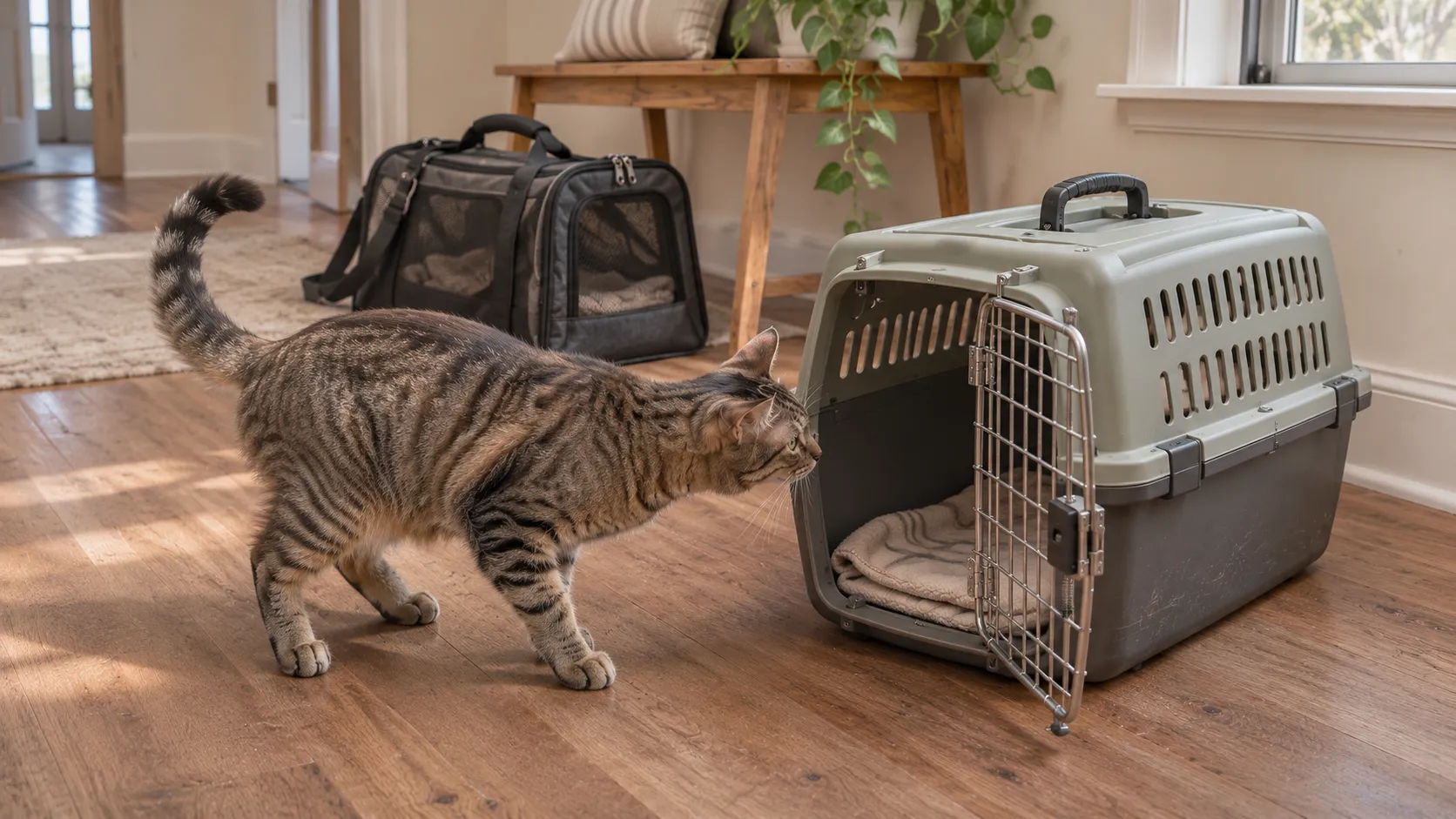
A ten-minute trip to the vet doesn't necessarily require an expensive travel carrier. Flying with your cat or taking a long road trip, however, may call for a different set of features.
For everyday transportation, we recommend the Petmate Two Door Top Load Kennel because of its rigid construction, convenient access and easy-to-clean interior. The Sherpa Original Deluxe is a practical soft-sided option for compatible cabin flights, while the Sleepypod Air 2.0 stands out for its independent crash-test certification.
Before choosing any of them, measure your cat. A carrier's advertised weight limit tells you only part of the story. Your cat also needs enough room to stand, turn around and rest comfortably.
Affiliate disclosure: LumaPaw may earn a commission from qualifying purchases made through links on this page, at no extra cost to you. As an Amazon Associate, LumaPaw earns from qualifying purchases.
Our Top Cat Carrier Picks at a Glance
| Product | Our Pick | Exterior Dimensions | Recommended Pet Weight | Price Tier | Main Limitation |
|---|---|---|---|---|---|
| Petmate Two Door Top Load | Best for Everyday Transport | 24 × 16.8 × 14.5 in | Up to 15 lb | Mid-range | Bulky, non-folding design |
| Sherpa Original Deluxe | Best for Air Travel | 17 × 11 × 10.5 in | Up to 16 lb | Mid-range | Airline restrictions and fabric containment limitations |
| Sleepypod Air 2.0 | Crash-Test-Certified Pick for Car Travel | 16–22 × 10.5 × 10.5 in | Up to 18 lb | Premium | Narrow interior |
Quick shopping links:
Dimensions and weight recommendations apply to the specific sizes featured in this guide. Price tiers are relative to the products compared, and retailer prices may change.
How We Chose These Cat Carriers
We compared ten cat carrier product families, including traditional plastic kennels, affordable fabric bags, collapsible carriers, reinforced travel carriers and wheeled designs.
Our research considered manufacturer specifications, retailer information, customer feedback, veterinary transportation guidance and independent crash-test results where available.
Rather than relying on popularity or star ratings alone, we examined usable interior space, loading convenience, cleaning, ventilation and the construction of doors, zippers, handles and supporting components.
We left out several collapsible and soft-sided carriers after finding customer reports of folding panels coming loose, zippers separating or pets pushing through openings. A wheeled carrier also raised concerns about limited standing room. These reports influenced our selection without establishing that every unit has the same problems.
Our recommendations are based on comparative research rather than firsthand product testing. Customer feedback helps identify practical advantages and potential weaknesses, but it does not establish how frequently a particular problem occurs.
The 3 Best Cat Carriers Compared
1. Petmate Two Door Top Load Kennel — Best for Everyday Transport
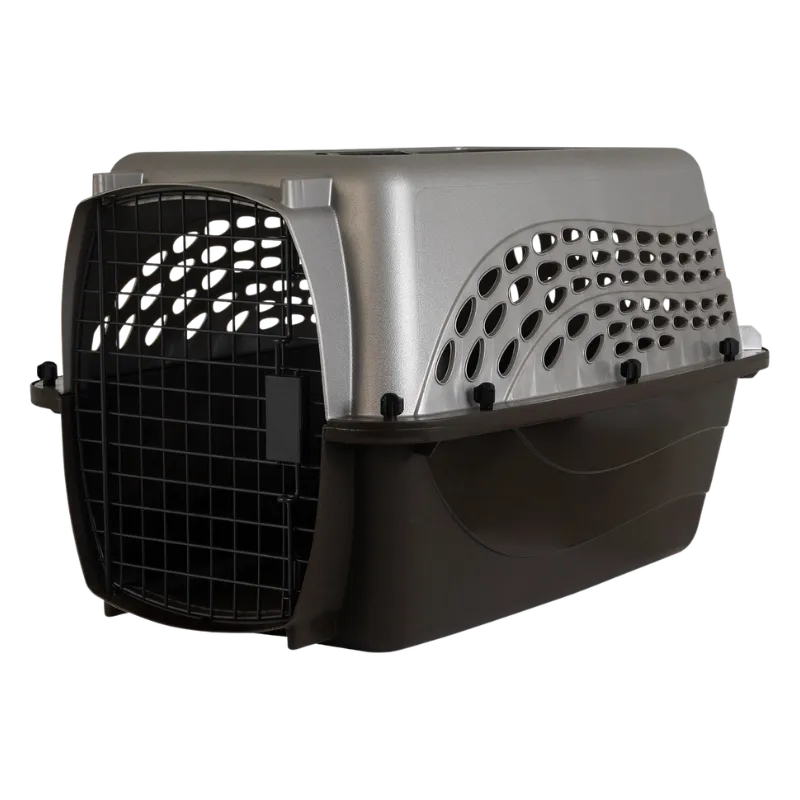
Product snapshot
- Selected version: Pearl Tan, 24-inch
- Carrier type: Hard-sided
- Exterior dimensions: 24 × 16.8 × 14.5 inches
- Interior dimensions: 21 × 14.5 × 13.5 inches
- Recommended pet weight: Up to 15 pounds
- Materials: Rigid plastic and steel doors
- Entry points: Top and front
If your cat mainly travels to the veterinarian, groomer or another nearby destination, a conventional hard-sided carrier is often the most practical starting point.
The Petmate Two Door Top Load Kennel offers two ways to get your cat inside. The front door works well for cats that enter voluntarily, while the upper opening provides another option when front-loading is difficult.
Unlike a flexible fabric bag, the rigid plastic shell maintains its shape during ordinary use. This can be useful for cats that dislike fabric pressing against their bodies when the carrier is lifted.
The plastic interior is also relatively easy to clean after accidents. You can wipe down the base and replace soiled bedding without having to clean an entire fabric enclosure.
Another useful detail is that Petmate publishes interior measurements for both the 19-inch and 24-inch models. Knowing the actual space available inside makes sizing easier than relying on exterior measurements alone.
What customers report
Owners frequently appreciate the convenience of loading their cats through the top door, along with the sturdy feel of the shell and its easy-to-clean interior.
Assembly experiences are more mixed. Some customers report missing hardware or misaligned screw holes, while others find the upper door awkward to operate or difficult to keep open.
Assemble the carrier according to the manufacturer's instructions, install every required fastener and make sure both doors latch properly before your first trip.
Pros
- Rigid construction with steel doors.
- Convenient top and front access.
- Easy-to-clean plastic interior.
- Published interior dimensions.
Cons
- Bulky and requires more storage space than a foldable carrier.
- Reported assembly and upper-door difficulties.
- The selected model has a recommended 15-pound capacity.
Best suited to: Owners looking for a practical everyday carrier, particularly for appropriately sized cats that are difficult to load through a front door.
Avoid if: Your cat exceeds the recommended capacity, needs more interior room or requires an under-seat airline carrier.
We could not establish independent crash-test certification for the Petmate, so it should not be treated as a certified vehicle restraint.
2. Sherpa Original Deluxe — Best for Air Travel
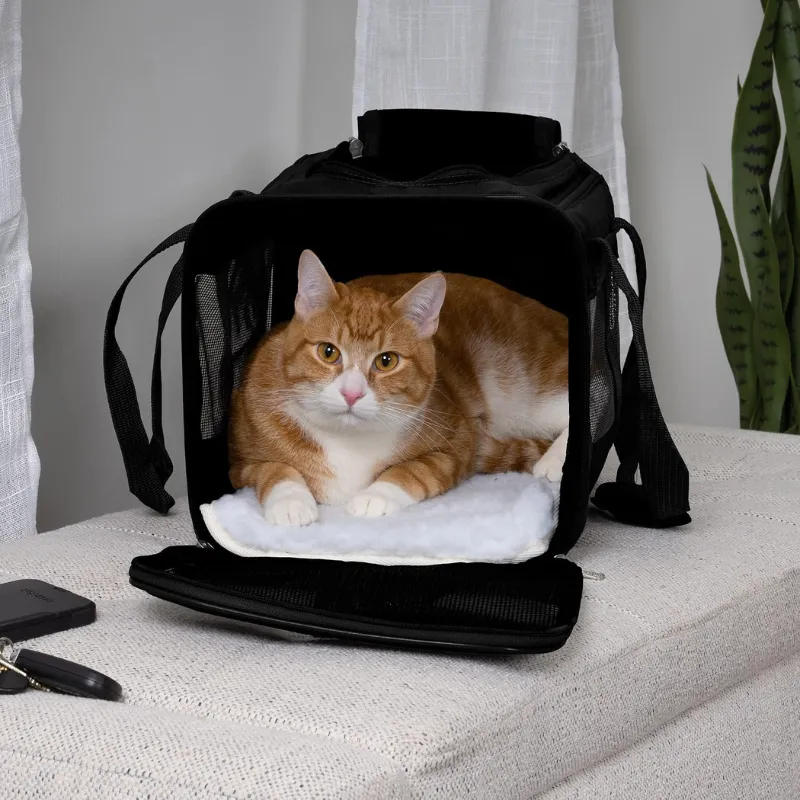
Product snapshot
- Selected version: Black, Medium
- Carrier type: Soft-sided travel carrier
- Exterior dimensions: 17 × 11 × 10.5 inches
- Recommended pet weight: Up to 16 pounds
- Structure: Flexible spring-wire frame
- Entry points: Top and side
- Bedding: Removable, machine-washable faux lambskin liner
A carrier that is comfortable at home may be too large to fit underneath an aircraft seat.
The Sherpa Original Deluxe addresses this problem with a flexible frame that allows the rear portion of the bag to compress for compatible under-seat spaces.
Its padded shoulder strap and carrying handles make it less cumbersome than a rigid plastic kennel when navigating an airport. Mesh panels provide ventilation, and the removable liner makes cleaning after a trip more manageable.
Another reason to consider Sherpa is its Guaranteed On Board program. It applies to eligible domestic flights within the United States and Canada and may reimburse your flight cost and pet travel fee if boarding is refused because of carrier size, provided all program requirements have been met.
That is not the same as universal airline approval. The Medium version is not covered by every participating airline.
The Federal Aviation Administration's pet travel guidance explains that airlines determine their own policies for pets traveling in passenger cabins. Confirm your airline's requirements before buying a carrier or booking your cat's travel.
What customers report
Many buyers describe successful flights and appreciate the flexible design, top-opening access and shoulder-carrying convenience.
However, customer feedback also includes reports of damaged mesh, zipper failures and deteriorating handle stitching. Some owners found the interior smaller than expected, even when their pets weighed considerably less than the recommended limit.
For a cat that persistently scratches or bites fabric enclosures, these limitations deserve particular attention.
Pros
- Flexible frame for compatible under-seat spaces.
- Convenient top and side access.
- Padded shoulder strap and washable bedding.
- Available in multiple sizes.
- Conditional airline boarding program.
Cons
- Airline acceptance varies by carrier size and flight.
- Reported mesh and zipper durability problems.
- Interior space can be restrictive for taller cats.
- No established independent crash-test certification for this model.
Best suited to: Owners flying with cats that fit comfortably inside and are reasonably accustomed to soft-sided carriers.
Avoid if: Your cat aggressively attacks mesh, regularly forces open fabric enclosures or cannot stand comfortably inside the selected size.
The Medium version may work well for many adult cats, but smaller cats may fit the Small model, while longer cats may need the Large version. A larger carrier must still meet your airline's restrictions.
3. Sleepypod Air 2.0 — Crash-Test-Certified Pick for Car Travel
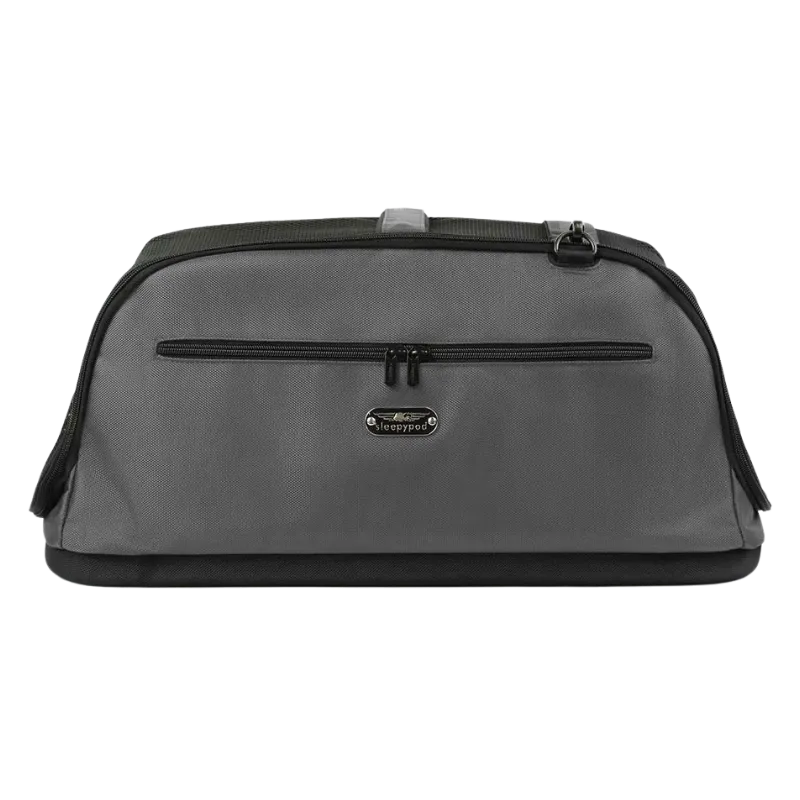
Product snapshot
- Selected version: Charcoal Grey, One Size
- Carrier type: Structured soft-sided travel carrier
- Exterior dimensions: 16–22 × 10.5 × 10.5 inches
- Interior dimensions: 15–21 × 9.5 × 9.5 inches
- Recommended pet weight: Up to 18 pounds
- Exterior material: Luggage-grade nylon
- Independent crash-test result: Four stars from the Center for Pet Safety
A seat-belt loop on a carrier doesn't tell you how it will perform in a collision. What sets the Sleepypod Air apart from our other picks is its independent crash-test certification.
The Center for Pet Safety's published test results confirm that the Sleepypod Air passed its January 2025 testing with a four-star rating using an 18-pound test dog dummy.
This provides more meaningful evidence of collision performance than an ordinary attachment strap. It does not guarantee that a cat will avoid injury in every accident, and correct installation remains essential.
The carrier also has an adjustable length, removable plush bedding, a padded shoulder strap and a luggage attachment. According to Sleepypod's product documentation, the updated design includes a fourth mesh window intended to improve ventilation and visibility.
Besides price, the biggest purchasing consideration is the shape of the interior. Although it extends to 21 inches internally, the width and height are both just 9.5 inches.
A tall or broad-bodied cat may find it restrictive despite weighing less than 18 pounds.
What customers report
Many buyers describe the carrier as well made and appreciate how it holds its shape during longer trips.
Less favorable experiences include limited visibility, excessive warmth, zipper problems and broken carrying handles. Some of this feedback relates to earlier versions of the Sleepypod Air, so it should not automatically be attributed to the updated 2.0 model.
The additional ventilation window addresses one aspect of the earlier design, but owners should still monitor their cat's comfort during travel.
If your cat starts panting or breathing with an open mouth, stop somewhere safe and contact a veterinarian immediately. Difficulty breathing in cats can be a medical emergency and should not be dismissed as ordinary travel stress.
Pros
- Independently documented crash-test certification.
- Dedicated vehicle restraint design.
- Adjustable carrier length and structured base.
- Removable, washable bedding.
- Additional ventilation window on the updated version.
Cons
- Substantially more expensive than conventional carriers.
- Narrow interior limits suitability for some cats.
- Historical ventilation, zipper and handle durability complaints.
- Available in one size.
Best suited to: Owners who regularly transport their cats by car and want a carrier with independently documented crash-test performance.
Avoid if: Your cat cannot move comfortably within the interior measurements or requires a larger enclosure.
When purchasing, confirm that the retailer is supplying the updated Air 2.0 version. Follow Sleepypod's installation instructions for the specific carrier you receive.
How to Choose the Right Cat Carrier
Choose the Right Size, Not Just the Weight Limit
Two cats weighing 12 pounds can have completely different body shapes. One may be compact, while the other has longer legs and a longer torso.
Before ordering a carrier, take three measurements:
- Body length: Measure from the tip of your cat's nose to the base of the tail.
- Standing height: Measure from the floor to the highest point of your cat's head or ears in a natural standing position.
- Body width: Measure across the widest part of the body.
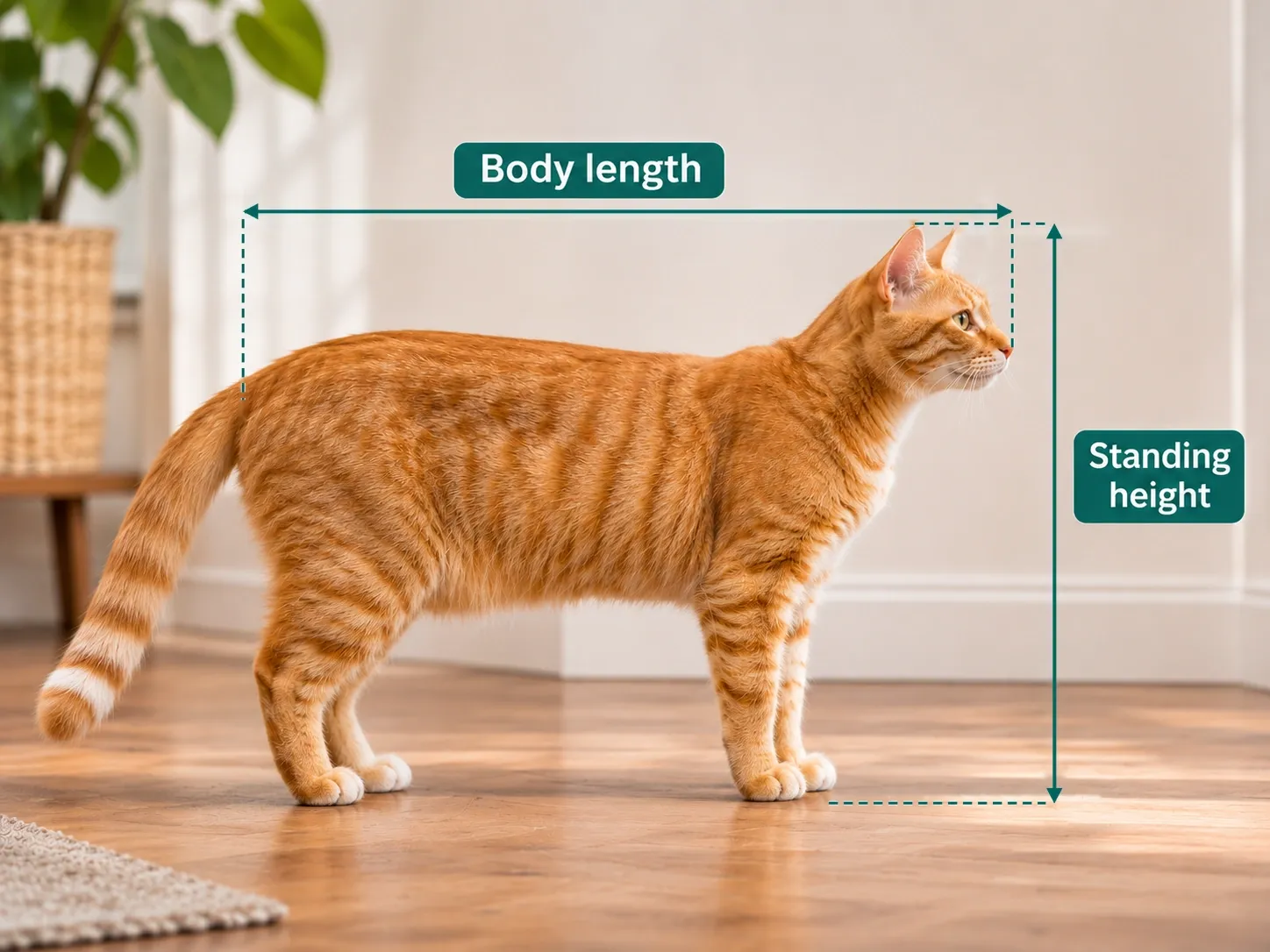
Compare these measurements with the carrier's usable interior dimensions, allowing sufficient room for natural movement.
Your cat should be able to stand, sit, turn around and lie down comfortably. Account for thick bedding, curved roofs and supporting frames that may reduce available space.
If a manufacturer publishes only exterior measurements, ask for the internal dimensions before purchasing, particularly if your cat is close to the recommended size limit.
Hard-Sided vs. Soft-Sided Cat Carriers
Neither construction type is automatically better for every journey.
| Feature | Hard-Sided Carrier | Soft-Sided Carrier |
|---|---|---|
| Structural rigidity | Generally greater | Depends on frame and materials |
| Cleaning | Usually easier to wipe down | Often requires spot cleaning |
| Portability | Typically bulkier | Often lighter and easier to carry |
| Storage | Requires more space | Some designs fold or compress |
| Containment | Depends on doors and shell fasteners | Depends on mesh, seams and zippers |
| Cabin travel | Often less practical | Flexible designs may be suitable |
For routine veterinary appointments, a sturdy plastic kennel with convenient upper access is a sensible option. A well-constructed soft carrier may be more practical when walking through airports or carrying a smaller cat over longer distances.
Collapsible carriers can help when storage space is limited, but their folding joints and locking panels deserve close inspection.
Wheeled carriers reduce carrying effort but may sacrifice interior height. Backpack designs require particular consideration of space, ventilation and stability.
The Cat Friendly Homes carrier selection guide offers additional guidance on choosing a suitable carrier for your cat.
Check Closures, Ventilation and Base Support
Before buying, take a close look at the door latches, zipper tracks and seams. These matter far more than extra pockets or decorative features.
On a hard-sided carrier, check that the doors latch securely and the upper and lower shell sections fit together correctly. On a soft carrier, inspect the mesh and stitching around each entrance.
Locking zipper pulls can help prevent sliders from moving apart, but they cannot prevent damaged mesh, torn seams or zipper teeth from separating.
A supportive base is equally important. If the floor bends excessively when lifted, your cat may struggle to maintain a comfortable position.
Make sure the carrier has sufficient ventilation and that blankets, luggage or vehicle seats do not obstruct its openings.
Consider How You Will Load, Carry and Clean It
For a reluctant cat, an awkward entrance can turn a routine appointment into a stressful experience.
A top-opening door provides an alternative loading method. A fully removable upper shell offers another advantage: in suitable circumstances, the veterinary team may be able to examine your cat while it remains in the carrier base.
These are different features, so check the actual construction before buying.
Also consider the combined weight of your cat and the empty carrier. A spacious model may look appealing online but become difficult to manage when carrying it between your home, vehicle and veterinary clinic.
For cats prone to motion sickness or toileting accidents, washable bedding and an interior that can be cleaned thoroughly are particularly useful.
Match the Carrier to Your Type of Travel
For occasional veterinary visits, prioritize containment, accessibility and easy cleaning. If you regularly travel by car, independent crash-test certification is another important consideration.
For flights, check the airline's dimensional restrictions before ordering. Even a carrier marketed as airline-approved may be too large for your particular flight.
If you have a large cat, prioritize interior space and documented weight guidance. None of our three selected carriers should be purchased solely because its advertised capacity appears sufficient.
On a limited budget, spend your money on dependable closures, suitable dimensions and structural support before paying for additional accessories.
How to Use a Cat Carrier Safely
Frequently Asked Questions
Can Two Cats Travel in the Same Carrier?
Separate carriers are generally preferable, even for cats that get along well at home. Travel stress can change how cats respond to each other, and sharing a confined space reduces their ability to move away.
The American Animal Hospital Association's guidance on veterinary visits recommends providing each cat with its own carrier.
How Long Can a Cat Stay in a Carrier?
There is no universal time limit suitable for every cat. Age, health, temperature, carrier size and individual stress levels all influence what is appropriate.
For longer journeys, plan ahead for water, suitable rest opportunities and toileting needs. Never release your cat in an unsecured outdoor area or while the vehicle is moving.
VCA Animal Hospitals' road travel guide provides additional advice for preparing cats for extended journeys.
A carrier is primarily intended for transportation, not routine prolonged confinement.
Are Cat Backpack Carriers a Good Choice?
Backpack carriers can appear convenient, but many offer insufficient space for comfortable movement. The motion of walking can also make the enclosure feel unstable.
Cats Protection's carrier guidance generally discourages backpack-style carriers for these reasons.
For necessary transportation, a stable conventional carrier is usually a more appropriate starting point.
Which Cat Carrier Should You Choose?
Choose the Petmate Two Door Top Load Kennel for practical everyday transportation, the Sherpa Original Deluxe for compatible cabin flights or the Sleepypod Air 2.0 if independently documented crash-test performance is your priority.
There is little reason to pay for specialized travel features you won't use. Whatever your budget or destination, choose a carrier that gives your cat sufficient room, maintains good airflow and has closures you can inspect before every journey.