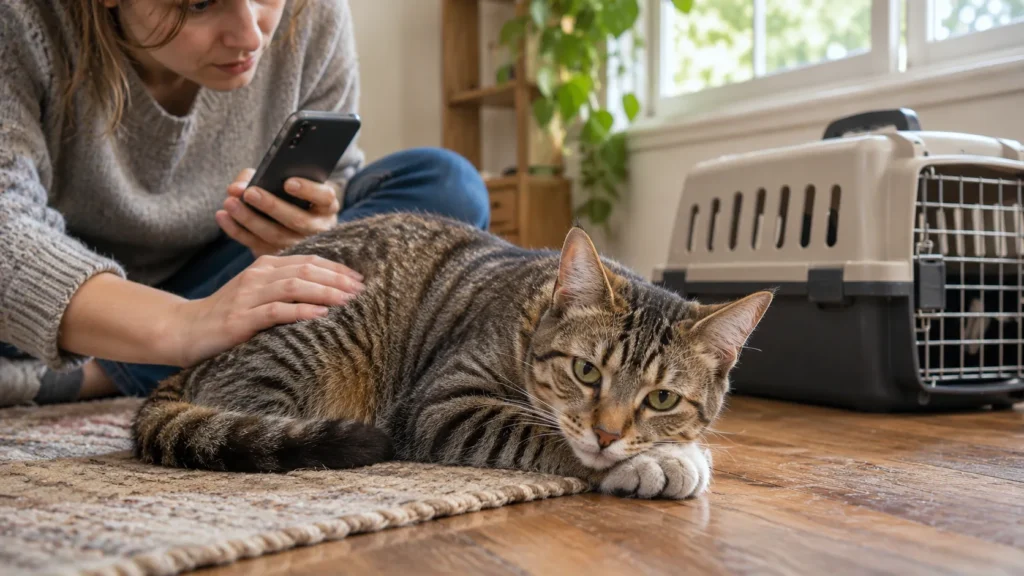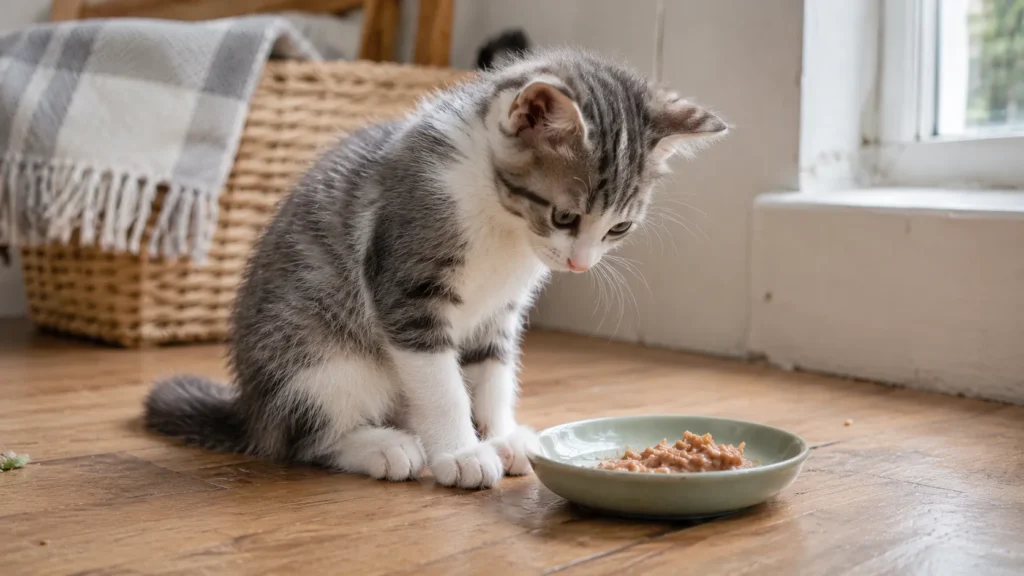
If your cat has an upset stomach but is still eating, drinking, and behaving normally, small meals of familiar, easily digestible food and access to fresh water may be all they need while you monitor their symptoms.
A veterinarian may also recommend a gastrointestinal diet or, in some cases, a temporary bland meal of plain cooked chicken or white fish.
Repeated vomiting, loss of appetite, diarrhea accompanied by other symptoms, or noticeable pain are different matters. These signs deserve veterinary attention rather than another change of food.
Knowing what to feed your cat starts with recognizing how unwell they are.
What to Do if Your Cat Has an Upset Stomach
Start by looking at your cat's overall condition rather than focusing only on the vomiting or loose stool. Are they behaving normally? Have they eaten or had anything to drink? Are they using the litter box as usual?
These details can help you recognize whether your cat is experiencing a mild digestive disturbance or something that needs more urgent attention.
When Home Monitoring May Be Appropriate
Brief home monitoring may be reasonable if your cat:
- Is an otherwise healthy adult.
- Has had a single episode of vomiting or mild diarrhea without other signs of illness.
- Remains alert and behaves normally.
- Continues to eat and drink.
- Shows no signs of pain, weakness, or bleeding.
- Has no suspected exposure to toxins or swallowed objects.
For example, a cat that passes one loose stool after eating an unfamiliar treat but continues to behave normally may simply need a return to a consistent diet and careful observation.
Contact your veterinarian if your cat vomits again, develops additional symptoms, or has diarrhea that doesn't improve within 24 hours. The PDSA provides separate guidance on vomiting in cats and diarrhea in cats.
When to Call a Vet or Seek Emergency Care
An upset stomach can sometimes be the first noticeable sign of a serious illness.
Seek emergency veterinary care if your cat:
- May have swallowed a toxic substance, string, or another potentially harmful foreign object.
- Cannot keep food or water down.
- Collapses, becomes extremely weak, or appears to be in severe pain.
- Vomits blood, produces vomit resembling coffee grounds, or passes black, tarry stools or substantial amounts of blood.
- Repeatedly strains in the litter box while producing little or no urine.
If you suspect your cat has swallowed string, thread, or another harmful object, don't try to make them vomit or pull on any visible string. Seek veterinary care immediately, even if they haven't developed symptoms yet.
Difficulty passing urine can be mistaken for constipation or abdominal discomfort. A urinary obstruction in cats is a potentially life-threatening emergency.
Contact your veterinarian promptly if your cat:
- Vomits more than once or develops worsening diarrhea.
- Has vomiting and diarrhea at the same time.
- Stops eating or eats noticeably less than usual.
- Has small amounts of fresh blood in their stool.
- Appears unusually tired, uncomfortable, or dehydrated.
- Has mild diarrhea that doesn't improve within 24 hours.
Kittens, senior cats, and cats with conditions such as diabetes or kidney disease need particular caution. Contact your veterinarian early rather than relying on general home-care advice.
Signs and Common Causes of an Upset Stomach in Cats
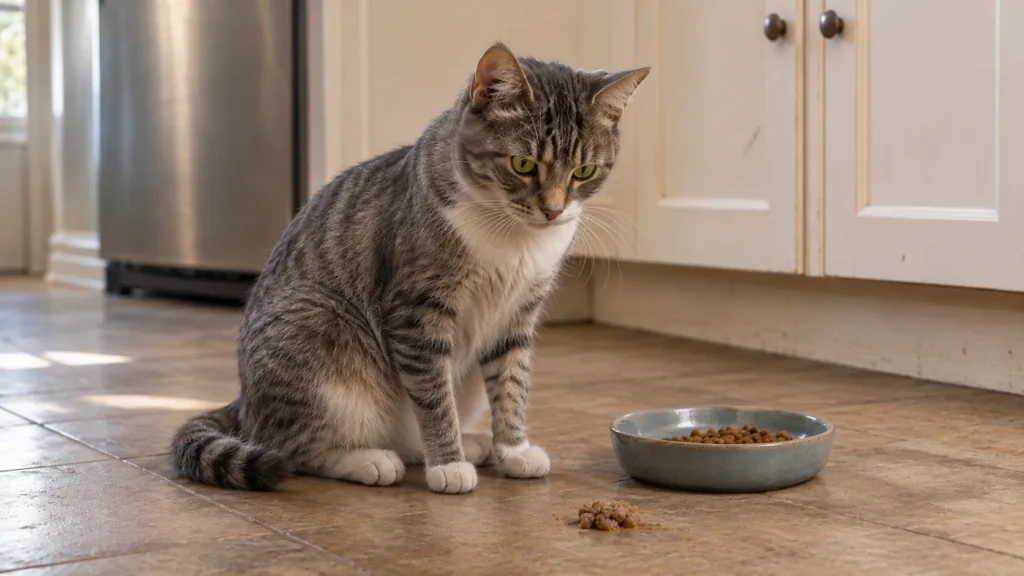
An upset stomach isn't always obvious in cats. Vomiting and diarrhea are easy to notice, but nausea can be much more subtle. You might notice your cat approaching their food bowl, sniffing their meal, and walking away without eating.
Other possible signs include:
- Lip licking, drooling, or repeated swallowing.
- Reduced appetite.
- Soft or watery stools.
- Unusual hiding or reduced activity.
- Abdominal discomfort.
Common triggers include sudden food changes, unfamiliar treats, spoiled food, food intolerances, and intestinal parasites. Infections, pancreatitis, swallowed objects, and diseases affecting organs such as the kidneys or liver can also cause digestive symptoms.
It's also worth distinguishing vomiting from regurgitation. Vomiting usually involves retching and abdominal effort, whereas regurgitation tends to happen more passively, often shortly after eating.
If your cat frequently brings food back up after meals, understanding why cats throw up after eating can help you describe what's happening more accurately to your veterinarian.
An upset stomach describes a collection of symptoms, not a specific diagnosis. Knowing what triggered those symptoms matters when deciding how to feed your cat.
What to Feed a Cat With an Upset Stomach
If your cat is well enough to eat and home monitoring is appropriate, keep their meals simple. Introducing several unfamiliar foods or supplements at once can make it harder to identify what's contributing to the problem.
Here are some feeding options and their limitations.
| Food | When It May Be Appropriate | Important Limitation |
|---|---|---|
| Familiar complete cat food | Mild digestive upset when feeding is tolerated | May not suit every underlying condition |
| Veterinary gastrointestinal food | When a veterinarian recommends digestive support | Formula must suit the cat's individual needs |
| Plain cooked chicken | Temporary bland feeding | Nutritionally incomplete |
| Plain cooked white fish | Alternative short-term bland food | Nutritionally incomplete |
| Plain cooked white rice | Occasionally included in a veterinarian-recommended bland diet | Not essential for cats or suitable as a meal on its own |
Familiar Cat Food and Highly Digestible Diets
If your cat has mild diarrhea but is otherwise well, continuing their usual complete and balanced food in smaller portions may be reasonable. This is particularly helpful when the problem follows an unfamiliar treat or a recent dietary change.
Temporarily leave out treats, table scraps, and unnecessary food toppers.
For some cats, a veterinarian may recommend a therapeutic gastrointestinal diet. These foods are formulated to address particular digestive needs, with characteristics such as high digestibility or specific fiber and protein profiles.
Ordinary sensitive-stomach cat foods and veterinary gastrointestinal diets are not necessarily interchangeable. The appropriate choice depends on the cause of your cat's symptoms.
If wet food is suitable for your cat's longer-term feeding needs, our guide to wet food options for sensitive digestion explains some of the differences between available formulas.
Bland Diets for Cats: Chicken, White Fish and Rice
Boiled chicken is often the first food people think of when their cat has an upset stomach. Plain cooked white fish is another possible short-term option.
If your veterinarian considers a homemade bland meal appropriate, prepare it carefully:
- Cook the meat or fish thoroughly.
- Remove bones, skin, and excess fat.
- Avoid butter, cooking oils, salt, sauces, and seasonings.
- Allow the food to cool before serving.
Choose a protein your cat can tolerate. Chicken is not automatically suitable for every cat, particularly one with a known adverse reaction to chicken.
What about chicken and rice?
Although chicken and rice has traditionally been recommended for digestive upset in pets, it does not provide complete and balanced feline nutrition.
The Canadian Academy of Veterinary Nutrition explains in its guidance on gastrointestinal nutrition that homemade chicken-and-rice diets have nutritional limitations and that appropriately formulated therapeutic diets are generally better options.
Rice isn't a necessary addition to every feline bland meal. Nor should plain chicken, fish, or rice become your cat's regular diet.
If your cat needs a special diet beyond a brief recovery period, ask your veterinarian about a complete food appropriate for their condition and life stage.
Should You Withhold Food After Vomiting?
You may have heard that cats should fast for 12 or 24 hours after vomiting. However, routinely withholding food for prolonged periods is not recommended.
Cats need adequate nutrition, including while recovering from illness. Prolonged insufficient food intake can contribute to serious complications, including hepatic lipidosis, also known as fatty liver disease.
If your cat has vomited once, is otherwise well, and is interested in eating again, a small portion of suitable food may be tolerated.
If your cat vomits again, don't repeatedly offer food in an attempt to settle their stomach. Contact your veterinarian for feeding instructions.
According to Cornell University's guidance on appetite loss, not eating can seriously affect an adult cat's health in as little as 24 hours. Very young kittens are especially vulnerable.
Don't wait for that amount of time to pass before seeking advice if your cat refuses food or appears unwell.
How to Care for a Cat With Mild Digestive Upset
During recovery, pay attention to whether your cat is keeping food down, drinking normally, and returning to their usual behavior.
Offer Small, Frequent Meals When Appropriate
Rather than serving a full bowl at once, split your cat's usual daily food allowance into several smaller meals if they are able to eat without vomiting. This lets you see whether they can tolerate food before offering more.
Follow any feeding instructions from your veterinarian, especially if your cat has an existing health condition or needs a special recovery diet.
Feed your cat somewhere quiet, away from other pets and household activity. Remove uneaten food before it spoils.
Don't force your cat to finish a meal or deliberately restrict their daily food intake for an extended period. If they repeatedly refuse food, contact your veterinarian.
Encourage Hydration
Vomiting and diarrhea can cause fluid loss, especially when a cat is also drinking less than usual.
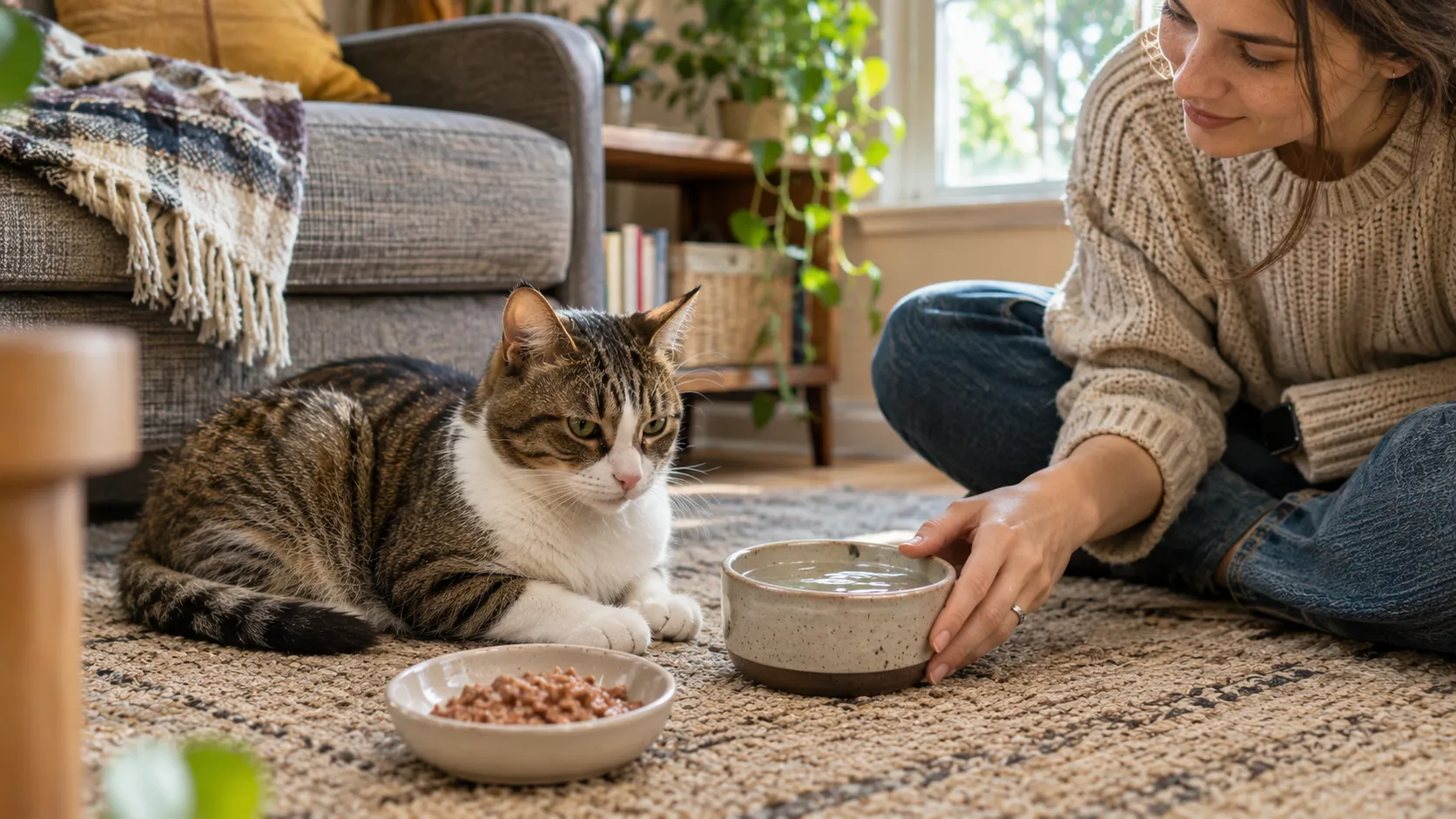
Keep clean, fresh water available in easily accessible locations. Some cats prefer several water bowls around the house, while others drink more readily from a fountain.
If your cat already tolerates wet food, it can contribute additional moisture to their diet. You may also add a little water to their food if they willingly accept it.
Dry or sticky gums, weakness, and reduced skin elasticity can indicate dehydration. However, these signs aren't always reliable on their own, particularly in older cats, whose skin may naturally be less elastic. If you're concerned about dehydration, contact your veterinarian rather than relying on a home test.
Cornell University's feline hydration guidance recommends contacting a veterinarian promptly when dehydration is suspected.
Never force water into your cat's mouth. A cat that cannot retain drinking water needs veterinary attention rather than additional home remedies.
Monitor Symptoms and Gradually Return to Normal Food
Keep track of your cat's condition while they're recovering. A few simple notes can also help your veterinarian if the symptoms persist.
Record:
- How much food your cat eats.
- Whether they are drinking normally.
- How often they vomit and what the vomit looks like.
- Changes in stool consistency and frequency.
- Urine output and litter-box behavior.
- Changes in activity, hiding, or signs of discomfort.
If your cat is improving and tolerating meals, gradually return to their usual feeding routine. If you've temporarily used a different food, reintroduce their normal diet over several days unless your veterinarian advises otherwise.
Follow any prescribed feeding instructions rather than changing a therapeutic diet as soon as your cat appears to feel better.
What Not to Give a Cat With an Upset Stomach
Some common household remedies can worsen digestive symptoms or expose cats to unnecessary risks.
Avoid giving your cat:
- Milk, cream, and dairy-based remedies: Many adult cats have difficulty digesting lactose.
- Rich or fatty table scraps: These can be poorly tolerated during digestive upset.
- Seasoned broth and gravy: They may contain ingredients unsuitable for cats, including toxic onions or garlic.
- Raw meat or fish: These introduce unnecessary foodborne illness risks.
- Human anti-diarrheal medications: Do not give your cat Pepto-Bismol containing bismuth subsalicylate, which can cause serious toxicity in cats. Other human stomach medications should only be used under veterinary direction.
- Human painkillers: Acetaminophen and ibuprofen can cause serious poisoning.
The FDA's guidance on pain relievers for pets highlights important differences between how humans and animals process these medications.
Don't give your cat medication from your medicine cabinet, even if the symptoms appear similar to something you've experienced yourself.
It's also best to avoid experimenting with several supplements, new foods, or home remedies during the same episode. If your cat needs medication or additional digestive support, your veterinarian can recommend an appropriate option.
What if Your Cat Keeps Getting an Upset Stomach?
Repeated digestive upset isn't something to dismiss as a normal part of owning a cat.
If your cat regularly vomits, develops loose stools, loses weight, or becomes reluctant to eat, an underlying condition may need attention.
Once your veterinarian has assessed the symptoms, dietary management may form part of the solution. Some cats benefit from a highly digestible diet, while others require a specific protein source, fiber profile, or veterinary therapeutic formula.
Our guide to cat food for sensitive stomachs explores longer-term feeding considerations for cats with digestive sensitivity. You can also learn more about dietary options for cats with recurring loose stools if stool quality is a particular concern.
A suitable diet can be helpful, but identifying why the symptoms keep returning is more important than repeatedly switching foods.
Frequently Asked Questions
How Long Does an Upset Stomach Last in Cats?
Mild digestive upset may begin improving within a day, but recovery depends on the cause, severity, and overall health of your cat.
Contact your veterinarian if mild diarrhea doesn't improve within 24 hours. Seek advice sooner if your cat develops additional symptoms, refuses food, becomes weak, or vomits again.
There is no reliable recovery timeline that applies to every cat.
Can I Give My Cat Pumpkin or Probiotics for an Upset Stomach?
Plain, unsweetened pumpkin provides fiber that may help with certain stool problems, but it isn't a general treatment for vomiting or an upset stomach.
As explained in this veterinary guide to feline diarrhea, some cats benefit from additional fiber, while others respond better to a lower-fiber diet.
Cat-specific probiotics may also help with certain digestive disturbances, although their benefits depend on the formulation and the underlying problem. Ask your veterinarian whether either option is suitable before adding it to your cat's meals.