

Finding the right dog food for chicken allergy can feel confusing at first. Chicken is common in many dog foods, treats, toppers, and even “sensitive stomach” formulas. So if your dog gets itchy skin, ear problems, paw licking, vomiting, or loose stool after eating chicken, switching foods may help — but only if you choose carefully.
If you suspect a chicken allergy, start by discussing your dog’s symptoms and diet history with your veterinarian. A food made without listed chicken ingredients may be an everyday option for some dogs, but it is not a reliable way to diagnose an allergy. A veterinarian may recommend a therapeutic hydrolyzed or novel-protein diet instead.
This guide compares five non-prescription foods formulated without listed chicken ingredients. These are everyday feeding options to discuss with your vet, not diagnostic elimination diets or guaranteed allergy-safe foods. It also explains how to check labels and when veterinary care is needed.
For a broader allergy guide, you can also read our full post on the best dog food for allergies.
Affiliate disclosure: LumaPaw may earn a commission from qualifying purchases made through links on this page, at no extra cost to you.
Quick Picks: Best Dog Food for Chicken Allergy
Salmon-based daily food: Purina Pro Plan Sensitive Skin & Stomach Salmon & Rice
A practical salmon-based option for many adult dogs with sensitive skin or stomach issues.
Best for: Adult dogs that tolerate fish and the other listed ingredients, when a veterinarian agrees.
Main concern: Not a strict limited-ingredient diet.
Grain-inclusive option: VICTOR Sensitive Skin & Stomach Salmon Meal & Brown Rice
A fish-based, grain-inclusive option to compare by cost per day.
Best for: Dogs that tolerate fish and grains, when an everyday diet is appropriate.
Main concern: Contains fish meal, pork fat and natural flavor; not a diagnostic diet.
Best premium beef option: ACANA Singles Beef & Pumpkin
A good pick if your dog needs to avoid chicken and you want a beef-based recipe.
Best for: Dogs that tolerate beef well.
Main concern: Grain-free and contains fish oil; check suitability with your vet.
Best lamb-based option: ACANA Singles Lamb & Apple
A useful choice for dogs that may do better with lamb instead of chicken, salmon, or beef.
Best for: Dogs needing a premium lamb recipe.
Main concern: Grain-free and contains fish oil; not an elimination diet.
Best limited-ingredient option: Natural Balance Limited Ingredient Salmon & Sweet Potato
A salmon-based, grain-free adult maintenance recipe with sweet potato.
Best for: Adult dogs that tolerate fish and need an everyday alternative to chicken.
Main concern: Grain-free; not a therapeutic allergy diet.
Can Dogs Be Allergic to Chicken?
Yes, dogs can be allergic to chicken, but it is important not to guess too quickly. Itchy skin, ear problems, vomiting, and diarrhea can also come from fleas, pollen, dust, grass, or other food ingredients.
A chicken allergy usually means the dog’s body reacts badly to chicken protein. Some dogs may only react to chicken, while others may have issues with other poultry ingredients too.
- Common signs owners notice include:
- Itchy skin
- Paw licking
- Ear infections or ear scratching
- Red or irritated skin
- Loose stool
- Vomiting
- Gas or stomach upset
- Constant scratching after meals
If your dog has strong symptoms, repeated ear infections, or ongoing digestive problems, speak with your vet before changing foods many times. A vet may recommend a proper elimination diet to find the real trigger.
How to Know If My Dog Is Allergic to Chicken
A food diary is useful, but diagnosis requires a controlled diet trial followed by a food challenge under veterinary guidance. The AAHA guidelines recommend a trial lasting 4–12 weeks; your vet will decide the appropriate duration and diet.
- Start with these steps:
- Write down your dog’s current food, treats, chews, and toppers.
- Check if chicken appears in more than one product.
- Ask your vet to select a therapeutic hydrolyzed or truly novel-protein diet based on your dog’s diet history.
- Feed only the prescribed trial diet; discuss treats, supplements and flavored medications with your vet.
- Record skin, ear and digestive symptoms throughout the trial.
- If symptoms improve, follow your vet’s instructions for a controlled food challenge to confirm the trigger.
Also check for hidden chicken ingredients. Some products may not say “chicken recipe” on the front but still include chicken inside.
- Look for:
- Chicken meal
- Chicken by-product meal
- Chicken broth
- Poultry meal
- Chicken fat and unspecified natural flavor: ask the manufacturer about protein residues and ingredient sources when relevant.
- Eggs, turkey or duck: these are separate potential triggers; avoid them if your veterinarian advises it.
Check the full label, not just the recipe name. Food allergies involve proteins; purified fats are not equivalent to chicken meat, but residual proteins or cross-contact can matter. VCA Animal Hospitals explains why retail limited-ingredient diets can contain undeclared proteins and are unsuitable for a strict diagnostic trial. Ask your veterinarian before using any of the foods below for a dog with confirmed allergy.
How We Chose These Foods
This comparison uses manufacturer ingredient information and matching retailer listings to identify everyday recipes without listed chicken ingredients. We have not personally tested these foods. Selection considers protein sources, nutritional suitability and practical limitations, not proof of allergy treatment.
- We looked for:
- Clear non-chicken protein sources
- Salmon, beef, or lamb recipes
- Sensitive skin or stomach support
- Limited-ingredient options where possible
- Matching product listings on Chewy
- Practical cost and feeding considerations
- Honest pros and cons
Customer ratings cannot establish allergy safety. All five foods are non-prescription options, and none should replace a veterinarian-directed elimination diet. Check the current package and contact the manufacturer if ingredient sources or cross-contact are a concern.
Best Dog Foods for Chicken Allergy
Salmon-based daily food for adults
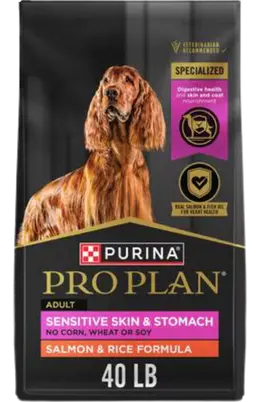
Purina Pro Plan Sensitive Skin & Stomach Salmon & Rice
Who should buy it:
Owners who want a reliable everyday food for a dog that may be sensitive to chicken.
Who should avoid it:
Dogs needing a strict vet-supervised elimination diet or a very simple ingredient list.
Purina Pro Plan Sensitive Skin & Stomach Salmon & Rice is an adult maintenance food with salmon as the first ingredient. The manufacturer’s ingredient list also includes fish meal, beef fat and natural flavor, with no chicken ingredient named. It is designed to support skin and digestive health.
It may be a practical everyday option when your dog tolerates the listed ingredients and your veterinarian considers a retail diet appropriate.
It is not a therapeutic elimination diet. The natural flavor source and manufacturing cross-contact should be clarified with the company if your dog requires strict avoidance.
Why we picked it: Salmon-first adult recipe with grains.
Pros
- Salmon-based recipe
- Good for sensitive skin and stomach needs
- Easy to find
- Grain-inclusive recipe
- Complete adult maintenance nutrition
Cons
- Not limited ingredient
- May not suit dogs with multiple food sensitivities
- Always check the label before buying
Grain-inclusive fish-based option
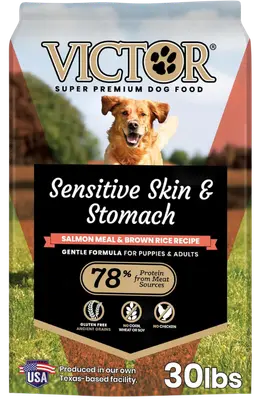
VICTOR Sensitive Skin & Stomach Salmon Meal & Brown Rice
Who should buy it:
Owners comparing fish-based kibble for a dog that tolerates its ingredients.
Who should avoid it:
Dogs that do poorly with fish-based foods or need a prescription allergy diet.
VICTOR Sensitive Skin & Stomach Salmon Meal & Brown Rice uses salmon meal, brown rice and other grains. The manufacturer states that it is formulated without chicken; its list also includes fish meal, pork fat and natural flavor.
It offers a grain-inclusive alternative to the grain-free recipes below. Compare the cost per day using your dog’s recommended portion rather than bag price alone.
Salmon meal is a concentrated protein ingredient, so its position on the label is not a reason to assume lower quality. As with any retail food, confirm the full ingredient list and suitability before feeding a dog with an allergy.
Why we picked it: Fish-based, grain-inclusive recipe formulated without chicken.
Pros
- Manufacturer lists no chicken
- Salmon-based
- Grain-inclusive
- Useful for skin and stomach support
- Formulated for all life stages, according to the manufacturer
Cons
- Contains more than one fish ingredient and natural flavor
- Not a therapeutic elimination diet
- May not be ideal for dogs sensitive to fish
Best premium beef recipe
ACANA Singles Beef & Pumpkin

Who should buy it:
Owners who want a premium non-chicken protein and know their dog tolerates beef.
Who should avoid it:
Dogs sensitive to beef or owners looking for a budget food.
ACANA Singles Beef & Pumpkin is a beef-based, grain-free recipe. The manufacturer’s ingredient information includes beef, pumpkin, legumes and fish oil. The recipe is not suitable as a guaranteed fish-free or allergy-safe diet.
Beef is an alternative to chicken, but it is also a possible allergen. Choose it only if your dog tolerates beef and the other ingredients.
A limited selection of animal protein sources can simplify label checking, but it does not guarantee the food is free of traces of other proteins. It is not intended for a diagnostic diet trial.
Why we picked it: Beef-based option for dogs that tolerate beef and the other ingredients.
Pros
- Beef-based recipe
- Beef is the main animal protein source
- Useful alternative to salmon
- Clearly named primary animal protein
- Includes pumpkin
Cons
- Contains fish oil
- Grain-free
- Not ideal for dogs with beef sensitivity
Best lamb-based option
ACANA Singles Lamb & Apple

Who should buy it:
Owners who want a premium lamb recipe for a chicken-sensitive dog.
Who should avoid it:
Dogs that have reacted badly to lamb or owners needing a cheaper food.
ACANA Singles Lamb & Apple is a grain-free, lamb-based recipe. The manufacturer and the linked retailer list fish oil alongside lamb ingredients. It is not a guaranteed fish-free food. Pet owners comparing this kibble with premium shelf-stable alternatives can also read our ZIWI Peak dog food review, which covers lamb, venison, beef, and fish-based air-dried recipes, along with fat levels, calories, and important allergy limitations.
This product is especially useful for pet owners who want a more focused recipe rather than a food with many animal proteins mixed together.
Why we picked it: Premium lamb option for dogs avoiding chicken.
Pros
- Lamb-based recipe
- Good alternative to salmon and beef
- Clearly identified primary animal protein
- Useful for dogs needing a different protein
- No chicken ingredient named in the listed recipe
Cons
- Contains fish oil
- Not for dogs sensitive to lamb
- May not be the best value for budget buyers
Best limited-ingredient salmon option
Natural Balance Limited Ingredient Salmon & Sweet Potato
Natural Balance Limited Ingredient
Salmon & Sweet Potato
Adult dry dog food
Who should buy it:
Owners who want a simple chicken-free salmon recipe for a sensitive dog.
Who should avoid it:
Dogs that need grain-inclusive food or do not tolerate salmon.
Natural Balance Limited Ingredient Salmon & Sweet Potato is a grain-free dry food for adult maintenance. The manufacturer describes it as poultry-free, with salmon as the animal protein source.
Its salmon and sweet potato recipe can simplify ingredient screening for dogs that tolerate fish. The limited-ingredient label does not establish that the food is suitable for an elimination trial.
It is grain-free, which is not required simply because a dog is allergic to chicken. Discuss the overall nutritional suitability of any grain-free diet with your veterinarian.
Why we picked it: Simple salmon and sweet potato recipe for food-sensitive dogs.
Pros
- Limited-ingredient style
- Salmon-based
- No chicken ingredient named in the listed recipe
- Good for dogs needing a simpler recipe
- Complete adult maintenance nutrition
Cons
- Grain-free
- Not for dogs sensitive to fish
- Not a therapeutic elimination diet
How to Choose Dog Food for Dogs Allergic to Chicken
- When choosing food, start with the protein. Look for clear options like:
- Salmon
- Lamb
- Beef
- Venison
- Whitefish
Be careful with duck or turkey. They are not chicken, but they are still poultry. Some dogs may tolerate them, while others may need to avoid all poultry.
Next, decide if your dog needs:
Sensitive stomach food: May support everyday digestion, but the label does not guarantee suitability for food allergies.
Limited-ingredient food: May simplify ingredient checking, but retail foods can contain undeclared proteins.
Veterinary hydrolyzed or novel-protein diet: A veterinarian may recommend one for diagnosis or ongoing management, based on the dog’s individual history.
For more alternative food formats, you may also like our guides to top air dried dog foods, the best freeze-dried dog food, and the best dehydrated dog food. These formats differ in preparation, texture, storage and nutritional composition. They are not inherently allergy-safe, and raw or freeze-dried raw foods carry additional microbial risks.
Safety Checklist Before Switching
- Before changing your dog’s food:
- Read the full ingredient list
- Check all treats, toppers and flavored medications with your vet.
- Follow your veterinarian’s transition instructions; routine changes are generally gradual.
- Track itching, stool, ears, and vomiting.
- During a diagnostic trial, feed only the selected diet as instructed.
- Contact your vet promptly for persistent or worsening symptoms.
- Seek emergency veterinary care for breathing difficulty, collapse or rapidly developing facial swelling.
This article can help with product research, but it does not replace veterinary diagnosis.
Frequently Asked Questions
Can dogs be allergic to chicken?
Yes, dogs can be allergic to chicken. Chicken is one of the more common animal proteins used in dog food, so some dogs may react to it after eating the same protein for a long time. Signs can include itchy skin, paw licking, ear problems, vomiting, gas, or loose stool.
That said, these signs can also come from fleas, seasonal allergies, or another food ingredient. If the symptoms keep coming back, it is better to speak with your vet before changing foods many times.
How do I know if my dog is allergic to chicken?
The clearest method is a veterinarian-directed elimination trial followed by a controlled food challenge if appropriate. Keep a record of food, treats, chews, toppers and medications, and do not reintroduce a suspected trigger on your own.
If your dog improves after eating a chicken-free diet, that may be a clue. But it does not fully confirm a chicken allergy. A vet-guided elimination diet is the best way to know for sure.
What is the best dog food for dogs allergic to chicken?
The best diet depends on the confirmed trigger, other dietary needs and your dog’s previous protein exposure. A veterinarian may recommend a therapeutic hydrolyzed or novel-protein food for diagnosis or long-term management.
The five retail foods above are examples of everyday recipes without listed chicken ingredients. Discuss their suitability with your vet before using them for a confirmed allergy; they are not guaranteed free of cross-contact.
Can dogs with chicken allergy eat chicken skin?
If your dog may be allergic to chicken, it is safer to avoid chicken skin during a food trial. Chicken skin is still part of the chicken, and it may also be fatty, which can upset some dogs’ stomachs.
During an elimination trial, feed only the prescribed diet and anything specifically approved by your veterinarian.
Can dogs allergic to chicken also be allergic to turkey?
Some dogs allergic to chicken may also react to turkey, duck, or other poultry, but not every dog will. Turkey is not chicken, but it is still a poultry protein.
Your veterinarian can choose a trial diet based on your dog’s previous exposures and suspected triggers. A different meat is not necessarily a novel protein if your dog has eaten it before.
Final Verdict
The best dog food for chicken allergy depends on an accurate diagnosis and your dog’s nutritional needs. If your veterinarian agrees that an everyday retail food is appropriate, Purina Pro Plan Salmon & Rice and VICTOR Salmon Meal & Brown Rice are grain-inclusive fish-based options, while Natural Balance Salmon & Sweet Potato is a grain-free adult recipe.
ACANA Singles Beef & Pumpkin and ACANA Singles Lamb & Apple provide alternative primary proteins; both contain fish oil. Check whether the entire recipe suits your dog.
Before buying, check the full label and ask your veterinarian about any suspected or confirmed allergy. If a diagnostic trial is needed, follow the prescribed diet and food challenge plan rather than choosing one of these retail foods.