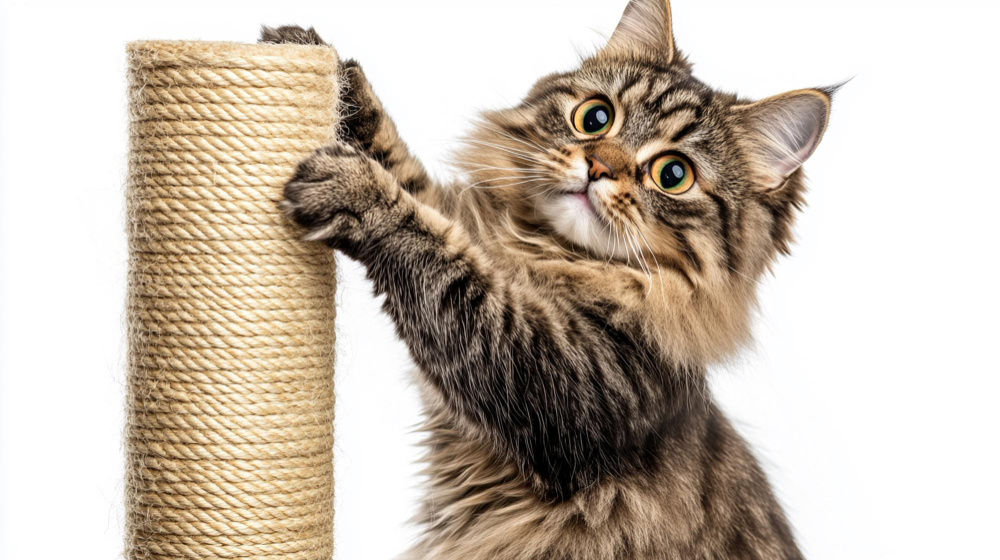
Kittens
Kittens often explore through chasing, pouncing, grabbing, and batting. Choose appropriately sized toys without loose pieces that could be swallowed, and keep strings and wand attachments out of reach between supervised play sessions.

Some cats will chase a feather wand across the room. Others would rather bat a small ball under the sofa, wrestle with a soft toy, or work out how to get food from a puzzle.
Finding the right cat toys starts with noticing what interests your cat. Explore our guides and play ideas for chasing, pouncing, kicking, and enrichment, with practical tips for choosing toys that suit your cat's habits and abilities.
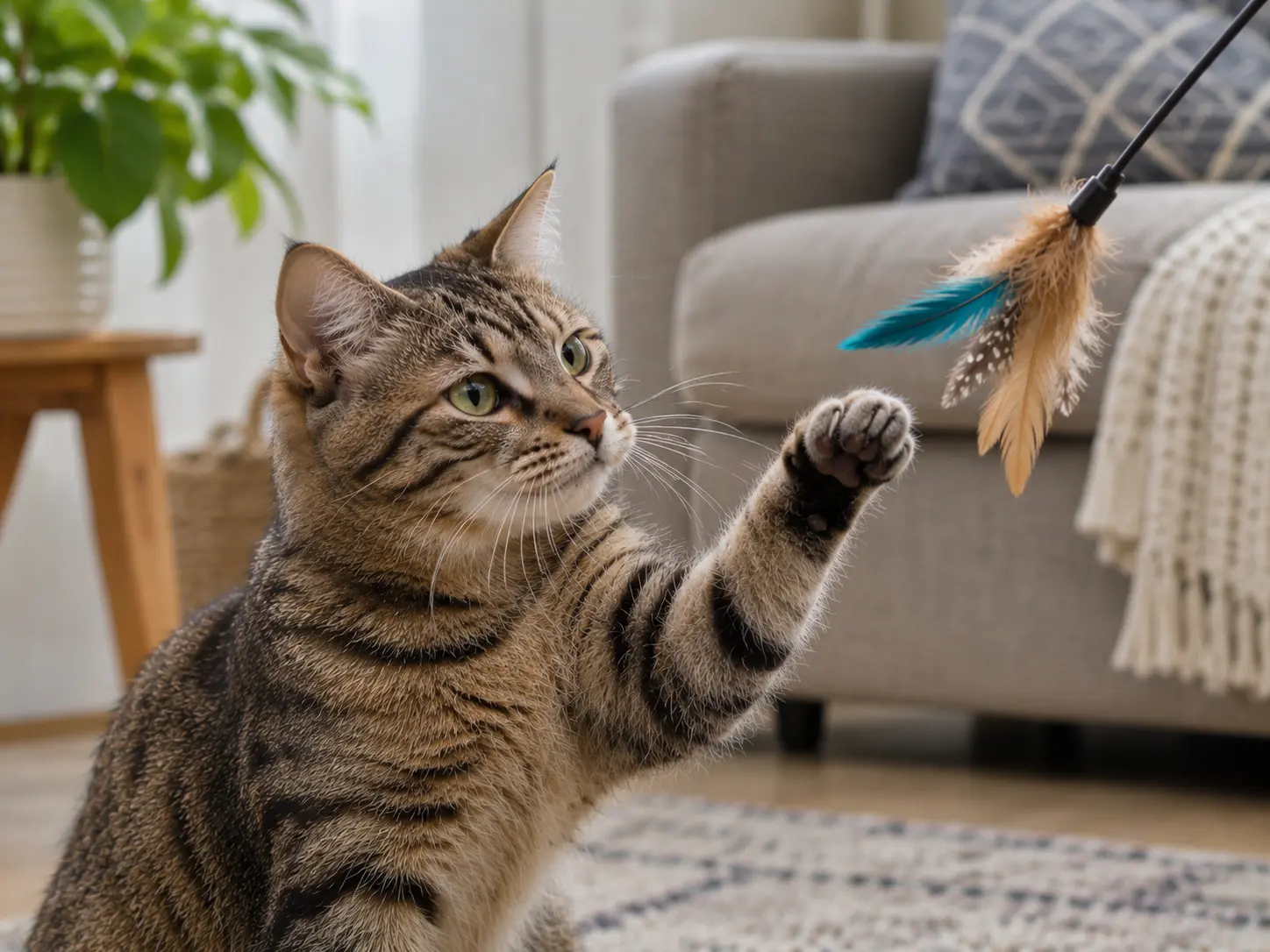
Cats often enjoy games that let them stalk, chase, and catch something moving. A feather wand, toy mouse, or moving attachment can turn an ordinary play session into a chance to practice those natural behaviors.
Try moving a wand toy across the floor, behind furniture, or briefly out of sight instead of waving it constantly in front of your cat's face. Give your cat opportunities to catch the toy, too.
Electronic motion toys offer a different kind of play. Some cats enjoy their changing movements, while others prefer a simpler toy controlled by a person.
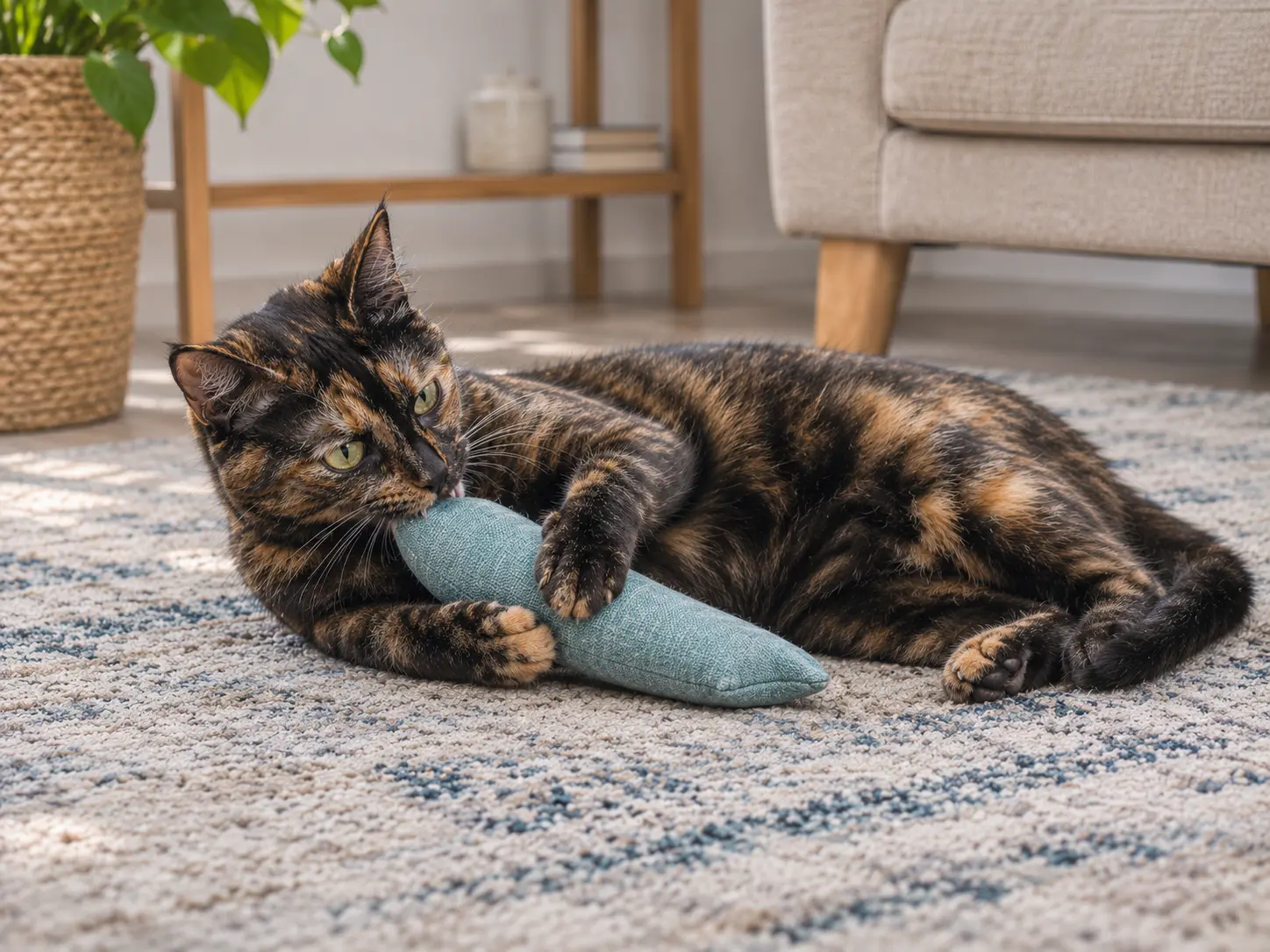
If you're comparing different styles, start with our Catnip & Interactive Cat Toys Guide.Not every cat wants to run after a moving toy. Some prefer carrying small toys, batting balls across the floor, or gripping a longer soft toy with their front paws and kicking it with their back feet.
Catnip-filled toys can also interest some cats, although responses vary. A cat that ignores catnip may still enjoy the toy's shape, texture, or movement.
Watch what your cat does during play. A cat that likes wrestling may prefer a kicker toy, while one that enjoys chasing objects across hard floors may be more interested in a lightweight ball or toy mouse.
Play doesn't always have to be fast or energetic. Food puzzles and treat-dispensing toys can give cats an opportunity to investigate, manipulate objects, and work for a food reward.
Start with an easy puzzle and allow your cat to learn how it works. You can gradually introduce more challenging activities if your cat enjoys them.
A little creativity helps, too. A cardboard box can become a hiding place, and a few pieces of your cat's usual dry food can turn a suitable puzzle feeder into a simple foraging activity. Include food used for games in your cat's normal daily allowance.
These activities can complement interactive play, particularly for indoor cats.
Kittens often explore through chasing, pouncing, grabbing, and batting. Choose appropriately sized toys without loose pieces that could be swallowed, and keep strings and wand attachments out of reach between supervised play sessions.
Adult cats have different preferences. Some love energetic chasing, while others enjoy short games with soft toys or food puzzles. Variety can be useful, but pay attention to what your individual cat actually enjoys.
Older cats can still benefit from play, although the activity may need to be gentler or slower. Try moving toys at ground level or offering activities that don't require repeated jumping.
If your cat suddenly becomes less willing to play, appears uncomfortable, or has difficulty moving, ask your veterinarian for advice rather than assuming it's simply age.
Check toys regularly for damage, exposed stuffing, loose attachments, and pieces that might be swallowed.
Supervise play with string, ribbon, feathers, and fishing-rod toys, then store them securely afterward. Don't leave a cat alone with a toy that could become tangled around their body or break into dangerous pieces.
It's also worth rotating a few toys instead of leaving every toy available all the time. Regular, short play sessions can be more inviting than trying to persuade your cat to play for a long stretch.
For additional guidance, read Cats Protection's advice on cats and play.
Browse our cat toy guides and related play resources, from interactive toys and catnip designs to other activities that suit different cats and households.