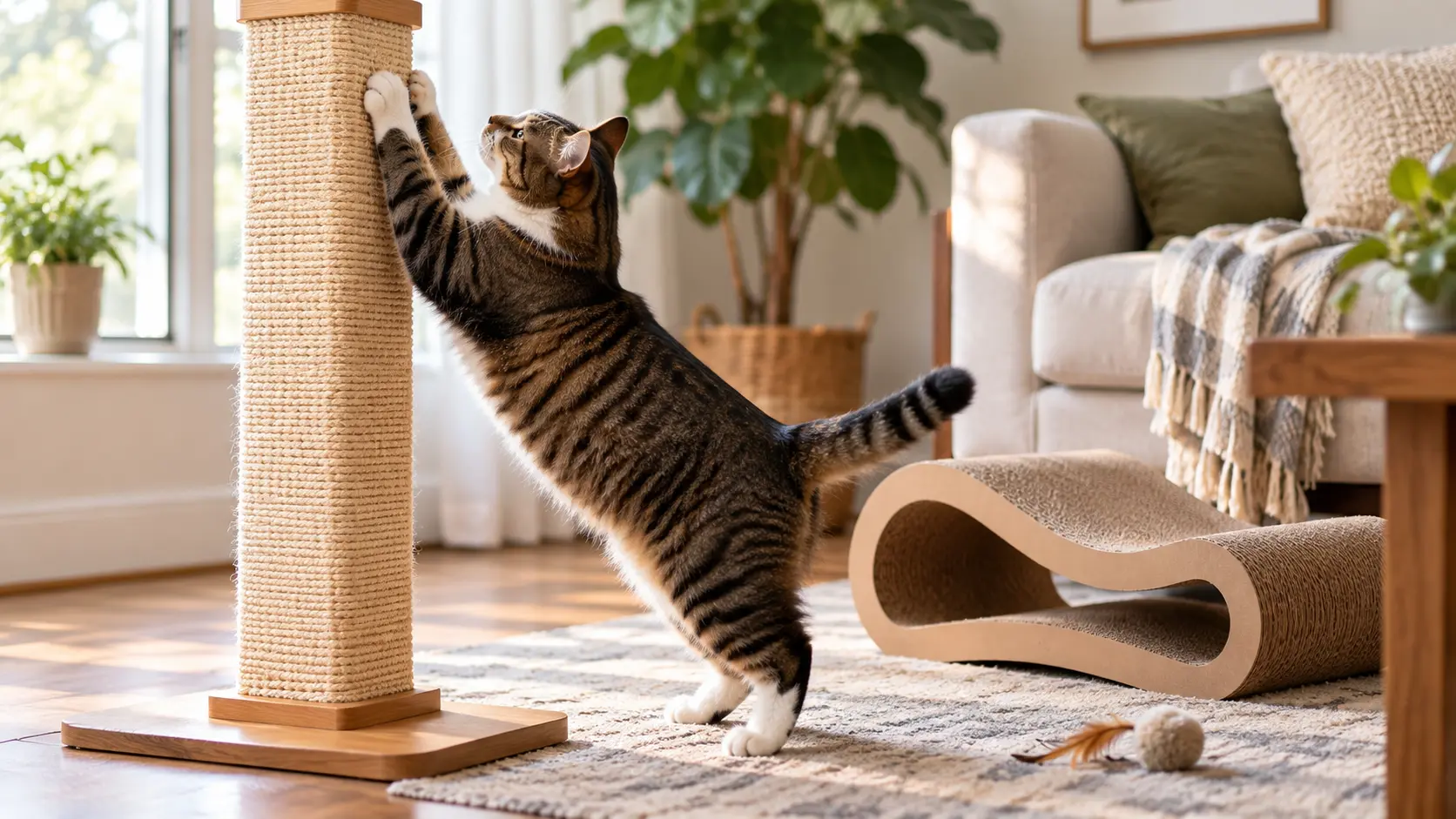
The best cat scratcher is not automatically the tallest post, the most expensive cardboard lounge, or the product with the most reviews. A scratcher can be well made and still go unused if it does not match the way your cat prefers to scratch.
Some cats stretch upward against sofa arms and doorframes. Others work on rugs and floors. Some switch between vertical, horizontal, and angled surfaces. That is why this guide compares several types of cat scratchers rather than ranking a row of nearly identical posts.
We looked at scratching orientation, material, usable scratching space, stability, construction, replacement options, recurring customer feedback, and current retailer information. The seven picks below cover vertical sisal, flat cardboard, L-shaped, multi-angle, lounge, bowl, and adjustable designs. That broad format is intentional: this page is the main commercial hub for cat scratchers, while dedicated vertical-post comparisons belong in LumaPaw’s separate cat scratching post guide.
Affiliate disclosure: This article may contain affiliate links. If you buy through one of these links, LumaPaw may earn a commission at no extra cost to you.
Quick Picks: Best Cat Scratchers by Scratching Style
We are not naming one Best Overall scratcher. A tall woven-sisal post can be an excellent choice for a cat that scratches upright and a poor choice for one that strongly prefers cardboard on the floor. The products below earned positions based on genuinely different uses rather than artificial award labels.
Product |
Best for |
Scratching style |
Material |
Replaceable or reversible? |
Main Limitation |
|---|---|---|---|---|---|
SmartCat The Ultimate |
Vertical scratching |
Upright |
Woven sisal |
No verified replacement column |
Higher price |
EHEYCIGA 26.8-in L-Shaped Scratcher |
L-shaped scratching |
Vertical + horizontal |
Corrugated cardboard |
No verified refill |
Heavy scratchers may wear it quickly |
Frisco Double-Wide |
Budget option |
Horizontal |
Corrugated cardboard |
Replacement pads available |
Basic design and cardboard debris |
PetFusion 3-Sided Standard |
Multiple angles |
Angled/mixed |
Corrugated cardboard |
Can be rotated; no refill insert |
Too short for a full tall stretch |
Modkat Scratcher Lounge Set |
Scratching + lounging |
Horizontal/curved |
Cardboard |
Reversible |
Premium price |
Necoichi Cozy Cat Scratcher Bowl XL |
Scratching + sleeping |
Horizontal/bowl |
Cardboard/paper |
Reversible, replaceable insert |
Outer shell is moisture-sensitive |
Hepper Hi-Lo |
Adjustable scratching |
Angled/multi-position |
Cardboard with wood/metal frame |
Replacement cardboard available |
High purchase and refill cost |
These seven positions reflect the final product differentiation established during research rather than review count or marketplace badges alone.
How We Researched and Chose These Cat Scratchers
We did not choose these products simply because they had thousands of reviews, an Amazon’s Choice badge, or a high average rating.
The first question was how a cat can use the scratcher. A vertical woven-sisal post solves a different problem from a flat cardboard pad, and an adjustable scratcher serves a different cat from a bowl-shaped scratcher bed.
We then compared the material and usable scratching area, not just the outside dimensions. Stability also mattered: tall posts need a dependable base, while lightweight cardboard products should not slide excessively during normal use.
Durability was evaluated together with replacement cost. Some cardboard products are reversible. Some have replacement inserts. Others require replacing the whole product once the useful surface is worn.
We also reviewed recurring customer-feedback patterns, paying more attention to repeated comments about stability, wear, cardboard debris, assembly, and sizing than to isolated complaints.
Finally, we checked model and size differences across Amazon, Chewy, and manufacturer information where available. That matters because similarly named versions are not always identical.
These recommendations are based on current product specifications, retailer information, manufacturer details, and recurring customer feedback. LumaPaw did not personally test these products. That research-first approach was part of the approved methodology for this pillar.
Best Cat Scratchers for Different Scratching Styles

SmartCat The Ultimate Scratching Post — Best for Vertical Scratching
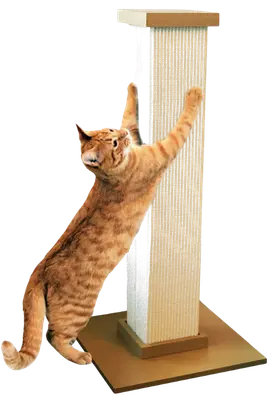
Best for: Cats that scratch sofa arms, doorframes, or other upright surfaces.
Avoid if: Your cat clearly prefers horizontal cardboard or you want replaceable scratching inserts.
If vertical scratching is clearly your cat’s preference, LumaPaw’s best cat scratching posts guide compares that format in more depth.
Product snapshot
- Height: 32 inches
- Base: about 16 × 16 inches
- Surface: woven sisal
- Model: SmartCat #3832
- Best for: cats that like a full upright stretch
The SmartCat Ultimate is the clearest choice in this roundup for cats that strongly prefer vertical scratching. Its 32-inch height gives many adult cats considerably more room to extend upward than short cardboard structures, while the square base provides a substantial footprint.
The scratching surface is woven sisal rather than a loose rope wrapped around the post. During our research, recurring owner feedback was particularly strong around stability and long-term wear. Some owners reported using the post for years, although that should not be treated as a guaranteed lifespan.
The tradeoff is price. It costs considerably more than basic cardboard pads, and we could not verify a replacement scratching column. When the usable sisal eventually wears out, replacing only that section may not be an option.
It is also worth remembering that build quality cannot override scratching preference. A cat that consistently chooses cardboard on the floor may simply have little interest in this type of post.
Pros
- Tall enough for substantial vertical stretching
- Stable base
- Durable woven-sisal surface
- Strong long-term owner-feedback record
Cons
- Higher upfront cost
- No verified replacement scratching column

EHEYCIGA 26.8-in L-Shaped Cat Scratcher — Best L-Shaped Cat Scratcher
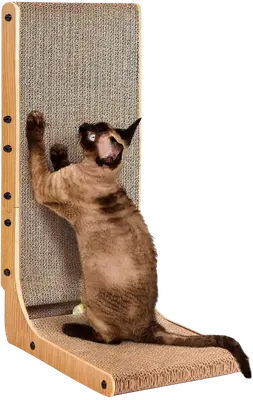
Best for: Cats that enjoy cardboard and use both vertical and horizontal surfaces.
Avoid if: You want a refillable scratcher or strongly dislike cardboard debris.
Product snapshot
- Size researched: 16.6 × 11.2 × 26.8 inches
- Material: corrugated cardboard
- Model: ECJP26ZPT
- Best for: cats that switch between floor-level and upright scratching
EHEYCIGA’s L-shaped design gives a cat two useful orientations without requiring two separate scratchers. The vertical section can sit against a wall or furniture, while the bottom section provides a floor-level scratching surface.
One reason it stayed ahead of similar L-shaped products in our research was cleaner retailer matching: the same 26.8-inch configuration was identifiable at both Amazon and Chewy. A larger 32-inch version is also available, but owners of long-bodied cats should compare its dimensions rather than assuming the 26.8-inch model will provide a complete upright stretch.
Assembly feedback was generally positive, and the researched price was much lower than many furniture-style scratchers.
The main weakness is typical of cardboard: lifespan varies sharply with scratching intensity. Some vigorous scratchers can tear through the surface much faster than lighter users, and loose cardboard pieces are a recurring complaint. We also did not verify an official replacement scratch panel for this model.
Pros
- Two scratching orientations
- Relatively compact
- Straightforward assembly
Cons
- Wear can be fast with heavy scratching
- No verified replacement insert
- Produces cardboard debris

Frisco Double-Wide Cat Scratcher — Best Budget Cat Scratcher
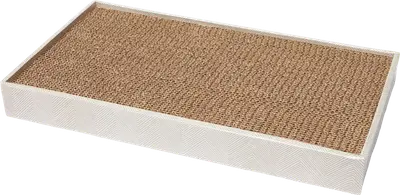
Best for: Cats that scratch rugs, floors, or other horizontal surfaces.
Avoid if: Your cat consistently seeks tall upright surfaces.
Product snapshot
- Size: 18 × 9.75 × 2 inches
- Material: corrugated cardboard
- Style: flat horizontal scratcher
- Replacement pads: available
- Best for: testing whether a cat likes floor-level cardboard
Not every cat needs a $60 piece of scratching furniture. The Frisco Double-Wide is a simple horizontal cardboard scratcher that was selling for about $10 when we rechecked it, making it the easiest low-cost option in this lineup. (Chewy)
The design is straightforward: a broad cardboard pad sits inside a base, and catnip is included. More importantly, replacement pads are currently available, so the whole setup does not have to be discarded every time the scratching surface wears out. Chewy lists the replacement pads as reversible. (Chewy)
Recent owner feedback commonly mentions cats both scratching and lying on the pad. The same feedback also illustrates why orientation matters: at least one owner reported that the cat used this flat pad but preferred a curved alternative when given the choice. (Chewy)
The obvious downside is mess. Scratched cardboard can end up around the floor, and this is still a basic cardboard pad rather than a long-lived piece of furniture.
Pros
- Low purchase price
- Wide flat scratching area
- Replacement pads available
- Useful low-risk way to test horizontal preference
Cons
- Cardboard debris
- Basic construction
- Primarily a Chewy product

PetFusion 3-Sided Vertical Cat Scratcher — Best Multi-Angle Cardboard Scratcher
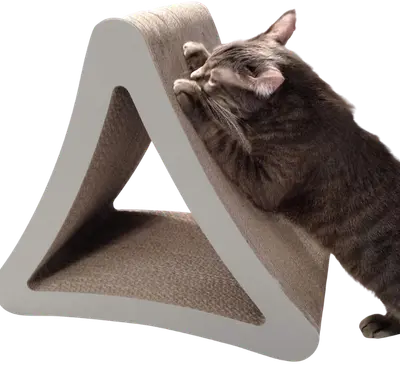
Best for: Cardboard-loving cats that scratch at several angles.
Avoid if: Maximum upright stretching is the priority.
Product snapshot
- Standard size: 18 × 10.5 × 15.9 inches
- Material: recycled corrugated cardboard
- Shape: triangular
- Assembly: none
- Best for: cats that like several scratching angles
The PetFusion 3-Sided is more useful than a simple cardboard slab because its triangular shape exposes several scratching surfaces while also creating an opening that some cats use for play or resting.
PetFusion currently confirms recycled corrugated cardboard, cornstarch glue, floor grippers, included catnip, and no assembly for the Standard model. (Petmate)
Long-term owner feedback was unusually encouraging for cardboard, with multiple reports of the product lasting many months or longer. That does not mean every cat will get the same lifespan; vigorous scratchers and multi-cat homes can wear it much faster.
The main limitation is height. Despite “Vertical” in the name, the Standard model is only about 16 inches tall, so it is not a substitute for a 32-inch post when a cat wants a full upright stretch.
Cardboard shedding and movement on smooth floors also appeared in feedback. A non-slip mat may help if the included grippers are not enough.
Pros
- Multiple usable scratching surfaces
- No assembly
- Play/rest opening
- Good durability evidence for cardboard
Cons
- Not tall enough for full vertical stretching
- Cardboard debris
- No replacement insert

Modkat Scratcher Lounge Set — Best Scratch-and-Lounge Set
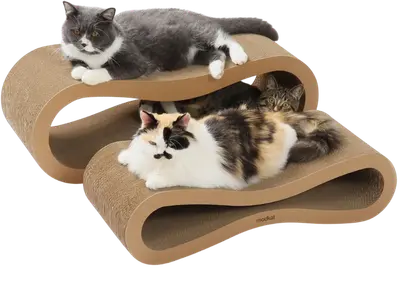
Best for: Cats that like long horizontal scratching surfaces and regularly lounge on cardboard.
Avoid if: You want inexpensive replacement inserts or primarily need vertical scratching.
Product snapshot
- Two scratchers included
- Large: about 30 × 10.6 × 10.6 inches
- Small: about 26.6 × 7 × 10.6 inches
- Material: corrugated cardboard
- Reversible: yes
The Modkat set makes the most sense for cats that do not treat a scratcher as a scratching surface only. Owner feedback repeatedly describes cats scratching, stretching, sitting, and sleeping on the curved pieces.
The set includes two different sizes, which can be useful in a multi-cat home or placed in different rooms. Both are reversible, extending the amount of usable cardboard before replacement.
Durability reports were stronger than we normally see from inexpensive cardboard pads, with some owners reporting extended use. Those experiences still vary by cat, and they should not be treated as a promised service life.
The biggest drawback is cost. This is premium-priced cardboard, and there is no separate replacement insert. When both sides are badly worn, the complete cardboard piece eventually needs replacing.
Expect some cardboard debris too. On slick floors, a grippy mat may be worthwhile for cats that launch themselves on or off the scratcher.
Pros
- Two scratchers included
- Reversible
- No assembly
- Strong scratch-and-lounge use case
Cons
- Premium price
- No refill insert
- Cardboard debris

Necoichi Cozy Cat Scratcher Bowl XL — Best Scratcher Bed
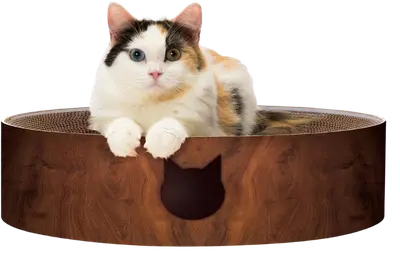
Best for: Cats that enjoy bowl-shaped beds and cardboard scratching.
Avoid if: You need a washable scratcher or your cat primarily scratches upright.
Product snapshot
- XL size: about 18.9 × 18.9 × 4.7 inches
- Material: cardboard/paper
- Center insert: reversible and replaceable
- Best for: cats that like to scratch and curl up in the same spot
Necoichi is different from the longer lounge-style scratchers because its round shape encourages cats to curl up inside it. Customer feedback repeatedly describes it functioning as a bed as much as a scratcher.
The replaceable center is the strongest practical feature. Owners can reverse the scratching insert and later replace it without throwing away the entire outer bowl.
The exterior can look wooden in product photos, but it is not a wooden frame. It is a paper/cardboard structure with a wood-look finish. That also means moisture is a genuine weakness: spills, vomit, or excessive dampness can damage the outer body.
The insert itself deserves gentle handling. Some owners report the spiral cardboard lifting or beginning to unwind while flipping it or during vigorous scratching.
One retailer detail also needs care: Large and XL naming has not always been consistent across listings. For this recommendation, the 18.9-inch XL configuration is the version to match when shopping.
Pros
- Doubles as a lounging bed
- Reversible scratching insert
- Replacement inserts available
- XL option provides more room
Cons
- Moisture-sensitive outer shell
- Insert can lift or unwind
- Size labels require careful checking

Hepper Hi-Lo Cat Scratcher — Best Adjustable Cat Scratcher
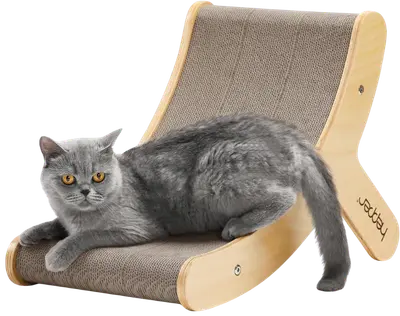
Best for: Cats that use angled surfaces and owners who value a reusable frame.
Avoid if: Low purchase and replacement cost matters most.
Product snapshot
- Three usable positions
- Frame: plywood with metal core
- Surface: replaceable B-flute cardboard
- Amazon size listing: about 24.5 × 14 × 6 inches
- Best for: cats that enjoy changing scratching angles
The Hepper Hi-Lo earns its place because it is genuinely adjustable rather than simply shaped at one fixed angle. The reusable frame can be set in three positions, allowing the same scratching surface to be presented differently.
Its plywood-and-metal structure also separates the permanent frame from the consumable cardboard. Replacement cardboard is sold separately, so the whole product does not need to be discarded when the scratching surface wears down.
That design comes at a cost. The complete unit is expensive compared with ordinary cardboard scratchers, and replacement cardboard was also relatively expensive during our research.
Independent feedback is thinner than for products such as SmartCat or PetFusion. We also found recurring complaints about cardboard debris, fast insert wear in some heavy-scratching homes, and occasional difficulty lining up the frame hardware during assembly.
For the right cat, the adjustable design is useful. For someone simply looking for an inexpensive scratching pad, it is hard to justify.
Pros
- Three positions
- Reusable frame
- Replacement cardboard available
- More furniture-like construction than disposable pads
Cons
- Expensive unit and refills
- Cardboard lifespan varies
- Smaller independent review base
- Some assembly-alignment complaints
How to Choose the Right Cat Scratcher
A good cat scratcher starts with your cat’s habits, not the product description. Before comparing materials or prices, look at where and how your cat already scratches.
Start With How Your Cat Already Scratches
Cats often give you useful clues about the type of scratcher they are most likely to use.
A cat that reaches up a sofa arm, doorframe, or wall usually needs a stable vertical surface with enough height to stretch comfortably. If that sounds familiar, a tall post such as the SmartCat style is a more natural starting point than a flat cardboard pad. You can compare more upright options in our best cat scratching posts guide.
Cats that work on rugs, doormats, or carpet are showing a stronger horizontal preference. A flat cardboard pad may make more sense than buying another post and hoping the cat changes its mind.
Other cats are less predictable. They may scratch the floor one day and the side of the sofa the next. An L-shaped or multi-angle scratcher can give those cats more than one usable position without filling the room with several products.
Preference can also change between cats in the same home. If one cat ignores a scratcher that another uses every day, that does not necessarily mean the product is poor quality.
Vertical vs Horizontal vs Angled Scratchers
A vertical cat scratcher is designed for cats that like to stand, reach upward, and pull downward while scratching. Height and stability matter more here than decorative features.
A horizontal cat scratcher sits flat or close to the floor. Cardboard pads are common because they are inexpensive and easy to replace, but horizontal scratchers can also be shaped as loungers or beds.
An angled cat scratcher falls somewhere between the two. It can suit cats that scratch sloped furniture, the edge of a sofa, or several different surfaces around the home.
If you are unsure, watch your cat for a few days before buying. Matching the orientation they already choose is usually more useful than trying to convince them to use a completely different style.
Sisal vs Cardboard: Which Material Fits Your Cat?
Sisal and cardboard are the two main materials represented in this roundup, and neither is automatically better.
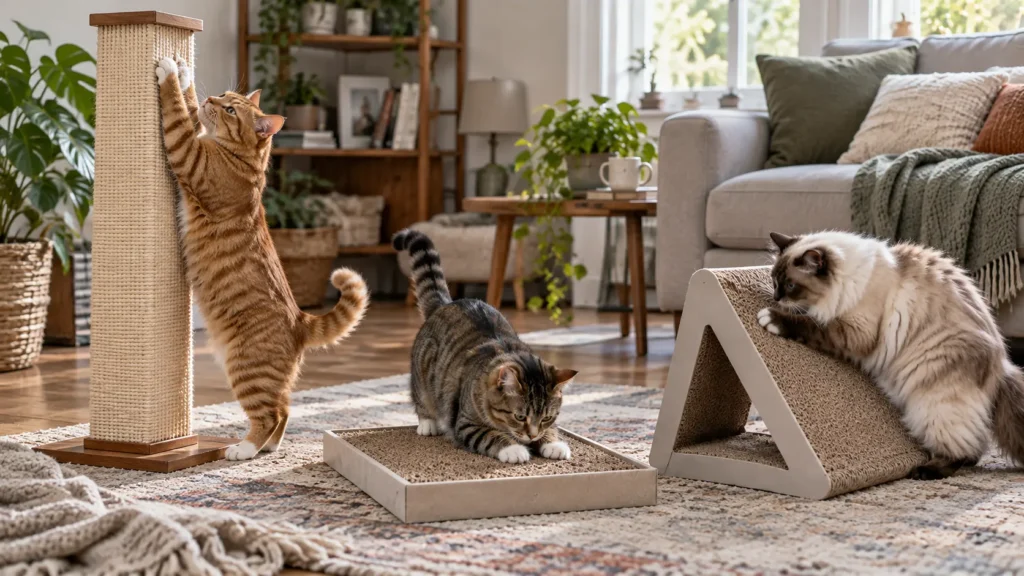
Woven sisal is a strong choice for upright scratchers. It can handle repeated clawing without producing the same loose paper debris as cardboard, and good woven surfaces may last a long time. That does not mean every cat likes the texture, though. Some cats walk straight past sisal and head for a cardboard box.
Corrugated cardboard comes in far more shapes. It can be flat, curved, L-shaped, triangular, or built into a lounging bed. Many cats readily use it, and inexpensive pads make it relatively easy to experiment with different orientations.
The compromise is wear. Heavy scratchers may tear through cardboard quickly, and small pieces around the scratcher are normal as the surface breaks down.
Carpet and jute scratchers also exist, but material alone should not drive the decision. Orientation, stability, and usable scratching area usually matter just as much.
Size Means Usable Scratching Area, Not Just Product Dimensions
A product can sound large on paper while providing surprisingly little surface where your cat can actually scratch.
For a vertical scratcher, look at the height of the usable scratching section rather than only the overall product height. A decorative top platform or thick base does not help a long-bodied cat extend farther.
For horizontal pads, length and width both matter. A narrow scratcher may work perfectly for scratching but feel cramped if your cat also likes to stretch out or lie on it.
The same issue applies to scratcher beds and lounges. A bowl may measure almost 19 inches across on the outside while providing less room inside.
This is why we did not automatically give a “large cat” label to products just because a retailer described them as Large or XL.
Stability, Base Size, and Mounting
A scratcher that moves every time a cat puts weight against it can be frustrating, especially for strong vertical scratchers.
For tall posts, a wide base and solid attachment between the post and base are important. Some cats scratch gently; others lean their full body into the surface or jump onto it.
Cardboard products have a different problem. Lightweight designs can slide across hardwood or tile even if they do not tip over. A non-slip mat can help when the built-in grip is not enough.
Wall-mounted scratchers can save floor space and provide a taller scratching surface, but installation quality matters. The mounting hardware needs to match the wall and the product’s instructions.
If you rent or simply do not want to drill into a wall, a freestanding post or floor scratcher may be easier to live with.
Durability, Refills, and Long-Term Cost
The lowest purchase price is not always the lowest long-term cost.
A cheap cardboard scratcher that needs frequent replacement can eventually cost more than a sturdier option. On the other hand, buying an expensive frame only makes sense if replacement scratching surfaces are reasonably priced and easy to find.
Before buying, check whether the scratcher is:
- reversible;
- fitted with replaceable inserts;
- designed so only one worn component can be replaced;
- or completely disposable once the scratching area is finished.
The Necoichi bowl, for example, has a replaceable center insert. Hepper sells replacement cardboard for the Hi-Lo frame. Frisco Double-Wide also has replacement pads.
Other products, including some premium scratchers, require replacing the entire unit once the usable surface is worn.
Cardboard debris should also be part of the cost calculation—not in dollars, but in maintenance. If scattered paper pieces bother you, a woven-sisal post may be easier to keep tidy.
Think About Age, Mobility, and Multi-Cat Use
Kittens may use almost any available surface, but that does not mean the smallest scratcher is automatically the best purchase. A larger, stable product can remain useful as they grow.
Adult cats usually give clearer clues about scratching orientation and material preference.
For older cats or cats with reduced mobility, easy access may matter more than maximum height. A low horizontal pad or gently angled surface may be easier to approach than something that encourages climbing or jumping.
In multi-cat homes, one scratcher may not satisfy every cat. Different cats can prefer different materials or locations, and competition over a favored scratching spot can make an additional scratcher useful.
Where Should You Put a Cat Scratcher?
Location can make almost as much difference as the product itself.
If your cat already scratches one end of the sofa, placing the new scratcher in another room may not solve much. Start close to the place your cat has already chosen.
Scratchers can also work well near sleeping areas. Many cats stretch and scratch after getting up, so having an appropriate surface nearby makes it easier for them to use it naturally.
For a cat targeting furniture, place the scratcher close enough to compete with that surface rather than hiding it in a corner because it looks neater there.
Once your cat is using it regularly, you may be able to move it gradually if needed.
Do not force your cat’s paws onto a new scratcher. Instead, make the scratcher easy to find and reward voluntary interest. Catnip can attract some cats, but not every cat responds to it.
In a multi-cat home, consider whether one scratching location creates unnecessary competition. Two well-placed scratchers can be more useful than one expensive product in the wrong place.
Cat Scratcher Safety and Quality Checklist
A scratcher is supposed to take repeated clawing, pulling, and sometimes climbing, so check it regularly rather than treating it as permanent furniture.
For freestanding posts, make sure the base sits flat and the post remains tightly attached. Re-tighten hardware if the manufacturer allows it and you notice movement.
For cardboard scratchers, some shedding is expected. The concern is when large pieces begin separating, loose components appear, or the structure becomes too damaged to stay stable.
Inspect hanging toys and balls as they wear. Small detached pieces can become a chewing or swallowing hazard, particularly for cats that chew toys rather than simply bat at them.
Keep paper and cardboard products dry. Moisture can weaken the structure, and products such as the Necoichi bowl are not designed like washable plastic or fabric beds.
If you use a wall-mounted scratcher, follow the mounting instructions and check that it remains securely attached.
On smooth flooring, watch for sliding. A scratcher may feel stable when you push it with your hand but still shift when a cat runs into it or scratches aggressively.
Replace the scratcher when the structure becomes unstable, important hardware is damaged, large loose pieces develop, or there is no longer enough useful scratching surface.
No scratcher is indestructible. How quickly one wears out depends on its construction, material, the number of cats using it, and how intensely they scratch.
Cat Scratcher FAQs
What Is a Cat Scratcher?
A cat scratcher is any product designed to give cats an appropriate surface for scratching. The term includes traditional scratching posts, flat pads, cardboard boards, angled scratchers, wall-mounted models, scratcher beds, lounges, and other designs.
That is why a cat scratcher is broader than a cat scratching post: a post is only one format.
What Type of Cat Scratcher Is Best?
The best type is the one that matches how your cat already likes to scratch.
Cats that reach upward often do well with a tall vertical post. Cats that work on rugs or floors may prefer a horizontal pad. Cats that use several orientations may respond better to an L-shaped or angled design.
Material preference matters too. A cat can prefer cardboard even when a sisal product is better built.
Is a Vertical or Horizontal Cat Scratcher Better?
Neither is universally better.
Vertical scratchers are a natural fit for cats that stretch upward against furniture or walls. Horizontal scratchers better match cats that scratch rugs, carpet, or the floor.
Some cats use both, which is why multi-position products can make sense when their preference is mixed.
Is Sisal or Cardboard Better for Cats?
Sisal generally offers better long-term durability and creates less paper debris, which makes it especially useful on upright posts.
Cardboard offers more shapes, often costs less, and is appealing to many cats. The downside is that it wears down and sheds pieces during use.
Choose based on your cat’s preferred texture and orientation rather than assuming one material is always superior.
How Tall Should a Cat Scratching Post Be?
A vertical post should provide enough usable scratching height for your cat to stretch comfortably without immediately reaching the top.
For many adult cats, taller posts around 30 inches or more provide considerably more stretching room than short kitten-style posts.
Long-bodied and larger cats may need even more usable height. If that is your main concern, compare the actual scratching surface rather than relying only on labels such as “Large.”
How Many Cat Scratchers Does a Cat Need?
There is no fixed number that works for every home.
One well-placed scratcher may be enough for some cats. Others use different surfaces in different parts of the house.
Multiple scratchers can make more sense in multi-cat homes, larger homes, or when a cat has clear vertical and horizontal scratching preferences.
Placement is usually more important than buying several scratchers at random.
How Do I Get My Cat to Use a New Scratcher?
Start by placing it close to a surface your cat already scratches or near a favorite sleeping area.
Make the scratcher accessible and stable. Some cats investigate immediately; others need time.
You can reward your cat for approaching or using it, and catnip may help with cats that respond to it. Avoid physically dragging your cat’s paws across the surface, which can make the new scratcher less appealing rather than more.
When Should I Replace a Cat Scratcher?
Replace it when normal wear turns into a functional or safety problem.
That can mean a post becoming unstable, hardware loosening or breaking, cardboard separating into large loose pieces, or most of the effective scratching surface being worn away.
A scratched-up appearance alone does not necessarily mean the product is finished. Many cats continue using surfaces that look rough but remain stable and functional.
Which Cat Scratcher Is Right for Your Cat?
Choosing a cat scratcher becomes much easier once you stop looking for one product that is supposedly best for every cat.
Start with scratching style. A cat that stretches upward needs a different setup from one that scratches rugs. Then compare material, usable size, stability, replacement options, and the amount of mess or maintenance you are comfortable with.
For dedicated vertical scratching, a tall woven-sisal post such as the SmartCat Ultimate is the strongest fit in this roundup. For basic horizontal scratching, a simple cardboard pad may be all your cat needs. Mixed scratchers can benefit from L-shaped or multi-angle designs instead.
Measure the available space, check the exact model and dimensions before ordering, and choose the cat scratcher that most closely matches the behavior your cat is already showing.