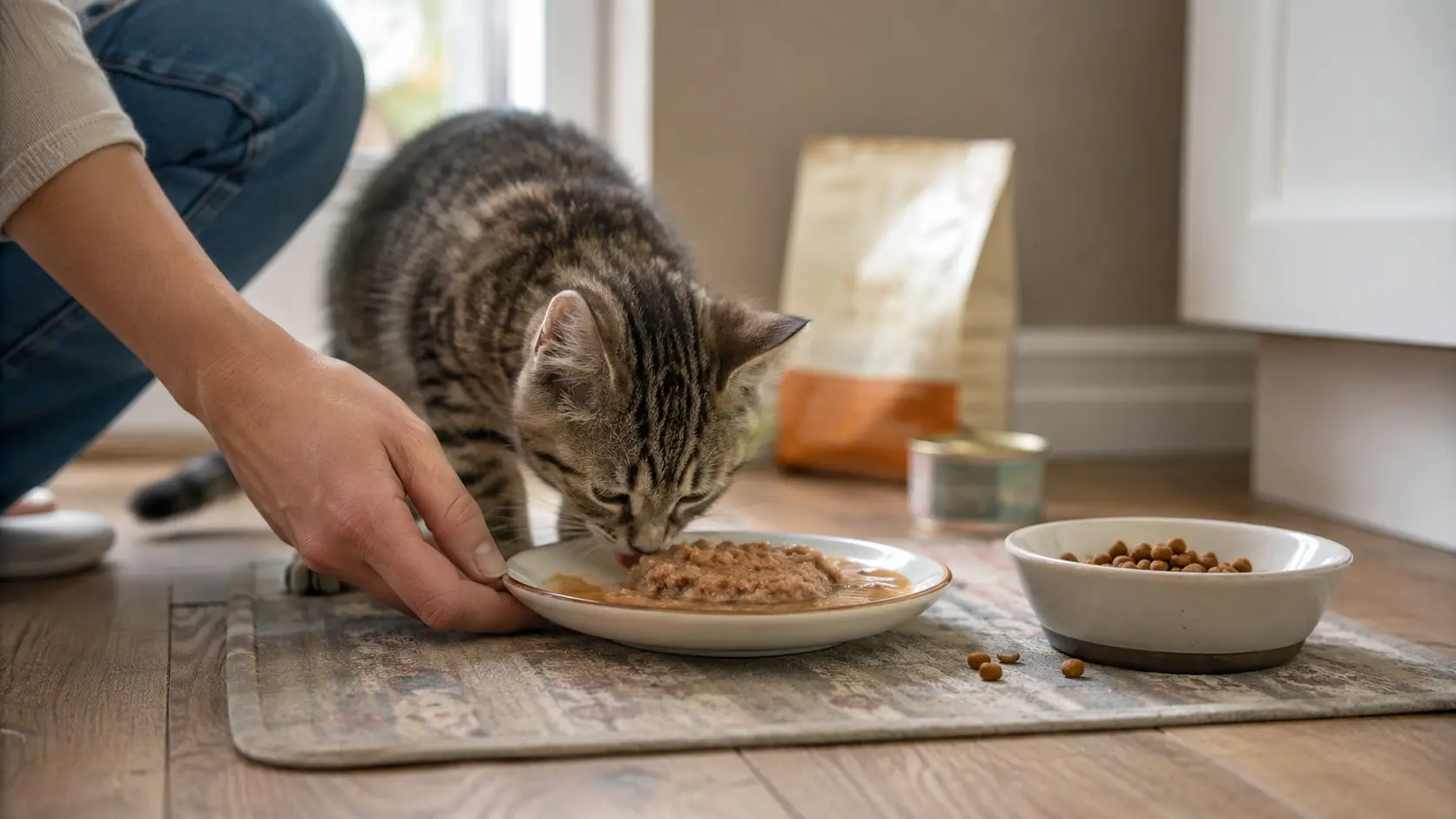
The best food for kittens should be clearly formulated for growth, provide enough calories for a developing body, and fit the kitten’s age, texture preferences, and daily feeding routine.
Wet food supplies more moisture and is often easier for young kittens to manage. Dry food is convenient, calorie-dense, and usually less expensive per meal. Many owners use both.
Our leading wet choice is the Purina Pro Plan Development Kitten Favorites Variety Pack, while Hill’s Science Diet Kitten Chicken Recipe offers the strongest overall balance among the dry foods we researched.
Kittens that are orphaned, underweight, unwell, or experiencing persistent vomiting or diarrhea need veterinary guidance rather than a simple product switch.
Affiliate disclosure: LumaPaw may earn a commission when you purchase through links on this page, at no additional cost to you. Our recommendations are based on product information, retailer listings, and customer-feedback patterns—not personal testing.
Our Top Food for Kittens at a Glance
Purina Pro Plan Development Kitten Favorites
Best Overall Wet Kitten Food
Three kitten recipes with approximately 99–113 calories per can. The pack contains two pâtés and one flaked recipe.
Main limitation: Many kittens enjoy the pâtés but reject the firmer whitefish pieces.
Hill’s Science Diet Kitten Chicken Recipe
Best Overall Dry Kitten Food
A calorie-dense dry formula with 33% minimum protein, 19% minimum fat, small kibble, and added DHA.
Main limitation: It costs considerably more per pound than the value-oriented dry foods.
Fancy Feast Kitten Classic Pâté Variety Pack
Best Budget Wet Kitten Food
Four soft pâté recipes at roughly half the observed cost per ounce of Purina Pro Plan.
Main limitation: The multi-protein formulas contain poultry, fish, milk, and egg.
Purina ONE +Plus Healthy Kitten
Best Value Dry Kitten Food
Complete growth nutrition, large bag options, and 40% minimum crude protein at a reasonable cost per pound.
Main limitation: Some of that protein comes from concentrated corn and soy ingredients.
Royal Canin Kitten Thin Slices in Gravy
Best Gravy-Style Food for Kittens 4–12 Months
Small pieces in gravy provide a useful alternative for older kittens that refuse smooth pâté.
Main limitation: It is expensive and provides fewer calories per can than the other wet picks.
How We Chose These Kitten Foods
High ratings were not enough to earn a place in this guide. We compared the products by looking at:
- Whether the food is intended for kitten growth
- Calories per can or cup
- Protein, fat, DHA, taurine, calcium, and phosphorus where available
- Wet or dry format
- Texture and kibble size
- Main proteins and likely allergens
- Price per ounce or pound
- Retailer availability
- Repeated positive feedback
- Common complaints and product limitations
We did not assume that “natural,” “premium,” “grain-free,” or a high protein percentage automatically makes one formula better.
We also separated product complaints from delivery problems. A dented can or torn bag matters, but it does not necessarily tell us whether the food itself is well formulated.
Prices and package sizes can change, so compare the current cost per ounce or pound before ordering.
The Best Food for Kittens

Purina Pro Plan Development Kitten Favorites — Best Overall Wet Kitten Food
Best for: Kittens that enjoy wet food and owners who want several flavors in one case.
Avoid if: Your kitten needs a limited-ingredient food or reacts to chicken, fish, wheat, or soy.
Common complaints: Uneaten whitefish cans, loose stool, dented cans, and occasional concerns about consistency changes.
Honest buying note: This is the strongest wet option overall, but choose a single-flavor pâté instead if your kitten consistently refuses chunks.
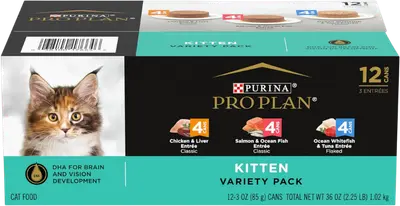
This variety pack contains Chicken & Liver Pâté, Salmon & Ocean Fish Pâté, and Flaked Ocean Whitefish & Tuna.
The recipes provide approximately 99–113 calories per three-ounce can, with 12–13% minimum crude protein and 4.5–6% minimum fat. They also include DHA and taurine for kitten growth.
The higher calorie density is useful for growing kittens that need substantial nutrition in a relatively small serving. The three recipes also let owners test more than one flavor without buying separate cases.
The limitation is texture consistency. The chicken and salmon recipes are soft pâtés, while the whitefish formula contains firmer pieces in liquid. Rejection of that third recipe is one of the most repeated complaints.
Pros
- Kitten-specific wet recipes
- Higher calories than the other wet picks
- Two pâtés plus one flaked formula
- DHA, taurine, vitamins, and minerals
- Strong retailer feedback
Cons
- Expensive per ounce
- Several proteins and potential allergens
- The whitefish texture is frequently rejected
- Some digestive-tolerance complaints

Hill’s Science Diet Kitten Chicken Recipe — Best Overall Dry Kitten Food
Best for: Owners seeking a premium mainstream dry food with high calorie density and small kibble.
Avoid if: Your kitten needs to avoid chicken, egg, or wheat.
Common complaints: Food refusal, digestive upset after reformulation, price, and kibble that may be too small for fast eaters.
Honest buying note: Start with the 3.5-pound bag. The larger bags cost less per pound, but they are poor value if the kitten dislikes the formula.
Before buying, check that the current package states the food is complete and balanced for kitten growth.
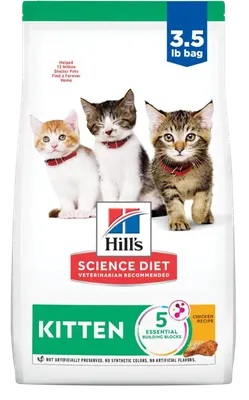
Hill’s provides 33% minimum protein, 19% minimum fat, 0.04% minimum DHA, and 555 calories per cup.
That calorie density can help growing kittens meet their energy needs without requiring a large volume of kibble. The pieces are also noticeably small, which many owners find manageable for kitten-sized mouths.
The formula starts with chicken and also contains brown rice, wheat gluten, chicken fat, barley, chicken meal, oats, and egg. It is not a simple formula for investigating food sensitivities.
Customer feedback is particularly strong for acceptance, stool quality, and the small kibble. However, some kittens refuse the current formula, and a few owners say the pieces are so small that their kittens swallow them without chewing.
Pros
- 555 calories per cup
- Balanced protein and fat levels
- DHA from fish oil
- Small kitten-sized pieces
- Several bag sizes
Cons
- High price per pound
- Low moisture, as expected from kibble
- Contains several grains and common allergens
- Formula-change complaints appear in reviews

Fancy Feast Kitten Classic Pâté Variety Pack — Best Budget Wet Kitten Food
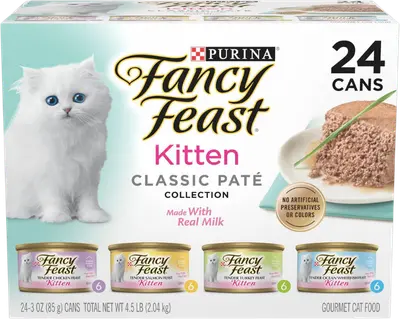
Best for: Budget-conscious owners, foster homes, and households feeding several kittens.
Avoid if: Your kitten needs to avoid poultry, fish, milk, or egg.
Common complaints: Dented cans, strong odor, rejection of individual flavors, and occasional vomiting or digestive intolerance.
Honest buying note: Fancy Feast is the practical budget winner, but check every can before feeding. Discard cans that are leaking, swollen, or badly damaged around the seams.
Fancy Feast offers four pâté recipes: chicken, turkey, salmon, and ocean whitefish.
The foods provide approximately 90–94 calories per can, 11–12% minimum protein, and 4–5% minimum fat. Retailer information describes them as complete and balanced for growing kittens.
Its clearest advantage is cost. The observed price was about $0.32 per ounce, compared with roughly $0.66 per ounce for Purina Pro Plan.
All four recipes have a consistent pâté texture. That makes the pack more predictable for kittens that struggle with chunks or refuse mixed-texture variety packs.
Pros
- Excellent cost per ounce
- Four flavors
- Consistent soft pâté
- Complete kitten-focused nutrition
- Wide retailer availability
Cons
- Multiple animal proteins
- Contains milk and egg
- Strong smell, particularly in fish recipes
- Not suitable for an elimination diet

Purina ONE +Plus Healthy Kitten — Best Value Dry Kitten Food
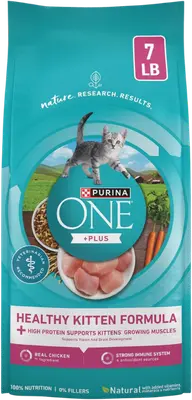
Best for: Owners seeking complete dry kitten nutrition at a reasonable ongoing cost.
Avoid if: Your kitten needs a chicken-free, corn-free, soy-free, or limited-ingredient formula.
Common complaints: Strong-smelling stool, food refusal, loose stool, torn bags, and dissatisfaction with corn or soy ingredients.
Honest buying note: This is a better value choice than Hill’s, but the ingredient profile is less suitable for owners prioritizing animal-sourced protein or a simpler formula.
Purina ONE combines a lower cost per pound with 40% minimum crude protein, 18% minimum fat, 518 calories per cup, DHA, taurine, calcium, and phosphorus.
Chicken is the first ingredient, but the formula also uses chicken by-product meal, corn protein meal, soybean meal, soy protein concentrate, and soy protein isolate.
That distinction matters. The 40% figure refers to total crude protein and should not be described as 40% animal protein.
The product is labeled for kitten growth and for reproducing females during gestation and lactation. Large bag sizes make it more economical for foster homes or multi-kitten households.
Pros
- Strong value per pound
- 40% minimum crude protein
- 518 calories per cup
- Large bag options
- Extensive customer feedback
Cons
- Corn and soy contribute to the protein total
- Complex ingredient list
- Low moisture
- Not appropriate for several common sensitivities

Royal Canin Kitten Thin Slices in Gravy — Best Gravy-Style Food for Kittens 4–12 Months
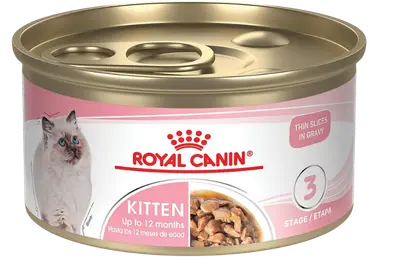
Best for: Kittens approximately four to 12 months old that prefer gravy and small pieces.
Avoid if: Your kitten is newly weaning or needs to avoid chicken, pork, or wheat.
Common complaints: High price, gravy eaten without the pieces, diarrhea or vomiting, formula changes, and shipping damage.
Honest buying note: This is not the strongest value or highest-calorie wet food. Its reason for inclusion is texture, so try a smaller pack before committing to a full case.
Royal Canin is the most specialized wet choice in the lineup. Instead of pâté, it provides small pieces in gravy for kittens in the later growth stage.
The formula contains 76 calories per three-ounce can, 10.5% minimum protein, 2.5% minimum fat, and up to 80.2% moisture.
Chicken, pork liver, and chicken liver are prominent ingredients. It also contains rice flour, wheat gluten, pork plasma, fish oil, and yeast.
The soft slices give it a meaningful reason for inclusion. Some kittens refuse pâté but readily eat gravy-based foods. Others lick away the gravy and leave the pieces, so the texture is not universally successful.
Pros
- Distinctive gravy texture
- High moisture
- Pieces sized for growing kittens
- Strong palatability feedback
- Detailed age-based feeding guide
Cons
- Highest wet-food cost
- Only 76 calories per can
- Several animal proteins and grains
- Mixed digestive feedback
Why Kittens Need Kitten-Specific Food
Kittens are building bone, muscle, organs, and nervous-system tissue while remaining highly active. Their nutritional needs are different from those of adult cats maintaining a stable body.
A suitable kitten-specific food should provide an appropriate balance of energy, protein, fat, amino acids, vitamins, and minerals for growth.
Veterinary nutrition guidance also recommends choosing a food with a nutritional adequacy statement that specifically covers growth or all life stages.
Useful nutrients to look for include:
- Taurine
- DHA
- Animal and total protein
- Fat
- Calcium and phosphorus
- Adequate calories
- Dietary moisture
An accidental serving of adult cat food is different from using an adult-maintenance formula as the regular diet. A kitten’s main food should be appropriate for growth.
How to Choose Complete and Balanced Kitten Food
Read the nutritional adequacy statement first
The front of the package can be misleading. The nutritional adequacy statement is one of the most useful parts of the label because it tells you which life stage the food is intended for. Look for wording confirming that the food is complete and balanced for:
- Growth of kittens
- Gestation and lactation
- All life stages, including growth
A topper, mixer, broth, or treat is not the same as a complete and balanced kitten food.
Compare calories, not just serving size
A three-ounce can is not nutritionally equivalent to a cup of dry food.
Among the products reviewed:
- Royal Canin provides 76 calories per can.
- Fancy Feast provides approximately 90–94 calories per can.
- Purina Pro Plan provides approximately 99–113 calories per can.
- Purina ONE provides 518 calories per cup.
- Hill’s provides 555 calories per cup.
Use the manufacturer’s feeding guide as a starting point, then adjust according to age, activity, body condition, and veterinary advice.
Read protein claims carefully
A high crude-protein number does not show how much comes from animal ingredients or how well the entire formula suits a kitten.
For example, Purina ONE lists 40% protein, but corn and soy concentrates contribute to that total. This does not make the food automatically poor, but it adds necessary context.
Identify common allergens
The foods in this roundup use combinations of:
- Chicken
- Turkey
- Fish
- Pork
- Egg
- Milk
- Wheat
- Corn
- Soy
A multi-protein variety pack may be convenient, but it is not ideal when trying to identify a suspected food reaction.
For a broader example of how we assess ingredients, formula differences, and brand claims, see our Farmina cat food review.
Wet vs Dry Food for Kittens
Wet food supplies more dietary moisture and is usually softer for young mouths. Its disadvantages include higher cost, shorter storage after opening, and the need to refrigerate leftovers.
Dry food is easier to measure and store. It is also more calorie-dense and usually costs less per feeding. However, it supplies little moisture, and kibble should not be treated as a replacement for dental care. If dry food fits your feeding routine, compare our dry kitten food picks for more kitten-specific options.
Mixed feeding can work well when portions are measured carefully. Owners who want to compare kitten-specific canned formulas can see our wet kitten food guide.
What Should Kittens Eat at Different Ages?
Birth to around four weeks
Cow’s milk is not an appropriate substitute; our guide to whether kittens can drink milk explains the difference between cow’s milk, kitten milk replacer, and weaning.
Cow’s milk is not an appropriate substitute.
Weaning kittens
Weaning often begins with soft, fresh portions of appropriate kitten food. Smooth pâté or properly moistened kitten kibble may be easier to manage than large chunks.
Introduce solid food gradually and monitor appetite and stool quality.
For a broader look at suitable foods, temporary options, treats, and foods to avoid, see our guide to what kittens can eat.
Two to six months
Kittens in this stage usually need several measured meals each day. Use food intended for growth and adjust portions as body weight and activity change.
Six to 12 months
Continue feeding an appropriate growth formula while monitoring body condition. Large breeds and kittens with unusual growth patterns may need individualized veterinary guidance.
How Much and How Often Should You Feed a Kitten?
Package instructions provide a starting point, not a perfect answer for every kitten.
Needs vary with:
- Age
- Current weight
- Expected adult size
- Activity
- Neuter status
- Body condition
- Wet, dry, or mixed feeding
Younger kittens generally need smaller, more frequent meals. VCA notes that most growing kittens do well when their daily food is divided into three to four small meals or more, although the right amount still depends on the food, growth rate, and individual kitten. Measured meals also make it easier to notice changes in appetite and prevent accidental overfeeding.
Contact a veterinarian when a kitten is not gaining appropriately, refuses food, loses weight, or develops persistent vomiting or diarrhea.
How often should kittens eat?
For many young kittens, several small meals work better than one or two large meals. Kittens under about four months are commonly fed three to four times a day, while older kittens can gradually move toward fewer measured meals as they grow.
Use the feeding directions on your kitten’s current food as a starting point, because calorie density varies between formulas. Adjust portions based on growth and body condition rather than feeding every kitten the same amount.
Orphaned, underweight, unwell, or poorly growing kittens may need a different schedule, so ask a veterinarian for individual feeding advice.
Kitten Food Safety and Quality Checklist
- Confirm that the food is appropriate for growth.
- Distinguish complete meals from toppers and treats.
- Check calories per can, cup, or pouch.
- Identify major proteins and possible allergens.
- Introduce new food gradually.
- Keep clean water available.
- Refrigerate opened wet food as directed.
- Discard leaking, swollen, or badly damaged cans.
- Keep dry food in its original bag inside a sealed container.
- Monitor appetite, stool, weight, and body condition.
- Avoid adding supplements unless a veterinarian recommends them.
Treats should remain a small part of the overall diet and should not replace kitten food. Our guide to healthy cat treats covers treat options separately.
How to Change Your Kitten’s Food
A gradual transition over roughly seven to ten days is usually easier than an overnight switch.
Start with a small amount of the new food mixed with the current diet. Increase the new portion gradually while reducing the old food.
Change one major variable at a time. Switching the brand, format, treats, and feeding quantity simultaneously makes it difficult to identify what caused a problem.
Stop the transition and seek veterinary advice if the kitten develops persistent digestive symptoms, weakness, dehydration, or refuses to eat.
Frequently Asked Questions About Food for Kittens
What is the best food for kittens?
The best option is a food labeled complete and balanced for kitten growth that fits the kitten’s age, calorie needs, texture preference, and tolerance. Purina Pro Plan leads our wet picks, while Hill’s Science Diet leads the dry options.
What is the best wet cat food for kittens?
Purina Pro Plan Development Kitten Favorites is our strongest overall wet choice because of its calorie density, kitten-focused nutrition, and recipe variety. Fancy Feast Kitten Pâté is the better budget choice.
What is the best dry cat food for kittens?
Hill’s Science Diet Kitten Chicken Recipe offers the strongest overall balance among the dry foods compared. Purina ONE is a less expensive alternative with larger bag options.
What is the best canned cat food for kittens on a budget?
Fancy Feast Kitten Classic Pâté provides four flavors, consistent texture, and complete kitten nutrition at the lowest observed wet-food cost in the group.
Can kittens eat adult cat food?
An occasional serving is unlikely to replace the overall diet, but adult-maintenance food should not normally be a kitten’s main food. Growing kittens need nutrition formulated for growth.
Is Sheba cat food good for kittens?
Check the exact product label. A Sheba recipe is suitable as a regular kitten meal only when it states that it is complete and balanced for growth or an appropriate all-life-stages profile. Adult-maintenance products and complementary foods should not be used as the sole kitten diet.
When can kittens eat dry food?
Kittens may begin exploring appropriately softened solid food during weaning. The timing and texture depend on development, so very young or orphaned kittens should be managed with veterinary or experienced rescue guidance.
Do kittens need grain-free food?
Most kittens do not automatically need a grain-free diet. Growth suitability, calories, nutrient balance, manufacturer quality controls, and individual tolerance matter more than a grain-free marketing claim.
If you specifically need to compare formulas without grains, our grain-free kitten food guide looks at those options without assuming grain-free is nutritionally superior.
Final Verdict
The right food for kittens depends on more than a high rating or attractive ingredient list.
Purina Pro Plan Development Kitten Favorites is our leading wet choice because of its calorie density and kitten-focused formulation. Hill’s Science Diet Kitten Chicken Recipe is the strongest dry option, provided the current bag confirms complete-and-balanced nutrition for growth.
For lower-cost feeding, choose Fancy Feast Kitten Pâté for wet food or Purina ONE +Plus Healthy Kitten for dry food.
Whichever formula you choose, verify the growth statement, transition gradually, measure portions, and involve a veterinarian when a kitten’s growth, appetite, or digestion does not seem normal.