Yes, kittens can drink milk—but the type of milk and the kitten’s age matter. Nursing kittens normally drink their mother’s milk. If a kitten is too young to be weaned and cannot nurse, a commercial kitten milk replacer is the appropriate substitute. Regular cow’s milk should not be used as a replacement meal. Once kittens are weaned, fresh water and nutritionally appropriate kitten food should become the foundation of their diet.
That distinction matters because “milk” can mean very different things: a mother cat’s milk, kitten formula, cow’s milk, goat’s milk, or a supplemental drink marketed as cat milk. They are not interchangeable.
Can Kittens Drink Milk? The Short Answer
What a kitten should drink depends largely on its stage of development:
- Nursing kitten: Mother’s milk is the normal source of nutrition.
- Unweaned orphaned kitten: Use a commercial milk replacer formulated for kittens when maternal milk is unavailable.
- Weaning or fully weaned kitten: Gradually move toward kitten food and fresh water rather than introducing regular milk.
VCA recommends commercial kitten milk replacers for orphaned kittens because they are more suitable than cow’s milk or homemade mixtures. For older, weaned kittens, food formulated for growth should provide their main nutrition.
Regular pasteurized cow’s milk is better described as nutritionally inappropriate for replacing kitten formula, rather than as a poison. Digestive tolerance also varies from cat to cat.
Can Kittens Drink Cow’s Milk or Regular Milk?
If by “milk” you mean the regular cow’s milk in the refrigerator, it should not be used to feed an unweaned kitten.
There are two separate reasons for this: cow’s milk does not match the nutritional composition of a mother cat’s milk, and lactose can become difficult for some cats to digest.
Cow’s Milk Does Not Match a Mother Cat’s Milk
A young kitten has demanding nutritional needs. Simply providing calories and liquid is not enough.
According to VCA, compared with a mother cat’s milk, cow’s milk is lower in protein, calories, fat, taurine and some minerals while containing more carbohydrate, including lactose. That makes it a poor substitute for either maternal milk or properly formulated kitten milk replacer.
Changing the type of ordinary cow’s milk does not solve this problem. Whole milk has more fat than 2% milk, for example, but neither recreates the overall nutrient balance a nursing kitten needs.
Lactose Can Also Cause Digestive Problems
Lactose is the sugar found naturally in milk. It is broken down by the intestinal enzyme lactase.
The common statement that “all kittens are lactose intolerant” is too simple. A classic feline nutrition study found that intestinal lactase activity decreased with age in kittens, and it also found considerable individual variation in how cats responded to lactose. Lactose-containing diets caused diarrhea in some cats, but not every cat reacted identically.
So cow’s milk should not be rejected solely because “kittens cannot digest lactose.” The stronger reason is that it is not an appropriate replacement diet, with digestive intolerance being an additional concern.
What Type of Milk Can Kittens Drink?
For a young kitten, the safest answer depends on whether its mother is available.
Mother’s Milk
A nursing kitten normally gets its milk directly from the mother cat, or queen. Her milk supplies nutrition suited to early growth, and the first milk produced after birth also provides important immune protection.
A healthy kitten nursing normally does not need household milk added to its diet.
Kitten Milk Replacer
If the kitten is orphaned, rejected, or otherwise unable to nurse, a commercial kitten milk replacer is the usual substitute.
That does not mean formula is identical to queen’s milk. It means it is specifically formulated for kittens and is a much more appropriate option than improvising with cow’s milk or homemade mixtures. VCA recommends choosing a replacer intended to meet the nutritional requirements of growing kittens and following its preparation and feeding directions.
Kitten Milk Replacer Is Not the Same as “Cat Milk”
Be careful with products simply marketed as “cat milk,” “milk treats,” or supplemental drinks.
Those descriptions do not automatically mean the product is designed to serve as the sole milk source for an unweaned kitten. FDA guidance distinguishes foods intended as complete and balanced diets from treats and supplements that are not meant to provide all required nutrition.
If you are caring for an orphaned kitten, check that the product is specifically intended as a kitten milk replacer, then follow its label directions.
What Milk Should Kittens Have at Different Ages?
Using age as a guide is more useful than applying one milk rule to every kitten.
Unweaned Kittens
Very young kittens normally depend on maternal milk. When maternal milk is unavailable, kitten milk replacer should provide their milk nutrition rather than ordinary dairy products.
This is also the stage when feeding mistakes carry more risk because neonatal kittens have limited energy reserves and depend heavily on adequate, regular nutrition.
Kittens Starting to Wean
Weaning is gradual.
VCA says the weaning process may begin at about 3 to 4 weeks, while practical kitten-care protocols commonly begin introducing kitten food at around four weeks. The transition continues over the following weeks rather than happening on one exact birthday.
As a kitten begins eating solids, the focus shifts toward complete-and-balanced food for kitten growth while formula is gradually reduced.
Fully Weaned Kittens
By the time a kitten is fully weaned, milk is no longer required as the main source of nutrition.
Fresh water should be available, and the main diet should be appropriate for growth. FDA notes that growing kittens have different nutritional requirements from adult cats, which is why the life-stage adequacy of the finished food matters.
There is no special kitten age at which ordinary cow’s milk suddenly becomes necessary.
My Kitten Drank Cow’s Milk — What Should I Do?
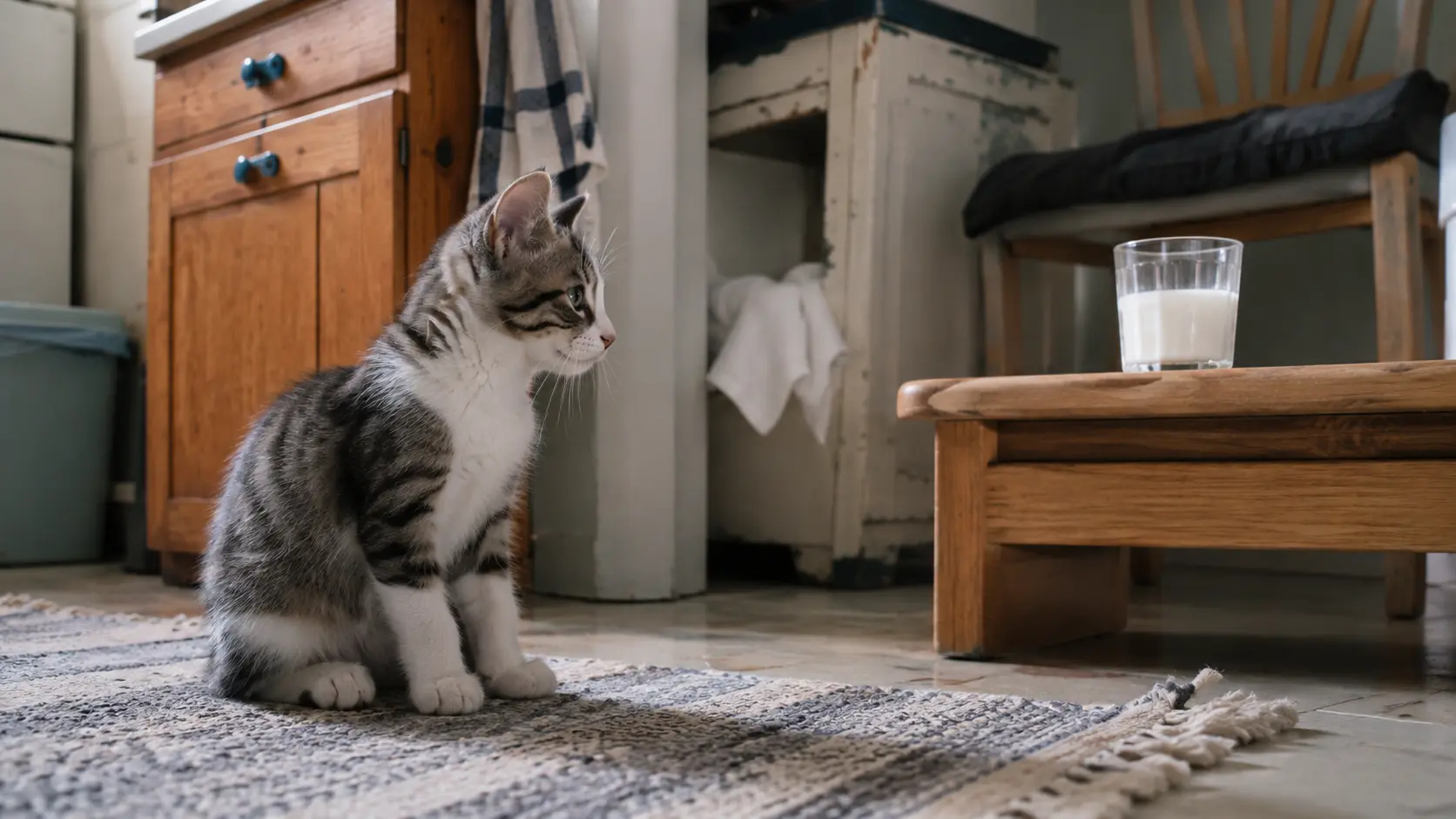
Finding your kitten with its face in a glass of milk is different from intentionally feeding cow’s milk as its main diet.
If milk has already been consumed, respond based on the kitten’s age and condition rather than assuming that every exposure will cause the same reaction.
Stop Offering More Cow’s Milk
Do not continue using regular milk as a meal or as a substitute for kitten formula.
Consider How Young the Kitten Is
A fully weaned kitten that took a few laps presents a different situation from a newborn or unweaned kitten that has been receiving cow’s milk instead of appropriate nutrition.
For a very young orphan, getting the feeding plan right is more urgent because neonatal kittens have small energy reserves and can deteriorate quickly when they are not feeding adequately.
Watch for Digestive or General Signs
Monitor for changes such as:
- loose stool or diarrhea
- repeated vomiting or regurgitation
- unusual lethargy or weakness
- refusing food or formula
- a general worsening in condition
Feline research shows individual variation in response to lactose, so there is no evidence-based universal number of teaspoons that can be described as “safe” for every kitten.
Return to Age-Appropriate Feeding
For a weaned kitten, return to its normal kitten diet and fresh water.
For an unweaned kitten without access to its mother, use an appropriate kitten milk replacer and seek veterinary guidance if you are unsure about feeding.
If milk is only one of several household foods you are wondering about, see our guide to what kittens can safely eat.
Get Help if the Kitten Becomes Unwell
Persistent diarrhea, repeated vomiting, weakness, poor feeding or other concerning changes should not automatically be blamed on lactose. Young kittens can develop similar signs for many reasons, and veterinary assessment may be needed.
What About Goat’s Milk, Lactose-Free Milk and Plant Milks?
Replacing cow’s milk with another household drink does not automatically make it suitable for kitten growth.
Goat’s Milk
Ordinary goat’s milk should not be used instead of queen’s milk or a properly formulated kitten milk replacer.
University of Wisconsin Shelter Medicine specifically advises that goat and cow milk are not suitable milk replacements for puppies or kittens.
That is different from saying pasteurized goat’s milk is inherently poisonous. The key issue here is that it does not provide an appropriately formulated neonatal diet.
Lactose-Free Cow’s Milk
Removing lactose addresses only one part of the problem.
Cow’s milk still differs from feline milk in its overall nutrient profile. A lactose-free version therefore should not be treated as a substitute for kitten milk replacer simply because the lactose has been removed.
Almond, Oat and Soy Milk
Human plant-based beverages are also not appropriate kitten formulas.
They are not formulated to provide the complete neonatal nutrition expected from maternal milk or a kitten-specific milk replacer. The concern does not need to be exaggerated into a claim that every plant milk is poisonous—the practical point is that these drinks should not replace appropriate kitten nutrition.
Raw or Unpasteurized Milk
Raw animal milk deserves a stronger warning.
FDA says investigations have linked H5N1 transmission in cats with food exposures, most often involving unpasteurized milk or uncooked meat, and notes that cats can develop severe or fatal disease.
A 2025 CDC Emerging Infectious Diseases report described three domestic cats that consumed H5N1-contaminated raw milk; two died and infection was confirmed in the surviving cat.
For that reason, do not give kittens raw or unpasteurized animal milk.
When Should You Contact a Veterinarian?
Young kittens have less room for prolonged feeding problems than healthy adult cats.
Contact a veterinarian promptly if a kitten develops:
- persistent or repeated diarrhea
- repeated vomiting or regurgitation
- marked lethargy or weakness
- difficulty nursing or refusal to feed
- poor or absent weight gain
- signs of significant dehydration
- unusual coldness
- difficulty breathing
Merck lists decreased weight gain, failure to suckle, persistent diarrhea, hypothermia, breathing difficulty, regurgitation and vomiting among signs that can accompany serious illness in neonates. These signs can have many causes, so they should not be assumed to be a simple reaction to milk.
Bottle feeding also needs care. VCA advises holding a kitten horizontally with the head in a neutral position and warns that formula flowing too quickly from a nipple can be aspirated into the airway, potentially causing pneumonia or worse. If a kitten is too weak to suckle normally, get professional help rather than force-feeding or attempting tube feeding without training.
Why Can Kitten Food Contain Milk Ingredients If Cow’s Milk Isn’t Recommended?
A milk-derived ingredient inside a formulated kitten food is not the same as replacing a meal with a bowl of cow’s milk.
What matters is the nutritional adequacy of the finished diet, not whether one ingredient happens to come from milk. FDA explains that a food labeled complete and balanced must meet an applicable nutrient profile or pass an appropriate feeding trial, and growing kittens have their own life-stage nutritional requirements.
So seeing a dairy-derived ingredient on a label does not mean ordinary milk is an equivalent meal. When choosing food for a growing kitten, consider the finished food and its nutritional adequacy statement rather than judging it from one ingredient alone.
Frequently Asked Questions
Can Kittens Drink Whole Milk?
Whole cow’s milk is still cow’s milk. The extra fat compared with reduced-fat milk does not correct its overall nutritional mismatch with queen’s milk. It should not replace maternal milk or a commercial kitten milk replacer for an unweaned kitten.
Can Kittens Drink 2 Percent Milk?
Switching from whole milk to 2% milk does not make cow’s milk an appropriate kitten formula. The issue involves the overall nutrient profile, not simply the percentage of milk fat.
When Can Kittens Drink Cow’s Milk?
There is no recommended age at which kittens need to start drinking regular cow’s milk. Once they are weaned, fresh water and nutritionally appropriate food for growth should provide their routine nutrition.
Is Cat Milk the Same as Kitten Milk Replacer?
Not necessarily. A product sold as cat milk may be intended as a treat or supplemental drink rather than as the sole nutrition for an unweaned kitten. Check whether the label specifically identifies it as a kitten milk replacer and follow the product’s intended feeding directions.
So, Can Kittens Drink Milk?
Kittens can drink milk when it is the right milk for their stage of development. Nursing kittens normally rely on their mother. If maternal milk is unavailable, an appropriate commercial kitten milk replacer is the preferred alternative—not ordinary cow’s milk, goat’s milk or a human plant-based drink.
As kittens wean, fresh water and food formulated for growth take over as their main sources of nutrition. If a very young kitten is orphaned, weak, not feeding normally, or develops persistent diarrhea or vomiting, contact a veterinarian rather than trying to solve the problem with household milk.