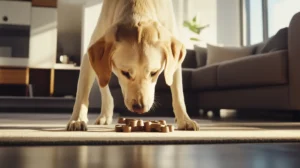
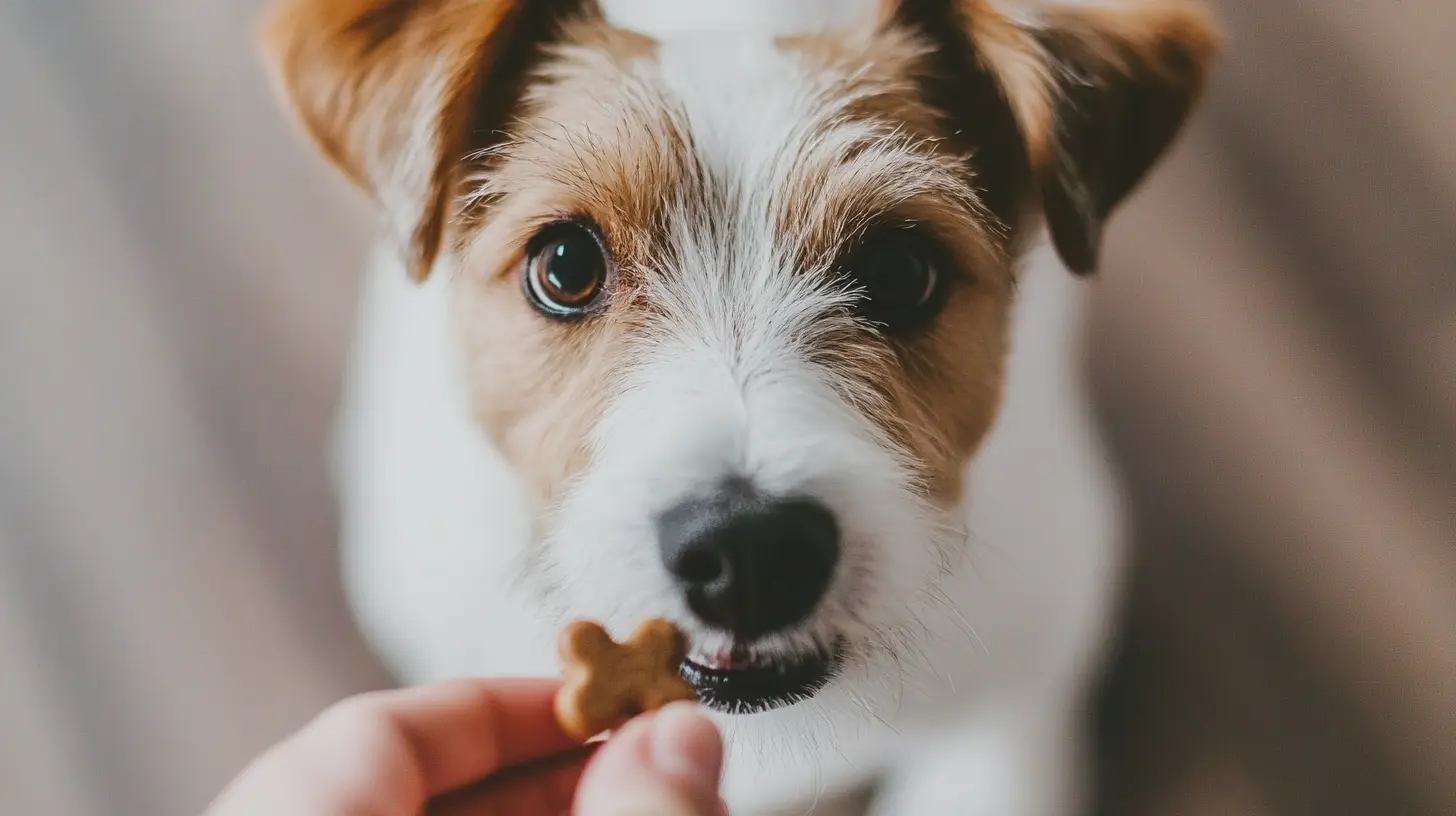
Training treats play a much bigger role in dog training than many owners realize. They’re not just “rewards” — they’re communication tools. The right training treat helps reinforce good behavior quickly, keeps your dog focused, and makes learning feel positive and fun rather than frustrating. When chosen correctly, treats can dramatically speed up training progress while strengthening the bond between you and your dog.
However, not all dogs — or training situations — are the same. Puppies often need softer, gentler treats that are easy to chew and safe for developing teeth, while adult dogs may handle a wider range of textures and flavors. Age, size, energy level, and training goals all influence what type of treat will work best.
It’s also important to understand the difference between daily training treats and high-value rewards. Daily training treats should be small, low in calories, and suitable for frequent repetition during basic obedience or routine practice. High-value treats, on the other hand, are richer and more exciting — best reserved for challenging tasks like recall training, distractions, or new behaviors. Using the right treat at the right time helps maintain motivation without overfeeding.
What Makes the Best Training Treats for Dogs?
Choosing the right training treats isn’t just about what your dog likes — it’s about finding rewards that support learning without causing overfeeding, distraction, or digestive issues. The best training treats for dogs share a few key characteristics that make them effective, safe, and practical for repeated use.
Size & Portion Control
During training sessions, dogs may receive dozens of treats in a short period of time. That’s why small, bite-sized treats are essential. Treats should be easy to eat in one quick bite so your dog can stay focused on the task instead of stopping to chew. Smaller treats also allow you to reward frequently without adding unnecessary calories to your dog’s daily intake.
Ideally, training treats should be no larger than a pea or easily breakable into smaller pieces, especially for puppies and small breeds.
Texture: Soft vs Pellet vs Freeze-Dried
Texture plays a major role in how effective a training treat is.
Soft dog training treats are often the most practical choice, especially for puppies, senior dogs, or fast-paced training. They’re easy to chew and swallow, which keeps training sessions moving smoothly.
Pellet-style treats are firm but small and uniform, making them useful for structured obedience training with adult dogs.
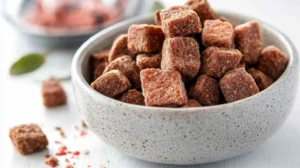
Freeze-dried options, commonly used in best freeze-dried dog food and treat guides, are highly aromatic and motivating but tend to be firmer and richer. These are best used as high-value rewards rather than everyday training treats.
Matching the texture to your dog’s age, teeth, and training style helps improve focus and responsiveness.
Calories Per Treat
One of the most overlooked factors when choosing training treats is calorie content. Because training involves repetition, even a few extra calories per treat can add up quickly.
For everyday training, low-calorie dog training treats are the safest option. Treats with one to two calories per piece allow you to reward generously without risking weight gain. Higher-calorie treats should be reserved for special situations, such as recall training or highly distracting environments.
This is especially important for dogs on controlled diets, such as those following low fat dog food for sensitive stomachs or pancreatitis, where calorie intake must be carefully managed.
Ingredient Quality
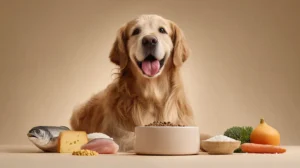
Training treats should be more than just tasty — they should also be made with ingredients you feel comfortable feeding regularly. High-quality training treats typically use simple, recognizable ingredients and avoid unnecessary fillers.
- Look for:
- Clear protein sources (such as chicken, beef, or liver)
- Limited ingredient lists
- Minimal artificial colors or preservatives
Dogs with sensitive stomachs or food allergies often do better with treats that align with diets recommended in best dog food for allergies guides, where simplicity and ingredient transparency matter most.
Understanding these core factors — size, texture, calories, and ingredients — makes it much easier to choose training treats that are both effective and healthy. In the next sections, we’ll apply these principles to specific training treat options designed for different needs, from low-calorie daily rewards to soft treats for puppies and high-value motivators.
Best Training Treats for Everyday Use (Low-Calorie Picks)
When it comes to daily training, low-calorie treats are essential. Basic obedience sessions, leash training, socialization, and behavior reinforcement often involve repeated rewards, which means calorie intake can add up quickly. Choosing low-calorie dog training treats allows you to reward consistently without overfeeding or disrupting your dog’s balanced diet.
The best everyday training treats are small, easy to handle, and motivating enough to keep your dog engaged — without being so rich that they cause weight gain or digestive issues. The two options below stand out for their balance of calorie control, ingredient quality, and real-world training performance.
Best Overall Low-Calorie Training Treat

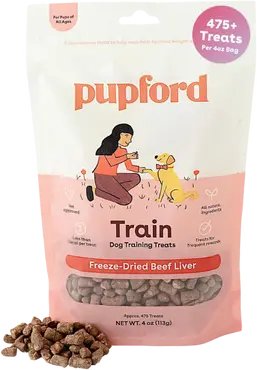
Pupford Freeze-Dried Training Treats are an excellent choice for dog owners who train frequently and want maximum flexibility without worrying about excess calories. Each treat is extremely low in calories, making them ideal for repetition during long or multiple training sessions.
These treats use simple, limited-ingredient recipes and have a strong natural aroma that keeps dogs motivated without overwhelming them. Because they can be easily broken or crumbled, they work well for dogs of all sizes, including puppies.
Pros
- Ultra-low calorie per treat for frequent rewards
- Simple, limited-ingredient recipes
- Suitable for puppies and adult dogs
- Highly motivating despite small size
Cons
- Smaller bag compared to some alternatives
- May require crumbling for very small dogs
Best Budget-Friendly Everyday Training Treat

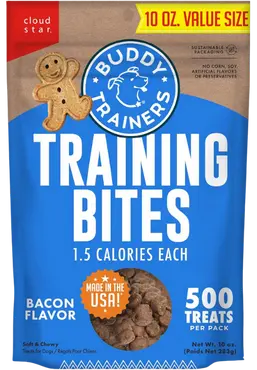
Buddy Biscuits Trainers Training Bites offer an affordable and practical option for daily training. These soft, chewy treats are clearly labeled with low calorie counts, making them easy to incorporate into routine obedience work without guesswork.
Their soft texture allows dogs to chew and swallow quickly, keeping training sessions flowing smoothly. They’re especially useful for owners who want a reliable, cost-effective training treat for consistent daily use.
Pros
- Soft, easy-to-chew texture
- Low calories per treat, clearly stated
- Budget-friendly and widely available
- Easy to break into smaller pieces
Cons
- Contains grains
- Fewer flavor options than premium treats
Both of these low-calorie options are well-suited for everyday dog training, whether you’re working with a new puppy or reinforcing good behavior in an adult dog. In the next section, we’ll look at soft dog training treats designed specifically for dogs that need gentler textures or extra encouragement.
Best Soft Dog Training Treats (Easy to Chew & Swallow)
Soft treats are often the best choice for smooth, effective training sessions. Unlike crunchy or hard treats that take time to chew, soft dog training treats are easy to eat quickly, allowing your dog to stay focused and engaged. This is especially important during fast-paced training, where timing and consistency matter.
Soft textures are also ideal for puppies, senior dogs, and small breeds, as well as dogs with sensitive teeth or gums. Because they’re easier to break into smaller pieces, soft treats give you better portion control while still providing a rewarding experience.
Below are two excellent soft training treat options that balance texture, taste, and practicality for everyday use.
Best Soft Training Treat for Puppies

Wellness Soft Puppy Bites are specifically designed for early training and socialization. Their very soft texture makes them gentle on developing puppy teeth, while their small size allows for frequent rewards without overwhelming young dogs.
These treats are made with thoughtful ingredients and are easy to chew and digest, which is especially important during the puppy stage when digestive systems are still developing. They work well for basic obedience, house training, and positive reinforcement during new experiences.
Pros
- Very soft texture, ideal for puppies
- Gentle on developing teeth
- Grain-free with quality ingredients
- Easy to break into smaller pieces
Cons
- Not the lowest-calorie option
- Smaller bag size
Best Mainstream Soft Training Treat
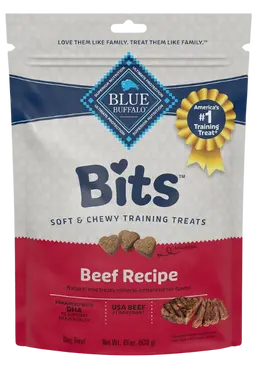
Blue Buffalo BLUE Bits are a popular choice among dog owners looking for a reliable, soft training treat from a well-known brand. These bite-sized treats have a moist, chewy texture that dogs find highly motivating, making them effective for both puppies and adult dogs.
Their size and softness make them easy to use during obedience training, leash work, or short practice sessions. They can also be broken in half for smaller dogs or longer training routines.
Pros
- Soft, moist texture dogs enjoy
- Easy to chew and swallow
- Trusted, widely recognized brand
- Suitable for puppies and adult dogs
Cons
- Higher calorie content than ultra-low-calorie treats
- Some dogs may be sensitive to certain recipes
Soft training treats are a great option when you want rewards that are easy to eat, gentle, and effective. In the next section, we’ll look at training treats based on specific training goals, including when it makes sense to use higher-value rewards.
Training Treats by Training Goal
Not all training situations require the same type of reward. While low-calorie and soft treats work well for everyday practice, some moments demand something more motivating. Challenging behaviors like recall, impulse control, or training in highly distracting environments often benefit from high-value training treats that immediately capture your dog’s attention.
Understanding when to switch from daily rewards to higher-value options helps keep training effective without overusing rich treats.
High-Value Treats for Recall & Distractions
High-value treats are best reserved for situations where focus is critical — such as recall training outdoors, working around other dogs, or reinforcing new behaviors. These treats are typically more aromatic, protein-dense, and exciting than standard training rewards.
Many trainers rely on freeze-dried options similar to those featured in best freeze-dried dog food guides, as they offer intense flavor in very small portions.
High-Value / Occasional Use
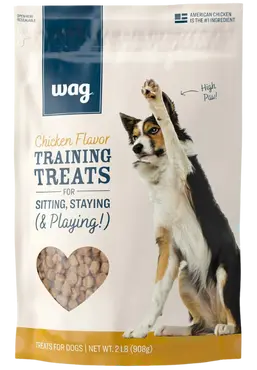
Wag Freeze-Dried Liver Dog Treats are an excellent example of a high-value reward used strategically during training. Made from a single protein source, these treats have a strong natural aroma that dogs find highly motivating, making them especially effective for recall training and high-distraction environments.
Because freeze-dried liver is rich and calorie-dense, these treats work best when crumbled into very small pieces. This allows you to deliver powerful rewards without overfeeding, while still maintaining your dog’s enthusiasm and focus.
Pros
- Single-ingredient, high-protein reward
- Extremely motivating for recall and distractions
- Grain-free and minimally processed
- Easy to crumble into tiny training portions
Cons
- Higher calorie density than daily training treats
- Not ideal for frequent or all-day training use
How Different Training Treats Compare
When choosing training treats for dogs, comparing options doesn’t have to mean reading through a complicated table. Instead, looking at how each type of treat performs across key training needs—such as calories, texture, and purpose—makes it easier to decide what works best for your dog.
Here’s a clear, practical comparison based on real training use.
Calories per Treat: Which Are Best for Frequent Rewards?
For daily training sessions, calorie control is one of the most important factors. Treats designed for repetition allow you to reward your dog often without worrying about weight gain.
- Pupford Freeze-Dried Training Treats and Buddy Biscuits Trainers stand out as the most suitable options for frequent rewards, thanks to their very low calorie content per piece.
- Wellness Soft Puppy Bites and Blue Buffalo BLUE Bits contain more calories and are better used in moderation.
- Wag Freeze-Dried Liver Treats are calorie-dense and should be reserved for special training moments rather than everyday use.
Best choice for calorie-controlled training: Pupford and Buddy Biscuits
Texture: What’s Easiest During Training?
Texture affects how smoothly a training session flows. Treats that are easy to chew and swallow help keep dogs focused.
- Soft treats, such as Wellness Soft Puppy Bites and Blue Buffalo BLUE Bits, are ideal for puppies, senior dogs, and fast-paced training.
- Buddy Biscuits Trainers offer a soft-chewy balance that works well for most dogs.
- Pupford treats are small and quick to eat, even though they’re freeze-dried.
- Wag Freeze-Dried Liver is firmer and best when crumbled into tiny pieces.
Best texture for fast training: Soft and easy-to-chew treats
Best Options for Puppies
Puppies need treats that are gentle on developing teeth and easy to digest.
- Wellness Soft Puppy Bites are specifically formulated for puppies and are the most beginner-friendly option.
- Pupford and Blue Buffalo BLUE Bits also work well for puppies when broken into smaller pieces.
- Wag Freeze-Dried Liver should be used sparingly with puppies due to its richness.
Best for puppies: Wellness Soft Puppy Bites
Best for Daily Training Sessions
Daily training requires consistency, repetition, and calorie control.
- Pupford and Buddy Biscuits Trainers are the most practical choices for everyday obedience, leash training, and behavior reinforcement.
- Soft treats with higher calorie counts can still be used daily, but portions should be carefully managed.
Best for daily use: Low-calorie, small training treats
Best for Recall and High-Distraction Training
Some situations require extra motivation. Recall training, outdoor distractions, and advanced behaviors often benefit from high-value rewards.
- Wag Freeze-Dried Liver Treats excel here due to their strong aroma and high palatability.
- These treats should be used occasionally and in very small pieces to avoid overfeeding.
Best for recall training: High-value freeze-dried treats
By thinking in terms of training purpose rather than brand alone, you can mix and match treats intelligently—using low-calorie options for daily practice and high-value rewards only when they’re truly needed.
Common Mistakes Dog Owners Make with Training Treats
Even the best training treats for dogs won’t be effective if they’re used the wrong way. Many common training problems don’t come from the dog — they come from how treats are chosen and applied during training sessions. Avoiding the mistakes below can make training faster, clearer, and healthier for your dog.
Using Treats That Are Too Large or Hard
One of the most common mistakes is using treats that take too long to chew. Large or crunchy treats interrupt the flow of training, causing your dog to lose focus between commands. This is especially problematic during fast-paced training, where timing is everything.
Training treats should be small, quick to eat, and easy to swallow. Soft or breakable treats allow you to reward immediately and move on to the next behavior without distraction.
Overfeeding During Training Sessions
Training often involves repetition, and calories can add up quickly. Many dog owners don’t realize how much food their dog consumes during training alone, especially when using regular treats instead of low-calorie training treats.
This can lead to unwanted weight gain over time, even if meals stay the same. Choosing low calorie dog training treats and keeping rewards small helps maintain a healthy balance while still reinforcing good behavior effectively.
Using High-Value Treats Too Often
High-value treats are exciting and motivating, but using them all the time can reduce their effectiveness. When dogs receive rich or highly flavorful treats for every simple command, they may lose interest in basic rewards or become overly dependent on food motivation.
High-value treats work best when reserved for difficult behaviors, new skills, or high-distraction environments. For everyday practice, simpler training treats are usually more effective and sustainable.
Switching Treats Too Frequently
Constantly changing training treats can confuse dogs and disrupt consistency. While variety can be useful in certain situations, frequent switching may cause dogs to focus more on the treat itself rather than the behavior you’re trying to reinforce.
Sticking with one or two reliable training treats helps create clear expectations and more predictable responses during training sessions.
Relying Only on Treats Without Fading Them
Treats are a powerful teaching tool, but they shouldn’t be the only form of reinforcement forever. Some dog owners forget to gradually reduce treat use, which can make dogs less responsive when treats aren’t visible.
As training progresses, treats should be paired with praise, play, or affection, then slowly reduced. This helps dogs respond reliably while still feeling rewarded and encouraged.
FAQs About Training Treats for Dogs
What are the best training treats for dogs?
The best training treats for dogs are small, easy to eat, and low in calories. Because training involves frequent rewards, treats should be designed specifically for repetition rather than occasional snacking. Soft or breakable treats are usually the most practical, as they allow dogs to stay focused without stopping to chew for long periods.
For everyday training, low-calorie treats work best. Higher-value treats can be helpful for difficult behaviors or high-distraction environments, but they should be used sparingly.
Are puppy treats for training different from adult dog treats?
Yes, puppy treats for training are often different. Puppies benefit from softer textures that are gentle on developing teeth and easier to digest. Training treats for puppies should also be small and portion-controlled, since young dogs are still growing and can gain weight quickly if overfed.
Many puppy-specific training treats are designed to be broken into tiny pieces, making them safer and more suitable for frequent rewards during early training.
How many training treats should I give my dog per session?
There’s no exact number, but the key is treat size and calorie count, not quantity alone. During a training session, dogs may receive dozens of rewards, especially when learning new behaviors. That’s why low-calorie training treats are recommended for daily use.
A good rule of thumb is to keep treats very small and adjust your dog’s regular meals if training sessions are long or frequent.
Can I use regular dog treats instead of training treats?
Regular dog treats are usually not ideal for training. They tend to be larger, higher in calories, and slower to chew, which can interrupt training flow and lead to overfeeding.
Training treats are specifically formulated to be small, quick to eat, and suitable for repetition. Using the right type of treat helps keep sessions efficient and focused.
Are soft dog training treats better than crunchy ones?
In most training situations, yes. Soft dog training treats are easier to chew and swallow, which allows you to reward your dog quickly and move on to the next command. This is especially helpful for puppies, senior dogs, and fast-paced training like clicker work.
Crunchy treats are better reserved for occasional rewards rather than active training sessions.
Should I use high-value treats during every training session?
High-value treats are very motivating, but they’re best used strategically, not constantly. Using rich or highly exciting treats for every simple command can reduce their effectiveness over time.
For daily practice, simpler training treats work well. High-value treats should be saved for difficult behaviors, recall training, or situations with heavy distractions.
How do I stop my dog from only listening when treats are visible?
This usually happens when treats are never phased out. Treats are meant to teach behaviors, not permanently replace praise or engagement. As your dog becomes more consistent, rewards should gradually shift toward verbal praise, play, or affection, with treats given less frequently.
This approach helps your dog respond reliably, even when treats aren’t immediately present.
Conclusion
Choosing the right training treats for dogs isn’t about finding one “perfect” option — it’s about matching the treat to your dog’s needs and the type of training you’re doing. Daily training treats should be small and low in calories, allowing you to reward frequently without worrying about overfeeding. Soft dog training treats are often the easiest to use, especially for puppies, senior dogs, or fast-paced sessions where timing matters. High-value treats, while extremely motivating, work best when reserved for challenging behaviors or high-distraction situations.
Every dog is different. Puppies may need gentler textures and simpler ingredients, while adult dogs might respond better to structured or higher-value rewards depending on their energy level and training goals. Paying attention to treat size, calorie content, and texture helps keep training effective, healthy, and enjoyable for both you and your dog.
By choosing training treats based on your dog’s age, preferences, and training style, you’ll create clearer communication, stronger motivation, and more consistent results — making training sessions more productive and rewarding over time.