
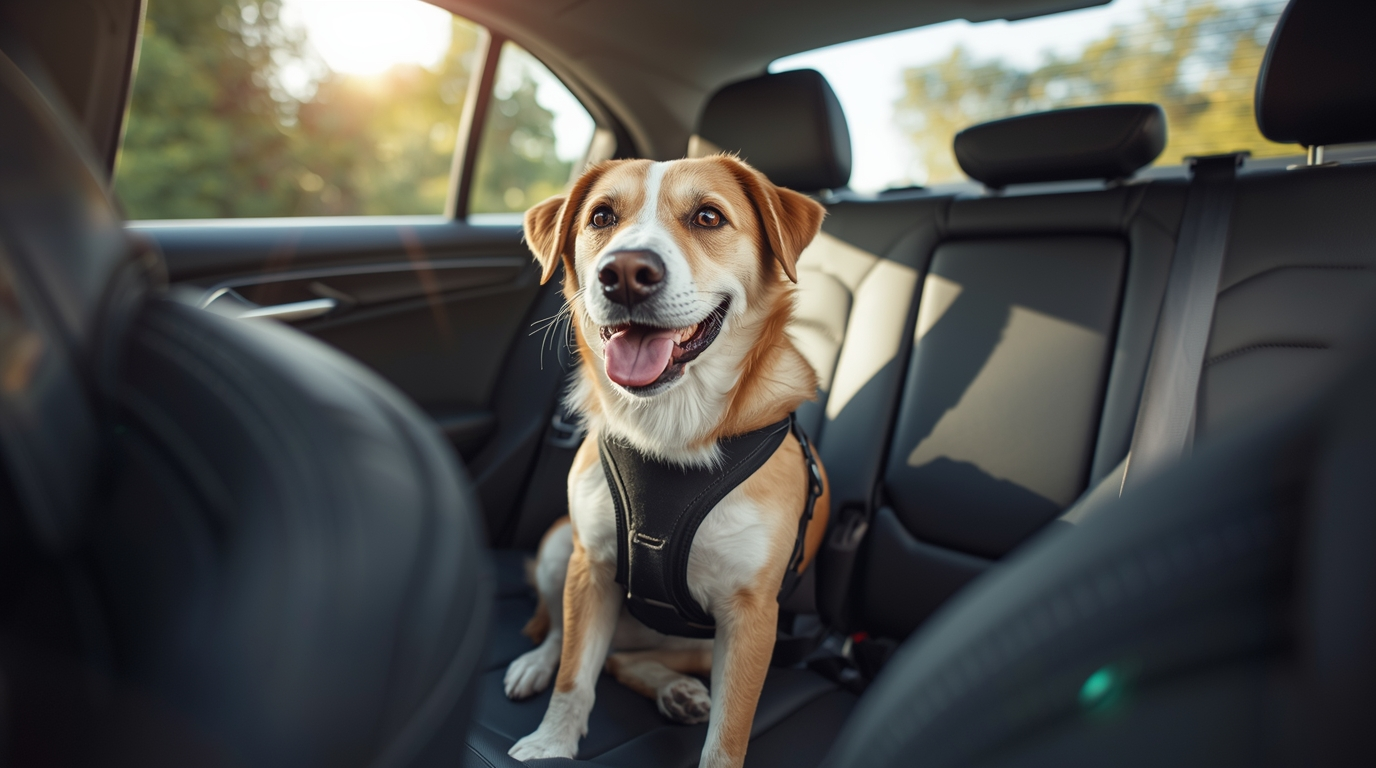
Every dog deserves to travel safely — whether it’s a quick trip to the vet or a long family road adventure. Yet, many pet parents don’t realize that letting a dog roam freely in the car can be dangerous for both the animal and the driver. That’s where a dog seat belt comes in.
A properly designed vehicle restraint can help limit distractions and reduce injury risk. But a typical dog seat belt tether is not the same as a crash-tested restraint system. Independent crash testing matters more than strap strength or customer ratings.
This guide explains how to choose a vehicle restraint for your dog and compares five commonly marketed tether designs, including their limitations. For crash protection, prioritize an independently certified car harness or carrier rather than an extension tether. For everyday walks, explore our best small dog harnesses; walking harnesses are not substitutes for vehicle restraints.
Why Every Dog Needs a Seat Belt
A suitable vehicle restraint helps keep your dog away from the driver and limits uncontrolled movement inside the car. Choose equipment designed for vehicle travel rather than relying on a walking leash or harness alone.
During sudden braking or a collision, an unrestrained dog can be thrown forward and injure both the dog and other passengers. A properly installed crash-tested restraint is designed to limit that movement, although no restraint can guarantee protection in every collision.
A familiar travel routine may help some dogs settle during rides. If your dog experiences motion sickness or persistent anxiety, ask your veterinarian for advice. Check local pet travel rules before your journey.
For collision protection, see the Center for Pet Safety certified products directory for independently tested harnesses, carriers, and crates.
Types of Dog Seat Belts (and Which One Fits Your Dog)
Every dog is different — and so is every car. That’s why choosing the right dog seat belt starts with understanding the main types available. Whether you drive a compact car, an SUV, or travel long distances, there’s a style that fits your dog’s size, comfort, and safety needs.
Harness-Style Dog Car Seat Belt
A crash-tested car harness is designed to connect to the vehicle using its specified restraint system. A padded walking harness combined with a separate tether is not equivalent. Choose a model certified for your dog’s size and weight, and follow the manufacturer’s installation instructions without adding extension straps.
Best for: dogs that fit the certified harness model and can travel comfortably in the vehicle’s rear seating area.
Clip-In Dog Seat Belts for Cars
Clip-in tethers attach to a seat belt buckle and are marketed to limit roaming. However, the Center for Pet Safety warns against extension tethers because excessive movement during a crash can cause serious injury. A buckle attachment or sturdy clip alone does not establish crash protection.
Limitation: these are not recommended as substitutes for a certified vehicle restraint.
Dog Carrier Seat Belt for Small Pets
For small dogs or puppies, consider an independently crash-tested travel carrier that fits their size. Secure the carrier using the manufacturer’s approved method. A regular soft-sided carrier with a generic strap is not automatically crash-safe.
Best for: small dogs that fit an appropriate crash-tested carrier and its weight limits.
Quick Tip
Check your dog’s measurements and weight, vehicle compatibility, and the exact restraint configuration covered by independent testing. Comfort is important, but it does not replace verified crash performance.
For walks outside the car, our guide to Martingale collars covers another type of equipment. Never use a collar as the attachment point for a vehicle restraint.
How to Choose the Best Dog Seat Belt
The best dog car seat belt setup for your dog should combine documented crash performance, proper fit, and compatibility with your vehicle. Here are the features worth checking before you buy.
Adjustable Length & Fit
Follow the restraint maker’s sizing chart and weight limits. Avoid adding slack or separate extension straps to a certified setup. Your dog should fit comfortably within the movement allowed by the tested design.
Crash-Test Certification
Look for independent certification for the exact model, size, and installation method. Marketing claims such as “crash-tested” or a high hardware strength rating do not by themselves demonstrate effective protection. The CPS certification directory is a useful starting point.
Comfort & Material Quality
Check the fit, stitching, contact points, and manufacturer instructions for cleaning and replacement. Padding can improve comfort, but elastic sections and strong materials alone do not establish crash safety.
Compatibility with Harnesses
Never attach a vehicle restraint to a dog’s collar. Use the harness or carrier specified by the tested system and confirm vehicle compatibility. Do not add generic buckle or headrest tethers to a crash-tested harness.
Easy Installation & Cleaning
Choose a system you can install correctly every time. Follow the manufacturer’s cleaning, inspection, and replacement instructions, especially after a collision.
Pro Tip:
Measure your dog and check the vehicle requirements before purchasing. A restraint must fit both your dog and your vehicle and be installed in the tested configuration.
Five Dog Seat Belt Tethers: Designs and Safety Limitations
The five products below illustrate common tether designs, not recommended crash-protection products. This comparison does not establish their crash performance. Because independent safety guidance warns against extension tethers, we recommend a certified car harness or carrier instead.
Mighty Paw Nylon Dog Seat Belt for Buckle, Black
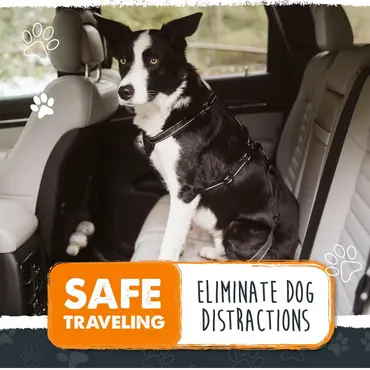
The Mighty Paw Dog Seat Belt is marketed as a buckle-style tether. Its design uses a strap to connect a harness to the vehicle’s seat belt receiver. That connection should not be confused with a certified crash-restraint system.
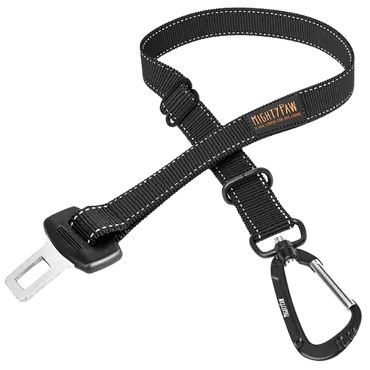
- Design: Buckle-style tether
- Limitation: Do not rely on the extension tether for crash protection.
For everyday walks, see our dog harnesses for small breeds. Use a separate certified vehicle restraint for car travel.
PetSafe Safety Seatbelt Tether (15–22 in)
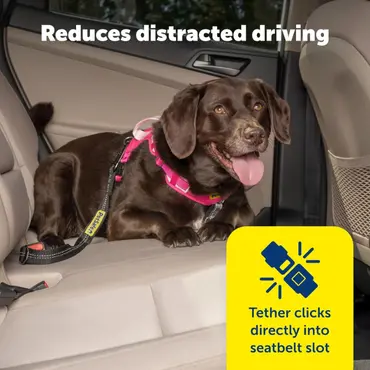
The PetSafe Safety Seatbelt Tether has an adjustable 15–22 inch strap and carabiner, according to the manufacturer’s product information. It is intended to limit roaming, but the hardware strength rating does not demonstrate crash protection.
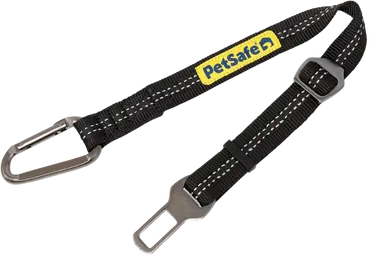
- Design: Adjustable buckle-style tether
- Limitation: A separate extension tether is not a certified crash-protection system.
Active Pets Adjustable Safety Dog Seatbelt
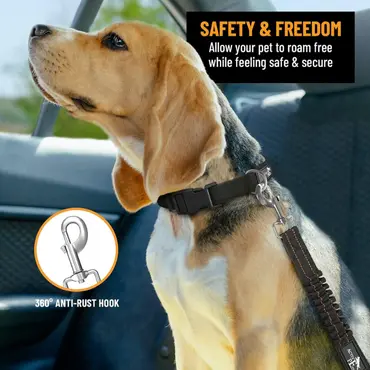
The Active Pets Adjustable Dog Seatbelt is an example of an elastic-style tether marketed for vehicle travel. An elastic section should not be interpreted as evidence of crash protection.
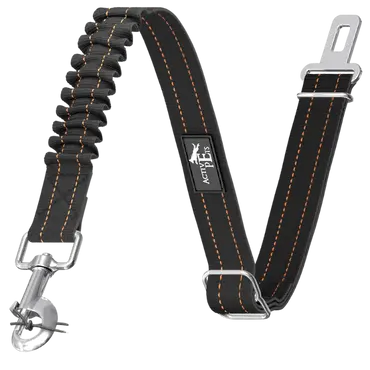
- Design: Adjustable elastic-style tether
- Limitation: Do not rely on elasticity or buckle compatibility as evidence of crash safety.
SunGrow Adjustable Safety Tether Dog & Cat Seat Belt (2-Pack)
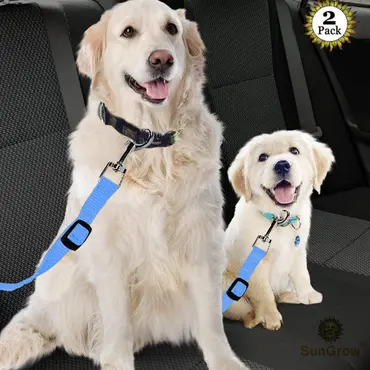
The SunGrow Adjustable Safety Tether (2-Pack) is marketed as a two-strap tether set. Having two straps does not make the setup a tested vehicle restraint, even when traveling with multiple pets.
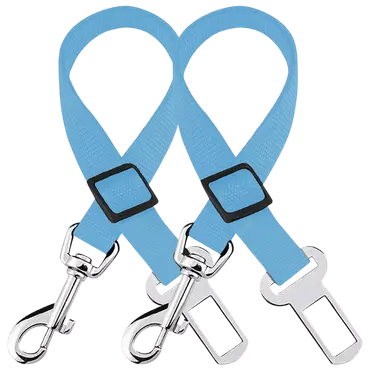
- Design: Two-pack tether set
- Limitation: Each pet needs its own properly fitted, suitable vehicle restraint.
For identification and leash walks during rest stops, see our leather dog collar guide. Never attach a car restraint to a collar.
BWOGUE 2 Packs Dog Safety Seat Belt Strap for Headrest

The BWOGUE Dog Safety Seat Belt Strap is marketed as a headrest-style tether. A headrest attachment does not establish that the system can protect a dog during a collision.

- Design: Headrest-style strap
- Limitation: Do not use a generic headrest tether as a substitute for a certified vehicle restraint.
Quick Takeaway
A tether may restrict roaming, but it is not a reliable substitute for a crash-tested restraint. For example, the Sleepypod Clickit Sport is independently certified by CPS for specified sizes and weight limits. Check the current certification and fit before buying. For small dogs, consult the certified carrier directory instead.
How to Properly Use a Dog Car Seat Belt
Proper installation matters as much as selecting a suitable restraint. Use the exact configuration described by the manufacturer for the certified model, without adding untested attachments.
Choose the Right Harness
Use a car harness designed and independently tested for vehicle travel, or a suitable certified carrier or crate. Never secure your dog in a car by attaching a restraint to a collar.
Clip the Seat Belt Securely
Attach the restraint using the vehicle connection points and belt routing specified by its manufacturer. Do not substitute an ordinary walking-harness D-ring, generic buckle adapter, or headrest strap for the tested attachment system.
Check Fit and Installation
Check that the harness fits your dog according to the sizing instructions and that the vehicle belt or other approved attachment is correctly positioned. Do not add slack or an extension tether.
Create a Calm Travel Routine
Help your dog get used to the restraint while the car is parked, then gradually introduce short trips. Reward calm behavior and ask your veterinarian for advice if anxiety or motion sickness persists.
Tip: Check the manufacturer’s instructions before adding any accessories that could change the restraint’s fit or installation.
Travel Safety Tips for Dogs
In addition to using a suitable restraint, these travel habits can help reduce distractions and make trips more comfortable. The American Veterinary Medical Association’s pet travel guidance offers practical advice for car journeys.
Keep the Harness Snug but Comfortable
Check the car harness fit before every trip using the manufacturer’s sizing and adjustment instructions. Inspect the restraint for damage or wear.
Take Frequent Breaks on Long Drives
Just like people, dogs need time to stretch, drink water, and relieve themselves. Stop every couple of hours to let your dog walk and relax. Short breaks reduce anxiety and make the next stretch of driving more peaceful.
Never Let Dogs Sit in the Front Seat
Airbags can seriously injure pets. Keep dogs out of the front passenger seat and use a properly secured, appropriate restraint in the back seat or another manufacturer-approved vehicle location. Never let your dog ride with their head outside the window.
Use a Dog Carrier Seat Belt for Small Breeds
Choose a certified travel carrier that fits your small dog and install it as directed. The Cornell University College of Veterinary Medicine provides guidance on selecting and positioning travel restraints.
Prepare a Small Travel Kit
Pack water, a collapsible bowl, a blanket, waste bags, and a toy to keep your dog calm and comfortable. Having these essentials within reach makes any trip easier to manage.
Quick tip: Never leave your dog unattended in a parked vehicle, and bring a leash for stops.
FAQs About Dog Seat Belts
Are dog seat belts for cars safe?
Not all products sold as dog seat belts provide crash protection. Choose an independently certified vehicle harness, carrier, or crate that fits your dog and follow its installation instructions. Avoid extension tethers, which can increase injury risk in a collision.
Can I use a regular seat belt for dogs?
Do not wrap a regular passenger seat belt around your dog. Use it only as directed by the manufacturer of a tested pet restraint designed to work with the vehicle’s seat belt system.
What’s the best dog car seat belt for small breeds?
A suitable independently crash-tested carrier can be a good choice for small dogs. Check the carrier’s size and weight limits, ventilation, and approved installation method. A small crash-tested harness may also be appropriate if it fits your dog.
Do seat belts fit every car type?
No. Compatibility depends on the vehicle, belt system, and restraint design. Check the manufacturer’s vehicle requirements and installation instructions before purchasing. Avoid generic adapters that change a tested restraint system.
How can I tell if my dog’s seat belt is secure?
Before driving, check the fit and connection points against the manufacturer’s instructions. Inspect for damage and confirm that all required attachments are correctly secured. If the setup does not fit or cannot be installed as directed, do not use it.
Can I use a seat belt with a harness?
Yes, if the harness is a vehicle restraint designed to connect to the car in that specific way. A walking harness with a generic tether is not equivalent to a crash-tested system. Never attach the restraint to a collar. For walking equipment only, see our small dog harness guide.
Conclusion: Choosing a Safer Dog Car Restraint
Choosing a dog seat belt requires more than comparing prices, clips, or adjustable straps. For crash protection, prioritize independently certified equipment designed for your dog’s size and your vehicle.
The five tether designs described above should not be treated as proven crash-protection systems. Choose a certified car harness, carrier, or crate instead, and install it without untested extensions or adapters.
Start with the Center for Pet Safety certified products directory, check the model’s fit and weight limits, and follow its instructions every time you travel.