A small dog harness needs to do more than come in an XS size. It should sit comfortably around your dog’s chest, stay clear of the front legs, and remain secure when the leash changes direction. That’s not always easy with toy breeds, short-legged dogs, or dogs whose neck and chest measurements fall between sizes.
For everyday walks, the Ruffwear Front Range offers a versatile padded design, while the Voyager Step-In Air is simpler and more affordable. Dogs that back out of ordinary harnesses may benefit from the Gooby Escape Free Sport’s specialized construction.
We compared six harnesses using manufacturer specifications, retailer information, and customer feedback. Each has a different reason to consider it—and limitations worth knowing before you buy.
Affiliate disclosure: LumaPaw may earn a commission from qualifying purchases through links on this page, at no additional cost to you.
Small Dog Harnesses at a Glance
| Harness | Best for | Main limitation |
|---|---|---|
| Ruffwear Front Range | Premium everyday walking | Expensive; bulky for some tiny dogs |
| Voyager Step-In Air | Easy step-in dressing | Limited adjustment |
| Gooby Escape Free Sport | Dogs prone to backing out | Fit-dependent security; plastic leash ring |
| rabbitgoo Classic No-Pull | Affordable adjustable design | Can be bulky; overhead fitting |
| 2 Hounds Freedom | Two-point leash training | Smallest common retail size excludes some toy breeds |
| Puppia Soft Original | Lightweight overhead mesh | Fixed neck opening |
These aren’t interchangeable harnesses. A Chihuahua with a narrow chest, a Dachshund that backs out of its vest, and a terrier learning not to pull may need entirely different designs.
Measure your dog before choosing a product, even if you’ve bought the same size from another brand.
How We Researched These Small Dog Harnesses
LumaPaw compared manufacturer details, Amazon and Chewy listings, sizing charts, materials, leash attachments, adjustment systems, and customer feedback.
We paid particular attention to complaints about harnesses riding into the armpits, slipping out of adjustment, wearing prematurely, or allowing dogs to escape. Reviews describing an actual dog’s size and fit were more useful than general comments about quality.
We also considered what each harness offers that a similar product doesn’t. A simple mesh vest serves a different purpose from an adjustable walking-control harness.
We did not physically test these products. Our recommendations are based on available product information, customer experiences, and comparisons between designs. High ratings and bestseller labels were not enough to earn a place.
The six picks focus on ordinary walking needs. Tactical dog harnesses, service dog harnesses, and vehicle restraints require different considerations and are outside this comparison.
The 6 Small Dog Harnesses Reviewed
Ruffwear Front Range — Best Premium Everyday Harness
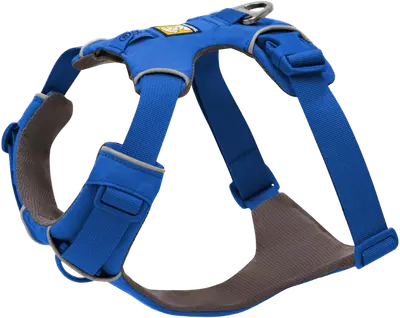
Best for: Small dogs that fit its padded shape and owners wanting a versatile harness for everyday walking.
Avoid if: Your dog measures below 13 inches around the chest, dislikes overhead dressing, or has a short body that makes broad harness panels uncomfortable.
Honest buying note: Ruffwear’s additional features are worthwhile when your dog fits the design and you’ll use both leash attachments. For a tiny dog that only needs short neighborhood walks, a lighter and less expensive harness may be more practical.
Customer feedback frequently praises the construction, adjustability, and comfort. Some small-dog owners, however, report that the padding or buckles sit awkwardly against their dog’s body. Others find the overhead design inconvenient to remove.
The Ruffwear Front Range makes sense for owners who want one adjustable harness for regular walks, longer outings, and occasional front-clip use.
Its four adjustment points help accommodate different chest shapes, while foam-padded panels cover the chest and underside. The back attachment uses an aluminum V-ring, and the front attachment is reinforced webbing.
That combination gives you more walking options than a simple back-clip vest.
Ruffwear also includes reflective trim, an ID pocket, and a loop for an optional visibility light. The XX-Small size accommodates chest girths of 13–17 inches.
Product snapshot
- Type: Padded overhead harness
- Smallest size: XXS, 13–17-inch chest
- Leash attachments: Front and back
- Adjustability: Four points
- Cleaning: Hand wash with mild detergent; air dry
Pros
- Four adjustment points
- Padded chest and belly
- Front and back leash attachments
- Reflective trim and ID pocket
- Detailed manufacturer sizing guidance
Cons
- More expensive than simpler harnesses
- Can feel bulky on very small dogs
- Neck opening doesn't unfasten
- Front attachment is webbing rather than metal
Voyager Step-In Air — Best Easy-On Step-In Harness
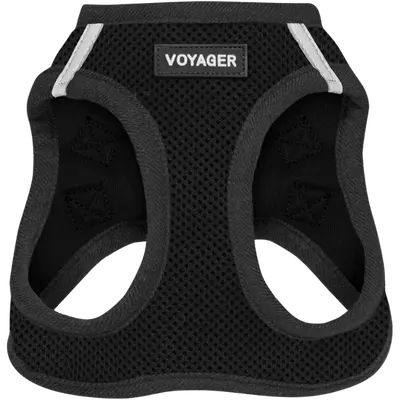
Best for: Small dogs comfortable stepping into a harness and owners who want simple dressing for everyday walks.
Avoid if: Your dog regularly backs out of harnesses, needs a front leash attachment, or has a body shape requiring extensive strap adjustment.
Honest buying note: Voyager is attractive because it does the basics without unnecessary features. But the three-part closure shouldn’t be mistaken for guaranteed escape resistance. Check the exact size chart for the selected color and trim, since published measurements vary slightly between versions.
Many customers appreciate how quickly they can put the Voyager on, particularly compared with complicated adjustable harnesses. Repeat purchases are another encouraging pattern.
The main concern is fit. Owners report that a harness can appear snug around the chest yet still allow a dog to back out. There are also complaints about plastic buckle damage and fastening wear.
Some dogs cooperate until it’s time to pull a harness over their head. Voyager’s Step-In Air avoids that part entirely.
Place the harness on the floor, guide your dog’s front paws into the openings, bring the sides together over the back, and secure the hook-and-loop closure and buckle.
The polyester air-mesh vest has reflective bands and two metal D-rings for the leash. It’s lightweight, comes in a wide range of small sizes, and costs considerably less than many padded adventure harnesses.
Product snapshot
- Type: Mesh step-in vest
- Small sizes: Include XS and smaller options, depending on the variant
- Leash attachment: Back only
- Closure: Hook-and-loop fastening, buckle, and double D-rings
- Material: Polyester air mesh
Pros
- Straightforward step-in design
- Lightweight mesh construction
- Very small size options
- Reflective detailing
- Affordable everyday choice
Cons
- Limited independent adjustment
- Hook-and-loop fastening can collect hair
- Buckle and closure-wear complaints
- Some dogs have escaped by reversing direction
Gooby Escape Free Sport — Best for Dogs Prone to Backing Out
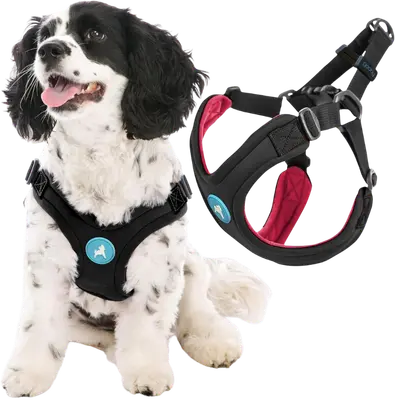
Best for: Small dogs that have backed out of conventional harnesses and can achieve the manufacturer’s required fit.
Avoid if: The rear section remains loose after adjustment, your leash clip doesn’t fit the ring properly, or you need a front-clip walking-control harness.
Honest buying note: This is a sensible design to investigate when backing out is the main problem, but no harness should be called escape-proof. Gooby’s mechanism depends on correct sizing. If your dog can still reverse out after proper adjustment, choose another containment approach rather than relying on the product name.
Customers report successful use with dogs that had escaped previous harnesses. The ability to adjust the neck and chest separately also receives positive feedback.
But not every experience is successful. Some owners describe escapes, loose adjustment straps, or concerns about the plastic leash attachment.
A dog that suddenly reverses direction can slip out of some ordinary harnesses even when the owner thought the fit was secure.
The Gooby Escape Free Sport is designed around that problem.
Its construction reduces the space around the rear of the harness when leash tension is applied, making backing out more difficult when the harness is correctly sized and adjusted.
Unlike the simpler Gooby Easy Fit model, Sport has four adjustment points around the neck and chest. That flexibility is particularly useful for small dogs with narrower or unusual proportions.
Product snapshot
- Type: Escape-resistant adjustable harness
- Small size: 12.5–18.75-inch chest
- Adjustability: Four points
- Materials: Neoprene padding and polyester webbing
- Leash attachment: Back POM plastic ring
Pros
- Specialized escape-resistant construction
- Four adjustment points
- Designed with smaller dogs in mind
- Padded contact areas
- Smaller minimum chest measurement than Gooby Easy Fit
Cons
- Dogs can still escape
- Plastic leash ring may not suit every leash clip
- Adjusters can shift on some dogs
- Requires careful fitting
rabbitgoo Classic No-Pull — Best Affordable Adjustable Harness
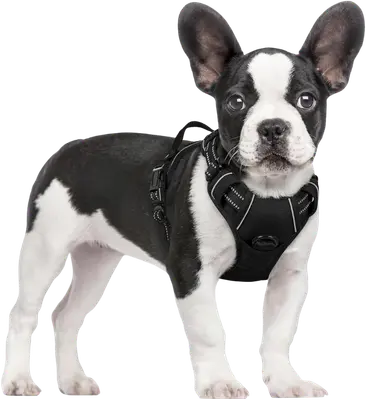
Best for: Owners seeking adjustable padding and two leash connections without spending Ruffwear prices.
Avoid if: Your dog dislikes overhead dressing, has difficult neck-to-chest proportions, or finds the body panels too bulky.
Honest buying note: rabbitgoo offers useful features for the money, but its value disappears if the harness rubs or shifts. Measure both the neck and chest, and check that the chosen version fits comfortably over your dog’s head.
Positive feedback often mentions solid-feeling construction, comfortable padding, and the convenience of switching leash attachments.
Fit complaints deserve equal attention. Some owners find that tightening the chest leaves the neck too loose, while others struggle to remove the harness after adjusting it securely.
The large Amazon review count includes experiences with bigger dogs, so it shouldn’t be treated as proof that the Small or XS versions fit toy breeds consistently.
The rabbitgoo Classic offers many features found on more expensive padded harnesses without reaching premium pricing.
It has four adjustment straps, cushioned panels, reflective detailing, a back handle, and two leash attachment points.
The front attachment can help redirect a dog during leash training. The back attachment works for ordinary walking. Having both options makes this a more flexible purchase than a basic back-clip vest.
However, the Classic is an overhead design. The neck and chest adjustments matter, especially for dogs with broad heads or narrow shoulders.
Product snapshot
- Type: Padded overhead harness
- Sizes: XS through XL in the current product family
- Adjustability: Four straps
- Leash attachments: Front and back metal rings
- Material: Polyester outer fabric with cushioned mesh sections
Pros
- Competitive price for its features
- Four adjustment points
- Front and back leash connections
- Reflective detailing
- Convenient back handle
Cons
- Head opening can be difficult to remove
- May sit awkwardly on short-bodied dogs
- Some reports of rubbing or shifting
- Reviews cover many different dog sizes
2 Hounds Design Freedom — Best for Two-Point Leash Training
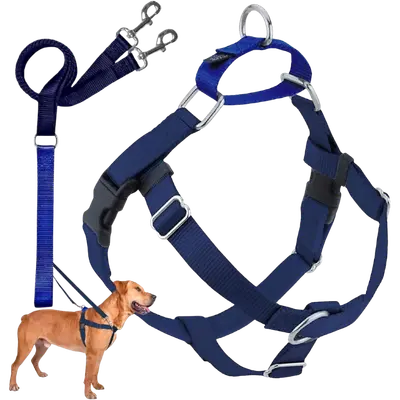
Best for: Small dogs large enough for the selected harness and owners practicing loose-leash walking with two-point control.
Avoid if: Your dog is below the minimum chest measurement, you prefer a longer relaxed-walking leash, or the straps sit too close to the front legs.
Honest buying note: Freedom makes sense when you’ll actually use its two-point training system. If your dog already walks comfortably on a regular back-clip harness, paying more for the included leash may not be worthwhile.
Owners frequently describe better control and easier redirection during walks. The velvet lining also receives favorable comments, particularly from people whose dogs experienced irritation with other harnesses.
The most repeated practical complaint concerns the leash length. Connected at both ends, it offers less freedom than some owners expect. There are also reports of fraying, difficult adjustments, and occasional chafing.
The Freedom harness is worth considering when ordinary walks have turned into repeated pulling and redirection.
Its main difference is the included double-ended training leash. One end connects to the front of the harness and the other to the back, allowing the handler to guide the dog from two points.
The harness uses nylon webbing, stainless-steel hardware, four adjustment points, and a velvet-lined section behind the front legs.
It’s a more training-focused setup than the Voyager or Puppia.
Product snapshot
- Type: Dual-connection training harness
- Selected XS bundle: 15–20-inch chest
- Leash attachments: Front and back
- Adjustability: Four points
- Included accessory: Double-ended training leash
Pros
- Two leash attachment points
- Training leash included in the selected bundle
- Stainless-steel attachment hardware
- Velvet lining behind the front legs
- Four adjustment points
- Made in the USA
Cons
- XS doesn't fit many extremely tiny dogs
- Included leash feels short when dual-connected
- More complicated initial fitting
- Customer reports of webbing wear and rubbing
Puppia Soft Original — Best Lightweight Overhead Mesh Harness
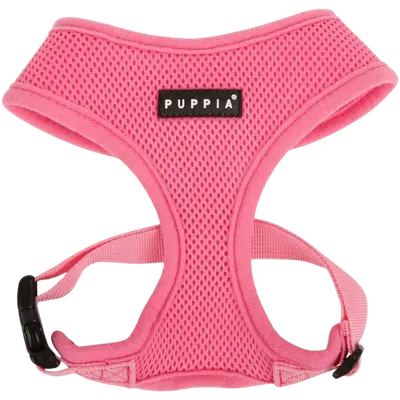
Best for: Small dogs whose head, neck, and chest proportions suit the fixed opening and adjustable chest belt.
Avoid if: Your dog has a relatively large head, dislikes overhead dressing, or has a history of backing out of harnesses.
Honest buying note: Puppia isn’t automatically more comfortable than Voyager just because both use mesh. The better choice depends largely on whether your dog prefers stepping into a vest or wearing a harness that slips over the head.
Customers often praise Puppia’s soft feel and uncomplicated construction. Some report using the same model for years or buying it again in different colors.
The recurring difficulty is sizing. A harness may fit around the chest but feel tight when pulled over the dog’s head. Choosing a larger size can then leave too much room around the body.
Puppia Soft takes a simpler approach than adjustable padded harnesses.
Its polyester air-mesh body slides over the dog’s head, while a chest belt and side buckle secure the harness around the body. There’s one back leash attachment rather than separate front and rear options.
For a dog that accepts overhead dressing, this can be a convenient alternative to a step-in vest.
The most important consideration is the neck opening: it doesn’t adjust independently.
Product snapshot
- Type: Lightweight overhead mesh harness
- Model: Puppia Soft Original, PDCF-AC30
- Material: Polyester air mesh
- Adjustment: Chest belt
- Leash attachment: Back only
Pros
- Lightweight mesh construction
- Straightforward fastening
- Small size options
- Less bulky than many padded harnesses
- Simple everyday design
Cons
- Fixed neck opening
- No front leash attachment
- Difficult removal for some dogs
- Fit can be inconsistent between neck and chest
- Not designed specifically for escape resistance
How to Choose a Harness for a Small Dog
A harness with more padding, buckles, or attachments isn’t necessarily a better fit. Start with how your dog walks and how comfortably you can put the harness on.
If you’re comparing harness styles beyond small breeds, our general dog harness guide covers a broader range of walking needs.
Step-In vs. Over-the-Head Harnesses
Step-in designs, such as Voyager Air, are useful when a dog dislikes equipment passing over its head. They can also be convenient for owners who prefer a quick fastening routine.
Over-the-head designs may offer more independent adjustment, depending on the model. However, some dogs resist having the neck opening pulled over their ears, especially during removal.
Neither design is automatically more secure. The leg openings, chest fit, fastening system, and dog’s body shape determine how well it stays in place.
Front-Clip vs. Back-Clip Harnesses
Back-clip harnesses attach the leash above the dog’s shoulders. They’re common for ordinary neighborhood walks.
Front-clip designs attach at the chest, allowing the leash to redirect the dog when it moves forward and pulls.
Some harnesses, including Ruffwear Front Range and rabbitgoo Classic, offer both attachment points.
A front clip can be useful during training, but it won’t teach loose-leash walking by itself. Practice rewarding your dog for walking near you without constant leash tension.
For a broader comparison of everyday walking equipment, see LumaPaw’s guide to dog collars and their different uses.
Padding, Adjustability, and Bulk
Padding can reduce contact with narrow straps, but thick panels aren’t helpful if they interfere with your dog’s front legs.
Check that the harness allows a natural walking motion and doesn’t push against the throat when the leash tightens.
A short-legged dog may need a narrower underside panel than a taller dog with the same chest girth. Long-haired dogs may also experience rubbing or fur catching around closures.
For puppies, leave room to adjust only within the manufacturer’s recommended range. Don’t buy an oversized harness hoping your dog will grow into it.
How to Measure and Fit a Small Dog Harness
A Chihuahua and a Pug can weigh about the same yet need completely different harness dimensions.
That’s why choosing by breed or weight alone often leads to poor fit.
Measure Chest Girth and Neck Size
Use a soft measuring tape and let your dog stand naturally.
- Measure the chest: Wrap the tape around the widest part of the rib cage, usually just behind the front legs.
- Measure the neck: Follow the manufacturer's instructions, particularly for harnesses with fixed or adjustable neck openings.
- Check the head opening: For overhead designs, make sure the harness can pass over the head comfortably.
- Compare the exact size chart: Use the measurements for the model and version you're buying, not a general brand chart.
For example, Ruffwear Front Range XXS starts at a 13-inch chest girth, while Gooby Escape Free Sport Small starts at 12.5 inches. The selected 2 Hounds Freedom XS retail bundle starts at 15 inches.
An XS label clearly doesn’t mean the same thing across all three.
Check the Fit Before the First Walk
After fastening the harness, check these points:
- You can generally fit about two fingers under the straps without forcing them.
- The harness doesn't press into the throat.
- The chest panel stays in position when the dog moves.
- The front legs can move freely without rubbing.
- The harness doesn't slide excessively when gentle leash tension changes direction.
- Your dog can't readily step or back out of the leg openings.
The two-finger guideline is a starting point, not a substitute for the manufacturer’s fitting instructions.
Try the harness indoors first. Let your dog walk, turn, sit, and take a few steps backward. A harness that looks fine while standing still may shift noticeably during movement.
If it causes coughing, persistent rubbing, restricted movement, or distress, remove it and reassess the fit. Dogs with diagnosed airway, neck, or spinal conditions may need veterinary guidance on suitable walking equipment.
Small Dog Harness Safety, Cleaning, and Replacement
Even a well-fitting harness needs regular inspection.
Before clipping on the leash, check the buckles, adjustment sliders, stitching, and attachment rings. A damaged ring or fastening system matters more than how new the rest of the harness looks.
Pay attention to the areas behind the front legs, around the chest, and at the neck opening. Redness, hair loss, or repeated rubbing are reasons to stop using the harness until the fit problem is resolved.
Cleaning depends on the materials. Ruffwear Front Range calls for hand washing and air drying. Other models may permit gentle machine washing. Follow the instructions for the exact product rather than assuming every mesh or nylon harness can go in the washer.
Replace a harness when you notice cracked buckles, frayed load-bearing straps, loose stitching, failing closures, or permanent stretching that changes the fit.
Don’t leave an everyday walking harness on a dog that chews equipment while unattended.
And remember that an ordinary walking harness is not automatically suitable for vehicle restraint. Car travel requires equipment intended and appropriately tested for that purpose.
Frequently Asked Questions About Small Dog Harnesses
What is the best type of harness for a small dog?
The best type depends on the dog’s measurements, body shape, walking behavior, and tolerance for different fastening styles.
Step-in mesh harnesses suit some dogs that dislike overhead dressing. Adjustable padded harnesses provide more fitting options, while specialized designs may help with pulling management or backing-out behavior.
No single style works for every small breed.
What size harness does a 5-pound dog need?
Weight alone can’t determine the correct size.
Measure your dog’s chest and any neck or head dimensions required by the manufacturer. One brand’s XXXS may fit where another brand’s XS is much too large.
Always check the exact model’s measurements rather than relying on a breed recommendation.
Are step-in harnesses good for small dogs?
They can be a practical option, particularly for dogs that don’t like having equipment pulled over their heads.
However, a step-in harness still needs properly positioned leg openings, secure closures, and a snug fit. Some dogs can back out of step-in vests, especially when they suddenly reverse direction.
Can a small dog escape from a harness?
Yes. Even harnesses designed to resist escape can fail to contain a dog if the fit is wrong or the dog moves in an unexpected way.
Look for excessive space around the chest and leg openings. Test gentle backward movement indoors before relying on a new harness outside.
For dogs that frequently back out of walking equipment, LumaPaw also explains how martingale collars work and where their limitations lie. A martingale is not a replacement for an appropriately fitted harness.
Can a harness stop a small dog from pulling?
A front-clip or two-point harness may help you redirect pulling and manage walks more comfortably.
It won’t reliably eliminate the behavior on its own. Reward-based loose-leash training, gradual practice, and appropriate equipment work together.
If pulling persists or your dog becomes distressed during walks, a qualified reward-based trainer can help.
Which Small Dog Harness Should You Choose?
The right small dog harness is the one that fits your dog’s body and suits the way you actually walk together.
Ruffwear Front Range is worth considering when you want adjustable padding and two leash attachments. Voyager Step-In Air is simpler for everyday use, while Gooby Escape Free Sport addresses a more specific backing-out problem.
rabbitgoo offers adjustable features at a lower price, 2 Hounds Freedom focuses on two-point leash training, and Puppia Soft provides a lightweight overhead alternative.
Don’t buy by rating or size label alone. Measure your dog, examine the design’s limitations, and check the fit before that first walk.