
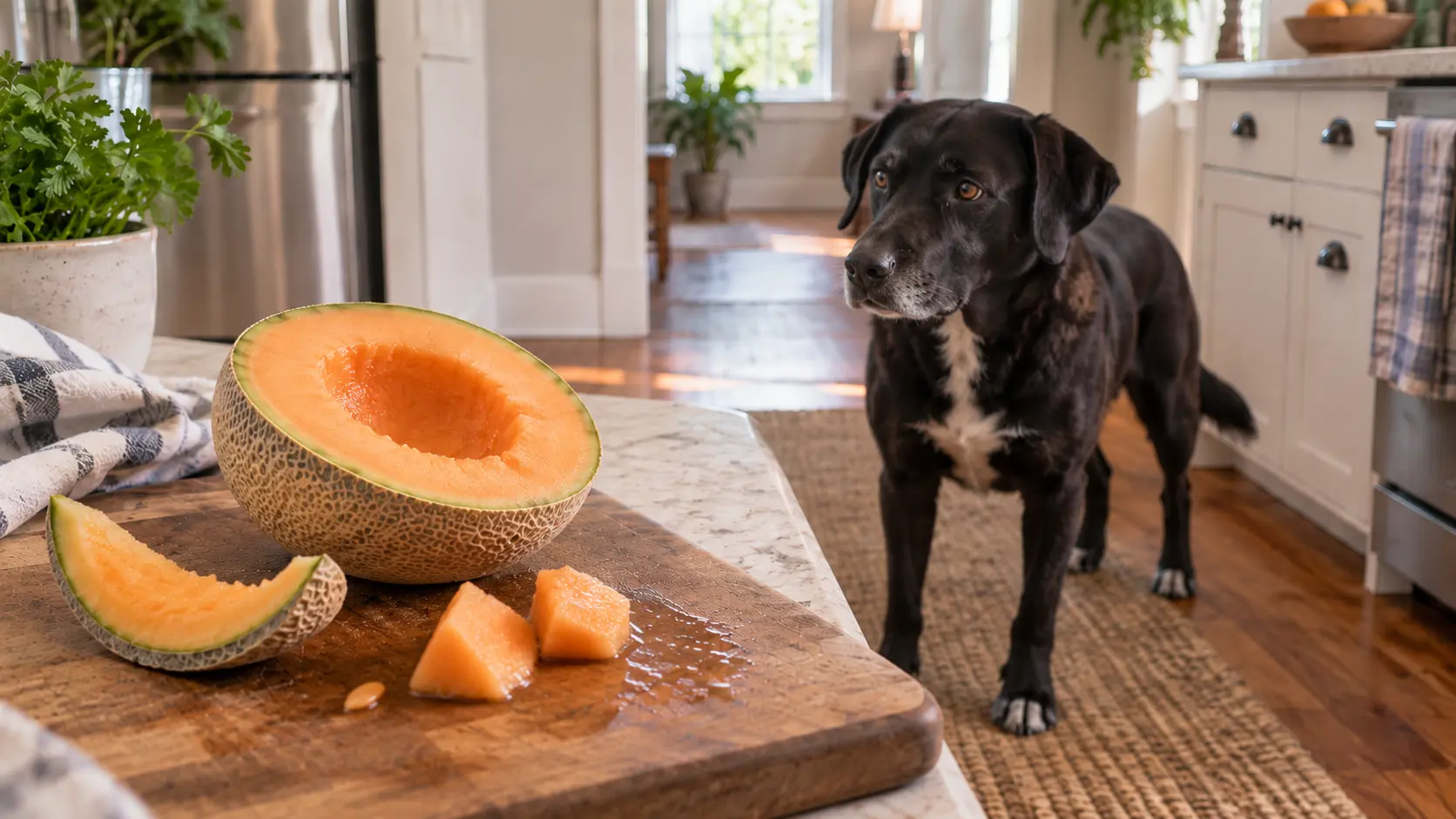
Yes, most healthy dogs can eat a small amount of plain cantaloupe flesh. The fruit itself is considered non-toxic to dogs, but that does not mean every part of the melon is suitable for them to swallow.
Remove the rind and seeds, cut the flesh into manageable pieces, and treat cantaloupe as an occasional extra rather than part of your dog’s essential diet.
The main things to get right are portion size and preparation. The rind deserves particular attention because it can create a choking or gastrointestinal obstruction risk if a dog swallows a large enough piece.
Can Dogs Eat Cantaloupe? The Short Answer
For most healthy dogs, plain cooked shrimp can be an occasional treat.
Shrimp should be fully cooked and served without sauces, breading, butter, garlic, onion, or heavy seasoning. Removing the shell and tail also avoids unnecessary choking and foreign-body risks.
Shrimp is still an extra rather than a nutritionally necessary part of a dog’s diet. The World Small Animal Veterinary Association recommends keeping treats and other extras to no more than about 10% of a dog’s daily calories, with the main diet providing complete and balanced nutrition.
That 10% is an upper limit, not a target to fill with shrimp or other treats.
Dogs with prescription diets or medical conditions that require dietary restrictions may need different guidance.
Can Dogs Eat Cantaloupe? The Short Answer
Plain cantaloupe flesh is generally safe for most healthy dogs in modest amounts. The ASPCA lists true cantaloupe as non-toxic to dogs, so this is not a food that needs to be treated like grapes, chocolate, or another known canine toxin.
There are still a few sensible precautions.
Part of cantaloupe |
Can dogs have it? |
What to know |
|---|---|---|
Plain flesh |
Yes, in modest amounts |
Serve as an occasional treat |
Rind |
No |
Tough pieces can create choking or obstruction concerns |
Seeds |
Remove before serving |
A simple precaution; they are not known to be a classic toxin |
Sweetened or processed cantaloupe |
Usually best avoided |
Added ingredients change the safety question |
Cantaloupe also should not replace a complete and balanced dog food. For most dogs, it is simply another optional treat.
Can Dogs Eat Cantaloupe Rind or Seeds?
The soft flesh is the easy part. The rind and seeds need a little more explanation.
Can Dogs Eat Cantaloupe Rind?
Do not deliberately feed your dog cantaloupe rind.
The important distinction is that the rind is not considered a classic poison. The concern is physical. Cantaloupe rind is tough, and a swallowed piece may be difficult for a dog to chew, digest, or pass through the gastrointestinal tract.
Depending on the size of the piece and the dog, rind can create a choking hazard or contribute to a gastrointestinal foreign-body obstruction.
That does not mean every bit of swallowed rind will cause a blockage. Some foreign material passes without incident, while other material does not. There is no reliable universal rule such as “this size of rind is always safe.”
The practical approach is much simpler: remove the rind completely before offering cantaloupe.
Can Dogs Eat Cantaloupe Seeds?
Scoop out the seeds before serving the melon.
There is not strong evidence showing that a few cantaloupe seeds act as a canine toxin, so it would be misleading to describe them as poisonous. Removing the seed mass is still an easy precaution and avoids giving your dog parts of the fruit that offer no real benefit.
If a dog accidentally swallows a few seeds with the flesh, that is not the same situation as known poisonous seed or pit exposures.
How Much Cantaloupe Can a Dog Eat?
There is no veterinary standard that says a dog of a particular weight should receive exactly two, three, or five cantaloupe cubes.
A more useful guideline is to look at the dog’s total treat intake.
Veterinary nutrition guidance generally recommends keeping treats and other extras below about 10% of a healthy dog’s daily calories. That includes everything outside the main diet—not 10% cantaloupe plus additional biscuits, chews, training treats, and table food.
The 10% figure is also a ceiling rather than something owners need to reach.
If your dog has never eaten cantaloupe before:
- Remove the rind and seeds.
- Offer one small piece appropriate for your dog's size.
- Watch for digestive upset.
- If it is tolerated well, small portions can be offered occasionally.
A Chihuahua and a Great Dane obviously do not have the same calorie needs or need the same piece size. Body condition, activity, age, other treats, and medical conditions all matter.
For broader guidance on where table foods fit into a dog’s diet, see our guide to human foods dogs can eat.
How to Prepare Cantaloupe for Dogs Safely
Safe preparation starts before you cut the melon.
The FDA recommends washing melons even when you are not going to eat the rind. Cutting through the outer surface can transfer microorganisms from the rind onto the flesh.
A simple preparation routine works well:
- Wash the whole cantaloupe under running water. A clean produce brush can be used on the firm outer rind.
- Skip soap and detergent. Plain running water is appropriate for washing produce.
- Cut the cantaloupe open and scoop out the seeds.
- Remove the rind completely.
- Cut the flesh into manageable pieces. Size them for your dog's body size and eating habits rather than using one standard cube size for every dog.
- Serve the fruit plain. Avoid adding sugar, syrup, sauces, or dessert ingredients.
- Start small if it is a new food.
A few pieces of fresh flesh are simpler than fruit cups, desserts, or smoothies containing several ingredients. With mixed foods, cantaloupe may no longer be the part that determines whether the food is suitable for your dog.
What Happens If a Dog Eats Too Much Cantaloupe?
Eating a large amount of cantaloupe can cause digestive upset in some dogs, especially if the fruit is new to them.
Possible signs include:
- loose stool
- vomiting
- stomach upset
Dogs vary in how well they tolerate new foods. If cantaloupe repeatedly causes digestive problems, there is no reason to keep offering it.
Contact your veterinarian if vomiting is persistent or repeated, diarrhea is severe or ongoing, your dog becomes markedly lethargic, appears painful, cannot keep water down, or otherwise seems significantly unwell.
That is different from a dog eating the rind, where the possibility of a swallowed foreign object adds another concern.
My Dog Ate Cantaloupe Rind — What Should I Do?
If your dog stole cantaloupe with the rind attached, the appropriate response depends on what was swallowed rather than on cantaloupe toxicity.
Start by checking:
- approximately how much rind is missing
- how large and thick the swallowed piece may have been
- when your dog ate it
- your dog's approximate size
- whether your dog is behaving normally
- whether breathing or swallowing appears affected
A tiny fragment and a large strip of rind are not equivalent situations. The same piece may also represent a different physical risk in a small dog than in a much larger one.
When It Is an Emergency
Trouble breathing or active choking requires immediate veterinary care.
Do not wait to see whether those signs improve on their own.
Signs That May Suggest a Gastrointestinal Problem
A swallowed foreign object can sometimes block part of the digestive tract. Warning signs may include:
- repeated vomiting
- loss of appetite
- abdominal pain
- a swollen or distended abdomen
- unusual lethargy
- straining to defecate or producing very little stool
- worsening gastrointestinal symptoms
If your dog swallowed a sizeable piece of rind, you cannot tell how much was eaten, the dog is small relative to the piece, or concerning symptoms develop, contact your veterinarian for individual advice.
Do not try to make your dog vomit at home unless a veterinarian or poison-control professional specifically tells you to do so. Whether inducing vomiting is appropriate depends on what was swallowed and the individual situation.
Is Cantaloupe Good for Dogs?
Cantaloupe contains water, naturally occurring carbohydrates and sugars, fiber, vitamins, and minerals.
That does not make it a nutritional requirement for dogs.
A healthy dog eating an appropriate complete and balanced diet should already receive the nutrients needed from the main food. A few pieces of cantaloupe can be an enjoyable treat, but they should not be presented as a treatment for dehydration, constipation, inflammation, or other health problems.
You may also see cantaloupe promoted because it contains vitamin C. Dogs can synthesize vitamin C themselves, so cantaloupe does not need to be fed as a required vitamin C source or “immune booster.”
If you want to compare cantaloupe with other produce, our guide to fruits and vegetables dogs can eat covers the broader category.
When Cantaloupe May Not Be a Good Choice
A food can be non-toxic and still be a poor choice for a particular dog.
Dogs With Diabetes or Medically Controlled Diets
Dogs with diabetes need a consistent feeding plan, and treats contribute calories and carbohydrates just like other foods.
If your dog has diabetes, do not add cantaloupe routinely without checking with the veterinarian managing the diet and insulin plan.
The same caution makes sense for dogs on:
- prescription or therapeutic diets
- structured weight-loss programs
- medically restricted feeding plans
- diets being managed for chronic gastrointestinal problems
Cantaloupe is not necessarily forbidden in every one of these situations. The issue is that adding seemingly small extras can interfere with a carefully controlled diet.
Can Puppies Eat Cantaloupe?
A healthy, fully weaned puppy eating solid puppy food can generally have a very small amount of properly prepared cantaloupe flesh.
Keep the portion small and cut it appropriately for the puppy.
Puppies have specific nutritional requirements for growth, so their complete puppy food should remain the nutritional priority. Cantaloupe is only an occasional extra and should not displace meaningful amounts of the puppy’s normal food.
Frequently Asked Questions
Can Dogs Eat Frozen Cantaloupe?
Plain frozen cantaloupe flesh is not inherently toxic, but freezing makes the pieces harder.
Use small pieces and supervise your dog. Thawing the fruit may be a better option for dogs that gulp food, have dental problems, or have difficulty chewing hard treats.
Avoid large frozen chunks that could be swallowed whole.
Can Dogs Eat Cantaloupe Every Day?
A small amount could fit within some healthy dogs’ daily treat allowance, but there is no nutritional reason a dog needs cantaloupe every day.
Total treat calories and individual tolerance matter more than frequency alone. Feeding a variety of extras should never push the dog’s main complete diet out of balance.
Can Dogs Have Other Types of Melon?
“Melon” describes several different fruits, so one cantaloupe answer should not automatically be applied to every variety or every part of those fruits.
Preparation also matters. Rinds, seeds, serving size, and other safety considerations can differ.
For a broader look at produce that may be suitable for dogs, check our guide to dog-safe fruits and vegetables.
Can Dogs Eat Cantaloupe? The Bottom Line
Yes, most healthy dogs can eat cantaloupe when you keep it simple: serve a modest amount of plain flesh, remove the rind and seeds, and count it as part of the dog’s overall treat intake.
The rind is the main safety concern. It is not a classic cantaloupe toxin, but a swallowed piece can create a choking or gastrointestinal obstruction risk. If your dog has already eaten rind, judge the situation by the amount swallowed, your dog’s size, and any symptoms—and contact a veterinarian when the exposure or symptoms are concerning.