
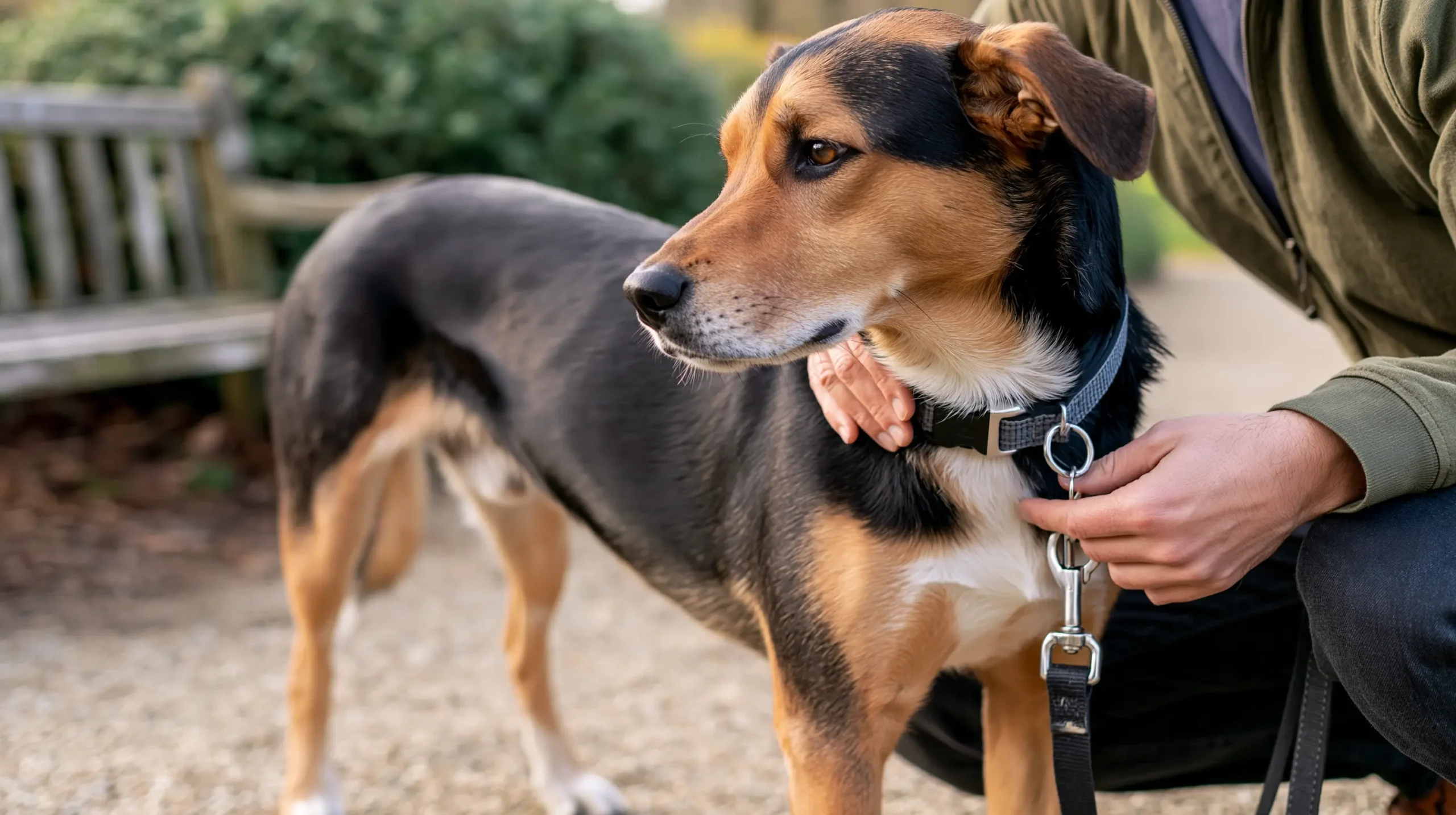
The best dog collar is not automatically the thickest, most expensive, or highest-rated option. It needs to fit your dog’s neck, suit their coat and activity level, hold identification securely, and remain comfortable during normal wear.
For most dogs, the Ruffwear Front Range offers the best balance of comfortable webbing, practical hardware, and easy everyday use. Other dogs may be better served by padded leather, a limited-slip martingale, a waterproof collar, or a narrower option made specifically for small necks.
This guide compares seven dog collars with genuinely different purposes, along with their common complaints, sizing limitations, and the dogs they may not suit.
Affiliate disclosure: LumaPaw may earn a commission when you purchase through links on this page, at no additional cost to you. Our recommendations are based on product information, retailer listings, and customer-feedback patterns—not personal testing.
Best Dog Collars at a Glance
Best Overall Everyday Collar: Ruffwear Front Range
A balanced flat collar with comfortable webbing, a dedicated aluminum leash ring, a separate ID attachment, and a silicone tag silencer.
Best for: Everyday identification and ordinary walks
Main limitation: Does not fit very small necks and is not reflective
Best Padded Leather Collar: Soft Touch Leather Two-Tone
A substantial full-grain leather collar with soft inner padding, brass hardware, and wider options for medium and large dogs.
Best for: Owners who prefer padded leather and traditional hardware
Main limitation: Thick, initially stiff, and awkward to size for dogs between ranges
Best Personalized ID Collar: GoTags Reflective Personalized Collar
The dog’s name and phone number are embroidered into reflective nylon, reducing reliance on a noisy dangling ID tag.
Best for: Visible, quiet identification
Main limitation: The adjustment slider may cover part of the contact information
Best Patterned Collar: LupinePet Original Designs
A washable nylon collar with jacquard patterns woven into the webbing and replacement coverage for eligible pet-related damage.
Best for: Owners who want patterns without relying on surface printing
Main limitation: Fairly basic construction with one shared ring for the leash and tags
Best Budget Collar for Small Dogs: CollarDirect Adjustable Reflective
Its X-small option fits necks from approximately 7 to 11 inches and uses narrower webbing than the other collars in this guide.
Best for: Toy breeds, smaller dogs, and growing puppies
Main limitation: Basic nylon and mixed feedback about buckle reliability
Best Martingale for Medium and Large Dogs: Max and Neo Chain Martingale
A limited-slip collar with thick nylon, a chain control loop, reflective stitching, and a locking buckle on standard sizes.
Best for: Supervised walks with dogs that may reverse out of flat collars
Main limitation: Size charts vary between older and newer retailer listings
Best Waterproof Collar for Water-Loving Dogs: Ruffwear Confluence
Coated webbing rinses clean and dries faster than ordinary woven nylon after swimming, rain, mud, or snow.
Best for: Medium and large dogs that frequently get wet
Main limitation: Stiffer than ordinary nylon and limited to roughly 14–26-inch necks
Types of Dog Collars and What Each Style Is For
Understanding the different types of dog collars is more useful than choosing solely by color or brand. Each style has a different purpose, and some dogs may use one collar for identification and a separate harness for walking.
Flat Collars
Flat collars are the most common dog collar style. They usually use nylon, polyester, leather, or coated webbing and close with either a side-release buckle or a traditional pin buckle.
They work well for identification and normal everyday wear. However, an ordinary flat collar may not stop a narrow-headed or nervous dog from backing out, and it can place uncomfortable pressure on the neck when a dog pulls hard.
Martingale Collars
A martingale is a limited-slip design. It becomes smaller when tension is applied but should not continue tightening like an unrestricted choke chain.
This style can help with dogs whose heads are narrower than their necks or dogs that have learned to reverse out of ordinary collars. Correct adjustment and supervision are essential. A martingale is not a complete loose-leash training solution.
Our dedicated guide explains how martingale collars work and compares additional designs.
Breakaway Collars
Breakaway collars are designed to release when sufficient pulling force is applied, which may reduce snagging risk in certain situations. They are different from ordinary quick-release collars, which only open when someone manually squeezes the buckle.
Compare our breakaway dog collars for release design, sizing, leash compatibility, and important safety limitations.
Leather and Padded Collars
Leather collars offer a traditional appearance and can become more flexible with use. Padded models may reduce direct contact and rubbing for some dogs, particularly when the inner lining is smoother than standard webbing.
They are usually heavier than nylon, require more care, and are not the most practical choice for dogs that swim regularly. You can compare the best leather dog collars for more sizes and styles.
Waterproof Collars
Waterproof collars normally use coated webbing that absorbs less moisture than regular nylon. They are easier to rinse after muddy walks and less likely to stay damp for hours.
The trade-off is that coated material can feel stiffer and less breathable against the neck. For more wet-weather options, compare our waterproof dog collars for swimming, mud, and rain.
Tactical Collars
Tactical collars generally use wider webbing, reinforced stitching, substantial hardware, and sometimes a control handle. Their additional weight and bulk make them unnecessary for many ordinary household dogs.
Our guide to tactical dog collars with handles compares reinforced options for owners who have a genuine handling or working-use need.
Hunting and Field Collars
Hunting collars prioritize visibility, identification, weather resistance, and practical hardware for sporting and field dogs. They are not automatically the same as tactical collars, which usually emphasize close control and reinforced handles.
Compare our hunting dog collars for field and sporting dogs for dedicated field-use options.
Reflective and Personalized Collars
Reflective material improves visibility when headlights or a flashlight shine on it. It does not produce its own light or guarantee that a driver will see the dog.
Personalized collars place contact information directly on the webbing or an attached plate. They can be useful if a tag is lost, but the information must remain readable after the collar is adjusted.
Our personalized dog collar guide compares embroidered names, engraved buckles, and built-in nameplates.
How We Chose These Dog Collars
How We Researched These Dog Collars.
Selections were based on current manufacturer specifications, Amazon and Chewy listings, product construction, available sizes, cleaning instructions, retailer availability, and repeated themes in positive, neutral, and negative customer reviews.
We paid particular attention to:
- Neck ranges and collar widths
- Buckles, leash rings, and ID attachments
- Materials and edge comfort
- Reflectivity and water resistance
- Adjustment stability
- Repeated breakage or sizing complaints
- Suitable and unsuitable use cases
- Whether each product added something different to the list
High ratings alone were not enough. The Carhartt Journeyman, for example, had a strong overall score but was removed after repeated buckle-release and breakage complaints conflicted with its proposed rugged large-dog position.
The 7 Best Dog Collars Reviewed

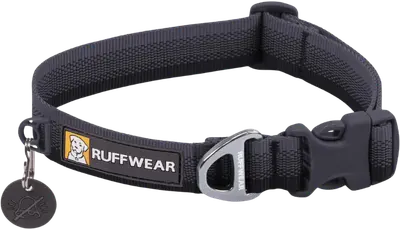
Ruffwear Front Range — Best Overall Everyday Collar
Best for: Everyday identification, neighborhood walks, and owners wanting clean tag organization.
Avoid if: Your dog pulls heavily, regularly backs out of flat collars, or needs an extra-wide collar.
Honest buying note: This is the best-balanced choice, not an escape-proof or heavy-pulling collar.
The Ruffwear Front Range is our strongest general recommendation because it covers the everyday details well without becoming bulky or overly specialized.
Its polyester Tubelok webbing connects to an aluminum V-ring for the leash. Identification tags attach separately, and a silicone silencer helps reduce metal-on-metal jingling. Ruffwear currently offers three neck ranges, beginning at approximately 11 inches and extending to 26 inches.
The collar feels more thoughtfully organized than basic nylon models where the leash clip and every tag share one small ring. It is also easier to put on than a traditional leather buckle.
Across recent Amazon and Chewy feedback, owners frequently praised its adjustability, quick drying, sturdy leash attachment, and long service life. The most common criticism was that the webbing felt narrower or lighter than expected for very large dogs.
Pros
- Comfortable everyday webbing
- Aluminum leash attachment
- Separate ID ring
- Reduced tag noise
- Easy side-release buckle
- Good general-purpose design
Cons
- No reflective material
- Does not fit necks under 11 inches
- May look narrow on giant breeds
- Not intended to stop dogs backing out
- Stock varies by size and color

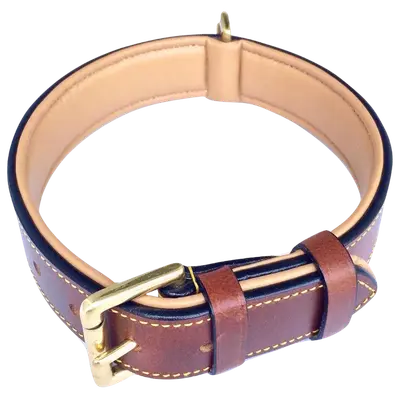
Soft Touch Leather Two-Tone — Best Padded Leather Collar
Best for: Medium and large dogs whose owners want padded leather and traditional hardware.
Avoid if: You remove the collar several times daily, your dog swims frequently, or their neck falls between two sizes.
Common complaints: Difficult buckling, excessive thickness, cosmetic wear on colored leather, and occasional failure around the smaller tag attachment.
Honest buying note: Choose brown when possible. Natural wear is less conspicuous than peeling on brighter coated finishes.
Soft Touch is the most convincing leather option in the group. It combines full-grain leather with a soft inner leather lining and lacquered brass hardware.
The size range becomes wider as it gets larger: the Large is approximately 1.5 inches wide, while the X-Large reaches around 1.75 inches. That gives it more visual balance on broad necks than a standard one-inch collar.
The large leash D-ring sits away from the buckle, and a separate smaller ring holds identification. Customer feedback commonly praises the padding and appearance, but the leather is thick and can be difficult to bend through the buckle at first.
Sizing deserves careful attention. The published ranges leave gaps between some sizes, and the padding adds bulk that can make the usable fit feel different from a thin collar with the same measurement.
Pros
- Full-grain leather
- Soft padded lining
- Brass buckle and hardware
- Wide options for large dogs
- Separate leash and ID rings
- Traditional appearance
Cons
- Initially stiff
- Slower to fasten and remove
- Awkward gaps between sizes
- Bulky on some small dogs
- Colored finishes may scratch or peel
- Not practical for frequent swimming

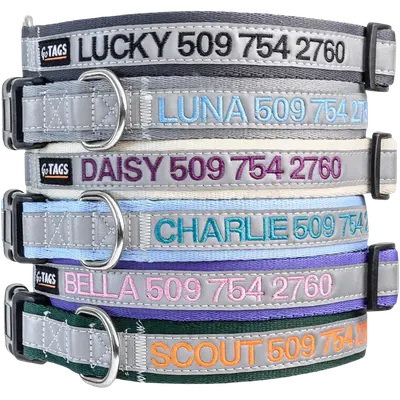
GoTags Reflective Personalized — Best Personalized ID Collar
Best for: Dogs wearing the collar mainly for identification, especially when the leash connects to a harness.
Avoid if: Your dog pulls hard, has an under-11-inch neck, or requires a long custom message.
Honest buying note: Use one reliable phone number, choose contrasting colors, and check every digit after delivery. Adjust the collar before confirming that all text is visible.
GoTags places the dog’s name and phone number directly on the collar using embroidery. The reflective strip adds visibility when illuminated, while the lack of a required name tag reduces jingling.
The collar uses nylon webbing, a plastic side-release buckle, and a metal D-ring. Current sizing begins at approximately 11 inches and extends beyond 27 inches, depending on the size.
Readability is its strongest advantage. It may be easier for someone to see a phone number on the collar than to handle an excited or nervous loose dog and inspect a small tag.
Its main design problem is serious enough to mention before purchase: the adjustment slider can rest over part of the embroidery. This is more likely when the dog is near the lower end of a size range or the custom text is long.
Pros
- Embroidered name and phone number
- Reflective strip
- Less tag noise
- Machine-washable nylon
- Clear identification when fitted correctly
- Strong retailer-review history
Cons
- Slider may conceal important digits
- No true toy-breed size
- Plastic buckle
- Can retain moisture after swimming
- Reflective strip may eventually lift or wear
- Customization errors occasionally occur

LupinePet Original Designs — Best Patterned Collar
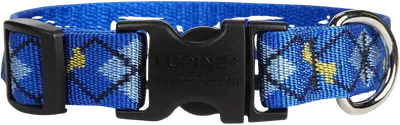
Best for: Owners who want a colorful everyday collar with useful replacement protection.
Avoid if: Your dog needs padding, waterproof webbing, strong reflectivity, or separate leash and ID rings.
Honest buying note: Check the exact pattern’s size and width rather than assuming every Original Designs collar has the same options.
Many patterned collars use a design printed onto the surface. LupinePet instead weaves its Original Designs patterns into the nylon webbing, which reduces the risk of the entire design peeling away like a surface coating.
The broader Original Designs range includes several widths and neck sizes, but the Dapper Dog version linked here uses 3/4-inch webbing across its available sizes. The collar uses a quick-release buckle and a welded metal D-ring.
Lupine’s “Even if Chewed” guarantee is another genuine advantage. Eligible products damaged during normal pet use may qualify for replacement, but conditions apply and excessive or repeated damage can be excluded.
Pros
- Pattern woven into the material
- Washable nylon
- Good design selection
- Quick-release buckle
- Welded D-ring
- Replacement coverage for eligible damage
Cons
- One ring shared by tags and leash
- No padding
- No waterproof coating
- Standard designs are not reflective
- Width varies between patterns and retailers
- Guarantee is conditional

CollarDirect Adjustable Reflective — Best Budget Collar for Small Dogs
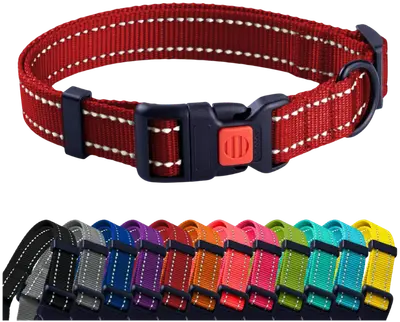
Best for: Toy breeds, small dogs, and growing puppies needing an affordable, narrow collar.
Avoid if: Your dog pulls strongly, backs out of flat collars, or needs premium hardware.
Honest buying note: Ignore labels such as Small or Medium. Use the numerical neck range and compare the collar width with the length of your dog’s neck.
A collar described as “small” is not always compact enough for a toy breed. CollarDirect stands out because its X-small option fits necks from roughly 7 to 11 inches and is only about 2/5 inch wide.
It uses nylon webbing, reflective stitching, a metal D-ring, and a plastic quick-release buckle with a sliding lock. The sizes become progressively wider, reaching one inch for larger dogs.
The narrow X-small construction makes it a better match for very small necks than a padded collar that starts near 12 inches. It is also affordable enough for a puppy that may outgrow the size.
Customer feedback is positive overall, particularly for value, visibility, and adjustment. However, some owners report the buckle opening despite the lock, so the closure should be inspected carefully.
Pros
- Starts at a 7-inch neck
- Narrow X-small webbing
- Low price
- Reflective stitching
- Lockable buckle
- Amazon and Chewy availability
Cons
- Basic nylon construction
- Some buckle-release complaints
- Not padded
- Limited reflective surface
- Can absorb water
- Parent Amazon listing combines multiple versions

Max and Neo Chain Martingale — Best Martingale for Medium and Large Dogs
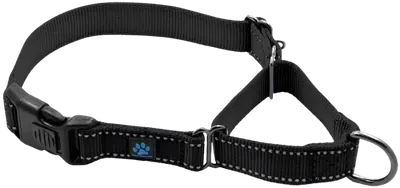
Best for: Medium and large dogs that may back out of correctly fitted flat collars.
Avoid if: Your dog is very small, has a delicate neck, or will wear the collar unattended.
Safety note: Martingales should be supervised because their moving loop can create entanglement risk. A dog that pulls hard may also experience excessive pressure on sensitive neck structures.
Max and Neo combines thick nylon with a metal chain control loop. When correctly adjusted, the martingale section reduces the collar’s circumference as tension is applied, making it harder for some dogs to reverse out.
Standard sizes include reflective stitching, a substantial leash D-ring, a locking buckle, and a separate attachment for lightweight tags. The manufacturer has revised its sizing, so older and newer retailer charts may not match.
Compared with the cheaper PetSafe martingale researched for this guide, Max and Neo offers more substantial hardware and a locking closure. It is also heavier, noisier, and less suitable for delicate necks.
Pros
- Limited-slip martingale design
- Thick webbing
- Locking buckle on standard sizes
- Reflective stitching
- Strong leash ring
- Separate ID attachment
- Broad retailer availability
Cons
- Conflicting old and new size charts
- Chain adds weight and noise
- May leave gray marks on light coats
- Separate tag loop can fail if overloaded
- Requires supervised use
- Not a pulling cure

Ruffwear Confluence — Best Waterproof Collar for Water-Loving Dogs
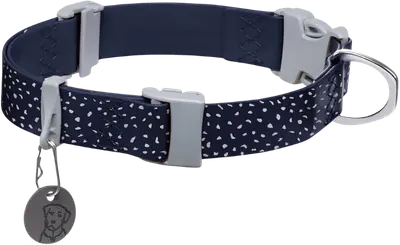
Best for: Medium and large dogs that regularly swim, hike in wet conditions, or come home covered in mud.
Avoid if: Your dog has sensitive skin, a small neck, or rarely gets wet.
Honest buying note: The extra cost makes sense for frequent water exposure. For ordinary dry-weather use, the Front Range is the better general purchase.
Ordinary woven collars can remain wet, collect sand, and develop a persistent odor. The Ruffwear Confluence uses coated webbing that absorbs less water and can be rinsed clean after swimming or muddy outings.
It also includes reflective screen printing, a separate tag holder, a silicone tag silencer, and a dedicated leash attachment. Current sizing covers approximately 14–20-inch and 20–26-inch necks.
The specialist construction is useful, but it is not the most comfortable choice for every dog. Coated webbing is stiffer than standard nylon, and a small number of owners reported rubbing or irritation.
Pros
- Waterproof coated webbing
- Easy to rinse
- Faster drying
- Reduced wet-collar odor
- Reflective details
- Separate leash and ID points
Cons
- Starts at a 14-inch neck
- Only one-inch width
- Stiffer than woven nylon
- May rub sensitive skin
- Mixed feedback about cam adjusters
- Inconsistent availability
- Higher price
How to Choose the Right Dog Collar
Measure the Neck First
Use a soft measuring tape around the area where the collar naturally sits. Keep the tape snug without pulling it tightly into the coat.
Do not choose a size based only on breed, weight, or the name of the dog’s previous collar size. A Medium from one brand may be close to a Small or Large from another.
Recheck growing puppies frequently.
Consider Width as Well as Length
A wider collar can spread contact across a larger area, but too much width may feel bulky on a short neck.
Toy breeds usually need narrow webbing and a small buckle. Large neck measurements do not automatically mean a collar is strong enough for a powerful puller.
Match the Material to Daily Life
Nylon and polyester are generally light, affordable, and easy to replace.
Leather offers a traditional appearance and padded options but requires more care.
Coated webbing suits regular water exposure but may feel less flexible.
Reflective stitching or strips can improve visibility when light shines on the collar.
Inspect the Hardware
Before every walk, check:
- Buckle for cracks or incomplete closure
- D-ring for movement or deformation
- Stitching for loose threads
- Adjustment slider for slipping
- Leather for tearing near hardware
- Coated webbing for sharp or peeling edges
Replace the collar if it opens under light hand pressure or repeatedly changes size during use.
Decide Whether the Collar Is for ID or Walking
A collar can hold tags while the leash connects to a harness.
This setup may be more appropriate for dogs that pull strongly, dogs with neck or airway concerns, and some short-nosed breeds. Veterinary guidance is sensible when a dog has a diagnosed airway, spinal, or neck condition. Pressure from hard pulling can affect delicate neck structures.
Dog Collar Safety and Quality Checklist
- Confirm that the collar cannot easily pass over the dog’s head.
- Check the skin and coat for redness, rubbing, or hair loss.
- Keep personalized contact details visible.
- Dry the neck and collar after swimming.
- Remove martingales before unattended rest or rough play.
- Do not use an everyday neck collar for a tie-out.
- Never attach a vehicle restraint directly to a neck collar.
- Do not expect a collar to stop pulling without training.
- Replace frayed webbing, cracked buckles, loose rings, and sharp hardware.
- Check puppy sizing regularly as the neck grows.
- Use a harness when leash pressure against the neck is a concern.
No collar should be described as completely escape-proof, indestructible, or guaranteed safe in every situation.
Frequently Asked Questions About Dog Collars
How tight should a dog collar be?
A flat collar should sit securely without restricting breathing or movement. You should be able to slide fingers beneath it, but the collar should not be loose enough to pass over the dog’s head.
Martingale collars require a different adjustment because the limited-slip section must tighten without becoming unrestricted. Follow the exact manufacturer instructions.
What type of dog collar is best for everyday use?
A comfortable adjustable flat collar works for many dogs. Look for secure hardware, suitable width, smooth edges, and a reliable place for identification.
Dogs that pull hard or have neck-related health concerns may need a harness for walks.
Are leather or nylon dog collars better?
Neither material is best for every dog.
Nylon is usually lighter, cheaper, and easier to wash. Leather often looks more traditional and may soften with use, but it is heavier and requires more care. Waterproof coated webbing is more practical for frequent swimmers.
What are dog collars made of?
Common materials include nylon, polyester, leather, coated webbing, plastic buckles, and metal leash rings. Martingales may use either a fabric control loop or a metal chain.
The material name alone does not establish quality. Stitching, edge finishing, hardware, adjustment, and fit are equally important.
Should dogs wear collars while sleeping or in a crate?
A collar can catch on crate hardware, furniture, another dog’s jaw, or other objects. The safest choice depends on the environment and the dog’s need for immediate identification.
Martingale and chain-loop collars should not be left on during unattended rest or rough play.
Are dog harnesses better than collars?
Harnesses are often better for dogs that pull because they distribute leash pressure across the body instead of concentrating it on the neck.
Collars remain useful for identification. Many owners use both: a collar for tags and a harness for the leash.
Why do some owners take dog collars off indoors?
Common reasons include reducing tag noise, preventing coat wear, allowing the neck to dry, and lowering snagging risk during crating or play.
Dogs that may escape through an open door still need reliable identification, so household risks should be considered before removing the collar.
How often should a dog collar be replaced?
Replace it according to condition rather than a fixed schedule.
Warning signs include:
- Fraying
- Cracked plastic
- Loose stitching
- Sharp edges
- A buckle that opens unexpectedly
- An adjuster that no longer holds
- Unreadable identification
- A size the dog has outgrown
Which Dog Collar Should You Choose?
The Ruffwear Front Range is the strongest everyday dog collar for owners who want comfortable webbing, organized tags, and practical hardware.
Choose Soft Touch for padded leather, GoTags for personalized identification, and CollarDirect for a small neck on a tighter budget. The Max and Neo martingale is the specialist choice for supervised walks with medium and large dogs that may back out, while the Ruffwear Confluence is worth its higher price mainly for dogs that regularly swim or get muddy.
Whichever dog collar you choose, measure the neck carefully, inspect the hardware, and decide whether the collar or a harness should carry the walking load.