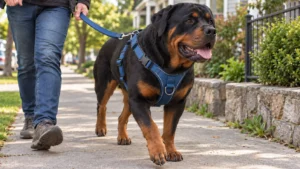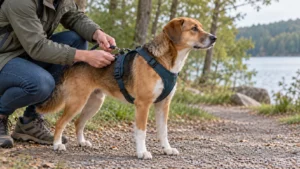
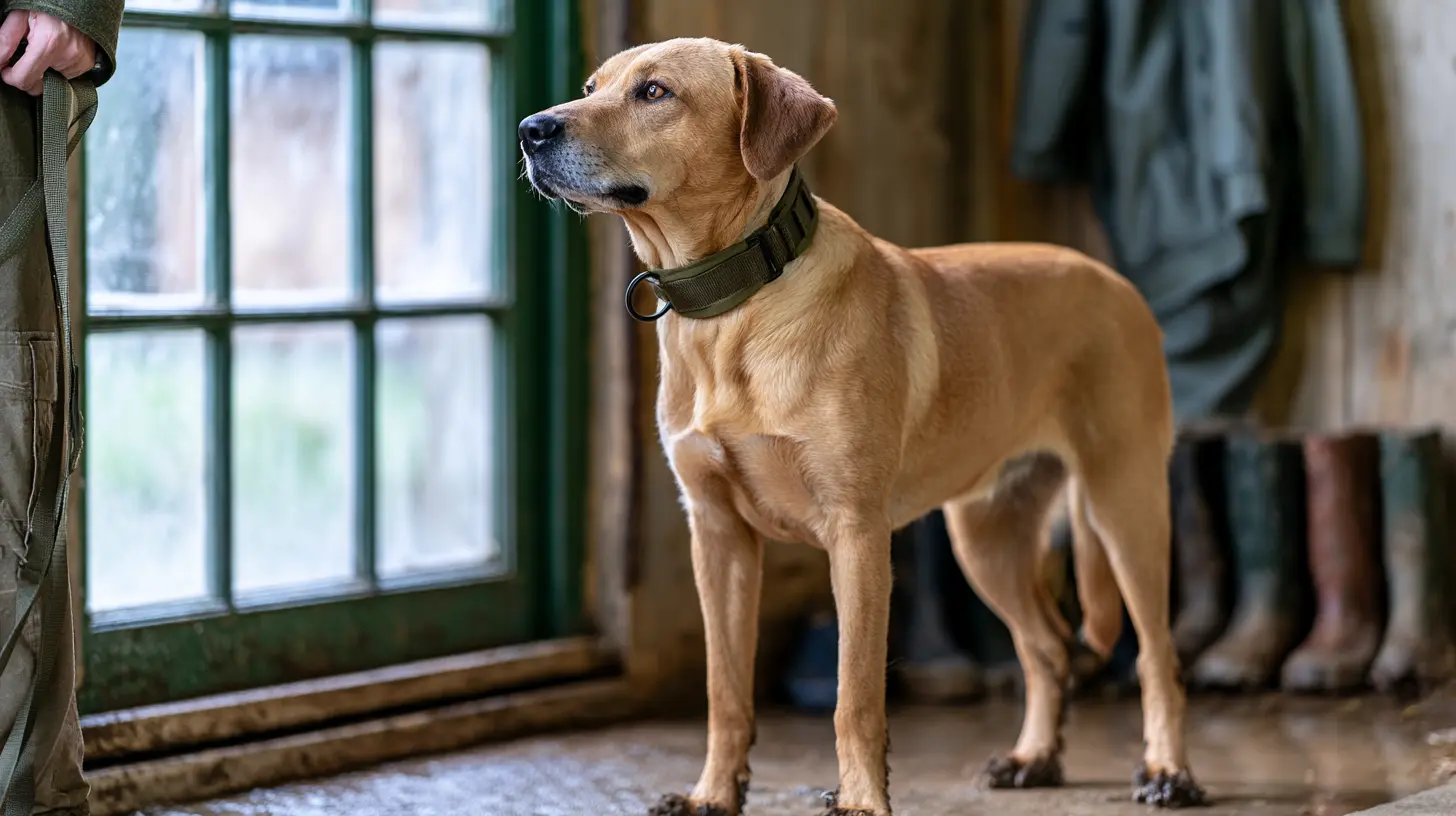
A tactical dog collar usually combines wider webbing, substantial hardware, and a handle for brief close control. That can be useful for strong, active, working, or outdoor dogs—but the word “tactical” is not a regulated quality standard.
Some collars have well-documented hardware and reinforced construction. Others mainly offer military colors, patches, and oversized buckles. The right choice depends on your dog’s neck size, build, comfort needs, and how you plan to use the collar.
Based on product specifications, customer-feedback patterns, and comparison with similar options, the OneTigris GBT08 is our Best Overall tactical dog collar. The Miles Tactical model has better-documented premium hardware, while the two-inch Tacticollar is built for broad-necked, very large dogs.
A heavy collar will not teach a dog to stop pulling. For dogs that regularly place strong pressure on their necks, a properly fitted harness may be more appropriate. Our complete dog collar guide explains how different collar styles serve different purposes.
LumaPaw may earn a commission from qualifying purchases made through links in this article. This does not influence which products we include or how we discuss their limitations.
Our Top Tactical Dog Collar Picks
Each collar below earns its place for a different reason. We did not rank products by star rating or review count alone.
OneTigris GBT08 Tactical Dog Collar
Award: Best Overall
Best for: Medium and large active dogs
Handle: Yes
Padding: Yes
Main advantage: Strong balance of comfort, control, price, and customer evidence
Main limitation: Can feel bulky, and the buckle has no published load rating
Miles Tactical COBRA Collar
Award: Best Premium Hardware
Best for: Large and extra-large dogs where buckle quality is the priority
Handle: Yes
Padding: No padding stated
Main advantage: Genuine AustriAlpin COBRA buckle
Main limitation: Expensive, stiff, and relatively heavy
Tacticollar 2-Inch Tactical Dog Collar
Award: Best for Very Large Dogs
Best for: Broad-necked large and giant breeds
Handle: Yes
Padding: Neoprene
Main advantage: Full two-inch padded construction
Main limitation: Heavy and available in only Medium and Large
Spark Paws Tactical Dog Collar
Award: Best Wide Tactical Collar for Broad-Necked Dogs
Best for: Family dogs needing a handle and a choice of widths
Handle: Yes
Padding: Neoprene
Main advantage: Multiple widths and brighter colors
Main limitation: The two-inch version may be excessive for some dogs
MADE TO ROAM Explorer Control Collar
Award: Best Low-Profile Handle
Best for: Everyday close control without a large raised handle
Handle: Yes
Padding: Limited
Main advantage: Flat vegan-leather control handle
Main limitation: Numbered sizing is less intuitive, and the buckle is COBRA-style rather than a genuine COBRA
DAGANXI Tactical Dog Collar
Award: Best Budget Feature Bundle
Best for: Budget-conscious owners wanting patches and an AirTag case
Handle: Yes
Padding: Soft lining
Main advantage: Many features for a low price
Main limitation: More complaints about fraying, hook-and-loop wear, and accessory durability
Plutus Pet Reflective Tactical Collar
Award: Best Reflective Option
Best for: Low-light walks and dogs underserved by bulky tactical collars
Handle: No
Padding: Neoprene
Main advantage: Confirmed reflective edging
Main limitation: Adjustment may loosen, and it is less tactical than the handle-equipped picks
How We Researched These Tactical Dog Collars
LumaPaw did not personally test these products. We compared published specifications, retailer information, manufacturer claims, and recurring patterns in verified and unverified customer feedback.
Construction and hardware
We looked at the collar material, width, published weight, stitching, buckle design, leash attachment, handle construction, padding, and edge finishing.
A metal buckle is not automatically stronger than every plastic buckle. We gave more weight to named hardware and published specifications than to vague phrases such as “heavy-duty” or “military-grade.”
The Miles Tactical collar, for example, uses a genuine AustriAlpin COBRA buckle. The manufacturer provides a force rating for that buckle, but the rating does not automatically apply to the complete collar, stitching, handle, or V-ring.
Fit and intended use
We considered whether each collar was appropriate for everyday family dogs, broad-necked giant breeds, or more specialized working use.
Width and weight mattered. A two-inch collar may suit a large dog with a long, broad neck, but the same design can interfere with movement or comfort on a smaller dog.
Customer-feedback patterns
We looked beyond average star ratings and paid attention to recurring comments about:
- Sizing accuracy
- Handle usability
- Padding and chafing
- Buckle corrosion or failure
- Adjustment slipping
- Fraying and loose threads
- Hardware coating wear
- Long-term durability
- Snagging during rough play
Prices, ratings, sizes, and inventory can change, so check the current listing before ordering.
The 7 Best Tactical Dog Collars

OneTigris GBT08 Tactical Dog Collar — Best Overall
Common complaints and limitations
Most positive reviews mention the comfortable lining, sturdy feel, accessible handle, and easy buckle.
Some buyers found the collar larger or thicker than expected. One owner reported that the collar remained structurally usable but looked worn after about a year of daily use. Another reported buckle corrosion and eventual failure after prolonged ownership.
That does not establish a widespread buckle defect, but owners using the collar around rain, mud, or saltwater should dry and inspect the hardware regularly.
Honest buying note
OneTigris is not the strongest documented collar in this roundup. Its Best Overall position comes from balance: it provides the features most buyers expect without the weight, stiffness, or price of premium working-dog gear.
The handle is intended for brief control. Do not use it to lift or suspend the dog.
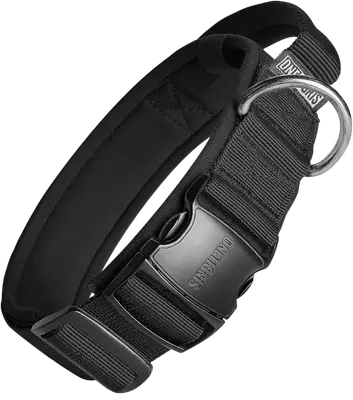
The OneTigris GBT08 offers the most practical balance for owners who want a tactical dog collar with a handle but do not need specialist working-dog hardware.
The checked Medium model measures 1.7 inches wide and weighs 4.83 ounces. It uses a reinforced woven outer construction, a soft padded lining, a metal quick-release buckle, an integrated control handle, and a hook-and-loop area for patches.
It comes in Small, Medium, and Large, with seven visible color options.
Best for
Medium and large active dogs that benefit from a padded collar and an accessible handle for brief close control.
Avoid if
Your dog has a small or short neck, frequently swims in saltwater, or needs a buckle with a published load rating.
Pros
- Soft padded lining
- Integrated control handle
- Metal quick-release buckle
- Patch attachment area
- Moderate verified weight
- Seven colors
- Strong customer-feedback volume
- Lower price than most specialist tactical collars
Cons
- May feel bulky on lightly built dogs
- Exact buckle alloy is not published
- No confirmed waterproofing
- Patch area can collect hair and debris
- Complete neck ranges need to be checked on the size chart

Miles Tactical 1.75-Inch COBRA Collar — Best Premium Hardware
Common complaints and limitations
Customers frequently praise the genuine buckle, secure adjustment, and substantial construction. Several owners reported years of service, including one who replaced the collar after five years mainly for cosmetic reasons.
The most common concerns are stiffness, bulk, and potential rubbing. One reviewer found the hook-and-loop corners sharp enough to worry about short-coated skin. Others said the collar could rotate when a leash was attached, moving the handle away from the top of the neck.
Adjustment also takes longer than on a standard sliding collar because the hook-and-loop system is designed to hold firmly once set.
onest buying note
The Miles collar makes sense when the genuine buckle and secure adjustment justify the price. It is unnecessary for many calm family dogs and may be less comfortable than a padded mid-priced alternative.
Inspect the edges carefully after fitting it, especially on short-haired dogs.
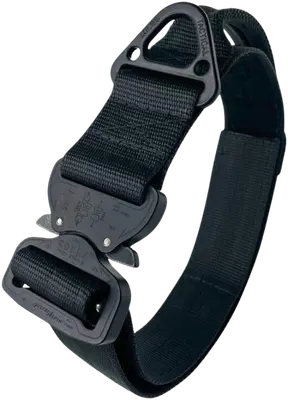
The Miles Tactical collar is built around its genuine AustriAlpin COBRA buckle. That gives it a clearer hardware advantage than collars using an unnamed metal clasp with a similar shape.
The Large With Handle version is 1.75 inches wide, fits the checked 18- to 29-inch neck range, and weighs 9.14 ounces. It also has a sewn control handle, V-ring, identification attachment points, hook-and-loop adjustment, and approximately eight inches of patch space.
The manufacturer states that the buckle can withstand more than 4,000 pounds of force. That figure applies to the buckle—not the complete collar assembly.
Best for
Large and extra-large dogs whose owners place a high priority on documented buckle quality.
Avoid if
Your dog is under approximately 70 pounds, has sensitive skin, or does not need specialized hardware.
Pros
- Genuine AustriAlpin COBRA buckle
- Published manufacturer buckle rating
- Wide 1.75-inch construction
- Sewn control handle
- V-ring and tag attachments
- Patch space
- Patch spaceSecure hook-and-loop adjustment
- Several positive multi-year ownership reports
Cons
- Expensive
- No soft padding stated
- Stiff compared with everyday collars
- Limited colors
- Slower adjustment process
- Relatively heavy

Tacticollar 2-Inch Tactical Dog Collar — Best for Very Large Dogs
Common complaints and limitations
Owners of German Shepherds, Belgian Malinois, Cane Corsos, Great Danes, and other large dogs frequently praise the width, padding, handle, and sturdy feel.
The main concern is choosing too much collar. Some buyers found Medium larger than expected, and the weight may be excessive for dogs without a broad, substantial neck.
One detailed reviewer noted that part of the metal buckle did not have nylon beneath it. Their thick-coated dog was comfortable, but owners of short-haired dogs should check for direct pressure or rubbing.
Honest buying note
Choose this collar for its broad padded body—not because its buckle looks similar to a COBRA.
A two-inch collar spreads contact over a wider area than a narrow strap, but it does not make continuous pulling safe. Dogs that regularly lean hard into a leash may be better managed with a suitable harness and training plan.
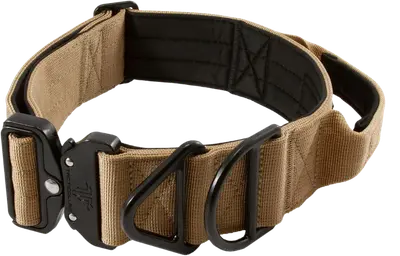
Tacticollar’s clearest advantage is its full two-inch width combined with a soft neoprene lining.
The checked Medium version weighs 11.68 ounces, making it the heaviest collar with a verified weight in this roundup. It has a quick-release metal buckle, an integrated handle, and two substantial attachment points.
The buckle resembles a COBRA-style closure but is not identified as a genuine AustriAlpin COBRA buckle.
Best for
Broad-necked large and giant dogs that can comfortably carry a wide, padded collar.
Avoid if
Your dog has a narrow neck, is sensitive to weight, or needs a patch panel.
Pros
- Full two-inch width
- Soft neoprene lining
- Functional control handle
- Substantial metal hardware
- Separate attachment points
- Strong customer satisfaction
- Clear hand-wash care instructions
Cons
- Heavy at 11.68 ounces
- Only Medium and Large shown
- No patch panel
- No published buckle-force rating
- Handle has no retaining strap
- May rotate during use

Spark Paws Tactical Dog Collar — Best Everyday Tactical Collar
Common complaints and limitations
Customers often praise the handle, easy buckle, bright colors, and substantial construction.
The two-inch version receives mixed comfort feedback. Some owners consider it ideal for broad-necked dogs, while others say it looks or feels too large for daily wear.
One reviewer reported that only part of the collar was lined with neoprene. Another found it difficult to attach identification tags because of the thick construction and large hardware.
Honest buying note
For most family dogs, the 1.5-inch version will be easier to justify than the two-inch model.
Do not select the widest option simply because it appears stronger. Neck length, coat, build, and comfort matter as much as body weight.
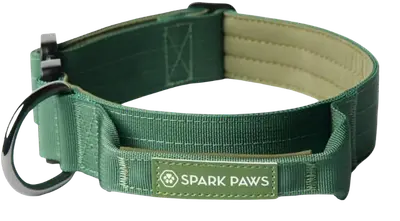
Spark Paws offers a less military-looking tactical collar with brighter colors and more width choices.
Depending on the selected size, available widths include one, 1.5, and two inches. The listed neck ranges run from 14–19 inches up to 21–26 inches.
The collar uses nylon, neoprene, and a metal-alloy buckle. It also has a grab handle and can be machine washed cold before line drying.
Best for
Medium and large family dogs whose owners want a handle, cushioning, and more color choice.
Avoid if
Your dog has a neck under 14 inches or is uncomfortable in a broad collar.
Pros
- Several width options
- Seven colors
- Neoprene cushioning
- Metal-alloy buckle
- Large grab handle
- Machine washable
- Moderate price
- Substantial customer-feedback volume
Cons
- Two-inch option can be excessively wide
- Product weight is not published
- Smallest range still starts at 14 inches
- Padding coverage may not be complete
- No patch panel
- Tag attachment can be awkward

MADE TO ROAM Explorer Control Collar — Best Low-Profile Handle
Common complaints and limitations
The most frequent criticism concerns cosmetic hardware wear. Several buyers report that the black coating on the rings or buckle can chip, fade, or tarnish.
Most say this did not affect function, but it matters for a collar sold partly on its polished appearance.
Some owners also found that the tag ring interfered with handle access or placed noisy tags closer to the dog’s head. The collar may rotate during use, changing the position of both the handle and rings.
onest buying note
MADE TO ROAM is one of the better everyday designs in the lineup. It lacks the padding of OneTigris and the specialist hardware of Miles Tactical, but its low-profile handle, separate rings, color selection, and warranty create a defensible position.
The handle is for brief guidance and control. It should not support a person’s weight or be used to lift the dog.
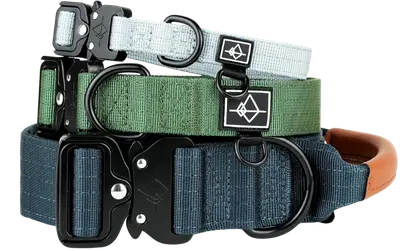
The MADE TO ROAM Explorer Control Collar uses a flat vegan-leather handle instead of a raised nylon loop.
That makes it a useful choice for owners who want a dog collar with handle access but prefer a cleaner, less bulky design.
It uses double-layer nylon, reinforced stitching, a COBRA-style metal buckle, a large leash D-ring, and a separate smaller identification ring. It is available in 15 colors and comes with a manufacturer warranty covering defects in materials and workmanship.
Best for
Everyday walks, vet visits, busy sidewalks, and other situations where brief close control may be useful.
Avoid if
You need thick neck padding, patch space, or a genuine load-rated COBRA buckle.
Pros
- Flat vegan-leather control handle
- Double-layer nylon
- Reinforced stitching
- Separate leash and tag rings
- Fifteen color choices
- Manufacturer defect warranty
- Clear cleaning instructions
- Strong customer feedback
Cons
- Limited cushioning
- Numbered sizing is less intuitive
- Product weight is not provided
- No patch panel
- Buckle is COBRA-style, not genuine AustriAlpin
- Handle and rings may rotate

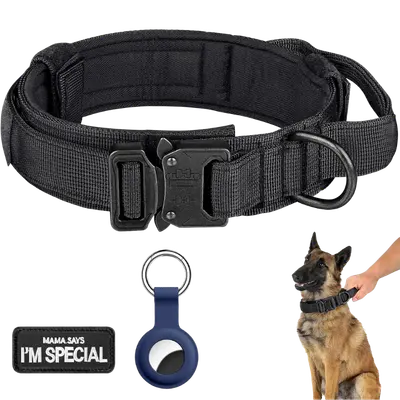
DAGANXI Tactical Dog Collar — Best Budget Feature Bundle
Common complaints and limitations
Loose threads and fraying are the most repeated construction complaints. Some buyers also report that the hook-and-loop surface or included patches deteriorated before the main collar.
The AirTag case should be treated as a convenience, not a security guarantee. One owner reported losing trackers when the included cases detached during hard play.
The most serious feedback involved one dog’s jaw becoming caught in another dog’s collar handle during rough play. This is not unique to DAGANXI, but it illustrates the snag risk created by raised handles.
Honest buying note
DAGANXI offers strong feature value, but its low price comes with more quality-control uncertainty.
Remove or closely supervise handled collars during rough multi-dog play. The AirTag holder should not replace a conventional ID tag and current microchip information.
DAGANXI includes more accessories than most products at its price.
The collar comes with a metal buckle, secondary hook-and-loop closure, padded interior, control handle, patch panel, two patches, and an AirTag case. Sizes run from Small through XXL, with many colors and patterns.
The seller describes the outer material as 1000D nylon, although independent strength testing is not provided.
Best for
Budget-conscious buyers who want patches, a handle, and an AirTag accessory in one package.
Avoid if
Multiple dogs regularly wrestle together, the collar will be worn in a crate, or you need professional working-dog construction.
Pros
- Lowest checked price
- Handle and patch panel
- Two included patches
- AirTag case
- Metal buckle
- Secondary closure
- Sizes S–XXL
- Many colors
- Very large customer-feedback base
Cons
- Repeated fraying complaints
- Hook-and-loop can wear down
- AirTag case may detach
- Conflicting sizing feedback
- No published hardware rating
- Weaker manufacturer documentation

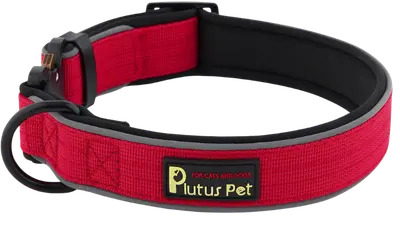
Plutus Pet Reflective Tactical Collar — Best Reflective Option
ommon complaints and limitations
Several owners confirm that the reflective edges are visible when light reaches the collar. Dirt can reduce the effect, so the trim needs regular cleaning.
The more important concern is adjustment stability. Multiple buyers reported that the collar gradually loosened. One dog reportedly slipped the collar and lost its tags.
Another customer said a small internal buckle spring came out in less than two months, leaving the closure unreliable. This appears to be an isolated report, but a buckle problem is more serious than cosmetic wear.
Honest buying note
Plutus Pet earns its place through reflectivity and smaller-dog availability, not professional tactical performance.
Check the fit and adjustment before every walk. Stop using the collar if the buckle sticks, opens irregularly, or the webbing repeatedly slips through the adjuster.
Plutus Pet is a reinforced reflective collar with tactical-style metal hardware rather than a true handle-equipped working collar.
It uses double-layer nylon, neoprene padding, a metal quick-release buckle, a metal adjuster, and reflective strips along the edges. It is offered in sizes XS through XL and ten colors.
Best for
Low-light walks, padded everyday wear, and dogs that are too small for many traditional tactical collars.
Avoid if
You specifically need a handle, patch panel, or collar for an escape-prone dog.
Pros
- Confirmed reflective edging
- Double-layer nylon
- Neoprene padding
- Metal buckle and adjuster
- Sizes XS–XL
- Ten colors
- Affordable
- Easier buckle operation for some owners
Cons
- No control handle
- No patch panel
- No separate tag ring confirmed
- Exact widths need verification
- Adjustment may loosen
- One reported buckle-spring failure
What Makes a Dog Collar Tactical?
A tactical dog collar is usually wider and more heavily constructed than a basic flat collar. Common features include reinforced webbing, a metal buckle, a substantial leash ring, padding, a control handle, or a hook-and-loop panel for identification patches.
There is no single regulated standard that every tactical collar must meet. A collar can be advertised as tactical even when the main differences are camouflage fabric, flag patches, or an oversized buckle.
Functional tactical features
The features that affect everyday use include:
- Reinforced stitching at the buckle, handle, and leash ring
- A secure closure that operates smoothly
- Webbing wide enough for the dog’s build
- Finished edges that do not rub the neck
- Padding where the hardware or webbing contacts the dog
- A handle positioned where it can be reached quickly
- A leash ring attached through reinforced material
- Clear neck measurements and adjustment ranges
Features that may be mostly cosmetic
Camouflage, military color names, flag patches, “K9” wording, and a large metal clasp can create the tactical look without proving better durability.
The phrase military dog collar also does not guarantee that a product meets a military procurement standard. Look for named materials, specific hardware information, careful stitching, and meaningful customer feedback instead of relying on the product name.
Field and hunting collars usually prioritize visibility, identification, weather resistance, and practical hardware rather than a close-control handle. Compare our hunting dog collars for field and sporting dogs if those features better match your dog’s activities.
How to Choose a Tactical Dog Collar
The best tactical dog collars are not simply the widest or heaviest. The collar has to suit the dog wearing it.
Start with neck measurement, not breed labels
Measure your dog’s neck where the collar normally rests. The tape should sit close to the coat without compressing the neck.
Use the exact size chart for the specific model. A Medium from one brand may fit very differently from a Medium sold by another brand.
Also consider:
- Thick seasonal coats
- Weight changes
- Growing puppies
- Long fur hiding the buckle or leash ring
- A narrow head that may slip through a loose fixed collar
Recheck the fit after the dog has worn the collar for several days. Thick webbing can settle or loosen as it flexes.
Dogs that frequently back out of ordinary buckle collars may need a different design rather than an even heavier tactical collar. Our guide to martingale collars for dogs that slip out explains how limited-slip collars work.
Choose an appropriate width and weight
A wider collar spreads contact across more of the neck, but wider is not automatically better.
A two-inch collar may suit a broad-necked mastiff or large working dog. The same collar can interfere with head movement on a shorter-necked dog.
Product weight matters too. The checked OneTigris Medium weighs 4.83 ounces, while the Tacticollar Medium weighs 11.68 ounces. That difference may be noticeable during daily wear.
Watch how your dog moves in the collar. The dog should be able to:
- Turn its head comfortably
- Lower its head to eat or drink
- Rest without the buckle pressing into the neck
- Walk without repeated scratching or head shaking
If the collar leaves pressure marks, causes hair loss, or appears to restrict movement, remove it and reassess the size or design.
Compare buckle type, not just appearance
The selected products use several types of closure.
Generic metal quick-release buckle: Common on OneTigris, Spark Paws, DAGANXI, and similar collars. Quality varies because the metal alloy and strength rating are often unpublished.
COBRA-style buckle: Designed to resemble specialist hardware but not necessarily produced or tested by AustriAlpin. MADE TO ROAM and Tacticollar use this general style.
Genuine AustriAlpin COBRA buckle: Used by Miles Tactical. This gives the buckle clearer documentation, but the published buckle rating should not be treated as the rating for the complete collar.
Before each walk, make sure the buckle:
- Opens and closes evenly
- Does not stick
- Has no loose spring or release tab
- Shows no serious corrosion
- Remains fully seated when closed
A large metal buckle is not useful if the webbing, stitching, handle, or leash-ring attachment is weak.
Inspect the handle design
A tactical dog collar with handle access can help when briefly guiding a dog through a doorway, holding the dog near traffic, or keeping the dog close during a vet visit.
Handle styles include:
- Raised nylon loops
- Padded webbing handles
- Flat handles that sit close to the collar
- Handles held down by hook-and-loop material
A tall handle is easier to grab but more likely to snag. A flat handle is less obtrusive but may be harder to reach quickly.
Look at where the handle is stitched into the collar. The attachment should appear reinforced, with no loose threads or narrow sections carrying all the force.
Check padding, seams, and edge finishing
Neoprene or another soft lining can reduce friction, especially on short-haired dogs. Padding does not correct poor sizing, however, and thick neoprene may hold moisture after swimming or washing.
If frequent swimming, heavy rain, or muddy conditions are the main concern, compare our waterproof dog collars. These options focus on coated, easy-clean materials rather than tactical handles and patch panels.
Check for:
- Exposed hook-and-loop corners
- Rough webbing edges
- Metal resting directly against the skin
- Seams that sit under the throat
- Padding that ends abruptly near the buckle
- Long fur becoming trapped in the closure
Traditional leather may feel less military in appearance but remains a valid option for owners who prefer a classic collar with substantial hardware. Our guide to durable leather dog collars compares the material’s comfort, care needs, and limitations.
Consider patches, tags, and visibility
Patch panels can hold a name, phone number, service label, or warning message. They also attract hair, dried grass, and dirt, especially when left uncovered.
A separate tag ring is more convenient than placing tags on the main leash ring. It prevents the leash clip and identification tags from competing for the same small attachment point.
For more permanent identification options, compare dog collars with names, embroidery, and nameplates.
Reflective edging can help a collar stand out when headlights or a flashlight reach it. Reflective material does not illuminate by itself and should not replace a light, reflective leash, or other visibility precautions near roads.
Tracker cases also need regular inspection. An AirTag holder can open, tear, or detach during rough play, and a tracker should not replace a conventional identification tag and updated microchip information.
Tactical Dog Collar Safety and Quality Checklist
A heavy-duty collar can still fail, fit poorly, or become caught on something. Check the complete collar rather than focusing only on the buckle.
Before putting the collar on
- Confirm that the selected neck range matches your dog.
- Inspect the webbing for cuts, fraying, or stretched stitching.
- Open and close the buckle several times.
- Pull gently on the leash ring and handle to check for movement.
- Make sure no metal edge presses into the skin.
- Add a readable identification tag.
- Remove loose accessories that do not serve a practical purpose.
During use
Use the handle for brief close control only. Never lift, suspend, drag, or carry a dog by a collar handle.
A collar is also not the right tool for managing constant pulling. If your dog repeatedly places strong pressure on its neck, use a suitable harness and consider guidance from a qualified trainer. Dogs with neck, airway, spinal, or mobility concerns should be assessed by a veterinarian before using heavy collar equipment.
Watch for signs that the collar is not working well for your dog:
- Frequent scratching
- Hair loss or skin redness
- Coughing or gagging under leash pressure
- Reluctance to lower or turn the head
- Hardware repeatedly moving under the throat
- The adjustment gradually loosening
- Remove loose accessories that do not serve a practical purpose.
Dry wet webbing and hardware thoroughly. Leaving a padded nylon collar damp can encourage odor and may speed up corrosion on coated metal parts.
When to remove the collar
Remove or closely supervise a handled collar during:
- Crating
- Unsupervised wear
- Rough play between dogs
- Wrestling where another dog’s teeth or jaw could catch the handle
- Play near branches, fencing, furniture, or other snag points
- Sleeping if the collar is especially heavy or bulky
Stop using the collar if the buckle starts opening irregularly, a spring becomes loose, the adjustment repeatedly slips, or stitching begins separating around a load-bearing point.
Tactical Collar vs Regular Collar vs Martingale vs Harness
A tactical collar is one option, not an automatic upgrade for every dog.
Tactical collar
Best suited to owners who need reinforced construction, a brief-control handle, patch space, or wider webbing for a suitably built dog.
Its disadvantages are extra weight, bulk, possible snagging, and more hardware against the neck.
Regular flat collar
A standard flat collar is usually lighter and simpler. It may be the better choice for calm everyday wear, identification tags, and dogs that do not need a handle.
For a broader comparison of materials and collar styles, see our guide to choosing the right type of dog collar.
Martingale collar
A martingale uses a limited-slip section to reduce the chance of a dog backing out. A fixed tactical buckle collar does not automatically provide that function.
Tactical and martingale collars solve different problems. One is mainly about construction and close control; the other is about controlled tightening and escape prevention.
Harness
A harness distributes leash force away from the neck. It may be the more suitable option for:
- Dogs that pull continuously
- Small dogs with delicate necks
- Dogs with breathing or neck concerns
- Owners needing more body control
- Long walks where a heavy collar would be uncomfortable
- Add a readable identification tag.
- Remove loose accessories that do not serve a practical purpose.
A handle-equipped collar should not be treated as a replacement for a properly fitted harness.
Caring for a Tactical Dog Collar
Follow the instructions for the exact product. The selected collars do not all use the same materials or cleaning method.
Cleaning nylon and neoprene
For hand-wash-only collars:
- 1
Remove patches, tags, and tracker cases.
- 2
Use lukewarm water and a small amount of mild detergent.
- 3
Gently scrub the webbing and lining.
- 4
Rinse thoroughly.
- 5
Hang the collar until it is fully dry.
Spark Paws allows machine washing on a cold setting followed by line drying. Tacticollar and Plutus Pet specify hand washing.
Do not assume every metal-buckle collar is machine washable. Repeated tumbling can damage coatings and internal buckle parts.
Inspecting metal hardware
After cleaning or wet use, check for:
- Rust or discoloration
- Peeling finish
- Rough metal edges
- Bent D-rings
- Sticking release tabs
- Changes in spring tension
- Movement where hardware joins the webbing
Cosmetic coating wear does not always affect function, but exposed or rough metal deserves closer inspection.
Maintaining patches and tracker cases
Brush hair and debris from hook-and-loop panels. Replace a patch if its backing no longer grips securely.
Open and inspect tracker cases after swimming, rough play, or washing. Do not rely on an accessory that has started stretching, cracking, or opening unexpectedly.
Frequently Asked Questions About Tactical Dog Collars
What is a tactical dog collar?
A tactical dog collar is a reinforced collar that commonly uses wider nylon webbing, substantial hardware, and features such as a control handle, padding, or identification patches. There is no universal regulated tactical standard, so construction quality varies by product.
Is a tactical dog collar safe for everyday wear?
It can be, provided the collar fits correctly and is not excessively wide or heavy for the dog. Check regularly for rubbing, trapped hair, loose adjustment, and hardware wear. Handled collars should be supervised around crates, rough play, and snag hazards.
What is the purpose of a tactical dog collar with a handle?
The handle provides brief close control in situations such as busy sidewalks, doorways, training sessions, or vet visits. It is not designed for lifting, carrying, or suspending the dog.
Can a tactical dog collar stop a dog from pulling?
No. A stronger or heavier collar does not teach loose-leash walking. It may actually place more force on the neck if the dog continues pulling. A suitable harness and help from a qualified trainer may be more appropriate.
Are military dog collars stronger than regular collars?
Some are made with wider webbing, metal hardware, and reinforced stitching, but military styling alone proves nothing. Check the buckle manufacturer, material details, stitching, width, product weight, and recurring customer complaints.
How tight should a tactical dog collar be?
It should be secure enough that the dog cannot easily slip out but loose enough to avoid constant pressure. Follow the manufacturer’s fitting instructions and check the fit after coat or weight changes.
Do not rely only on a general finger rule. Collar width, padding, coat thickness, and neck shape can change how a fit feels.
Are tactical dog collars suitable for small dogs?
Many are not. Wide webbing and large metal buckles can be too heavy or restrictive for small or short-necked dogs.
The Plutus Pet collar offers smaller sizes, but it lacks a control handle and has some adjustment-security complaints. In many cases, a lightweight flat collar or harness is a more practical choice for a small dog.
Which Tactical Dog Collar Should You Choose?
The OneTigris GBT08 is the most balanced tactical dog collar for most medium and large dogs. It combines padding, a control handle, metal hardware, patch space, moderate verified weight, and an accessible price.
Choose the Miles Tactical model when genuine AustriAlpin buckle hardware matters more than padding or cost. The Tacticollar is better suited to very large, broad-necked dogs that can comfortably carry a two-inch collar. Spark Paws offers more everyday width and color choices, while MADE TO ROAM provides a flatter, less-obtrusive handle.
DAGANXI is the lowest-cost feature bundle, but its fraying, AirTag-retention, and snagging complaints deserve attention. Plutus Pet is the strongest reflective alternative, though it has no handle and requires regular fit checks.
Measure your dog carefully, compare width and weight—not just neck range—and inspect the hardware regularly. The best choice is the collar that fits your dog’s actual build and routine, not the one with the most military-looking design.