A dog harness for large dogs needs to do more than look sturdy. It should fit the dog’s chest and neck correctly, stay in position during walks, and give you appropriate control without uncomfortable rubbing.
That can be harder to find than expected. A harness labeled XL might fit a Labrador but be too narrow for a broad-chested Mastiff. Two harnesses with similar padding and leash clips may also behave differently when a strong dog pulls or tries to back out.
We’ve compared seven options for different needs, from affordable everyday walking to pulling management and more secure multi-strap designs. The Ruffwear Front Range is a good starting point for ordinary walks, but it isn’t automatically the right choice for every large dog.
Affiliate disclosure: LumaPaw may earn a commission when you purchase through links on this page, at no additional cost to you. Our recommendations are based on product specifications, retailer information, and customer feedback—not hands-on testing.
Our Top Dog Harness Picks for Large Dogs at a Glance
These harnesses aren’t interchangeable. Some prioritize padding, others offer more adjustment, and a few are designed for dogs that need more than a conventional two-strap fit.
| Dog Harness | Best For | Key Limitation |
|---|---|---|
| Ruffwear Front Range | Everyday walks | No grab handle |
| rabbitgoo Classic No Pull | Budget-friendly walking | Less generous fit for some very broad dogs |
| 2 Hounds Design Freedom | Pulling management | More complicated fitting |
| Julius-K9 IDC Powerharness | Very large dogs | Rear leash attachment only |
| Chai's Choice Quick Release | Padded, easy-on design | XL fit needs careful checking |
| Ruffwear Flagline | Dogs that back out of harnesses | Higher price and fit-sensitive design |
| Blue-9 Buckle-Neck Balance | Hard-to-fit body shapes | Takes time to adjust properly |
Before choosing from this list, measure your dog’s chest. An excellent harness in the wrong size can be less useful than a simpler model that fits correctly.
How We Researched These Large-Dog Harnesses
We compared manufacturer sizing charts, materials, leash attachments, adjustment systems, padding, cleaning instructions, and retailer information from Amazon and Chewy.
Customer feedback was also important, particularly reports involving rubbing behind the front legs, shifting straps, difficult sizing, damaged buckles, and dogs slipping out.
We considered products including PetSafe Easy Walk, Carhartt Nylon Duck, OneTigris FIRE WATCHER 2.0, Embark Adventure, and Frisco Big Dog. Some offered useful features but had weaker evidence, greater overlap with our selections, or unresolved concerns about fit and hardware.
Ratings and bestseller labels helped us understand product popularity, but they didn’t decide the list. Likewise, we didn’t assume a tactical-looking harness was stronger than a simpler design.
LumaPaw has not physically tested these harnesses. The following recommendations reflect documented product features, comparisons, and reported customer experiences. Individual fit and durability can vary.
Best Dog Harnesses for Large Dogs Reviewed
1. Ruffwear Front Range — Best for Everyday Walks
Product snapshot
- Size examined: Large/X-Large, 32–42-inch chest
- Leash attachments: Front and back
- Construction: Polyester ripstop shell, foam padding, mesh lining
- Adjustability: Four points
- Cleaning: Hand wash, mild detergent, air dry
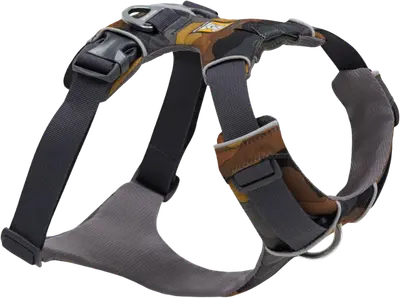
The Ruffwear Front Range makes sense for owners who want one padded harness for regular neighborhood walks, park visits, and everyday outings.
It has an aluminum leash ring on the back and a reinforced webbing connection at the chest. Four adjustment points help accommodate different proportions, while reflective trim and a small enclosed ID pocket add practical details.
Compared with the rabbitgoo Classic, Front Range has more detailed manufacturer documentation and a different approach to materials and fit. That helps justify considering the higher price, although it doesn’t prove the harness will last longer for every dog.
Customer feedback frequently praises comfort, fit, and everyday usability. Complaints include rubbing on certain body shapes, difficulty getting the harness over the head, and occasional concerns about adjustment or attachment wear.
Its biggest omission is a grab handle. The L/XL also stops at a 42-inch chest measurement, which rules it out for some giant breeds.
Pros
- Padded construction with four adjustment points
- Front and rear leash attachments
- Reflective details and ID pocket
Cons
- No top handle
- Costs more than several alternatives
- May not fit very broad-chested dogs
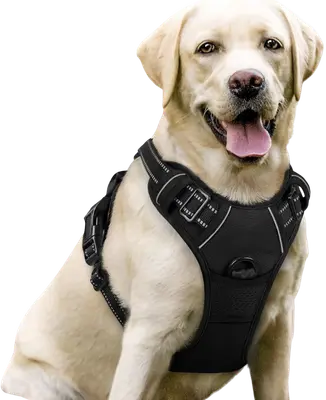
2. rabbitgoo Classic No Pull — Best Budget Harness
Product snapshot
- Version examined: Classic No Pull, Black, Large
- Amazon model: B01M8JT6FT
- Leash attachments: Front and back
- Material: Polyester Oxford fabric with cushioning and mesh
- Adjustability: Four straps
- Extras: Top handle and reflective details
Not every large dog needs an expensive harness for ordinary walks. The rabbitgoo Classic offers several features found on pricier models, including front and rear leash connections, adjustable straps, padding, and a handle.
Its front connection can be used when working on pulling, while the rear attachment suits normal walks. Two quick-release buckles help secure the harness after it is slipped over the dog’s head.
The main attraction is value. The reviewed black Large version was available at a substantially lower price than Ruffwear Front Range, making it an accessible option for owners who want a versatile walking harness without spending much.
Customer feedback includes praise for everyday comfort and convenient handling. Fit-related complaints are worth watching, particularly around neck proportions, overhead removal, and possible rubbing.
The Classic isn’t a specialized escape-resistant design, and the Large label alone doesn’t establish that it will fit every large breed.
Pros
- Affordable for the included features
- Two leash attachment options
- Padding, reflectivity, and grab handle
Cons
- Over-the-head fitting
- Not intended as a dedicated escape-resistant harness
- Sizing can be awkward for some broad or unusually proportioned dogs
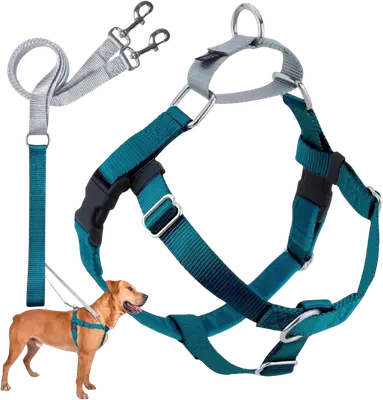
3. 2 Hounds Design Freedom — Best for Pulling Management
Product snapshot
- Version examined: Freedom No-Pull Harness & Leash
- Largest relevant size: XXL, manufacturer chest range 36–44 inches
- Leash attachments: Front ring and rear control loop
- Material: Nylon webbing with velvet lining behind the front legs
- Included accessory: Double-ended training leash, with the reviewed bundle
The Freedom harness offers something more specialized than a typical front-clip vest: a double-connection system designed to give the handler two points of contact.
The front connection helps guide the dog, while the rear loop works with the included leash arrangement. This can be useful for a strong dog that changes direction or pulls against the lead.
The design has four adjustment points, stainless-steel hardware, and velvet lining behind the front legs. Owners frequently describe improved handling once they have fitted the harness correctly.
However, there’s a learning curve. Some customers find the included training leash short, and fitting the harness takes more effort than snapping together a padded vest. Reports of chafing and fraying also deserve attention.
A no-pull harness should help support leash training, not replace it. Dogs can continue pulling even when wearing one.
Pros
- Specialized two-point leash arrangement
- Adjustable fit across several large sizes
- Velvet lining in an area vulnerable to rubbing
Cons
- More involved fitting process
- Included leash may feel short
- Some reports of rubbing and webbing wear
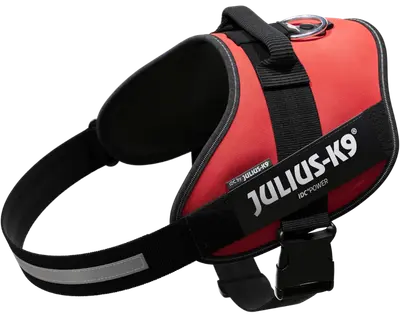
4. Julius-K9 IDC Powerharness — Best for Very Large Dogs
Product snapshot
- Version examined: IDC Powerharness, Size 3
- Fit: Large/XXL size range; confirm the current regional chart
- Leash attachment: Rear ring
- Construction: Saddle-style body with adjustable chest and belly straps
- Extras: Securing handle, reflective details, interchangeable patches
- Cleaning: Hand wash
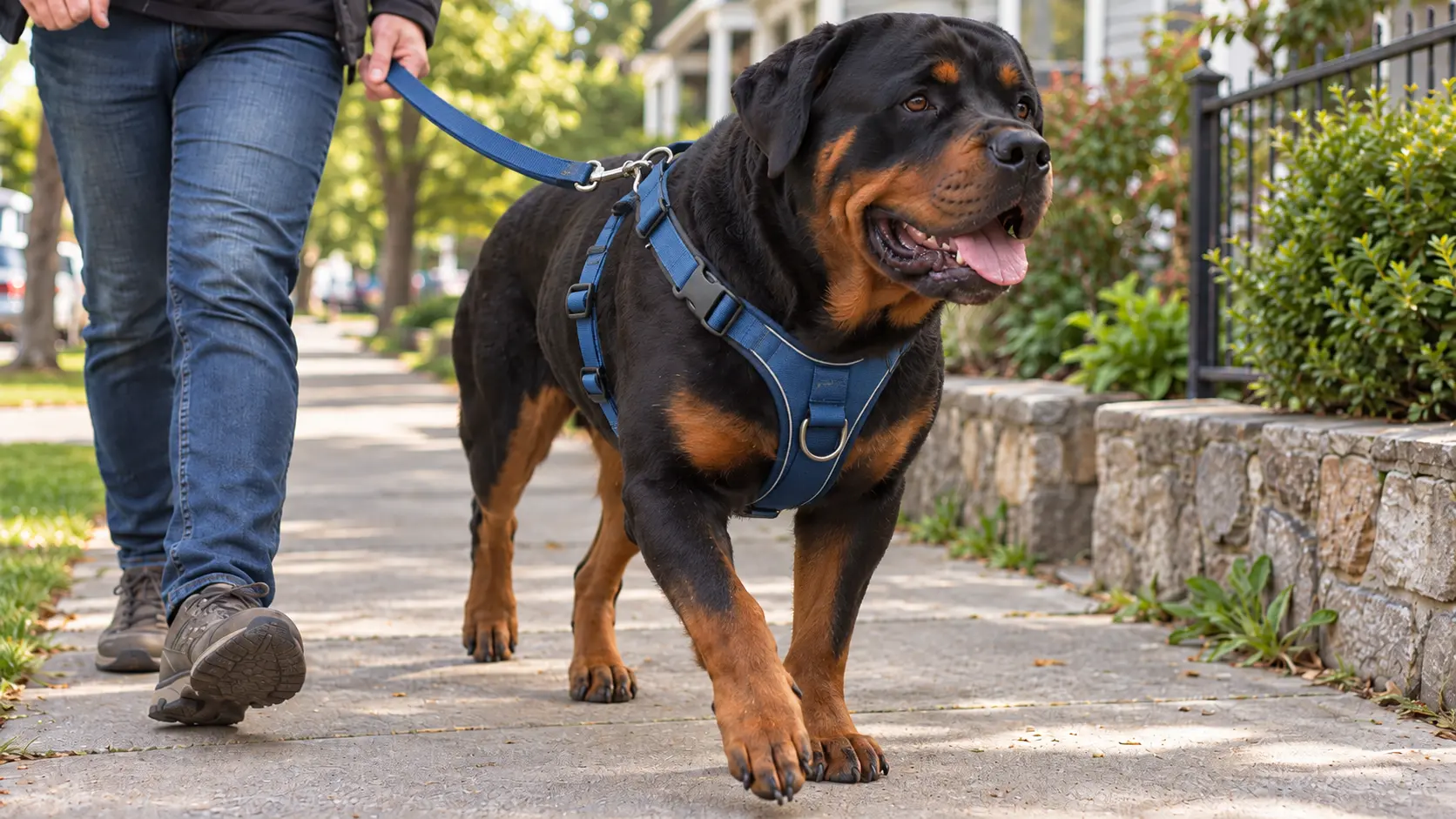
Very large dogs can be difficult to fit, particularly when conventional vest harnesses stop around a 42-inch chest measurement.
The Julius-K9 IDC Powerharness offers larger sizing options and a relatively straightforward design. Its broad saddle-style back section, horizontal chest strap, and belly buckle make dressing simpler than on many multi-strap harnesses.
The top handle is useful for brief close handling, and reflective sections improve visibility in low light. The adjustable handle-fixing feature also helps keep the handle from projecting unnecessarily.
Reviews from owners of Rottweilers, Mastiffs, and other large breeds often praise the convenience and fit. Complaints include shifting, unsuitable chest-strap positioning, and dogs managing to back out when the harness isn’t secure.
An important distinction: the standard IDC Powerharness uses a rear leash attachment. Despite some no-pull descriptions on retailer pages, it isn’t equivalent to a harness with a built-in front training connection.
Pros
- Large size options for broad dogs
- Quick, relatively simple dressing
- Handle and reflective details
Cons
- Rear-only standard leash attachment
- Some dogs can reverse out
- Chest-strap placement may not suit every build
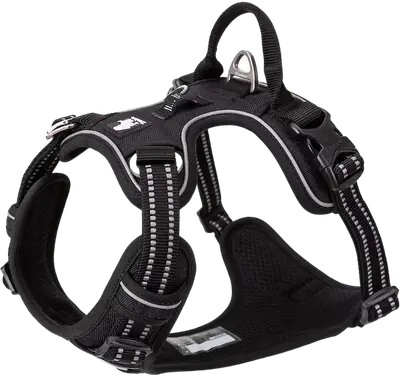
5. Chai's Choice Quick Release — Best Padded Easy-On Harness
Product snapshot
- Version examined: Premium Quick Release Outdoor Adventure
- Size examined: X-Large, 30–40-inch dog chest range on Chewy's chart
- Leash attachments: Front and back
- Adjustability: Four points
- Extras: Opening neck buckle, padding, top handle, reflective stitching
- Cleaning: Follow the current product-version care label
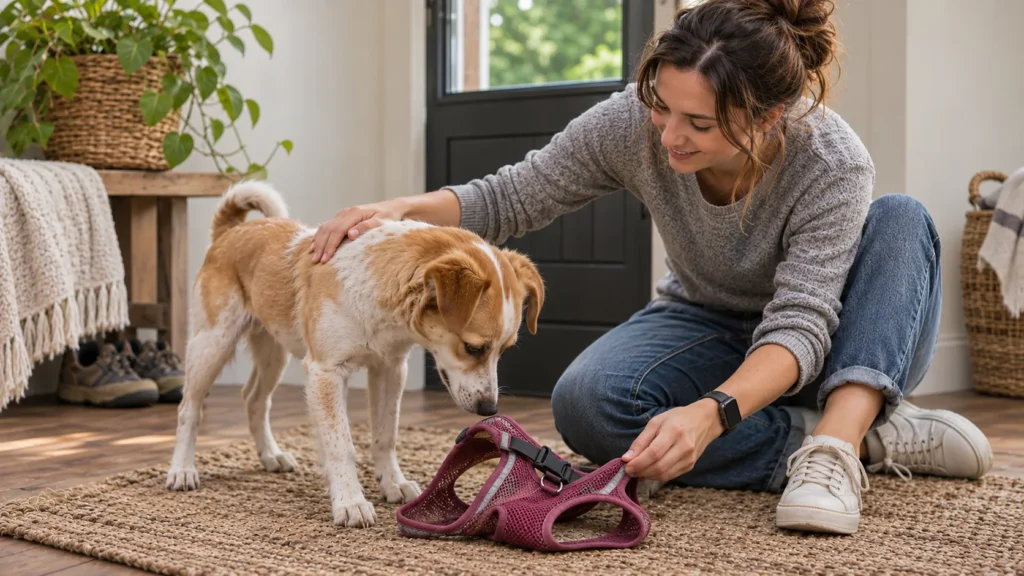
Some large dogs strongly dislike having a harness pulled over their heads. Others simply won’t stand still long enough to make overhead dressing convenient.
The updated Chai’s Choice Quick Release tackles that problem with a buckle at the neck. Open it, position the harness, fasten the buckles, and adjust the straps without forcing a fixed neck opening over the dog’s ears.
Unlike a basic strap harness, this version also has padded sections, front and rear leash connections, reflective stitching, and a top handle.
Customers frequently appreciate the easy-on arrangement and comfort. However, some report underarm rubbing, fitting difficulties, and occasional buckle concerns.
The main issue to check before buying is sizing. Chewy’s listing distinguishes the harness’s overall product measurements from its chest measurements, making it easy to misunderstand the XL range.
Pros
- Opening neck buckle
- Padded body with a grab handle
- Front and rear leash connections
Cons
- XL sizing needs close attention
- Padding may still rub on some dogs
- More expensive than a basic budget harness
6. Ruffwear Flagline — Best for Dogs That Back Out of Harnesses
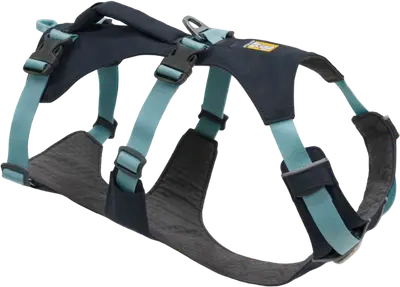
Product snapshot
- Version examined: Flagline, Large/X-Large
- Chest girth: 32–42 inches
- Leash attachments: Three connection points
- Adjustability: Six points
- Construction: Lightweight body with an additional rear securing section
- Extras: Padded assistance handle
A dog that backs out of ordinary harnesses presents a different problem from one that simply pulls forward.
The Ruffwear Flagline has an additional strap positioned farther back on the torso. Combined with its six adjustment points, this gives owners more ways to establish a secure fit than a typical two-strap vest.
It also has multiple leash attachment options and a padded handle designed for controlled assistance over obstacles. Its relatively lightweight construction may appeal to owners who find heavier multi-strap harnesses cumbersome.
Customer feedback includes positive reports from owners of dogs that previously escaped simpler harnesses. The adjustment system and rear strap are recurring reasons for satisfaction.
There are limitations. The L/XL stops at a 42-inch chest girth, fitting takes care, and one Chewy customer reported tearing in the chest area on two XL harnesses. That report doesn’t prove a widespread defect, but it is important when considering the product for a powerful dog.
Pros
- Additional rear securing section
- Six fitting adjustments
- Multiple leash connections and assistance handle
Cons
- Higher purchase price
- More straps to adjust correctly
7. Blue-9 Buckle-Neck Balance — Best for Hard-to-Fit Dogs
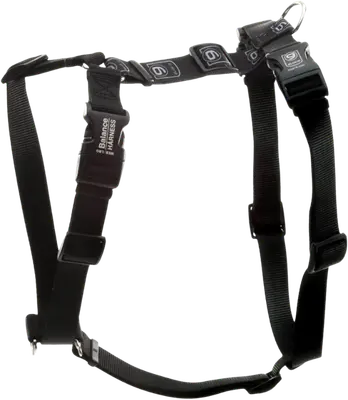
Product snapshot
- Version examined: Buckle-Neck Balance, Black, Large
- Chest girth: 29–43.5 inches
- Material: Nylon webbing
- Leash attachments: Front and back
- Adjustability: Six points
- Extras: Opening neck buckle
- Cleaning: Washable nylon; follow manufacturer care instructions
Some large dogs have a broad ribcage and narrower waist. Others have a deep chest but relatively slim neck. Those proportions can make conventional padded harnesses difficult to fit.
The Blue-9 Balance is worth considering because it offers six adjustment points rather than relying on a fixed vest shape. The buckle-neck version also opens at the neck, which can make dressing less stressful for dogs sensitive to overhead handling.
Its minimal body coverage is another advantage for owners who prefer not to cover much of the dog’s chest and back.
Customer feedback often praises the fit flexibility, particularly for dogs that struggled with other designs. The main complaints involve the time required to adjust it and occasional shifting or rotation once the dog starts walking.
There’s no thick padding or top handle. For some dogs that simplicity is useful; for others, a padded vest will be more comfortable.
Pros
- Six adjustment points
- Neck buckle and dual leash rings
- Minimal body coverage
Cons
- Initial fitting can be frustrating
- Can rotate if poorly adjusted
- No padded vest or grab handle
How to Choose a Dog Harness for Large Dogs
Match the Harness to Your Dog's Walking Style
Start with what actually happens during walks. For a broader comparison of designs, see our best dog harness guide.
A large dog that walks calmly beside you may be comfortable in a conventional padded harness such as the Ruffwear Front Range or rabbitgoo Classic.
A strong puller may benefit from the handling options on the 2 Hounds Freedom, particularly when combined with consistent loose-leash training.
A dog that backs out of harnesses needs a different approach. An additional securing strap, careful adjustment, and possibly a backup attachment may be more important than padding.
If your dog has an unusual chest shape, a more adjustable design such as Blue-9 Balance may be worth trying.
Look Beyond “Heavy-Duty” Marketing
A heavy duty dog harness shouldn’t earn that description just because it has thick fabric, military-style panels, or metal rings.
Look at the parts that actually hold the dog:
- Stitching around leash attachments
- Buckle construction and security
- Webbing condition and reinforcement
- Adjusters that stay in place under normal movement
- Suitable dimensions for the intended dog
A metal ring is only one part of the harness. The stitching and material connecting it to the body matter as well.
No walking harness should be assumed to have a particular breaking strength unless that claim is supported by relevant testing of the complete product.
Consider Padding, Chest Shape, and Ease of Dressing
Padding can improve comfort, especially during longer walks, but it won’t fix straps that rub the forelegs or restrict movement.
Low-coverage harnesses allow more air circulation and may suit dogs that dislike bulky equipment. However, thin straps can create concentrated pressure if fitted badly.
An opening neck buckle is helpful for dogs sensitive to overhead handling. For other dogs, an ordinary two-buckle design may be completely adequate. For practical dressing steps, see our guide to putting on a dog harness.
Choose the shape that suits your dog rather than the harness with the longest feature list.
XL and XXL Dog Harness Sizing: How to Find the Right Fit
The letters on a harness label aren’t standardized. One manufacturer’s Large may fit a bigger chest than another company’s XL.
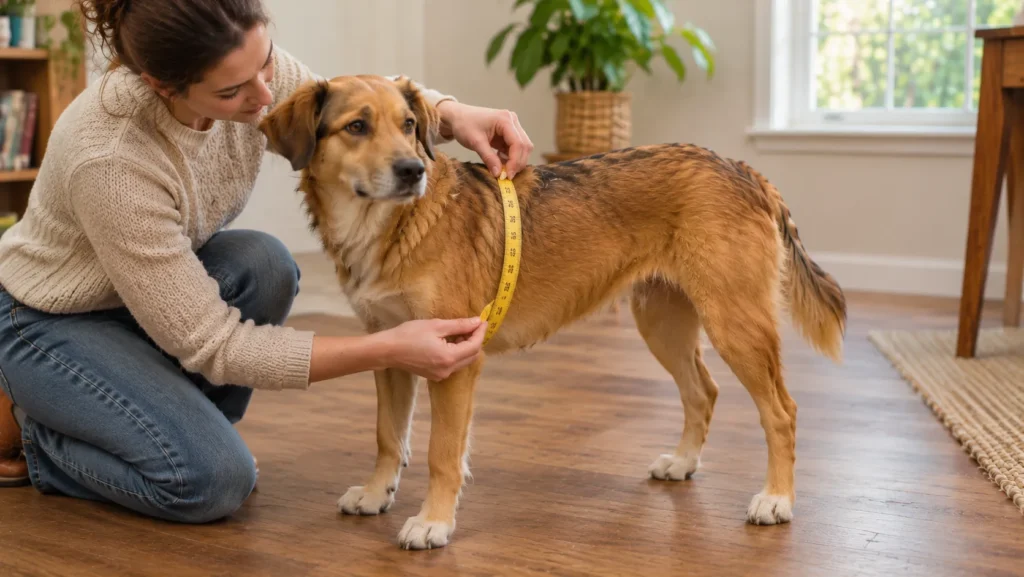
Measure Chest Girth Before Choosing Large, XL, or XXL
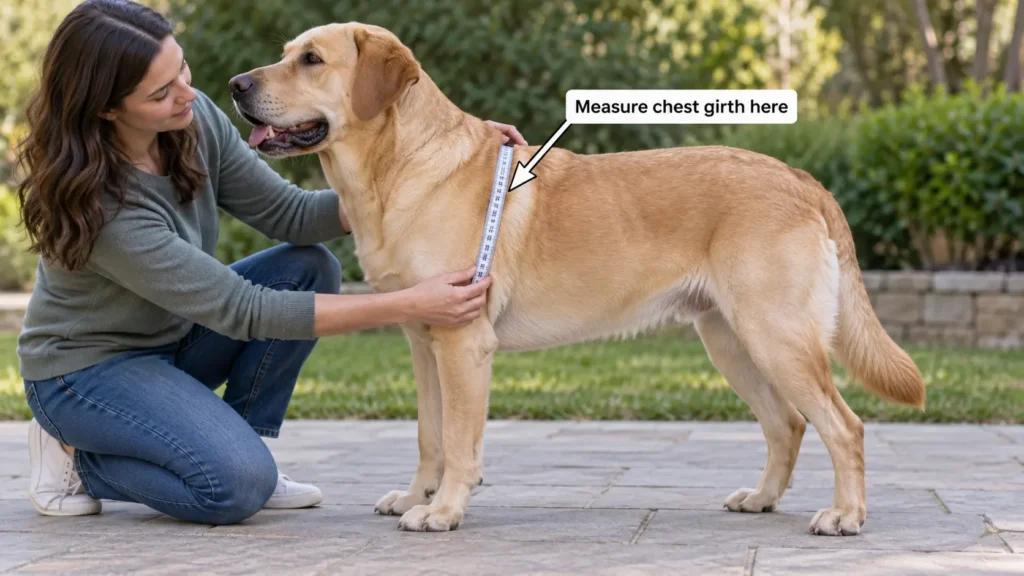
With your dog standing comfortably:
- Wrap a flexible tape measure around the widest part of the ribcage, usually just behind the front legs.
- Keep the tape snug without compressing the body.
- Record the measurement in inches.
- Measure the neck or front chest if the manufacturer's sizing instructions require it.
- Compare those numbers with the exact harness chart—not just the suggested breed or weight.
Check the fit after dressing the dog. The harness should stay positioned without digging into the skin, shifting excessively, or preventing comfortable movement.
Why XL in One Brand May Not Equal XL in Another
These published ranges show how different the labels can be.
| Harness | Size | Published Chest Range |
|---|---|---|
| Ruffwear Front Range | L/XL | 32–42 inches |
| Ruffwear Flagline | L/XL | 32–42 inches |
| Blue-9 Balance | Large | 29–43.5 inches |
| 2 Hounds Freedom | XXL | 36–44 inches |
| Julius-K9 IDC | Size 3 | Approximately 32.5–45.5 inches on one US chart |
Measurements can change between versions and regional charts. Check the seller’s current measurements for the exact variation you intend to buy.
Chai’s Choice also demonstrates why reading the chart labels matters: a product-size measurement isn’t necessarily the same as the dog’s actual chest circumference.
Check for Rubbing, Rotation, and Backward Escape
Once you’ve adjusted the harness, let your dog walk a short distance in a secure area.
Watch how the straps move around the shoulders and front legs. A harness that looks fine while the dog stands still might shift during turns or when leash tension changes.
Check the fit with the dog standing and moving naturally. You should generally be able to fit a couple of fingers beneath the straps, but the manufacturer’s fitting instructions take priority.
If the harness rotates, exposes a large gap, slides toward the throat, or allows the dog to slip backward out of it, don’t rely on it until the fit problem has been resolved.
Front-Clip vs. Back-Clip vs. Dual-Clip Harnesses for Large Dogs
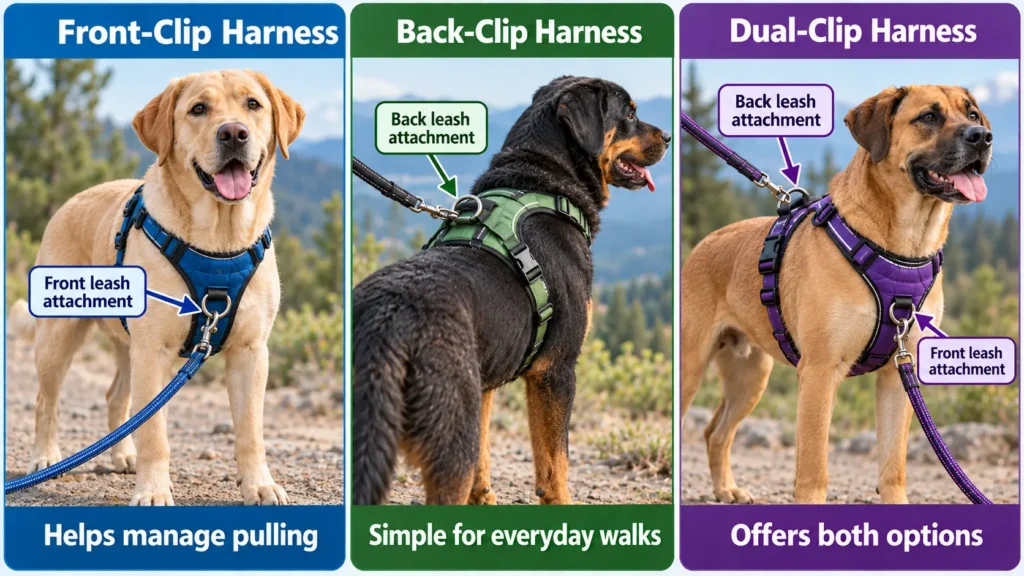
The leash connection changes how a harness handles tension.
| Design | Useful For | Main Limitation |
|---|---|---|
| Front clip | Redirecting dogs during leash training | Can rotate or shift when fitted poorly |
| Back clip | Everyday walking and some outdoor activities | Doesn't inherently discourage pulling |
| Dual clip | Switching between walking and training arrangements | Requires the correct leash setup |
A front-clip harness can help guide a dog away from pulling straight ahead, but it isn’t an automatic training solution.
Back-clip harnesses are practical for dogs that already walk with a loose leash. Dual-clip models offer more flexibility, especially when both connection points are designed to work with a double-ended leash.
For dogs that pull intensely, work on leash manners in addition to choosing suitable equipment. A qualified reward-based trainer can help if walks are becoming difficult or unsafe.
Large-Dog Harness Safety: What to Check Before Every Walk
Large dogs can place substantial tension on their walking equipment, especially if they lunge suddenly. Checking the harness regularly is more useful than assuming an expensive or thick-looking design will remain reliable indefinitely.
Before walking:
- Examine buckles for cracks, deformation, or unexpected opening.
- Check leash rings, stitching, and webbing for damage.
- Confirm that adjustable straps haven't slipped.
- Look for rubbing, redness, or coat wear near the front legs.
- Make sure the harness sits correctly when the dog moves.
- Replace damaged equipment rather than attempting an unreliable repair.
Don’t leave a regular walking harness on an unsupervised dog when straps or handles could catch on crate hardware, furniture, or other objects.
A walking harness is not automatically a car safety restraint. Use an appropriate vehicle-restraint product with credible crash-testing evidence for car travel. For independent test results, see the Center for Pet Safety 2013 harness study.
Likewise, a grab handle doesn’t necessarily mean you can safely lift the dog’s entire body weight. Owners of large senior dogs with mobility difficulties may need a purpose-built support harness and veterinary advice.
A collar can still be useful for identification even when the dog walks in a harness. Our guide to everyday dog collars explains the differences between collar styles and their limitations.
Frequently Asked Questions About Large-Dog Harnesses
What size harness does a 100-pound dog need?
A 100-pound dog might need Large, XL, XXL, or another manufacturer-specific size. Weight doesn’t tell you enough about chest circumference or body proportions. Measure your dog and follow the chart for the exact harness model.
Are front-clip harnesses better for large dogs that pull?
They can be helpful. A front leash connection gives the handler a way to redirect some dogs instead of allowing them to lean straight forward against a back attachment. Results depend on fit, dog behavior, and training. A front clip alone won’t teach loose-leash walking.
Is an XXL dog harness always bigger than an XL?
Not across different brands. XXL isn’t a universal measurement. A particular company’s XL may offer a wider fit than another company’s XXL, so always compare actual measurements.
Can a large dog escape from a harness?
Yes. Dogs can sometimes back out of loose or poorly positioned harnesses, particularly when frightened or resisting movement. Multi-strap designs may make backward escape more difficult for some dogs, but none should be treated as completely escape-proof.
Does a heavy-duty dog harness have to be tactical?
No. Tactical styling, MOLLE panels, and thick fabric don’t automatically make a harness stronger. Secure attachments, appropriate stitching, reliable buckles, good adjustment, and a stable fit matter more for ordinary large-dog walking.
Which Large-Dog Harness Should You Choose?
The best dog harness for large dogs is the one that fits properly and matches how your dog behaves on a leash.
For ordinary walking, Ruffwear Front Range is a sensible starting point if your dog’s chest falls within its range. rabbitgoo Classic offers a lower-cost alternative, while 2 Hounds Freedom provides more specialized pulling-management options.
Julius-K9 deserves consideration for very large dogs, Chai’s Choice for easier padded dressing, and Blue-9 for challenging body proportions. Ruffwear Flagline offers another approach when backing out of conventional harnesses is a concern.
Before buying, measure your dog, check the current size chart, and read the limitations of the specific version you’re considering. A secure, comfortable fit matters more than the label on the packaging.