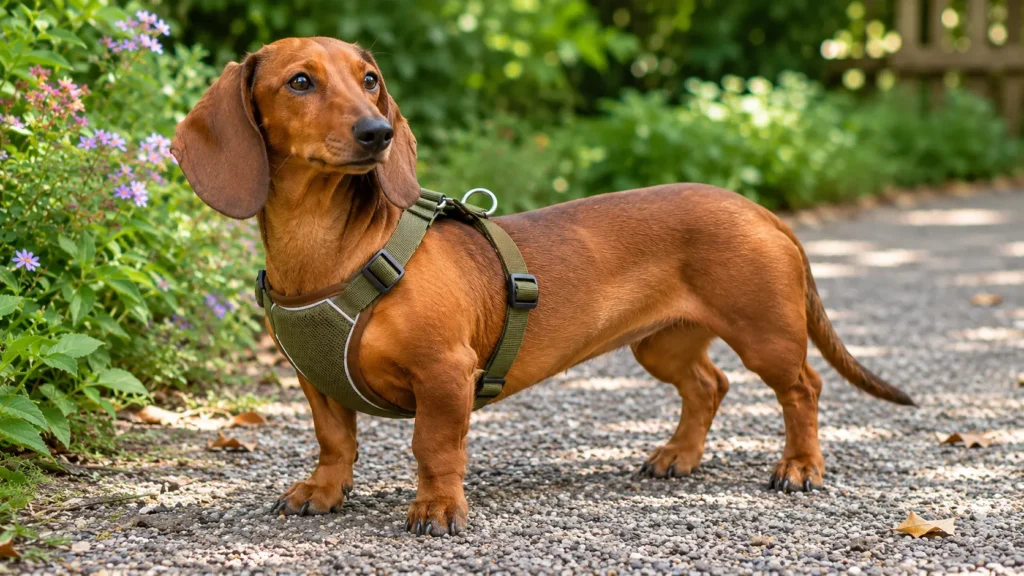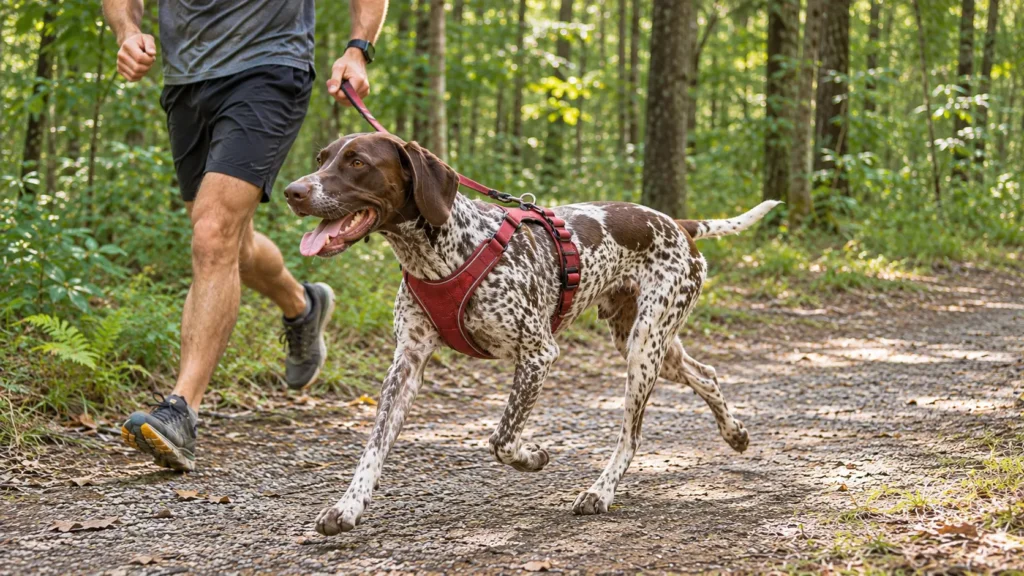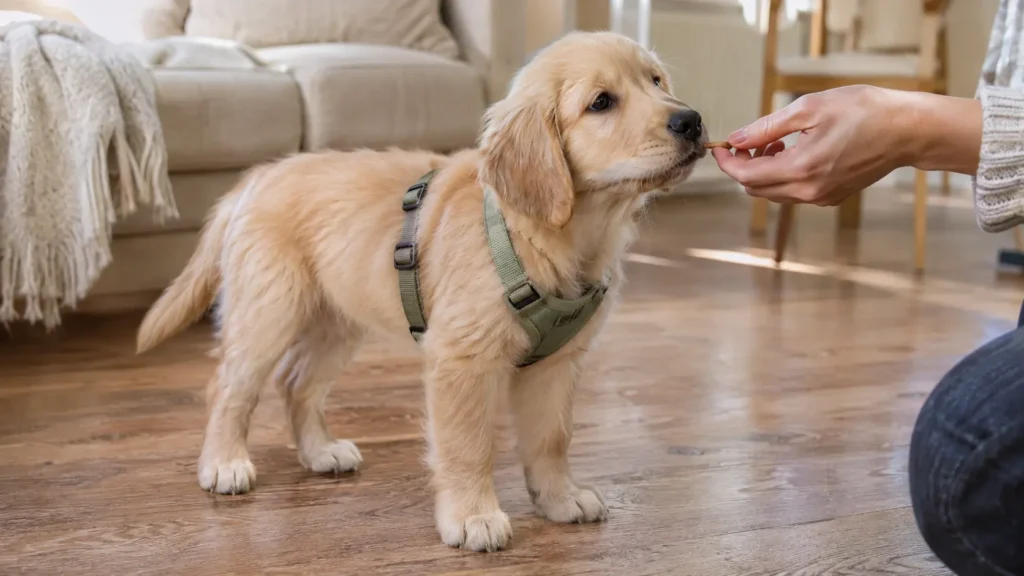
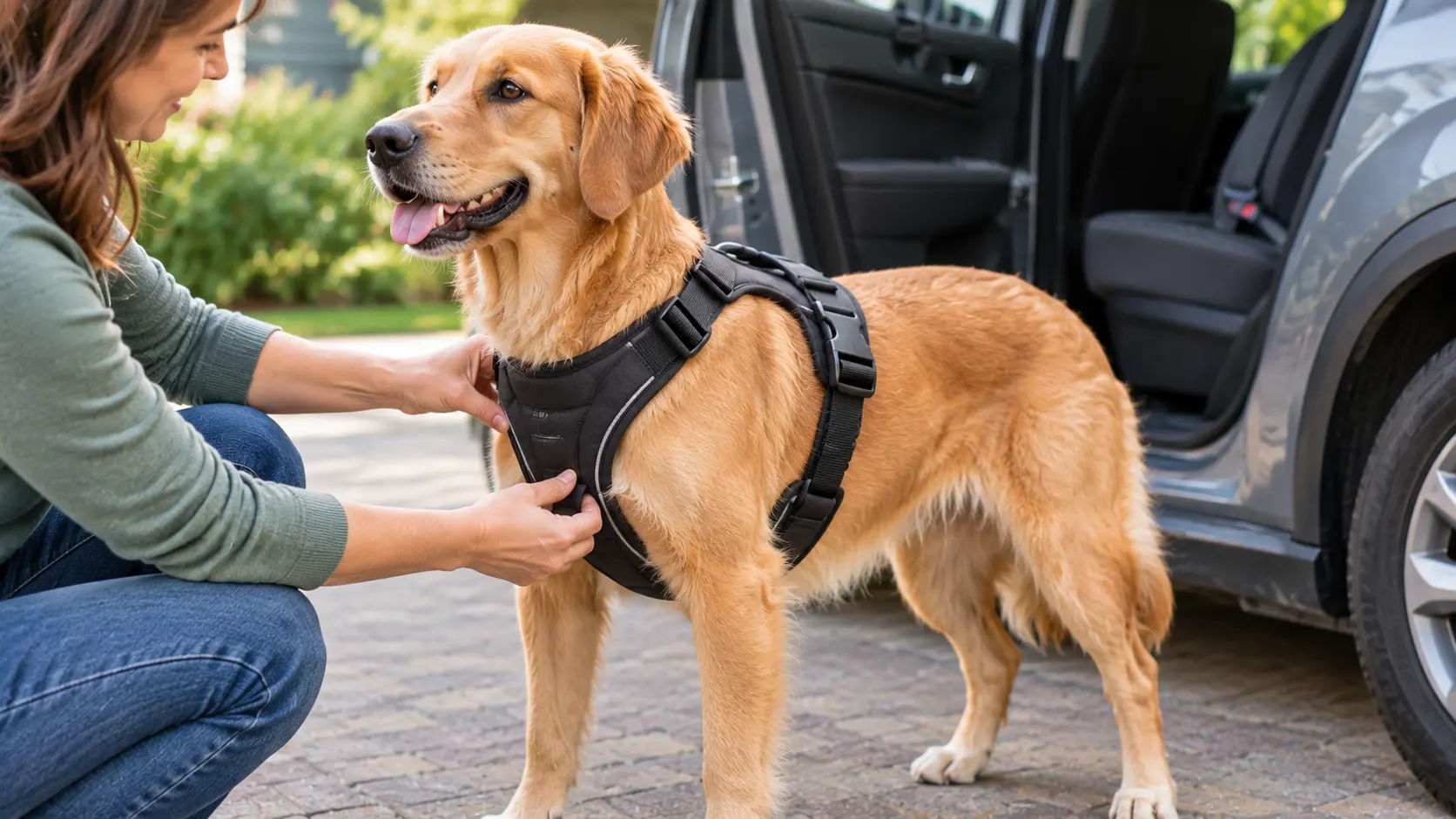
A good dog seat belt harness does more than keep your dog from wandering around the back seat. It should fit securely, work with your vehicle's seat belt, and have credible evidence behind its safety claims.
The tricky part is that “crash-tested” doesn't mean the same thing on every product. Some harnesses have independent certification from the Center for Pet Safety (CPS). Others rely on manufacturer-commissioned testing or different approval systems. Installation also varies, and a harness that fits one dog comfortably may be unsuitable for another.
We compared four dedicated car harnesses with different strengths: the Sleepypod Clickit Range and Sport Plus for their CPS certification history, the more affordable Kurgo Enhanced Strength Tru-Fit, and the step-in Thule Cappy.
Affiliate disclosure: LumaPaw may earn a commission when you purchase through links on this page, at no additional cost to you.
Dog Seat Belt Harnesses at a Glance
| Dog car harness | Main advantage | Safety evidence | Selected size | Main drawback |
|---|---|---|---|---|
| Sleepypod Clickit Range | Designed to accommodate different body shapes | CPS 5-star certification | Medium, 24.5–29-in chest | Premium price; installation complaints |
| Sleepypod Clickit Sport Plus | CPS-certified design with a smaller starting chest measurement | CPS record under Clickit Sport | Medium, 22.5–28-in chest | Complicated fitting and seat-belt setup for some owners |
| Kurgo Enhanced Strength Tru-Fit | Lower-cost car and walking harness | Manufacturer-commissioned crash testing | Medium, 18–28-in chest | Not CPS-certified; specific carabiner setup required |
| Thule Cappy | Step-in design without pulling the harness over the head | Thule-reported crash testing and TÜV approval | Small, 18.5–25-in chest | Size and fit limitations; less extensive feedback |
These are the specific variations examined for this guide. Other sizes may have different fit limits, and published crash-test coverage should not be assumed to apply identically to every size.
How We Researched These Dog Car Harnesses
We examined manufacturer specifications, independent safety-certification records, published crash-testing information, Amazon and Chewy listings, and available customer reviews.
We looked beyond star ratings. A strong safety record matters, but so do accurate sizing, secure installation, hardware quality, comfort, and whether owners can realistically use the harness as instructed.
Customer feedback helped identify recurring complaints, particularly about fit, fastening, and seat-belt routing. These reports describe owners' experiences; they do not establish how a product would perform in a collision.
LumaPaw has not physically tested these harnesses or conducted crash tests. Our assessments are based on the available product information, safety documentation, and customer feedback.
The 4 Dog Seat Belt Harnesses Reviewed
1. Sleepypod Clickit Range — CPS-Certified Harness for Varied Body Shapes
Selected variation: Jet Black, Medium — 24.5–29-inch chest
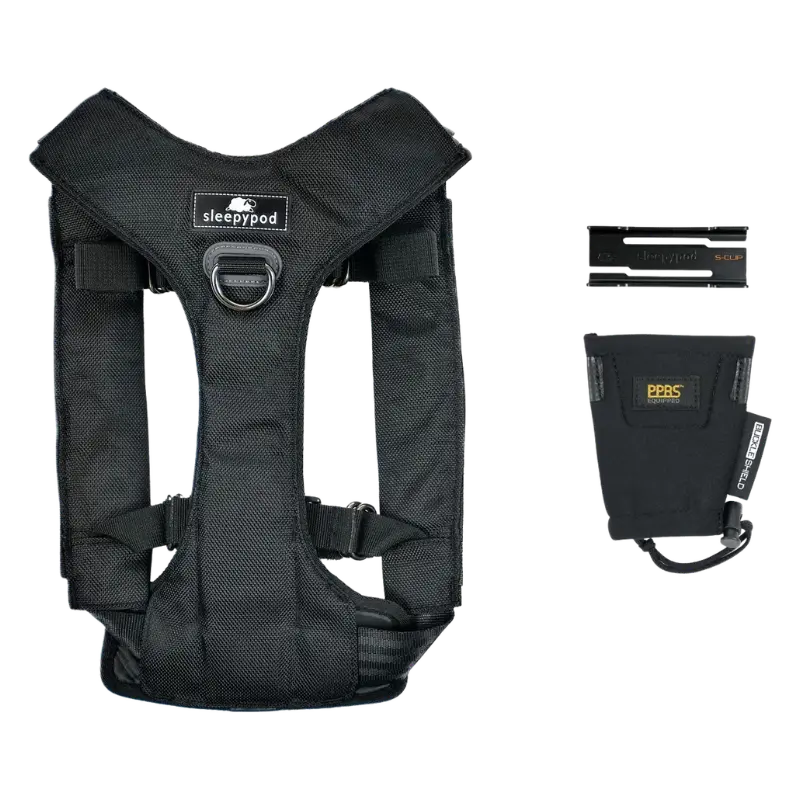
The Sleepypod Clickit Range stands out for combining documented independent certification with a design intended to accommodate a variety of dog body shapes.
It uses a broad, padded vest, shock-absorbing sleeves, and a three-point restraint arrangement that connects to the vehicle's seat belt. Sleepypod designed the Range family with different chest shapes in mind, including dogs that may not fit conventional harness geometry comfortably.
The Center for Pet Safety's Clickit Range record gives the model a five-star rating and identifies Small, Medium, Large, and X-Large sizes. Its record includes testing with a 110-lb test dog.
That's meaningful independent evidence, but it doesn't mean every dog up to 110 lb can wear any Range size or that every size sold has identical documented coverage.
What we like: The Range has a substantial padded structure, independent certification, and a dedicated vehicle-restraint design. It can also be used for walking through its designated leash attachments.
Its different fit approach is particularly relevant if you've struggled to find a harness that sits correctly around your dog's chest. However, the manufacturer’s broader body-shape accommodation claim is not a guarantee of individual fit.
What gives us pause: The Chewy feedback available during our research was limited and largely critical. Owners reported difficult seat-belt installation, sizing frustrations, and some construction-quality concerns.
With only a handful of ratings in that sample, it's too early to draw broad conclusions about reliability. Still, the complaints matter because a difficult installation can prevent owners from using the harness correctly.
There's also a separate Clickit Range Long design. Don't assume its longer vest is interchangeable with the regular Medium reviewed here.
Best for: Owners who prioritize independently documented crash testing and want to investigate a different chest-fitting design.
Avoid if: Your vehicle's seat belt cannot be routed as Sleepypod instructs, your dog falls outside the appropriate fit range, or you need a harness that's particularly quick to put on and secure.
Buying note: Check Sleepypod's fit guidance carefully and confirm the exact model before ordering. The premium cost is easier to justify when the harness genuinely fits your dog and vehicle.
2. Sleepypod Clickit Sport Plus — CPS-Certified Option for Smaller Chest Measurements
Selected variation: Jet Black, Medium — 22.5–28-inch chest
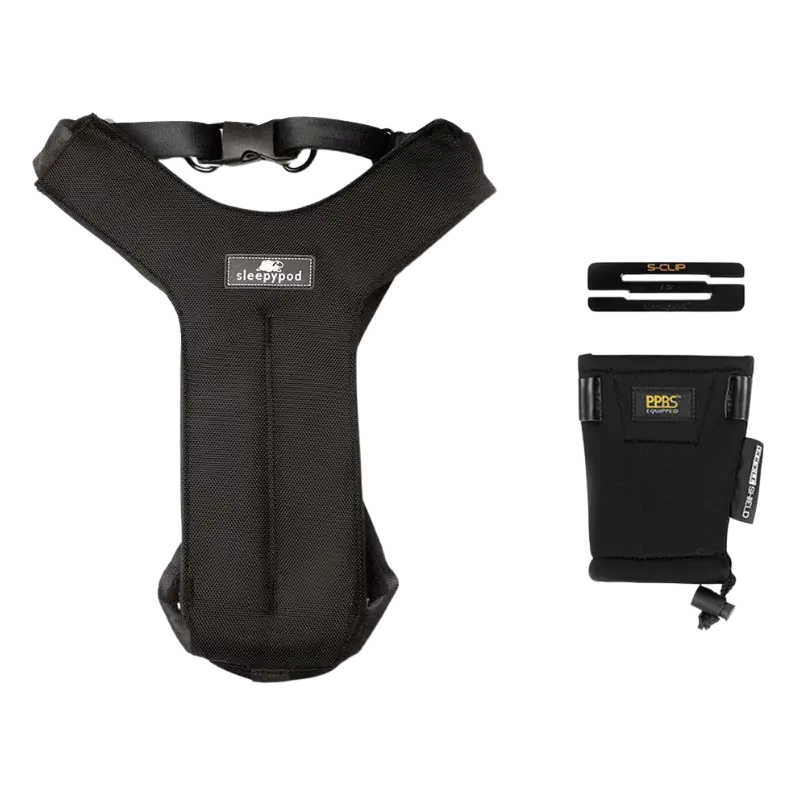
The Clickit Sport Plus is worth comparing directly with the Range rather than treating the two as interchangeable Sleepypod products.
For the selected Medium sizes, Sport Plus starts at a 22.5-inch chest measurement, while Range starts at 24.5 inches. That difference could make Sport Plus worth investigating for a dog whose chest measurements fall between those numbers.
The harness uses Sleepypod's Infinity Loop webbing design and a padded vest intended to help manage restraint forces during sudden deceleration. It also serves as a walking harness using its designated attachment.
The certification distinction matters. The CPS five-star certification record identifies the model as Clickit Sport, while Sleepypod markets its current Sport Plus package as CPS-certified. Readers should check the current product documentation rather than assume every similarly named version has an identical testing history.
The CPS record also specifies weight coverage by size. For the certified Medium Clickit Sport, it lists a 45–90-lb range. A matching chest measurement alone therefore isn't enough to establish whether a particular dog falls within the documented certification range.
Sport Plus has a more substantial retailer-review history than Range. Owners have praised its sturdy construction and the reassurance of its certification. Others describe difficulty positioning the straps, threading the seat belt, or getting their dogs comfortable.
These mixed experiences make proper fitting particularly important. A dog should not have to tolerate twisted webbing, painful pressure, or an installation that cannot be completed as instructed.
Best for: Owners seeking the Clickit Sport fitting design, particularly when its chest measurements work better than the corresponding Range size.
Avoid if: Your dog doesn't fall within the appropriate fit and tested-weight guidance, or the seat-belt setup is impractical in your vehicle.
Buying note: Compare the official Sport Plus and Range size charts before choosing. The cheaper of the two is not automatically the better purchase if the fit is wrong.
3. Kurgo Enhanced Strength Tru-Fit — Lower-Cost Crash-Tested Car-and-Walk Harness
Selected variation: Black, Medium — 18–28-inch chest
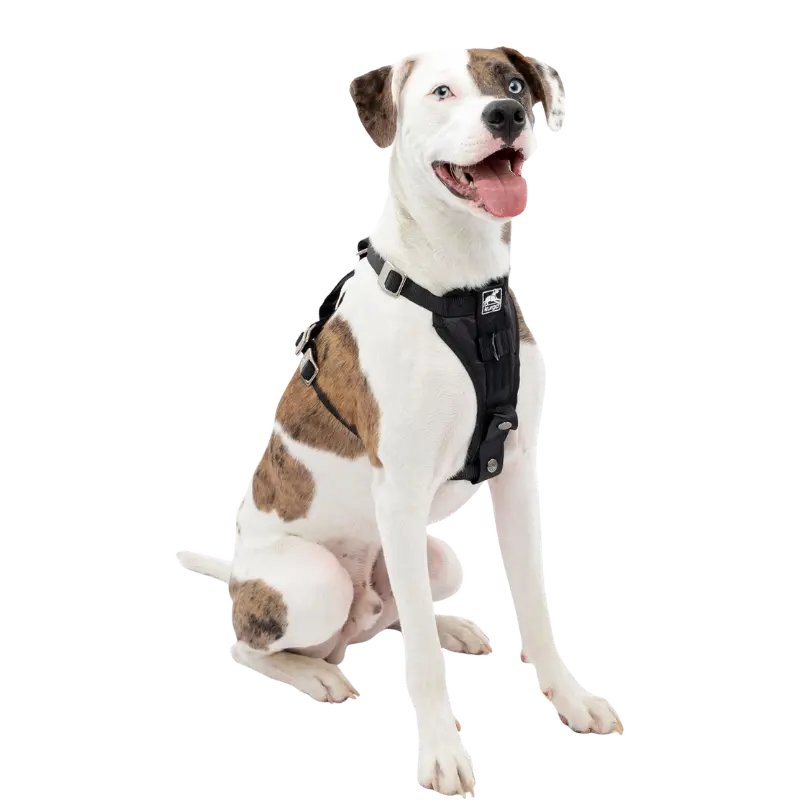
Kurgo offers a different proposition from the two Sleepypod harnesses: a considerably lower purchase price, substantial adjustability, and manufacturer-documented crash testing.
The Enhanced Strength Tru-Fit has five adjustment points, a padded chest plate, steel nesting-style buckles, and leash attachment points for walking. The selected Medium is listed for dogs with an 18–28-inch chest and a recommended weight of 25–50 lb.
Its broader adjustment range may help some owners get a suitable everyday fit, although it doesn't guarantee comfort on every body shape.
Kurgo publishes crash-testing information for the Enhanced Strength design, including testing of the v3 model. The manufacturer states that the harness has been tested for dogs up to 75 lb.
That is not the same as CPS certification. The testing provides relevant evidence, but it should not be described as an independent CPS approval.
The most important practical difference is its vehicle attachment.
Kurgo supplies a carabiner and a nylon loop tether, but its current car-installation instructions direct owners to attach the carabiner to both portions of the vehicle's lap-and-shoulder belt and then to the specified webbing on the harness. The nylon loop tether is not used in that described crash-test configuration.
Kurgo also warns against fastening the carabiner to the walking leash ring.
That distinction is easy to overlook when shopping because the product includes several pieces.
Customer feedback is generally favorable about the sturdy hardware and adjustment options. More critical reviews mention confusing buckles, rubbing around the front legs, and fit that shifts on certain dogs.
The nesting buckles may take practice, but that's different from a product being defective. Owners should assess whether they can fasten and adjust them consistently.
Best for: Owners looking for a more affordable, dual-purpose harness with published manufacturer crash-testing documentation.
Avoid if: You specifically require CPS certification, cannot follow the specified vehicle attachment method, or your dog experiences rubbing or poor restraint positioning.
Buying note: Make sure you're purchasing the Enhanced Strength version, not another Tru-Fit walking-harness model. The similar names can cause confusion.
4. Thule Cappy — Step-In Car Harness for Dogs That Dislike Over-the-Head Designs
Selected variation: Black, Small — Model 771001
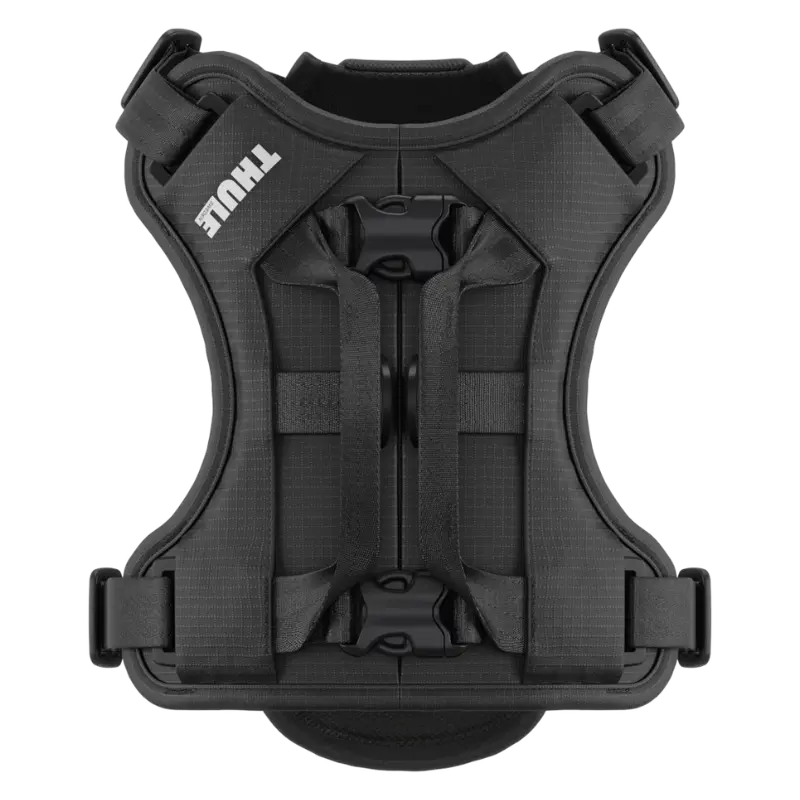
Some dogs strongly dislike having a harness pulled over their heads. Thule Cappy offers a useful alternative with its step-in design.
Once adjusted for the dog, its fastening arrangement is intended to make putting the harness on less awkward. Separate adjustment straps help avoid having to start the fitting process from scratch every time.
The selected Small fits a chest circumference of 18.5–25 inches, with a maximum dog weight of 25 lb. Neck measurements matter too, so owners should use Thule's complete chart rather than selecting by weight alone.
Thule also includes padded mesh panels and loops that allow the vehicle's seat belt to pass through the back of the harness.
The manufacturer describes Cappy as crash-tested and TÜV approved. That's relevant supporting evidence, although the complete underlying TÜV testing criteria weren't available for independent assessment during this review.
It would be misleading to present that approval as identical to the Center for Pet Safety's five-star certification.
Owners have praised the Cappy's construction and fastening design. Some reviews also describe stiffness, fitting difficulties, or problems with seat-belt positioning, including a report of entanglement.
Those complaints do not establish a widespread defect, but they are reasons to check the harness carefully during initial fitting.
Best for: Smaller dogs within the stated size limits whose owners prefer a step-in design instead of an over-the-head harness.
Avoid if: Your dog exceeds the Small's weight or fit limits, the harness restricts comfortable movement, or your vehicle's seat belt doesn't work with Thule's specified routing.
Buying note: The step-in design may simplify putting the harness on your dog. It does not eliminate the separate task of correctly threading and securing the vehicle seat belt.
What Does Crash-Tested Mean for a Dog Harness?
Crash-testing claims can sound reassuring, but they don't always describe the same evidence.
Before comparing products, it helps to understand who conducted the test, what was tested, and whether the result applies to the harness you're considering.
CPS Certification vs. Manufacturer Crash Testing
The Center for Pet Safety is an independent nonprofit that conducts testing and maintains certification records for qualifying pet travel products.
Its published records give buyers a way to check specific models, tested sizes, and the corresponding test-dog weights.
That's why the Sleepypod Clickit Range and Clickit Sport stand apart in this comparison: their CPS certification records can be examined directly.
Manufacturer-commissioned testing can also provide useful information. Kurgo, for example, has published test documentation for its Enhanced Strength harness. However, the existence of a laboratory report doesn't automatically mean the product meets CPS's certification criteria.
When reading any crash-test claim, look for the exact model, tested size and weight, installation method, and actual reported result.
An impressive test involving one configuration should not be treated as proof of identical protection for every dog or size.
FMVSS 213, TÜV Approval, and the ASTM Dog Harness Standard
FMVSS 213 is a U.S. federal safety standard for child restraint systems. Some dog harness manufacturers use its procedures or crash conditions as a testing reference.
That does not mean those harnesses have received a U.S. government dog-safety certification.
Thule describes Cappy as TÜV approved, but that is a separate approval claim and should not be confused with CPS certification.
There's also a more directly relevant published standard: ASTM F3725-25, Standard Consumer Safety Specification for Dog Harnesses for Motor Vehicle Safety.
It establishes specifications related to dog vehicle-harness restraint performance. Its existence does not mean every product labeled crash-tested complies with it.
No matter which standard or test is referenced, no car harness can guarantee protection in every collision.
How to Choose a Dog Car Safety Harness
Check Chest Measurements and Tested Weight Coverage
Start with a flexible measuring tape.
Measure around the widest part of your dog's rib cage, usually just behind the front legs. If the manufacturer requests a neck measurement, take that separately.
Then check three things together: chest size, dog weight, and the manufacturer's relevant test information.
A harness may appear to fit based on chest circumference while falling outside the weight range documented in its safety certification.
This is particularly important with the Sleepypod models, where the independent CPS records identify specific tested-weight coverage.
Don't size up simply to give your dog more freedom to move. A loose restraint can shift or allow excessive movement, while an overly tight one can cause pressure and discomfort.
Body shape matters as well. Two dogs with the same chest measurement may have very different shoulder widths, chest depths, and proportions.
For ordinary walks, different dog harness styles and fit options may be appropriate. For car travel, however, you need a harness specifically designed for vehicle restraint and used according to its instructions.
Check Your Vehicle's Seat Belt and Attachment Requirements
Not all dog car harnesses connect in the same way.
The Sleepypod models use their designated seat-belt routing. Thule Cappy also uses the vehicle's belt through its built-in loops.
Kurgo's Enhanced Strength design uses a specified carabiner connection to the vehicle belt and harness webbing.
Before purchasing, check that your vehicle has a suitable seat-belt system and enough usable belt length for the required routing.
Don't assume an extension strap, aftermarket adapter, or spare leash clip can solve a compatibility problem safely.
If your car's belt cannot secure the harness as instructed, contact the manufacturer or choose a different compatible restraint.
Consider Comfort, Movement, and Everyday Practicality
Crash-test evidence should come first, but owners also need a harness they can use correctly every trip.
Look at how the chest plate sits, whether straps rub behind the front legs, and whether the dog can adopt the resting positions permitted by the restraint design.
Some harnesses are bulky. Others have more complicated adjustment hardware or require extra time to route the belt.
Also inspect the materials and hardware. Look for durable stitching, securely attached buckles, and webbing that doesn't twist excessively during normal use.
If you want to use the harness for walking, verify that the manufacturer provides an appropriate leash attachment. A vehicle-restraint point is not automatically a walking attachment, and vice versa.
How to Secure Your Dog With a Car Harness
Follow the Manufacturer's Exact Seat Belt Instructions
The correct installation depends on the harness.
Place your dog in the vehicle position specified by the manufacturer, generally the rear passenger area, and secure the restraint exactly as shown in its instructions.
For the Kurgo Enhanced Strength, this means using the designated carabiner arrangement rather than attaching the belt to the leash ring.
For harnesses that use seat-belt loops, make sure the belt passes through the correct points and is buckled as directed.
The Center for Pet Safety warns against extension tethers because the additional movement can undermine crash protection.
Even if an aftermarket accessory appears to fit the harness, that doesn't establish that it has been tested or approved for use with it.
If anything about the attachment is unclear, consult the manufacturer's instructions before driving.
Check Fit, Strap Position, and Wear Before Driving
A quick pre-trip inspection can catch problems that are easy to miss when everyone is getting into the car.
Check that:
- The harness sits properly against your dog's body without twisting or excessive slack.
- Buckles and adjustment points are fully secured.
- The seat belt follows the correct route and is not tangled.
- Your dog cannot reach the driver or interfere with vehicle controls.
- The webbing, stitching, buckles, and restraint points show no concerning damage.
A dog that repeatedly escapes, becomes entangled, or appears distressed by the restraint may need a different fit or design.
Damaged components should be addressed according to the manufacturer's replacement guidance rather than repaired with improvised hardware.
Dog Car Harness vs. Seat Belt Tether: What's the Difference?
A dog car harness and a seat belt tether are not the same piece of equipment.
A purpose-built car harness distributes restraint forces through a designed structure around the dog's body. Some have been evaluated in crash tests using specified vehicle connections.
A separate tether typically connects a harness to a seat-belt buckle, headrest, or other attachment point. Depending on the product, it may mainly limit where the dog can move.
That movement control should not be confused with demonstrated crash protection.
A tether that works well for stopping a dog from wandering across the seats has not necessarily been tested for the forces involved in a collision.
For a closer look at the different accessory designs, see our guide to dog seat belt tethers and their limitations.
For crash protection, prioritize a purpose-built restraint with credible test evidence, an appropriate fit, and an installation method you can follow correctly.
Frequently Asked Questions
Are Dog Seat Belt Harnesses Safe?
A well-designed car harness with credible testing evidence and correct installation can provide a more defensible restraint choice than an ordinary, untested walking harness.
However, safety depends on the exact model, its tested configuration, the dog's size and shape, and proper use.
A crash-tested label alone is not enough. No harness guarantees that a dog will avoid injury in every crash.
Can You Put a Car Seat Belt Through a Regular Dog Harness?
You should not assume a regular walking harness is suitable for vehicle restraint.
Even if a seat belt physically fits through part of the harness, that doesn't establish that the materials, stitching, attachment points, or design can manage collision forces.
Use a harness expressly designed for car travel and follow its manufacturer-approved installation method.
Can Puppies and Very Small Dogs Use a Car Harness?
Possibly, but only if a suitable model fits the puppy's current measurements and falls within the manufacturer's intended use and relevant testing coverage.
Young puppies and very small dogs may fall below the supported size or weight range of many dedicated car harnesses.
For those dogs, an appropriately sized, crash-tested carrier may be worth considering instead. The Center for Pet Safety's certified-products directory includes other types of pet travel restraints.
Puppies grow quickly, so recheck fit regularly. A harness that fits today may need replacing as their proportions change.
Which Dog Seat Belt Harness Should You Choose?
Start with your dog's measurements and the available safety evidence—not the product's star rating or price.
The Sleepypod Clickit Range is worth examining if independent CPS certification and accommodation of different body shapes are priorities. The Clickit Sport Plus offers a different fitting range with an established Clickit Sport certification history.
The Kurgo Enhanced Strength Tru-Fit is a more accessible option for owners who want published manufacturer crash-testing information and a harness that also works for walking. Its exact vehicle attachment instructions are especially important.
For smaller dogs that dislike over-the-head harnesses, the Thule Cappy Small offers a different step-in arrangement, provided the dog's measurements and vehicle setup are suitable.
There's no universal winner. The better purchase is the harness whose documented evidence, fit, and approved installation method genuinely work for your dog and car.
If none fits correctly or can be installed as intended, don't force the choice. Look for an appropriate alternative restraint with credible testing evidence.