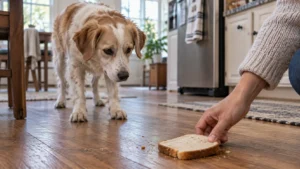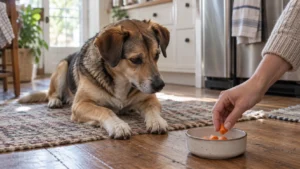
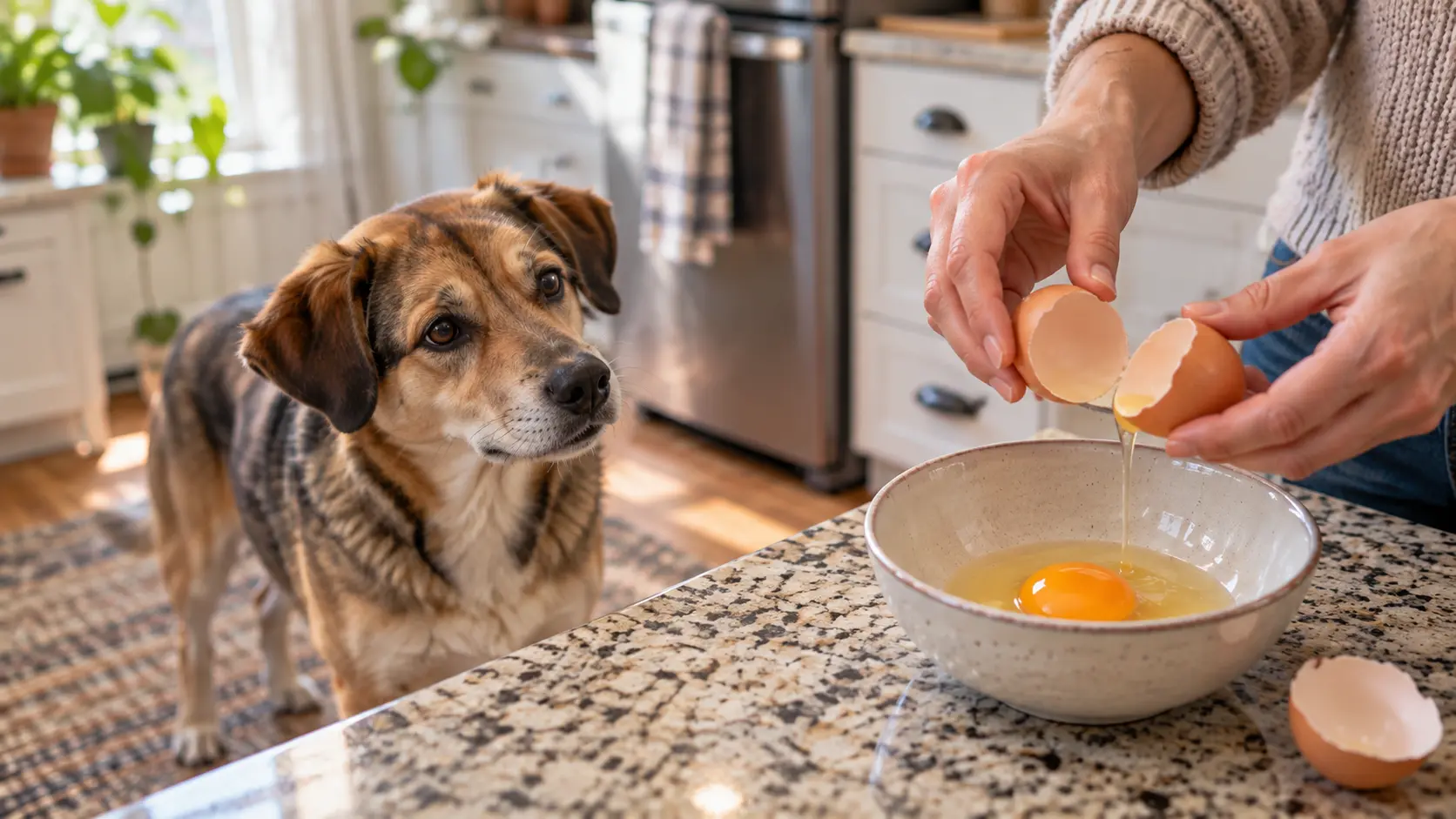
Dogs can eat egg, but raw or undercooked eggs are not the safest way to serve it. For intentional feeding, a fully cooked, plain egg is the better choice because raw eggs can carry foodborne bacteria such as Salmonella.
If your dog has already eaten one raw egg, that is a different situation. A single raw egg should not automatically be treated like a toxic-food poisoning event, especially if your dog is otherwise healthy and acting normally. The main concerns are foodborne illness and, with repeated raw egg-white feeding, interference with biotin availability.
Here is how to handle an accidental raw egg, why cooked eggs are preferred, and where scrambled, boiled, egg whites, yolks, and eggshells fit.
Can Dogs Eat Raw Eggs? The Short Answer
It is better not to intentionally feed dogs ordinary raw or undercooked eggs.
The main issue is food safety. The CDC includes uncooked eggs among raw animal proteins that can carry disease-causing germs and recommends cooked food as the safer option for pets.
That does not mean every raw egg contains harmful bacteria or that every dog eating one will become sick. Some exposed dogs remain completely normal, and clinical salmonellosis is considered relatively uncommon in dogs. Dogs can also carry and shed Salmonella without obvious illness.
If you want to share egg regularly, cook it thoroughly and keep it plain. You can find more foods that may or may not be suitable in our guide to human foods dogs can eat.
What Should I Do If My Dog Ate a Raw Egg?
If your dog stole a raw egg or you accidentally added one to the food, first check exactly what was eaten.
- Identify what was in the egg dish. A plain raw egg is different from an egg mixed with onion, garlic, or another unsafe ingredient.
- Consider the condition of the egg. An obviously spoiled egg or one affected by a food-safety recall deserves more caution than a fresh egg.
- Do not try to make your dog vomit unless a veterinarian tells you to.
- Watch for signs of illness, including vomiting, diarrhea, bloody diarrhea, reduced appetite, unusual lethargy, or fever.
- Clean any raw egg from bowls, counters, floors, and your hands. Raw-egg exposure is a household hygiene issue as well as a pet-food issue.
- Contact your veterinarian sooner if your dog is a puppy, immunocompromised, has a significant underlying illness, or develops concerning symptoms.
For an otherwise healthy dog that eats one fresh raw egg and continues acting normally, the event is not automatically equivalent to poisoning. Monitoring is generally more proportionate than assuming that illness will occur. There is no reliable universal “watch for exactly X hours” rule, so base the next step on the individual dog and any symptoms that appear.
Why Are Raw Eggs Riskier for Dogs?
Salmonella and foodborne bacteria
Raw eggs can contain Salmonella. The risk is not that every egg is contaminated, but that you cannot reliably tell whether one is contaminated simply by looking at it.
Dogs exposed to Salmonella may develop gastrointestinal illness, but they do not always show symptoms. Research has also documented dogs shedding Salmonella after exposure while remaining clinically normal.
That matters for people in the household too. Bacteria can potentially be spread through contaminated food bowls, surfaces, saliva, or feces.
This is why fully cooking the egg is preferable to relying on the idea that a dog’s digestive system can safely handle raw animal foods.
Avidin, biotin, and raw egg whites
Raw egg whites contain avidin, a glycoprotein that binds biotin and reduces its absorption.
This issue is sometimes exaggerated online. Merck Veterinary Manual notes that naturally occurring biotin deficiency is rare in dogs, while repeated feeding of raw egg whites can create a deficiency because of avidin.
So the useful distinction is:
Repeated or substantial raw egg-white feeding is the nutritional concern. One accidentally eaten whole raw egg is not a realistic reason to expect sudden biotin deficiency.
That does not make raw egg a better choice; it simply keeps the risk in proportion.
Are Raw Eggs Good for Dogs?
Eggs provide protein, fat, and several nutrients, but those nutrients do not need to be delivered in raw form.
There is no strong evidence showing that serving an egg raw gives dogs a meaningful health advantage that outweighs the added food-safety risk. Broader claims that raw feeding is inherently healthier also remain inadequately supported.
You may also see claims that raw eggs make a dog’s coat noticeably shinier. That is largely anecdotal. The fact that eggs contain nutrients needed for healthy skin and coat does not prove that feeding them raw causes a visible improvement.
For most owners, the more useful question is not whether eggs contain nutrients, but whether there is a good reason to accept the raw-food risk. For ordinary feeding, there usually is not.
Can Dogs Eat Scrambled Eggs?
Yes. Many healthy dogs can have plain, fully cooked scrambled egg as an occasional extra.
The simplest option is an egg cooked by itself until there are no runny portions, allowed to cool, and then served in an amount appropriate for the dog.
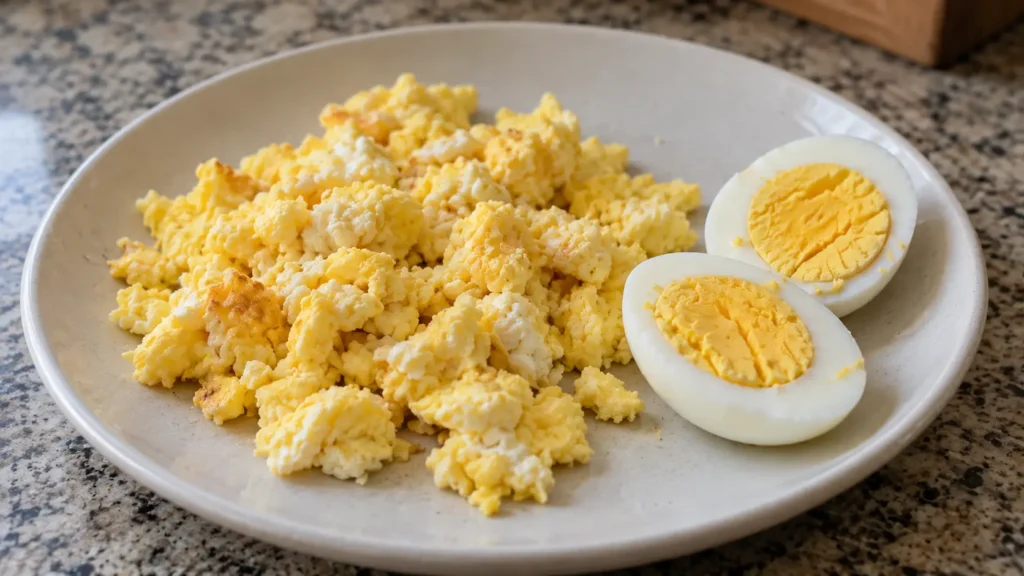
The problems usually come from what people add to scrambled eggs rather than from the cooked egg itself.
Ingredients to leave out
Onion and garlic: These are genuinely unsafe for dogs and should not be included in their eggs.
Butter and oil: Small cooking amounts are not equivalent to onion toxicity, but they add fat and calories. That matters especially for dogs on fat-restricted diets.
Cheese: It adds calories and fat and may not suit every dog’s diet.
Milk or cream: Some dogs tolerate small amounts, while others develop digestive upset from lactose. If you normally scramble eggs with milk, our guide explains whether dogs can tolerate milk.
Plain scrambled egg is easier to evaluate than a heavily seasoned breakfast scramble.
Can Dogs Eat Boiled or Hard-Boiled Eggs?
Plain hard-boiled egg is also a reasonable occasional extra for many healthy dogs.
The advantage is simple: the egg can be cooked thoroughly without needing oil, butter, or other ingredients.
FoodSafety.gov advises cooking shell eggs until both the yolk and white are firm.
What about runny or soft-boiled eggs?
A partly cooked egg is not the same as a fully cooked egg from a food-safety perspective.
Soft-boiled eggs, runny scrambled eggs, or eggs with a liquid yolk still contain undercooked portions. If you are deliberately preparing egg for your dog, cooking both the yolk and white through is the safer approach.
How Much Cooked Egg Can a Dog Have?
There is no single egg allowance that fits every dog.
A whole egg contributes enough calories that it can be a modest extra for a large dog but a much bigger part of the daily calorie allowance for a small dog.
A more useful guideline is the 10% rule: veterinary nutrition guidance generally recommends that treats and extras together stay around 10% or less of a dog’s daily calories, while the rest comes from a complete-and-balanced diet.
That means:
- a small dog may need only part of an egg;
- a larger dog may be able to fit more into its calorie allowance;
- other treats eaten that day also count;
- weight, body condition, age, activity, health, and the main diet all affect how much is reasonable.
Avoid rigid charts that assign every dog of a particular weight a fixed number of eggs per week. They make feeding look more precise than the evidence supports.
When Eggs Need Extra Caution
Puppies
Puppies do not need raw eggs for growth.
Their main food should be complete and balanced for growth because puppies have specific nutritional requirements. Young animals can also be more vulnerable to foodborne illness than healthy adults.
If you want to let a puppy taste egg, use a small amount of fully cooked plain egg rather than replacing meaningful amounts of balanced puppy food.
Avoid casual eggshell or calcium supplementation in puppies, especially large- and giant-breed puppies, unless their diet has been professionally formulated.
Dogs with health or dietary restrictions
Ask your veterinarian before adding egg regularly if your dog:
- has pancreatitis or is on a prescribed low-fat diet;
- eats a veterinary therapeutic diet;
- is undergoing an elimination diet for suspected food allergy;
- has significant gastrointestinal disease;
- has a weakened immune system;
- has previously reacted badly to egg.
Egg does not automatically cause pancreatitis, and egg allergy should not be described as common. The point is that an otherwise reasonable extra may interfere with a carefully controlled diet or may not suit an individual dog.
What About Egg Whites, Yolks, and Eggshells?
Egg whites: Fully cooked egg white can be part of a plain cooked egg. The avidin concern relates mainly to repeated feeding of raw egg whites.
Egg yolks: Cooked yolk can also be included. It contributes calories and fat, so portion size still matters.
Eggshells: Eggshell contains calcium, but that does not mean dogs eating complete-and-balanced food need extra calcium. Routine DIY eggshell supplementation can upset the mineral balance of a diet, with excessive calcium being a particular concern in growing dogs.
If you are preparing a home-cooked diet that requires a calcium source, the amount should be determined as part of a properly formulated recipe rather than estimated by sprinkling eggshell powder over meals.
Common Egg-Feeding Mistakes to Avoid
A few simple mistakes create most of the unnecessary problems with eggs:
- assuming raw egg must be healthier because it is less processed;
- regularly feeding raw egg whites for supposed nutritional benefits;
- treating a runny egg as equivalent to a fully cooked one;
- adding onion or garlic;
- turning a plain egg into a high-fat meal with butter, oil, cream, or cheese;
- offering whole eggs frequently without considering the dog's size or other treats;
- letting egg replace too much complete-and-balanced dog food;
- routinely adding eggshell powder as a calcium supplement without nutritional guidance;
- treating anecdotal coat improvements as proof that raw egg has a special benefit.
When to Call a Veterinarian
Contact your veterinarian if your dog develops concerning or worsening signs after eating raw egg, including:
- repeated vomiting;
- persistent or severe diarrhea;
- bloody diarrhea;
- marked lethargy;
- reduced appetite or refusal to eat;
- fever or suspected fever.
Seek advice sooner for puppies, dogs with weakened immune systems, or dogs with significant underlying illness.
Veterinary or veterinary-nutrition guidance is also useful before making eggs a regular part of a therapeutic, elimination, raw, or home-prepared diet.
Frequently Asked Questions
Can dogs eat raw eggs mixed with their food?
Mixing a raw egg into kibble or another meal does not remove its food-safety risk. If you want to add egg to your dog’s normal food, fully cook it first and keep the addition within the dog’s overall treat and calorie allowance.
Can dogs eat eggs every day?
There is no universal rule saying every dog can or should have an egg every day. A whole egg may represent a small extra for one dog and a large portion of another dog’s daily calories. Consider the dog’s size, calorie needs, health, main diet, and all other treats rather than using a fixed daily schedule.
Can dogs eat pasteurized raw eggs?
Commercial pasteurization substantially reduces the Salmonella concern compared with an ordinary unpasteurized raw shell egg. However, pasteurization does not establish that raw egg is nutritionally better or that a dog needs raw egg in its diet.
Do raw eggs make a dog's coat shiny?
There are plenty of anecdotes, but good evidence showing that raw egg itself produces a shinier coat is lacking. Eggs contain useful nutrients, but that does not prove a special benefit from serving them raw.
Can dogs eat egg yolks?
Many healthy dogs can eat cooked egg yolk as part of a fully cooked egg. Yolks contribute fat and calories, so they should still fit within the dog’s overall diet rather than being treated as an unlimited extra.
The Bottom Line
So, can dogs eat raw eggs? A dog may eat one without becoming sick, but raw or undercooked egg is not the form to choose for routine feeding. Fully cooked, plain egg avoids an unnecessary foodborne-pathogen risk while still giving your dog the egg itself.
If your dog accidentally eats one raw egg and remains well, do not automatically treat it as poisoning. Monitor for illness, keep surfaces clean, and contact your veterinarian if symptoms develop or your dog belongs to a higher-risk group.
When eggs are offered intentionally, keep them cooked, plain, and proportionate to the dog’s overall diet.