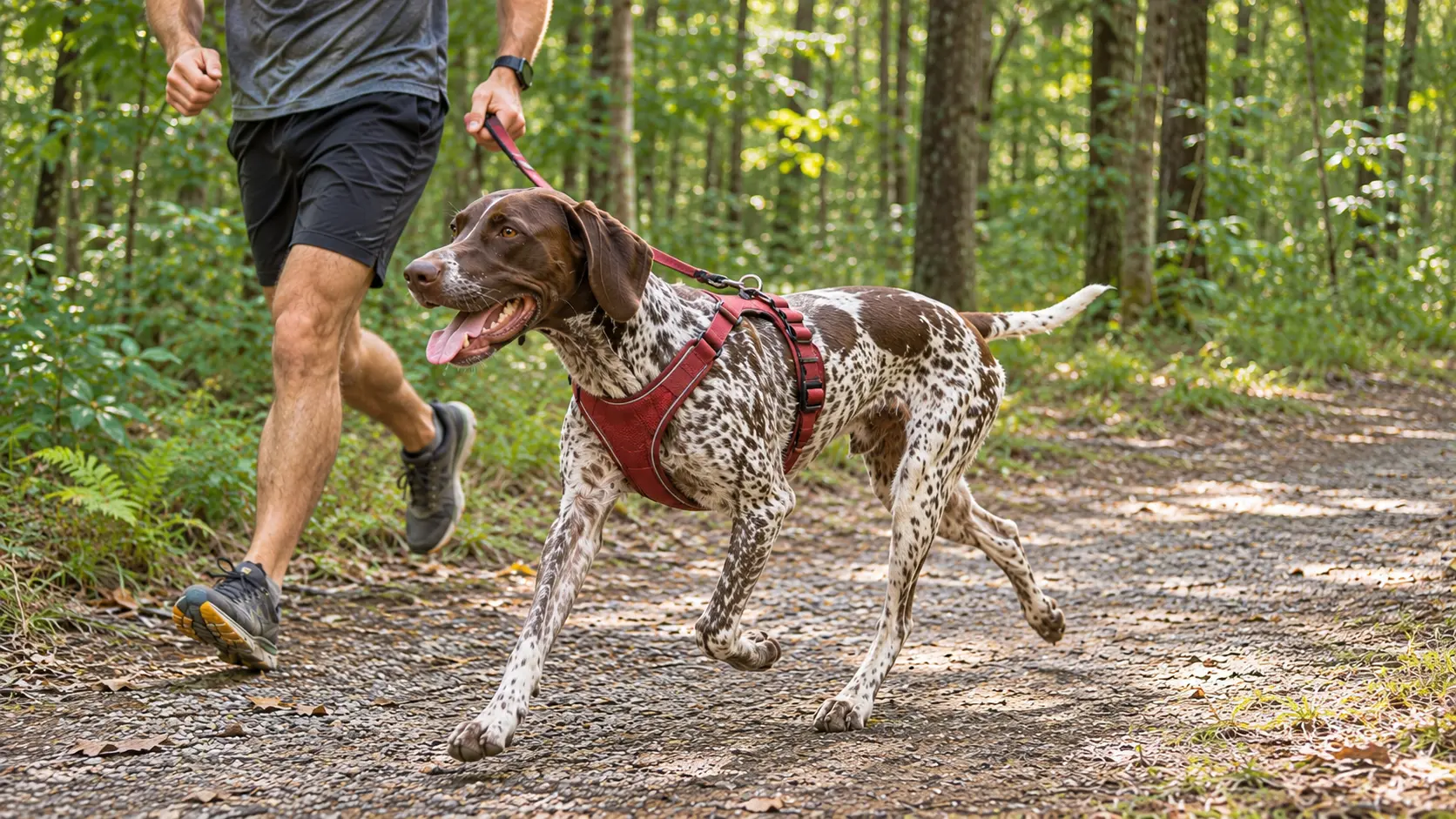
The best dog running harness depends on how your dog runs. A dog that jogs comfortably beside you needs different equipment from one that pulls ahead during canicross or tackles rocky trails where occasional lifting assistance is necessary.
For most recreational runners, the Non-stop Dogwear Line Harness 5.0 offers a useful balance of padding, adjustability and outdoor versatility. The Ruffwear Hi & Light is worth considering if you prefer something less bulky, while the Non-stop Dogwear Freemotion 5.0 is designed specifically for sustained pulling.
This guide compares six products for different outdoor activities, including their practical advantages, common fit problems and important limitations.
If you're looking for equipment primarily for everyday walks, start with our complete guide to choosing a dog harness.
Affiliate disclosure: LumaPaw may earn a commission when you purchase through links on this page, at no additional cost to you. As an Amazon Associate, LumaPaw earns from qualifying purchases. Our recommendations are based on product research and customer feedback, not hands-on testing.
Best Dog Running Harnesses at a Glance
| Product | Best For | Main Advantage | Key Limitation |
|---|---|---|---|
| Non-stop Dogwear Line 5.0 | Recreational running and hiking | Padded, versatile construction | Fixed neck opening |
| Non-stop Dogwear Rush | Short pulling activities | Compact pulling-specific design | Not preferred for prolonged strong pulling |
| Ruffwear Hi & Light | Lightweight running | Minimal body coverage | Fit can be difficult |
| Ruffwear Flagline | Trail running | Extra body strap and assistance handle | Belly clearance on some dogs |
| Non-stop Dogwear Freemotion 5.0 | Canicross | Full-length pulling design | Specialized fitting requirements |
| Noxgear LightHound | Night running visibility | Active LED illumination | Better as supplementary visibility equipment |
The first five products are running or hiking harnesses. The LightHound serves a different purpose: making your dog more visible during outings after dark.
How We Chose These Running and Hiking Harnesses
We researched ten candidates using manufacturer specifications, Amazon and Chewy listings, sizing charts and customer reviews.
Our selection focused on:
- Fit and stability during movement.
- Padding, materials and potential friction points.
- Leash attachment design and intended activity.
- Adjustment options for different body shapes.
- Reported problems involving buckles, stitching and leash attachments.
- Practical features for hiking, pulling sports and nighttime exercise.
- Value compared with alternatives serving the same purpose.
We excluded several popular, lower-priced harnesses because recurring fit, rubbing or hardware complaints made them less compelling for running. Others offered features already covered by stronger candidates.
LumaPaw has not physically tested these products. Our recommendations reflect documented design features, manufacturer guidance and reported customer experiences. Individual fit and durability can vary.
Our Top Dog Harness Picks for Running and Hiking
1. Non-stop Dogwear Line Harness 5.0 — Best Overall for Recreational Running and Hiking
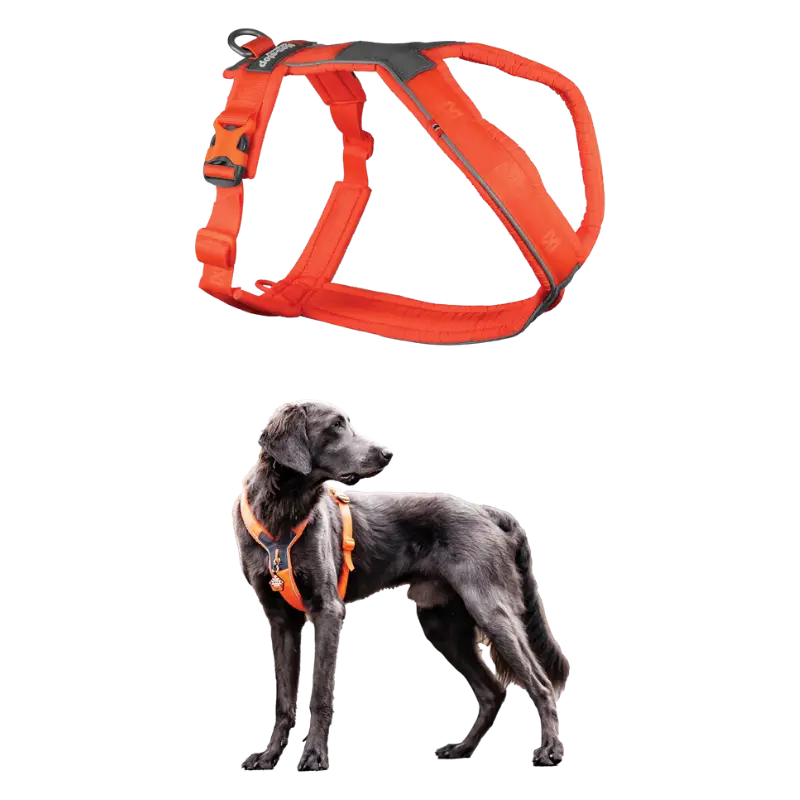
The Line Harness 5.0 is a sensible starting point for owners who want one harness for morning jogs, weekend hikes and ordinary walks.
Originally developed for outdoor activities such as hiking and tracking, it also suits running with dogs that don't continuously pull on the leash.
Product snapshot
- Versions examined: Orange, Size 2 and Blue, Size 6
- Construction: Nylon ripstop with closed-cell foam padding
- Adjustability: Chest straps
- Available sizes: 0–9, depending on color
- Leash attachments: Two or three, depending on size
- Extras: Reflective details and reinforced wear areas
Its Y-shaped front and padded straps provide coverage without wrapping the dog in a large vest. Side-release buckles let you secure the harness without lifting the dog's front legs through separate openings.
The leash attachment configuration is particularly useful. Every size has a standard back connection and an attachment underneath for tracking. Sizes 3 and above also have a front loop for mild pulling control.
That distinction matters if you're shopping for a small dog: the Size 2 Amazon version does not include the front attachment found on the Size 6 Chewy version.
Owners frequently praise the padding and clearance behind the front legs. Some describe successful running outings without the armpit irritation they experienced with previous harnesses.
The most consistent drawback is the fixed neck opening. A dog with a broad head, thick coat or unusual neck-to-chest proportions may be difficult to fit, even when its chest falls within the recommended range.
Pros
- Padded construction with relatively little bulk.
- Suitable for several recreational outdoor activities.
- Useful size-dependent leash attachment options.
- Reflective details and a broad size range.
Cons
- Neck opening cannot be adjusted.
- No assistance handle.
- Smallest sizes lack a front attachment.
- Some owners report color fading and sizing difficulties.
Best for: Dogs that jog alongside their owners and need a versatile outdoor harness.
Avoid if: Your dog pulls continuously during runs or has difficulty wearing fixed-neck harnesses.
Buying note: Measure both the neck and chest using the official Line 5.0 sizing guide. If those measurements point to incompatible sizes, consider an adjustable-neck alternative rather than forcing the fit.
2. Non-stop Dogwear Rush — Best Short Pulling Harness
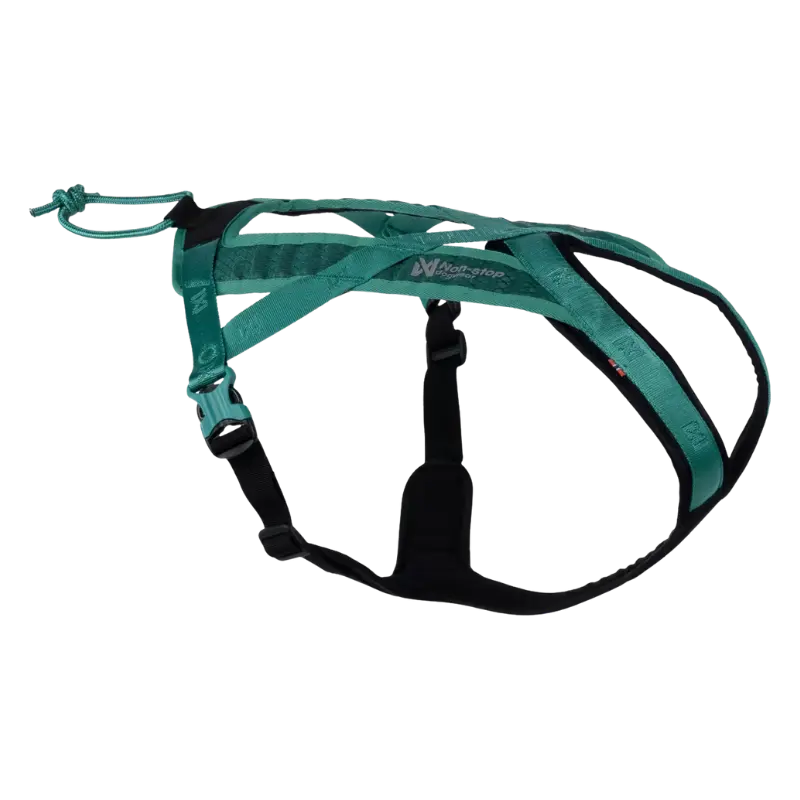
Some dogs naturally want to run ahead and lean into their harness. For these dogs, equipment designed to accommodate pulling makes more sense than a conventional walking harness.
The Rush provides a shorter alternative to a full-length canicross harness.
Product snapshot
- Version examined: Teal, Size 1
- Construction: Polyester with ventilated HexiVent material
- Adjustability: Side straps and rear attachment loop
- Available sizes: 1–8
- Leash attachment: Rear rope loop
Unlike the Line 5.0, which connects a running leash near the dog's back, the Rush positions its pulling connection closer to the tail. It's intended for activities where the dog pulls ahead and the line leads upward toward the runner or another suitable attachment point.
The shorter body design is useful for compact dogs that may be difficult to fit into longer pulling harnesses. Side-release buckles also simplify dressing compared with the Freemotion.
Its HexiVent construction is designed to promote airflow and drying. That is a practical feature for active dogs, although it doesn't make strenuous exercise in hot weather safe.
The available customer feedback is encouraging. Owners describe comfortable running and biking outings, including several reports of little or no rubbing. However, the written-review sample was small, and we found individual complaints about sizing and difficulty removing the fixed neck opening.
Pros
- Specifically designed for pulling activities.
- Short construction with convenient side buckles.
- Adjustable rear pulling connection.
- Ventilated materials and reflective details.
Cons
- Fixed neck opening.
- Limited independent customer feedback.
- No front leash attachment or assistance handle.
- Less suitable than a full-length pulling harness for prolonged, powerful pulling.
Best for: Recreational canicross participants and dogs beginning pulling sports.
Avoid if: Your main goal is discouraging pulling, or your dog regularly pulls hard over long distances.
Buying note: Follow the manufacturer's Rush fitting instructions, including checking its position under tension. Non-stop Dogwear recommends the Freemotion 5.0 for longer distances with strong pulling dogs.
3. Ruffwear Hi & Light — Best Lightweight Running Harness
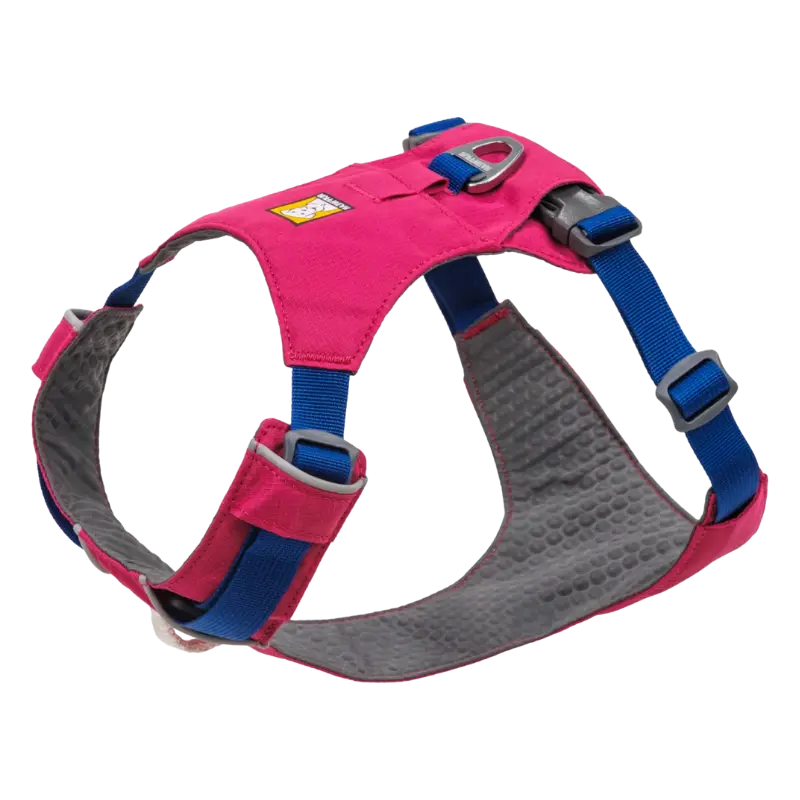
If your dog runs comfortably without pulling and dislikes bulky equipment, the Ruffwear Hi & Light is one of the most interesting options in this comparison.
Rather than adding extra padding, handles and body panels, it concentrates on keeping the harness compact and adjustable.
Product snapshot
- Version examined: Alpenglow Pink, X-Small
- Reviewed chest range: 17–22 inches
- Construction: Polyester ripstop shell
- Adjustability: Four points
- Available sizes: XXXS–L/XL
- Leash attachments: Aluminum back ring and reinforced front webbing loop
The Hi & Light is particularly appealing for smaller dogs because its size range starts at a 9–13-inch chest circumference. Larger dogs can also benefit from its low-profile construction when extra padding and lifting features aren't necessary.
Ruffwear includes a debris-resistant lining, reflective trim, a small ID pocket and a loop for attaching a compatible safety light.
Customer reviews frequently highlight the lightweight feel. Owners whose dogs dislike substantial vest-style harnesses often appreciate the smaller panels and reduced bulk.
Fit is the main limitation. Some customers report short-feeling chest straps, excessive room around the neck or sideways movement during use. Others have expressed concerns about the fabric front attachment.
The design can also be less forgiving for dogs that benefit from substantial padding or have a history of slipping out of harnesses.
Pros
- Minimalist construction suitable for recreational jogging.
- Four adjustment points, including neck adjustment.
- Excellent range of small-dog sizes.
- Two leash attachments and reflective details.
Cons
- Less padding than more substantial outdoor harnesses.
- Recurring sizing and adjustment complaints.
- Can shift on certain body shapes.
- No assistance handle.
Best for: Small dogs and recreational runners who prefer lightweight equipment.
Avoid if: Your dog needs substantial padding, regularly escapes harnesses or participates in sustained pulling sports.
Buying note: Check for adjustment webbing tucked inside the harness panels before deciding the straps are too short. Use the official Ruffwear size chart and confirm that the harness remains stable during a short walk.
4. Ruffwear Flagline — Best for Trail Running
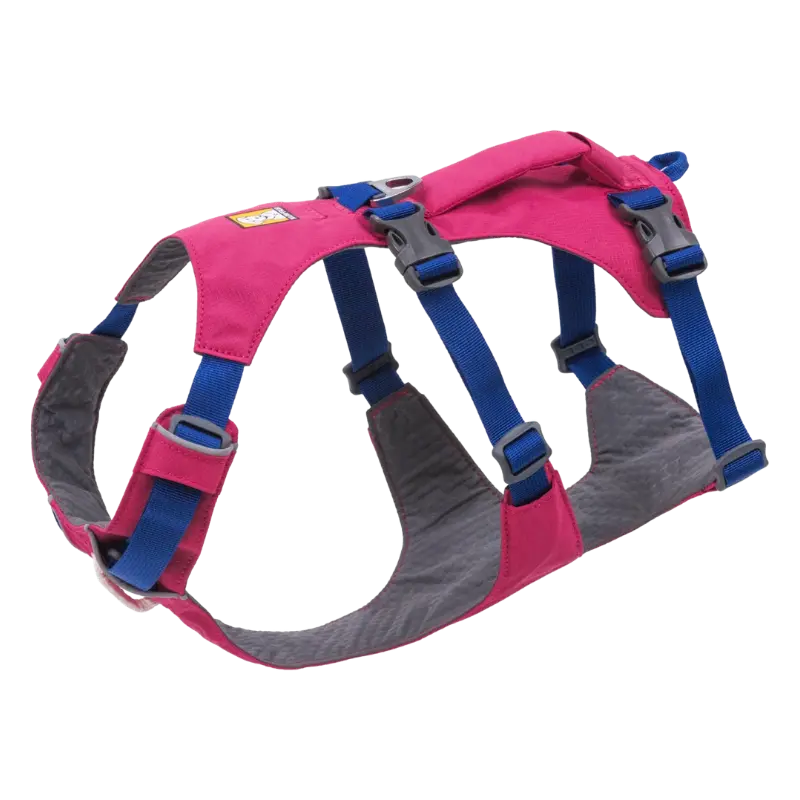
A simple running harness works well on many routes. Rocky trails, steep steps and obstacles can make additional support features worth having.
The Ruffwear Flagline combines an extended body design with a padded assistance handle while keeping the overall construction relatively lightweight.
Product snapshot
- Version examined: Alpenglow Pink, Small
- Reviewed chest range: 22–27 inches
- Adjustability: Six points
- Leash attachments: Three
- Available sizes: XXS–L/XL
- Extras: Additional rear body strap and padded lift-assistance handle
The Flagline's main advantage becomes apparent on uneven terrain. If your dog needs occasional help getting over a fallen tree or negotiating a high step, its handle and extended chest and belly panel are more appropriate for assistance than an ordinary walking harness's grab handle.
The additional rear strap also makes it more difficult for a correctly fitted dog to reverse out of the harness.
Many customers appreciate this extra retention, particularly those whose dogs have escaped simpler designs. The handle also receives positive feedback from hikers and owners of dogs needing occasional support.
However, the longer body coverage creates a fitting consideration that is easy to overlook: several owners of male dogs report that the belly panel can interfere with urination.
Some customers also report difficulty adjusting the neck or getting all the straps to sit correctly.
Pros
- Additional rear strap for improved retention.
- Six adjustment points and three leash connections.
- Padded handle designed for lift assistance.
- Useful combination of technical hiking and running features.
Cons
- More complicated fitting than a conventional harness.
- Belly panel may interfere with urination on some dogs.
- Relatively expensive.
- Not designed specifically for pulling sports.
Best for: Trail runners, hikers and dogs that occasionally need help navigating obstacles.
Avoid if: The extended body panel interferes with your dog's movement or toilet habits.
Buying note: Check chest measurements, torso length and the position of the rear strap. Let your dog walk and urinate comfortably before committing to the fit.
The Flagline is more escape-resistant in design, not escape-proof. Use its handle for the assistance described by Ruffwear, not prolonged suspension or technical rescue lifting.
5. Non-stop Dogwear Freemotion 5.0 — Best for Canicross
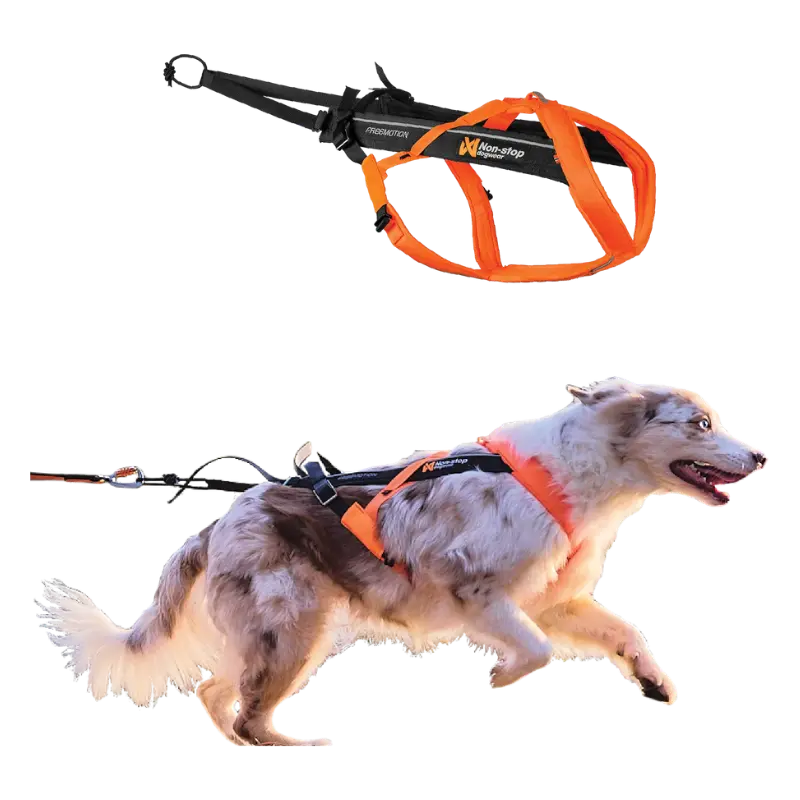
Canicross involves running with a dog that pulls ahead of you, usually connected through a flexible running line and a belt worn by the runner.
For this type of activity, the Freemotion 5.0 is a more specialized choice than an ordinary recreational harness.
Product snapshot
- Versions examined: Orange/Black, Size 3 and Pink/Grey, Size 8
- Construction: Nylon ripstop with closed-cell foam padding
- Adjustability: Side and back straps
- Available sizes: 3–9
- Leash attachment: Rear pulling connection
- Intended sports: Canicross, bikejoring and skijoring
The full-length design extends farther along the dog's body than the Rush. Its adjustable sides and back allow you to customize the fit for activities involving sustained pulling.
The manufacturer specifically designs it for sports where the pulling line leads upward toward a runner's belt or another elevated attachment point.
Customer feedback from dog-sport participants includes praise for its construction, adjustability and comfort when fitted correctly.
Sizing, however, requires considerably more attention than fitting a conventional walking harness. Several owners report needing to exchange sizes, and some find the fixed neck opening awkward to remove.
The Amazon review history also contains experiences with the original Freemotion. Those older reviews should not automatically be treated as evidence about the updated 5.0.
Pros
- Dedicated full-length pulling-sport construction.
- Adjustable side and back straps.
- Padded neck opening.
- Replaceable components and reflective details.
Cons
- Expensive compared with recreational harnesses.
- More complicated to put on and remove.
- Fixed neck opening.
- Unnecessary for dogs that run beside their owners without pulling.
Best for: Regular canicross participants and dogs that maintain pulling tension over longer distances.
Avoid if: You're looking for a conventional jogging harness or equipment that discourages pulling.
Buying note: Use the Freemotion 5.0 fitting instructions rather than relying on chest circumference alone. Check the harness under tension, secure all adjustment straps and inspect the rear attachment rope before running.
6. Noxgear LightHound — Best for Night Running Visibility
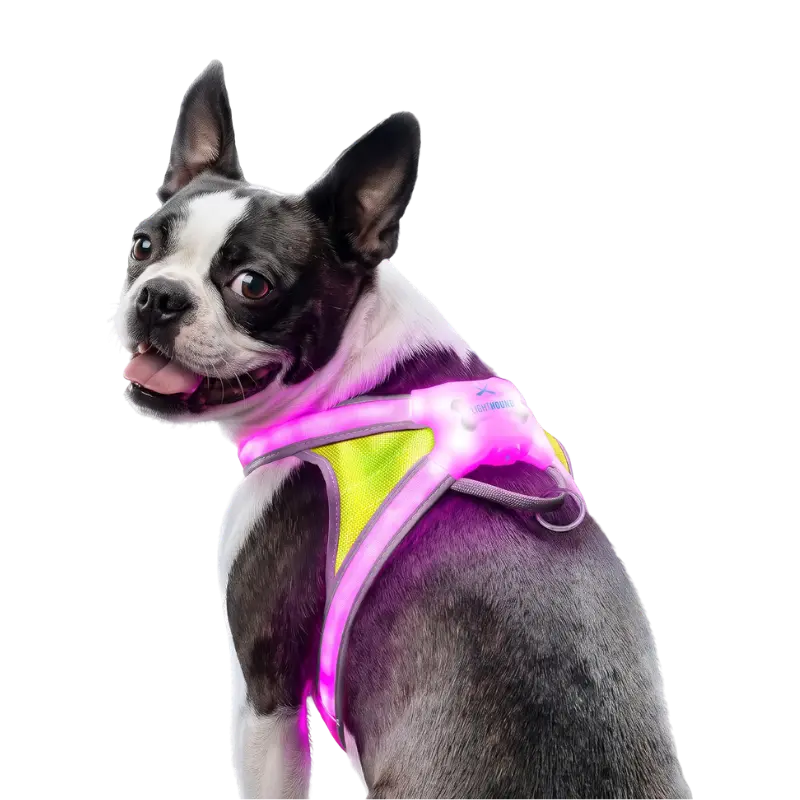
Reflective trim is useful when headlights or another light source reaches your dog. The Noxgear LightHound goes a step further by producing its own illumination.
It's a useful addition for runners who regularly leave home before sunrise or exercise after dark.
Product snapshot
- Version examined: Medium, Harness Only
- Reviewed chest range: 17.5–30 inches
- Lighting: LED fiber optics with eight solid colors and six multicolor modes
- Battery: USB rechargeable
- Available sizes: S–XL
- Adjustability: Neck and chest
Its illuminated straps help make your dog easier to see from different angles, while the fluorescent fabric adds another visibility feature.
Noxgear advertises approximately 12 hours of battery operation, although actual runtime can vary. The removable electronic module also allows the fabric portion to be washed separately.
Customer feedback is especially positive about brightness and visibility. Many owners describe using the LightHound during nighttime walks and early-morning exercise.
The less convincing part is its role as a primary restraint. Some owners report weak connectors, damaged straps or sideways movement. Others deliberately wear it over a separate harness.
For running, particularly with a dog that pulls or lunges, we prefer that second approach.
Pros
- Active illumination rather than reflection alone.
- Multiple lighting colors and patterns.
- Adjustable construction.
- Rechargeable battery and removable electronics.
Cons
- Requires regular charging.
- Reported buckle and strap concerns.
- Can rotate during movement.
- Electronic housing cannot be submerged.
Best for: Improving visibility during nighttime and early-morning runs.
Avoid if: You need a dedicated pulling harness or a sole restraint for an escape-prone dog.
Buying note: If layering the LightHound over another harness, make sure neither interferes with the other's fit or leash attachment. Check the battery and charging-port cover before heading out.
The manufacturer's LightHound guidance explains its electronic and water-resistance limitations.
How to Choose the Right Dog Harness for Running and Hiking
Match the Harness to Your Dog's Running Style
Start by observing what your dog actually does when you increase your pace.
A dog that runs beside you with a relaxed leash generally needs a stable, comfortable back-clip harness. The Line 5.0 and Hi & Light address this type of activity.
If your dog deliberately runs ahead and pulls, consider equipment designed for that purpose. The Rush offers a shorter pulling design, while the Freemotion is intended for more sustained pulling sports.
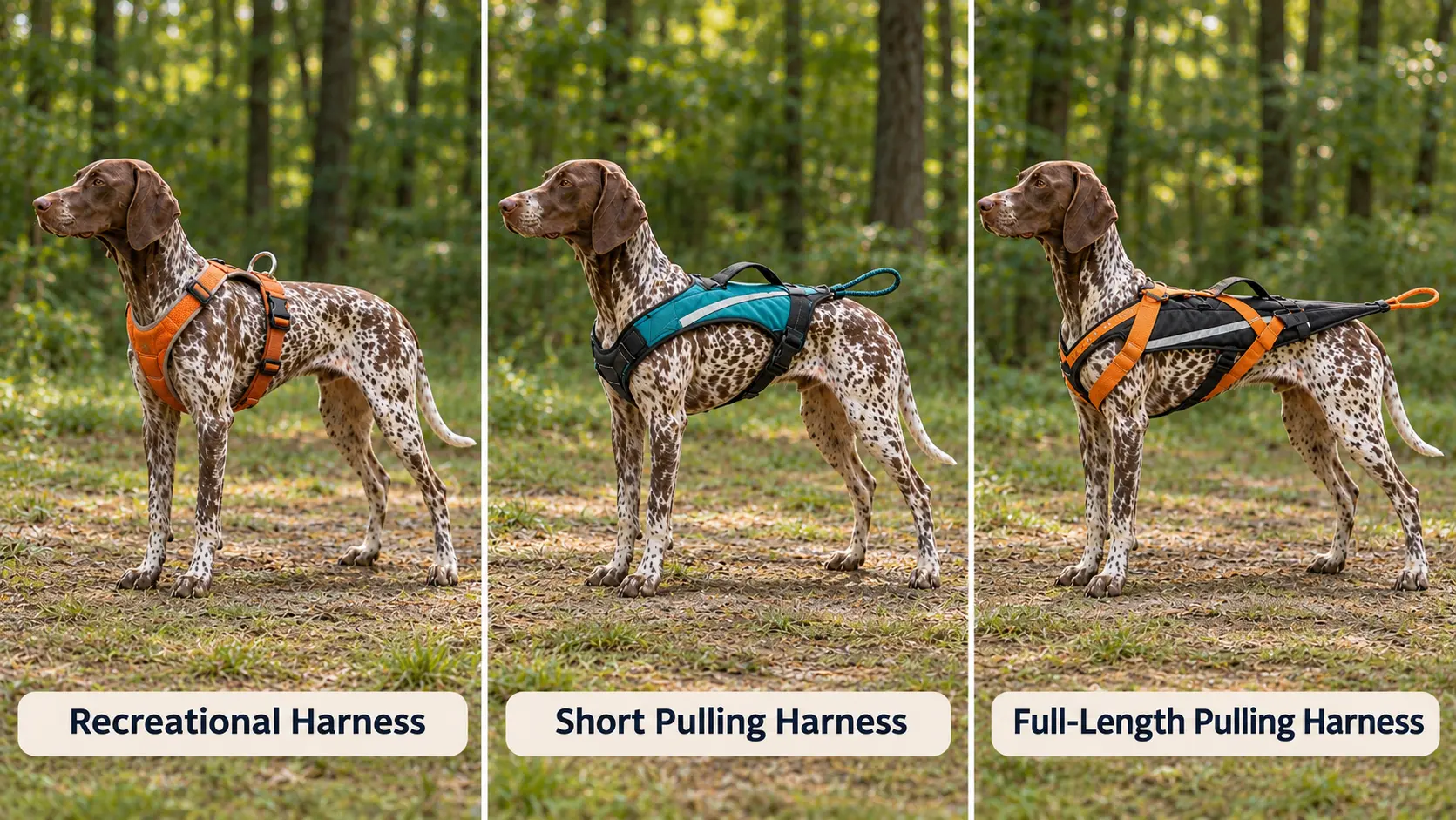
For hiking and trail running, additional features such as an assistance handle and rear retention strap can become more valuable than keeping equipment as minimal as possible.
Buying a specialized canine running harness is worthwhile when its design solves a real problem. It isn't necessary just because you occasionally jog with your dog.
Get the Fit Right Before Your First Run
Measure around the widest part of your dog's rib cage. For harnesses with fixed neck openings, measure the neck as well.
Once the harness is adjusted, let your dog walk and trot in a secure area. Look for straps that slide toward the throat, panels that rub behind the front legs or large gaps that could allow the dog to back out.
A couple of fingers beneath the straps can be a useful starting point for many conventional harnesses, but the manufacturer's specific instructions take priority. Dedicated pulling harnesses have different fitting requirements and should be assessed under tension.
Body shape matters just as much as overall size. Deep-chested, broad-necked or unusually proportioned dogs may not fit every design. Our guide to harnesses for large dogs covers additional options for larger and difficult-to-fit dogs.
Check Padding, Weight, and Freedom of Movement
More padding isn't automatically better. A bulky harness can be unnecessary for a dog that runs comfortably in lightweight equipment, while thin straps may be less comfortable for another dog.
Pay attention to where the material sits, especially near the armpits, shoulders and chest.
A small veterinary study examining harness design and shoulder movement found that both harness styles studied could reduce shoulder extension. A Y-shaped design alone does not guarantee unrestricted movement.
Watch your own dog's stride and check the skin beneath the straps after the first few outings.
Choose the Right Leash Attachment
A back attachment is generally a practical starting point for dogs jogging alongside their owners.
Front attachments can help redirect a pulling dog during walking, but tension from the front may cause some harnesses to rotate or move toward the legs. For continuous running, stability and comfortable movement should take priority.
Dedicated pulling harnesses use a different attachment arrangement intended for forward pulling under tension.
If your dog's main problem is unwanted pulling during walks, our front-clip dog harness guide covers equipment better suited to that purpose.
Consider Terrain, Handles, and Visibility
The best dog harness for hiking may need features that offer little benefit during a neighborhood jog.
On challenging trails, an assistance handle can be useful. An extended body design may also help dogs that tend to reverse out of conventional harnesses.
For nighttime activities, reflective trim is helpful, but active lighting adds visibility without relying entirely on an external light source.
Choose these features according to the routes you actually use. Extra equipment isn't necessarily an improvement if it adds bulk without solving a practical problem.
Frequently Asked Questions
Can I Run With My Dog in a Regular Walking Harness?
Yes, provided the harness fits securely, stays in position during movement and doesn't interfere with your dog's natural stride.
For occasional loose-leash jogging, a suitable walking harness may be all you need. Dedicated pulling equipment becomes more important when your dog runs ahead under sustained tension.
Can You Run With a Front-Clip or No-Pull Harness?
It depends on the design and how your dog behaves.
Front attachments are useful for some walking and leash-training situations, but they may cause a harness to rotate when the dog pulls. For sustained recreational running, a stable back attachment is generally more practical.
A front-clip harness isn't automatically unsafe, but it should not interfere with movement or be used as a substitute for dedicated pulling equipment.
Is a Hiking Harness Different From a Running Harness?
There is considerable overlap. A comfortable, well-fitting outdoor harness may work for both activities.
Hiking harnesses are more likely to include handles and additional body straps for uneven terrain. Recreational running harnesses often prioritize reduced bulk, while canicross harnesses are specifically designed to accommodate pulling.
Final Thoughts
The best dog harness for running is the one that matches your dog's movement, behavior and the activities you enjoy together.
The Non-stop Dogwear Line 5.0 is our preferred starting point for recreational running and hiking, while the Ruffwear Hi & Light offers a more minimalist alternative.
Choose the Flagline when technical terrain makes additional retention and assistance useful. For dog-powered running, the Rush and Freemotion 5.0 address different pulling needs.
The LightHound is worth considering if visibility after dark is a priority, particularly as a supplement to a suitable running harness.
Whatever you choose, check the fit before your first run. A comfortable, stable harness that suits your dog is more valuable than an expensive model with features you'll rarely use.