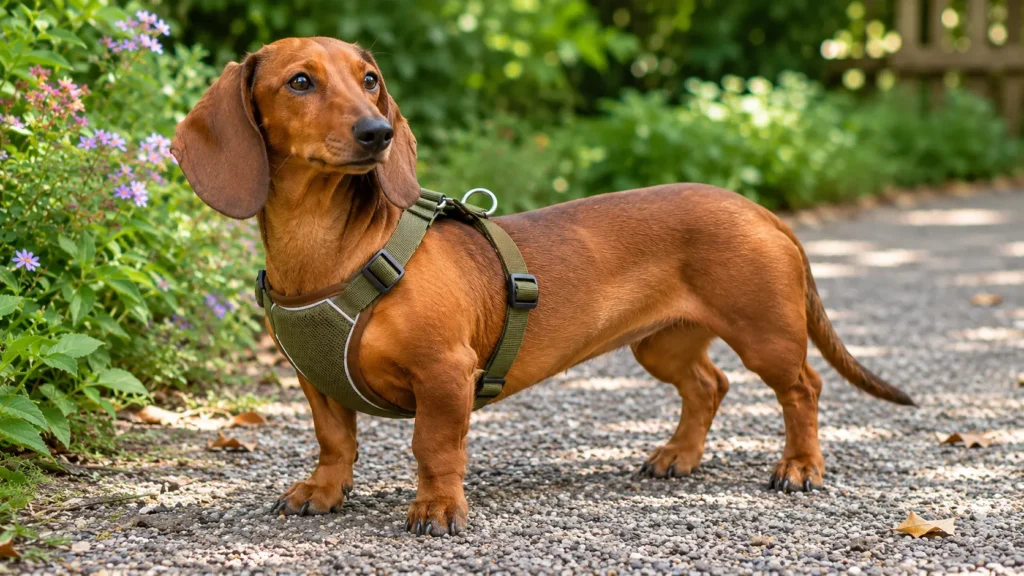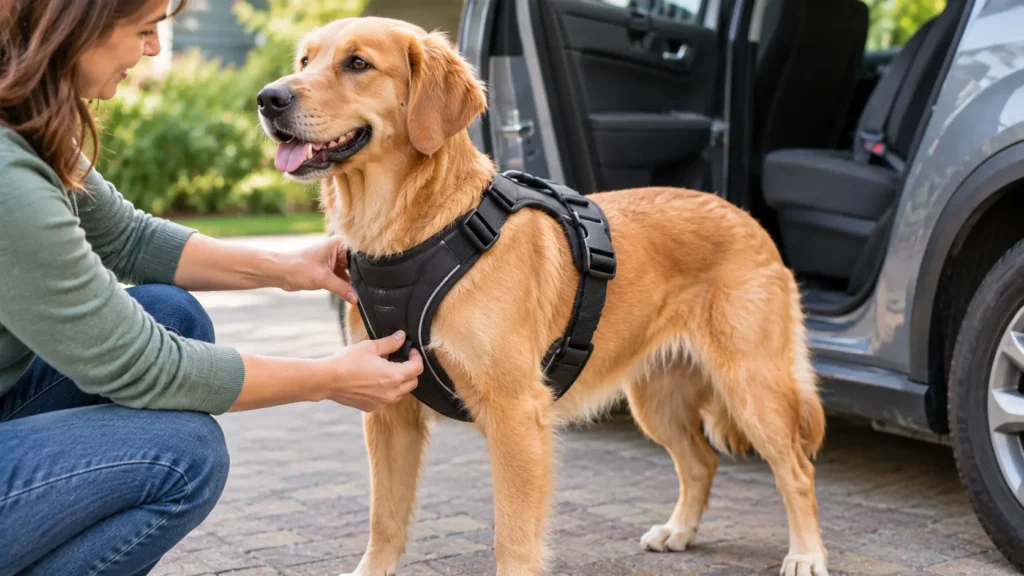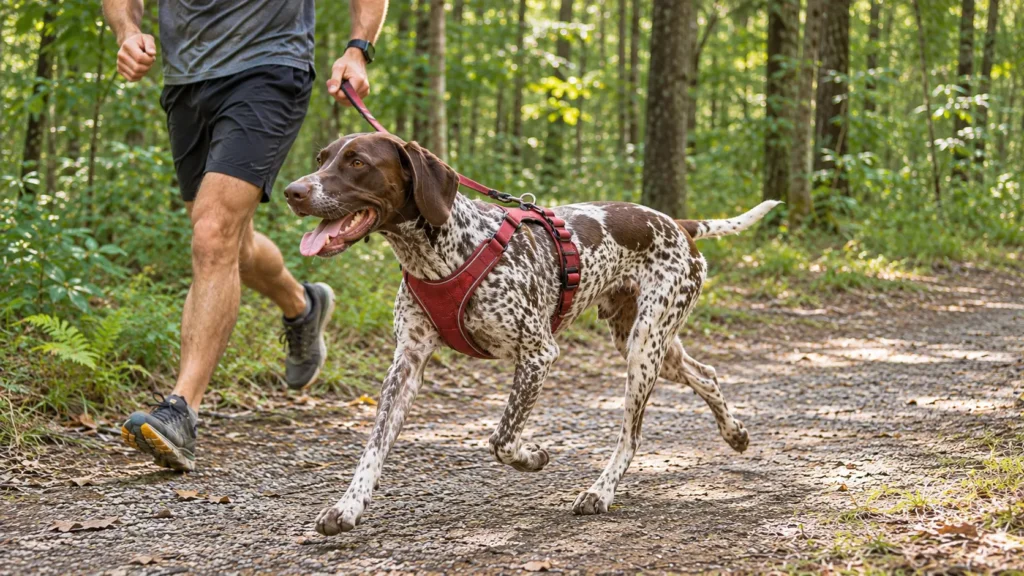
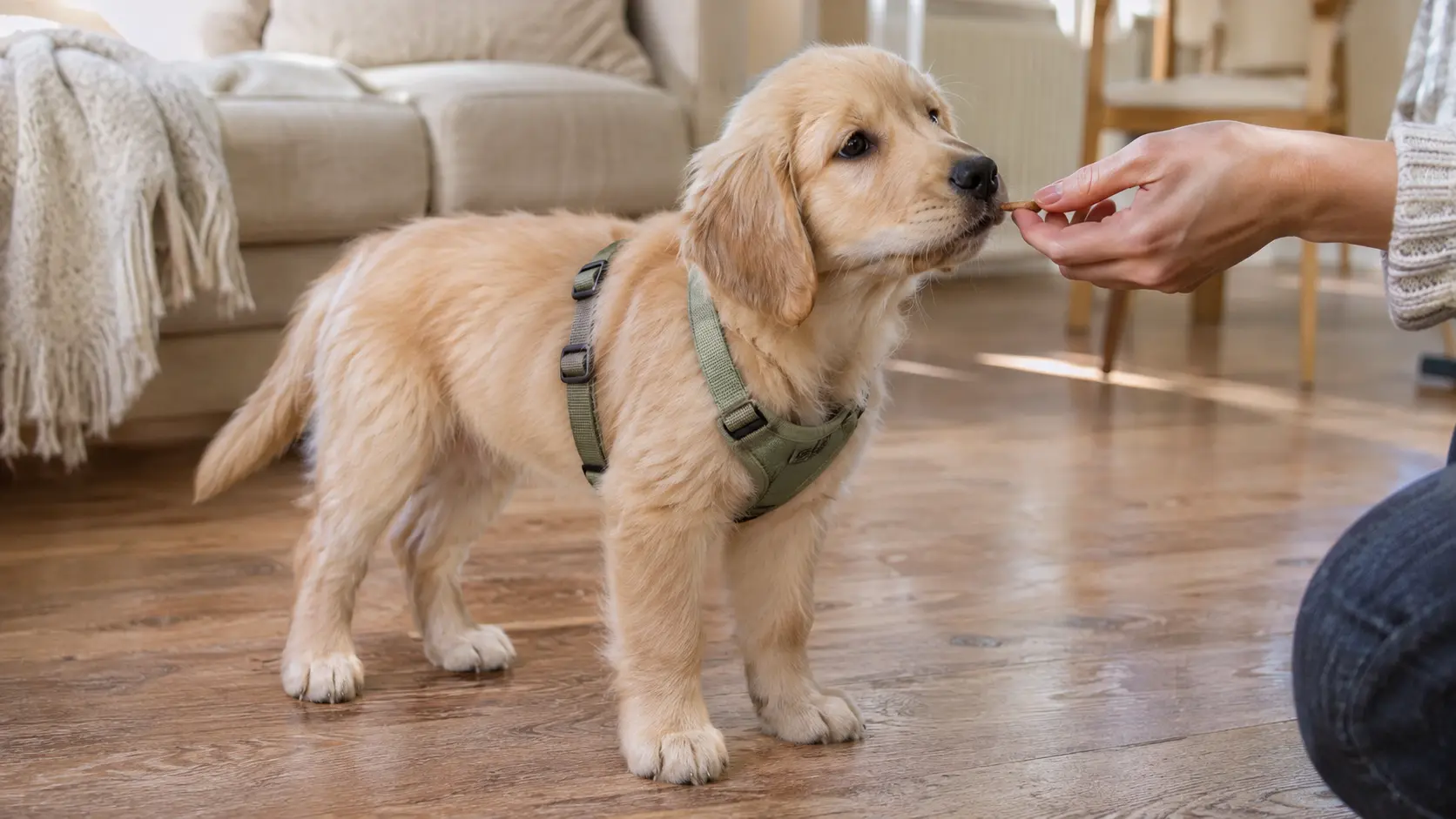
The best puppy harness fits your dog comfortably today, offers some room for growth, and gives you enough control for early leash training without unnecessary bulk.
For very small puppies, the Halti Anatomy Puppy Harness stands out for its tiny size options and adjustable design. The Blue-9 Balance is particularly appealing for growing puppies that need a more customizable fit, while the Voyager Step-in Flex offers an affordable alternative for everyday walks.
But your puppy's size isn't the only consideration. Some puppies dislike having a harness pulled over their heads, others chew their equipment, and fast-growing dogs can outgrow a perfectly good harness surprisingly quickly.
This guide compares six puppy harnesses with different strengths, along with their sizing limitations, customer-reported concerns, and practical advice for choosing your puppy's first walking equipment.
Affiliate disclosure: LumaPaw may earn a commission when you purchase through links on this page, at no additional cost to you. As an Amazon Associate, LumaPaw earns from qualifying purchases. Our recommendations are based on product specifications, retailer information, and customer feedback—not hands-on testing.
The Best Puppy Harnesses at a Glance
| Puppy Harness | Best For | Chest Size Coverage* | Leash Attachment | Main Limitation |
|---|---|---|---|---|
| Halti Anatomy Puppy | Tiny puppies | 8.25–17.25 inches | Back | Only two sizes |
| Blue-9 Balance | Growing puppies | 13.5–43.5 inches | Front and back | Initial fitting takes time |
| Voyager Step-in Flex | Affordable adjustment | 13–28 inches | Back | Mixed buckle and strap feedback |
| Rabbitgoo Minifit | Harness and leash set | 10.8–23.7 inches | Back | Limited room for growth |
| Ruffwear Hi & Light | Lightweight design | 9–42 inches | Front and back | Higher price |
| Non-stop Dogwear Ramble | Growing large-breed puppies | 15.7–49.6 inches | Three attachment positions | More bulk and expense |
Chest measurements represent the smallest and largest listed sizes across each product range, not the adjustment range of one harness. Some sizes overlap, while others have gaps. Always check the exact size chart before ordering.
Our 6 Best Puppy Harness Picks
1. Halti Anatomy Puppy Harness — Best for Tiny Puppies
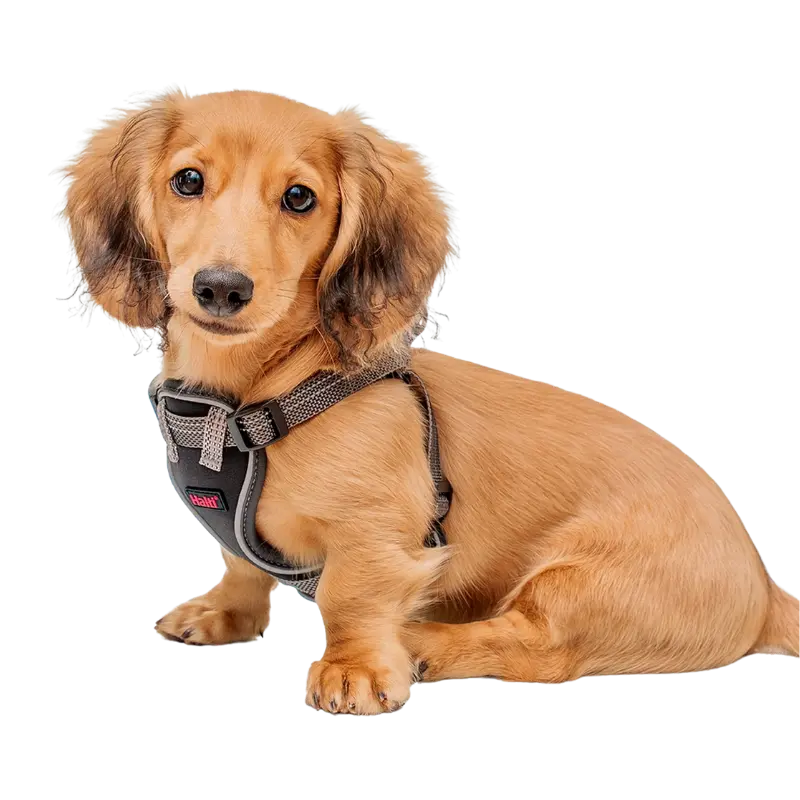
Finding a harness small enough for a young toy-breed puppy can be difficult. Even products labeled extra-small sometimes leave too much space around the neck or chest.
The Halti Anatomy Puppy Harness addresses this problem with two genuinely small sizes and four adjustment points. Unlike many adult dog harnesses offered in miniature sizes, this model was specifically designed with puppies in mind.
Product snapshot
- Reference variation: Grey, XS
- Available sizes: XXS and XS
- Chest measurements: 8.25–11.75 inches for XXS; 11–17.25 inches for XS
- Construction: Adjustable straps with neoprene padding
- Leash attachment: Back
- Entry style: Step-in
Its scalloped chest panel provides cushioning, while the adjustable straps allow you to refine the fit around your puppy's neck and chest. The step-in design is also useful if your puppy becomes nervous when equipment passes over its head.
Customer feedback includes positive experiences with small puppies, construction quality, and growing room. However, some owners found the initial adjustments awkward, and others reported that their dogs managed to back out of the harness.
The biggest limitation is size coverage. Once your puppy exceeds the XS measurements or the harness no longer fits its body shape, you'll need another model.
Pros
- XXS sizing suitable for some exceptionally small puppies.
- Four adjustment points.
- Padded chest panel and reflective details.
- No overhead fitting required.
Cons
- Available in only two sizes.
- No front leash attachment.
- Some fitting difficulties and escape complaints.
Best for: Toy-breed puppies, miniature breeds, and very small dogs learning to accept their first harness.
Avoid if: Your puppy is already close to the upper XS measurements or frequently backs out of walking equipment.
Buying note: Measure both the neck and chest. The XS offers a useful adjustment range, but it should never be worn loosely simply to allow for future growth.
2. Blue-9 Balance Harness — Best Adjustable Harness for Growing Puppies
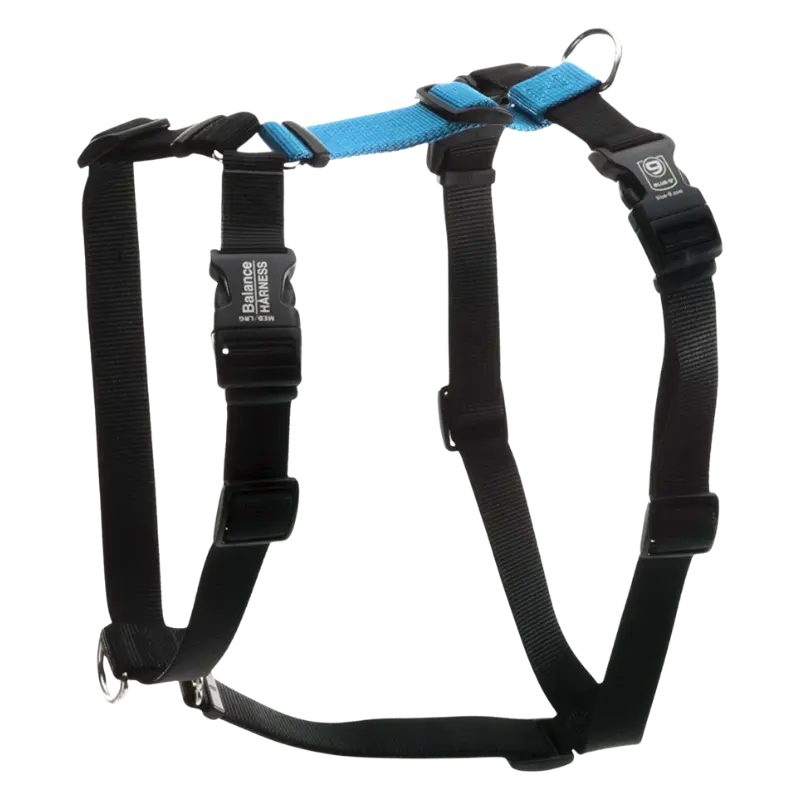
A puppy's chest can grow wider while its neck and body proportions change at different rates. This is where a highly adjustable harness becomes particularly useful.
The Blue-9 Balance has six adjustment points, allowing more customization than many conventional body harnesses. Its simple nylon strap construction also avoids relying on a large, fixed-shape chest panel.
Product snapshot
- Reference variation: Standard Buckle-Neck, Blue, Medium
- Available sizes: XS to Large, including Medium/Large
- Medium chest range: 21–32 inches
- Adjustment points: Six
- Leash attachments: Front and back
- Material: Nylon webbing
The opening neck buckle is especially practical. You can fasten the harness around your puppy rather than pulling a closed neck opening over its ears.
Both front and rear leash attachments are available, making the Balance a flexible puppy training harness. You can use the rear ring for ordinary walking or the front connection when additional pulling management is helpful.
Several puppy owners describe successfully adjusting the harness as their dogs grew. Other customers appreciate its minimal body coverage and customizable fit.
There are drawbacks, though. Setting up six adjustment points takes patience, and the unpadded straps may rub if positioned incorrectly. Customer reports also include harness rotation, chewing damage, and dogs escaping from unsuitable fits.
Pros
- Extensive adjustment around different body areas.
- Broad, overlapping size ranges.
- Front and back leash attachments.
- Neck buckle eliminates overhead fitting.
Cons
- More expensive than basic puppy harnesses.
- Initial adjustment can be complicated.
- No dedicated padding.
- Not suitable for determined chewers.
Best for: Growing medium- and large-breed puppies, owners working on leash manners, and dogs that are difficult to fit with conventional vest harnesses.
Avoid if: Your puppy needs extensive padding or has a chest circumference below the smallest available size.
Buying note: Follow the Blue-9 fitting instructions carefully. The neck section should sit below the throat, and the girth strap needs sufficient clearance behind the front legs.
3. Voyager Step-in Flex — Affordable Adjustable Pick
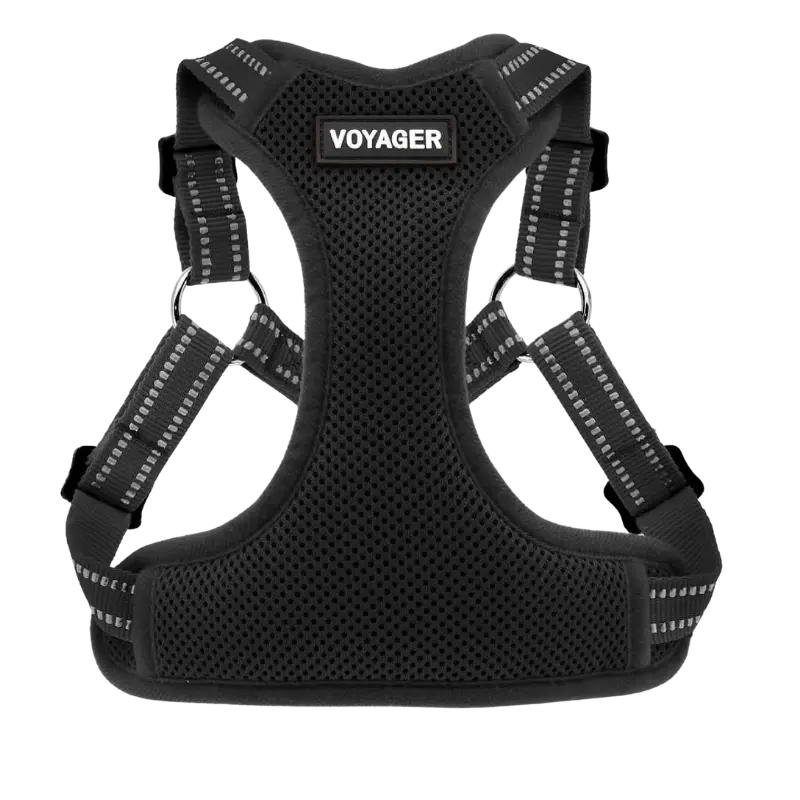
Spending a lot on a puppy's first harness doesn't always make sense, especially when you expect to replace it within a few months.
The Best Pet Supplies Voyager Step-in Flex combines a relatively affordable price with adjustable neck and chest straps. That makes it a more adaptable option than a conventional mesh vest with a mostly fixed shape.
Product snapshot
- Reference variation: Army Base, Medium
- Available sizes: XS to XL
- Medium chest range: 17–21 inches
- Medium neck range: 13–15 inches
- Construction: Polyester mesh and adjustable webbing
- Leash attachment: Double rear D-rings
The step-in design keeps fitting straightforward once the straps are adjusted. A mesh chest panel provides a broader contact surface than narrow nylon straps, and reflective detailing adds visibility when illuminated.
Owners frequently praise the Flex for its affordability, comfortable fit, and ease of use. Some puppy owners report buying another size as their dogs grew rather than switching to a more expensive harness.
However, customer feedback also includes reports of plastic buckles breaking, adjustment straps loosening, and dogs slipping out. These concerns are important enough to check the harness carefully before relying on it outdoors.
The Flex makes the most sense for ordinary walking with a small or medium puppy, not for dogs that pull hard or repeatedly try to escape.
Pros
- Affordable enough for growing puppies.
- Adjustable neck and chest straps.
- Soft mesh and reflective detailing.
- Easy step-in entry.
Cons
- Reported buckle and strap-loosening problems.
- No front leash connection.
- Limited suitability for larger growing dogs.
Best for: Budget-conscious puppy owners who want more fitting flexibility than a basic mesh vest.
Avoid if: Your puppy is a persistent puller, frequently backs out of harnesses, or needs a more substantial walking harness.
Buying note: Choose the Step-in Flex, not the similarly named Voyager Step-in Air. Also check the manufacturer's weight guidance alongside your puppy's actual measurements.
4. Rabbitgoo Minifit Harness & Leash Set — Best Puppy Harness and Leash Set
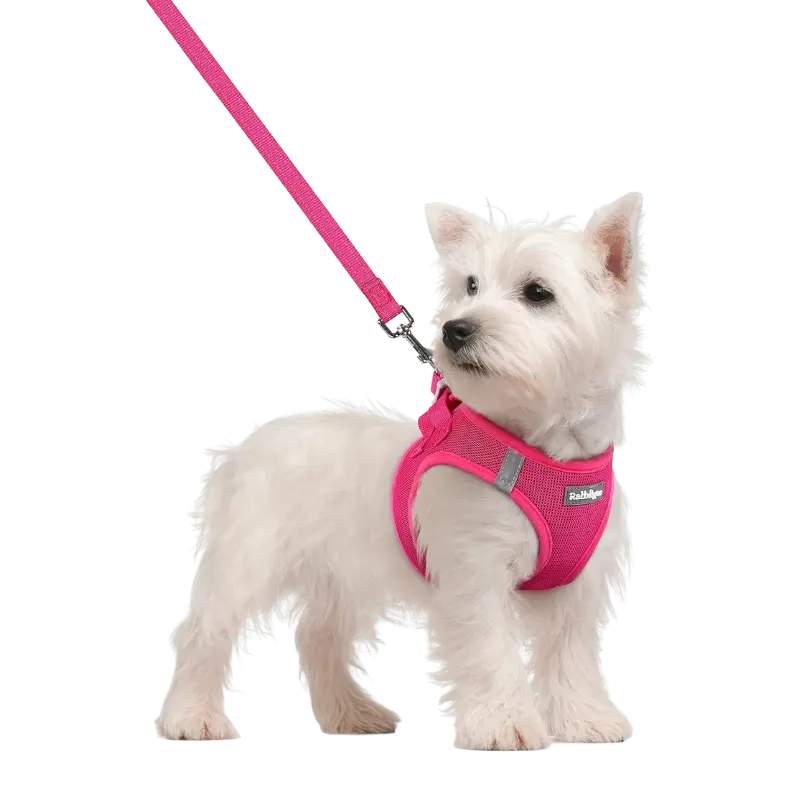
If you're buying walking equipment for the first time, a matching harness and leash can be a convenient way to get started.
The Rabbitgoo Minifit combines a lightweight step-in mesh vest with a matching leash, making it a practical starter set for small puppies.
Product snapshot
- Reference variation: Rose Red, Small
- Small chest range: 15.1–16.5 inches
- Small neck range: 11.6–12.8 inches
- Construction: Breathable mesh
- Closure: Hook-and-loop fastening and quick-release buckle
- Included accessory: Matching leash
The Minifit is designed to be simple to put on. Your puppy steps into the leg openings, and the harness fastens across the back. The leash connects to both rear D-rings.
Its relatively soft construction and limited bulk are appealing for young dogs getting used to wearing equipment.
The biggest compromise is adjustability. The Small size covers just 1.4 inches of chest circumference. A fast-growing puppy could outgrow that range well before the harness wears out.
Customer feedback is largely positive in the reviews available to us, particularly regarding ease of use, small-dog fit, and the included leash. However, owners also report sizing inconsistencies and dogs reacting to the noise of the hook-and-loop closure. One customer reported that the fastening weakened over time, allowing their dog to escape.
The available critical-review evidence is less extensive than for several other harnesses in this guide.
Pros
- Includes a matching leash.
- Affordable starter set.
- Available in very small sizes.
- Soft mesh and convenient step-in design.
Cons
- Limited adjustment within each size.
- Hook-and-loop fastening can wear.
- Closure noise may bother nervous puppies.
- Rear leash attachment only.
Best for: Owners of small puppies who need an uncomplicated harness and leash combination.
Avoid if: Your puppy is growing rapidly, pulls strongly, or needs independently adjustable neck and chest straps.
Buying note: Select the harness-and-leash bundle rather than the harness-only version. Check the measurements for the exact Amazon variation, as available sizes differ between listings.
5. Ruffwear Hi & Light — Best Lightweight Harness
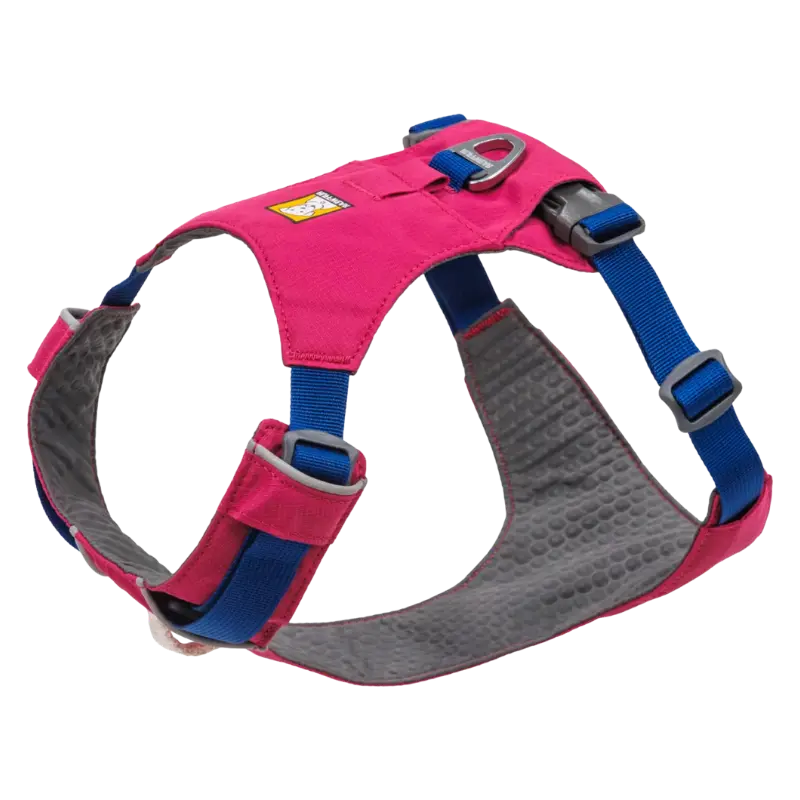
Some puppies freeze, scratch at their harness, or refuse to move when wearing bulky equipment. A less substantial harness may be worth trying once you've ruled out poor fit and introduced it gradually.
The Ruffwear Hi & Light uses a low-profile body design with less material than many heavily padded outdoor harnesses. Its size range also extends down to XXXS, which fits a chest circumference of 9–13 inches.
Product snapshot
- Reference variation: Alpenglow Pink, XS
- Available sizes: XXXS to L/XL
- XS chest range: 17–22 inches
- Adjustment points: Four
- Construction: Polyester ripstop with a lightweight lining
- Leash attachments: Aluminum rear V-ring and reinforced front webbing loop
The updated Hi & Light includes both front and back leash connections. It also has reflective trim, an identification pocket, and a lining designed to resist collecting debris.
Owners often describe the harness as less cumbersome than larger body harnesses. Positive reviews mention comfortable everyday walking, quick drying, and suitability for smaller dogs.
Fit remains an important concern. Some owners found that the neck opening was too large even when the chest fitted correctly. Others reported difficulty accessing the full strap adjustment or raised concerns about the front fabric attachment.
Its price is another consideration. The smaller sizes have relatively narrow adjustment ranges, so a growing puppy may need a replacement sooner than expected.
Pros
- Lightweight, low-profile construction.
- Six sizes, including XXXS.
- Front and back leash connections.
- Reflective trim and ID pocket.
Cons
- Premium price.
- Requires overhead fitting.
- Recurring sizing and fit complaints.
- Front attachment uses reinforced fabric rather than metal.
Best for: Puppies uncomfortable with bulky harnesses and owners prioritizing lightweight everyday walking equipment.
Avoid if: Your puppy strongly dislikes overhead entry, needs substantial cushioning, or is likely to outgrow its size very soon.
Buying note: Choose the updated version with both front and rear attachments. Check the neck opening as well as the chest measurement before taking your puppy outdoors.
6. Non-stop Dogwear Ramble — Best for Growing Large-Breed Puppies
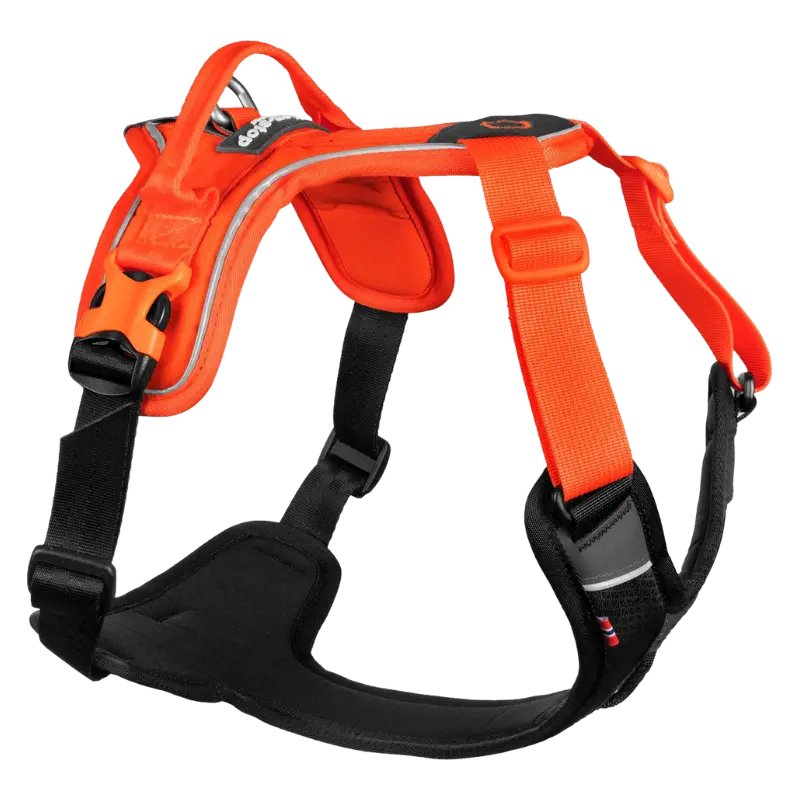
Large-breed puppies can change size considerably during their first year. A harness with generous adjustment ranges may help reduce how often you need to replace their walking equipment.
The Non-stop Dogwear Ramble was designed for everyday use, including growing puppies and dogs with broader chests. Its adjustable neck and chest, overlapping sizes, and padded construction give it a different purpose from the minimalist Blue-9 Balance.
Product snapshot
- Reference variation: Black/Orange, Medium
- Available sizes: XS to XL
- Medium chest range: 22.8–35.4 inches
- Medium neck range: 16.9–23.6 inches
- Construction: Polyester ripstop, closed-cell foam and reinforced webbing
- Leash attachments: Three positions
- Additional feature: Back handle
The Ramble combines a conventional rear attachment, a front connection intended for mild pulling management, and an underside attachment for a tracking line.
Its wider padded sections and top handle may appeal to owners of sturdy, growing puppies who enjoy supervised outdoor exploration.
The Chewy reviews available to us include positive comments about materials, hardware, cleaning, and comfort. Some fitting difficulty was also reported, particularly with challenging body proportions. The written-review sample was small, so it doesn't establish long-term reliability.
The Ramble is one of the more expensive and substantial harnesses in this comparison. A tiny puppy taking short neighborhood walks probably doesn't need this level of construction.
Pros
- Generous adjustment ranges.
- Adjustable neck and chest.
- Padded, reinforced construction.
- Multiple leash attachments and a back handle.
Cons
- Higher purchase price.
- More bulk than minimalist harnesses.
- Not suitable for very tiny puppies.
- Limited independent customer-review evidence.
Best for: Growing medium- and large-breed puppies that need an adjustable, padded harness for everyday walks and age-appropriate outdoor activities.
Avoid if: Your puppy is very small, you prefer minimal equipment, or you need an inexpensive temporary harness.
Buying note: Check both measurements using the manufacturer's Ramble size chart. Even its generous adjustment ranges won't accommodate every stage of growth. If you're shopping for a fully grown dog, see our guide to the best harnesses for large dogs.
How We Chose These Puppy Harnesses
We compared manufacturer specifications, sizing charts, Amazon and Chewy product listings, materials, adjustment systems, and available customer reviews.
Particular attention was given to features that matter during puppyhood:
- Small-size availability and room for growth.
- Strap positioning and hardware bulk.
- Ease of putting on and removing the harness.
- Leash attachments for early walking and training.
- Reports of rubbing, loosening, damaged buckles, and escapes.
- Purchase and eventual replacement costs.
High ratings and brand popularity did not determine our recommendations. Each selected harness offers a different combination of fit, convenience, adjustability, or value.
These are research-based recommendations rather than hands-on test results. Customer experiences help identify practical concerns, but they don't establish how a harness will perform on every puppy.
How to Choose the Right Harness for Your Puppy
Measure Your Puppy Before Buying
Use a soft measuring tape while your puppy stands naturally.
Measure around the chest at the location indicated by the manufacturer, usually around the widest part of the rib cage behind the front legs. If the sizing guide includes a neck measurement, take that measurement too.
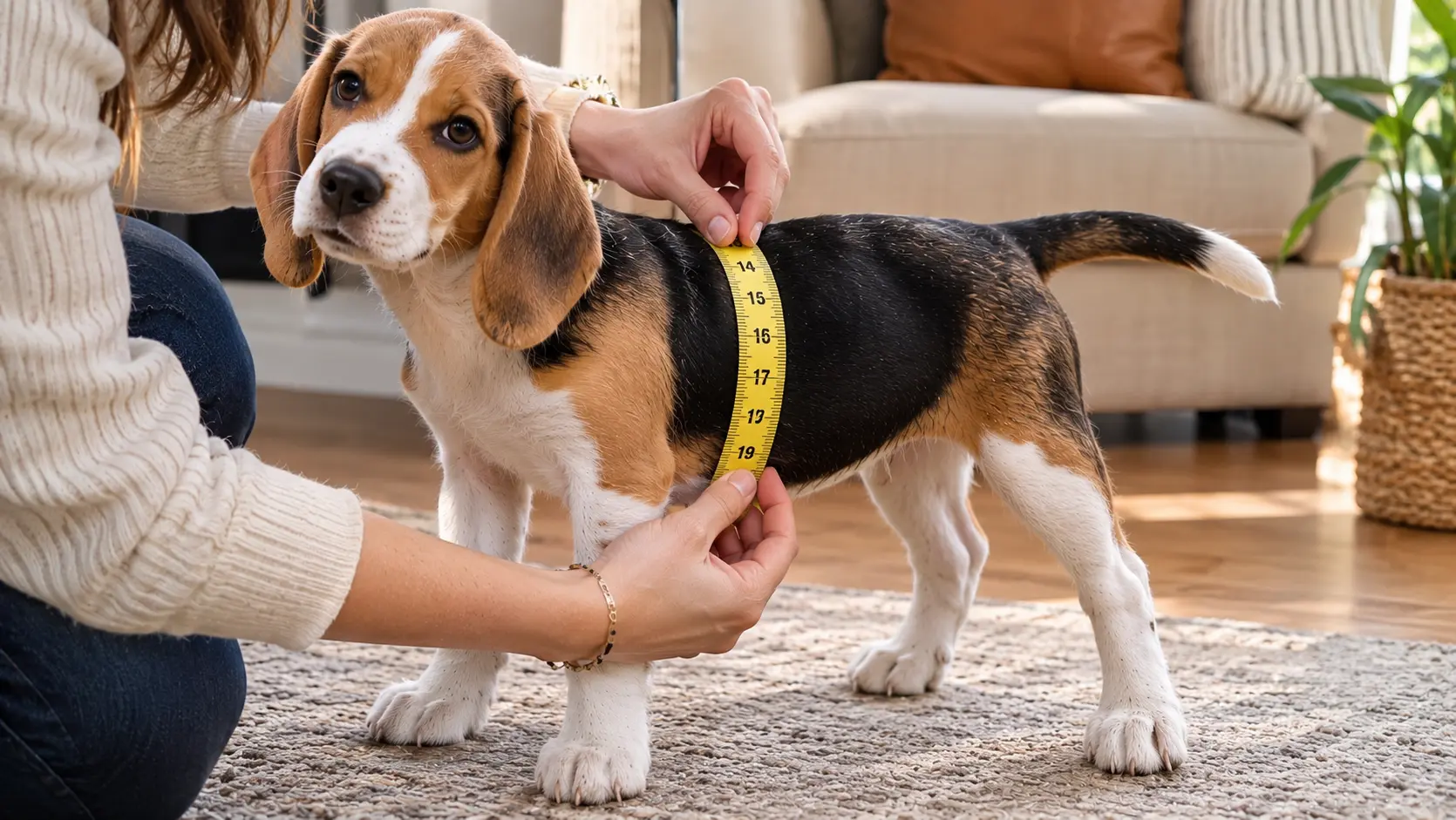
Avoid choosing a harness solely by breed, age, or body weight. Two puppies of the same weight may have very different chest and neck proportions.
Size labels aren't standardized, either. The Halti XXS fits chest measurements of 8.25–11.75 inches, while Ruffwear's XXS fits 13–17 inches.
That's a considerable difference for two products carrying the same size label.
Allow for Growth Without Buying Too Large
An adjustable harness can accommodate some growth, but buying an oversized one can leave gaps that allow your puppy to slip out.
Look at the adjustment range within the size you intend to purchase, not simply the full range advertised for the product.
For example:
| Harness and Size | Chest Measurement Range |
|---|---|
| Halti Anatomy XS | 11–17.25 inches |
| Blue-9 Balance Medium | 21–32 inches |
| Voyager Flex Medium | 17–21 inches |
| Rabbitgoo Minifit Small | 15.1–16.5 inches |
| Ruffwear Hi & Light XS | 17–22 inches |
| Ramble Medium | 22.8–35.4 inches |
A wider range can be useful, but the chest measurement is only part of the fit. Neck openings, strap positions, and chest panels also need to remain appropriate.
Buy a harness that fits securely at your puppy's current size and has some adjustment room remaining.
Look for Comfortable, Unrestricted Movement
A padded harness isn't automatically more comfortable than a thin strap harness. The placement and fit of the material matter just as much.
Once the harness is fitted, watch your puppy walk and turn in a secure indoor area.
The straps shouldn't press against the throat, dig into the armpits, or interfere noticeably with normal movement. Check whether the harness rotates excessively or leaves large gaps when your puppy changes direction.
You should generally be able to slide a couple of fingers comfortably beneath the straps, although the manufacturer's fitting instructions take priority, especially for very small puppies.
VCA Animal Hospitals' guidance on collars and harnesses emphasizes comfortable fitting, gradual introduction, and supervision during use.
Front-Clip vs. Back-Clip Harnesses for Puppy Training
A back-clip harness is a sensible starting point for many puppies. It keeps the leash connection above the body and works well for ordinary walks while your puppy learns to follow you.
A front-clip design provides another way to manage pulling. The chest attachment can help redirect some dogs instead of allowing them to lean straight into the leash.
The Blue-9 Balance and Ruffwear Hi & Light offer both options, allowing you to choose the attachment that suits your puppy and the situation.
Remember that a no-pull harness doesn't teach loose-leash walking by itself. Reward your puppy for walking calmly, and avoid jerking the leash or using equipment to deliver physical corrections.
If pulling becomes your main concern, our comparison of front-clip and no-pull dog harnesses explains the differences between several specialized designs.
Choose a Design Your Puppy Is Comfortable Wearing
Step-in harnesses such as the Halti, Voyager Flex, and Rabbitgoo Minifit can be helpful for puppies that dislike equipment passing over their heads.
The Blue-9 Balance approaches this differently, using an opening neck buckle.
Over-the-head harnesses, including the Ruffwear Hi & Light, can also work well when introduced patiently.
Whichever style you choose, consider the leash too. A large, heavy metal clasp may be unnecessarily cumbersome for a tiny puppy. Use a manageable fixed-length leash with hardware appropriate for your dog's size.
Frequently Asked Questions
Is a Harness or Collar Better for a Puppy?
A properly fitted harness is often a useful choice for early leash training because it avoids placing the walking load directly on the neck.
A lightweight flat collar can still hold identification tags when appropriate. The two serve different purposes, and the leash doesn't need to attach to the collar simply because your puppy wears one.
Can an 8-Week-Old Puppy Wear a Harness?
Yes, many eight-week-old puppies can begin wearing a correctly sized harness for short, supervised familiarization sessions.
Start indoors and introduce the equipment gradually. Wearing a harness doesn't mean your puppy is ready for long walks or visits to busy public areas.
Ask your veterinarian which outdoor environments and activities are appropriate for your puppy's vaccination status, health, and development.
Can a Puppy Wear a Harness All Day?
It's better to remove the harness when your puppy isn't walking, training, or being supervised.
Continuous wear may contribute to rubbing, and straps can become caught on crates or furniture. Puppies may also chew accessible equipment.
Check the skin beneath the straps regularly and remove the harness before leaving your puppy unattended.
Final Thoughts
The right puppy harness depends on your dog's current measurements, growth rate, and comfort with the design.
The Halti Anatomy is particularly worth considering for tiny puppies, while the Blue-9 Balance offers extensive fitting flexibility as dogs grow. Voyager Flex provides a more affordable adjustable option, and Rabbitgoo Minifit is convenient for owners who need a matching leash.
Ruffwear Hi & Light emphasizes lightweight construction, while the Non-stop Dogwear Ramble offers generous adjustment ranges and padded support for larger puppies.
Whatever you choose, measure your puppy before buying, check the fit frequently, and replace the harness when it becomes too small or damaged. A harness that fits comfortably today matters much more than one your puppy might grow into several months from now.