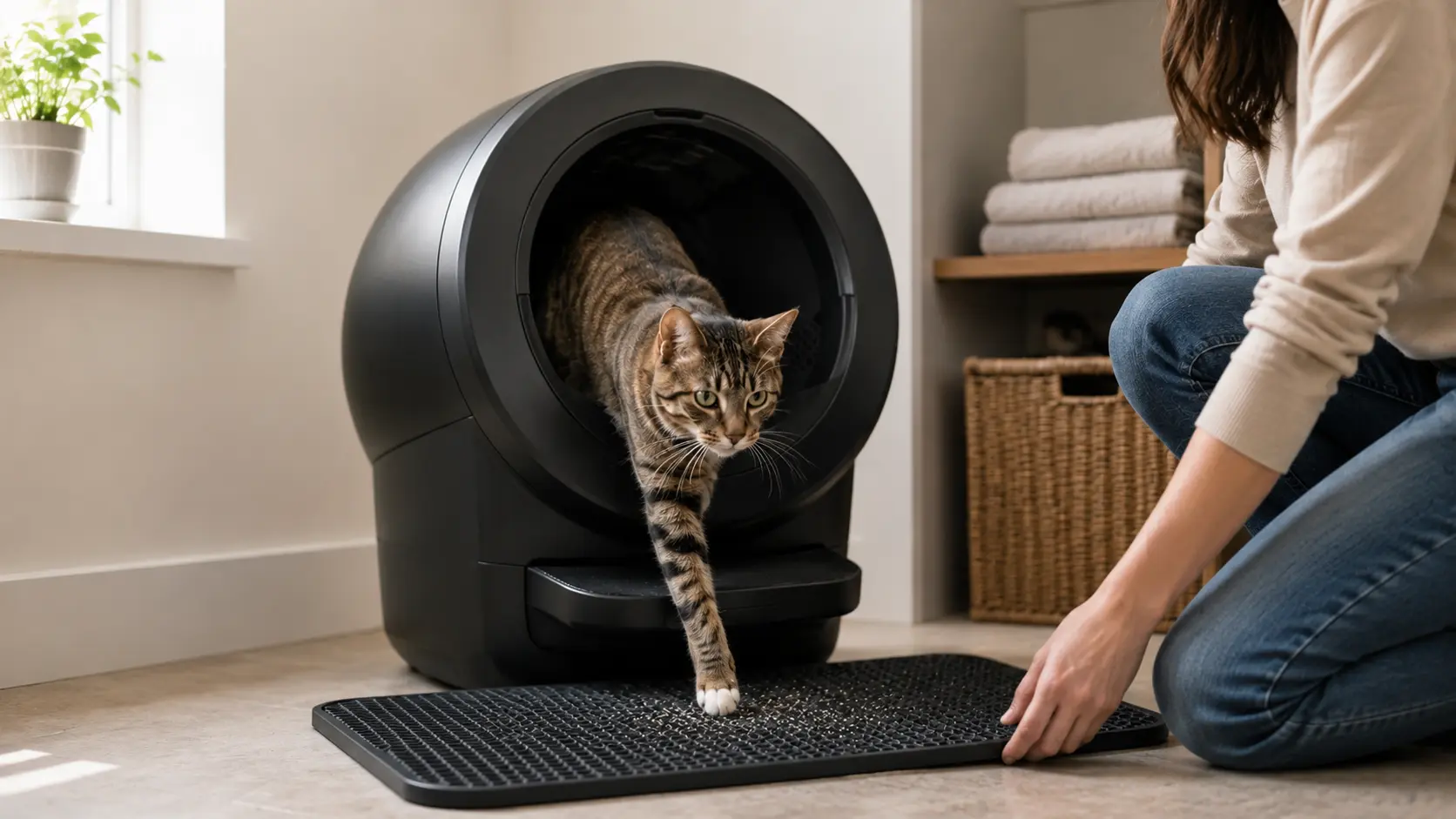
Spending $599 to $899 on a litter box is difficult to justify with a simple list of features. The better question is whether a Litter-Robot removes enough daily work to make the cost worthwhile for your cats, home, and budget.
For many multi-cat households, owners with mobility limitations, and people who struggle to keep traditional boxes scooped consistently, the answer may be yes. For one cat, limited floor space, or a buyer expecting a maintenance-free appliance, the value is less clear.
Based on current specifications, retailer feedback, independent reviews, and the depth of available ownership evidence, Litter-Robot 4 offers the best overall value for most buyers. The other models make sense only when their specific advantage solves a real problem.
This article contains affiliate links. As an Amazon Associate, LumaPaw may earn from qualifying purchases at no additional cost to you.
Quick Verdict: Is Litter-Robot Worth the Money?
A Litter-Robot is most likely worth it when reducing daily scooping would make a meaningful difference to your routine.
It is most likely worth it when:
- You have two or more cats.
- Scooping causes back, shoulder, or mobility discomfort.
- Traditional boxes are not being cleaned as consistently as they should be.
- Odor containment is a high priority.
- You value waste-drawer alerts and litter-box usage records.
- You can afford the machine without relying on promised litter savings to justify it.
It is probably not worth it when:
- You have one cat and do not mind scooping.
- The purchase would stretch your budget.
- Your cat strongly avoids enclosed litter boxes.
- You have nowhere to place and clean a large appliance.
- You expect the machine to eliminate all litter-box maintenance.
- Your cat regularly urinates high against the walls of a box.
- You would be frustrated by sensor resets, app problems, or interrupted cycles.
The core benefit is real: the machine automatically sifts clumped waste into a drawer. But it still needs litter refills, drawer changes, wiping, sensor care, and occasional manual intervention.
Which Litter-Robot Is Most Worth It?
The current lineup contains four models. They should not be treated as four equally strong recommendations. Litter-Robot 4 is the sensible default, while EVO, LR5, and LR5 Pro suit narrower situations.
Litter-Robot 4 — Best Overall Value
Current research price: $699
Published capacity: Up to four cats; approximately 3–25 pounds
Best for: Most one- to four-cat households
Main advantage: Strongest combination of features, price, and customer-review evidence
Main limitation: Recurring sensor, liner, software, and cleaning complaints
Evidence confidence: High
Litter-Robot EVO — Best Space-Saving Option
Current research price: $599
Published capacity: Up to two cats; approximately 3–19 pounds
Best for: One or two cats in apartments or smaller homes
Main advantage: Smallest and lightest model in the current lineup
Main limitation: Limited long-term evidence and a smaller usable cat range
Evidence confidence: Low to medium
Litter-Robot 5 — Best for Larger Cats and Heavy Multi-Cat Use
Current research price: $799
Published capacity: Up to five cats; approximately 3–30 pounds
Best for: Larger cats and higher-volume multi-cat homes
Main advantage: More headroom, larger waste capacity, and WasteID
Main limitation: Less long-term evidence than LR4 and a $100 price increase
Evidence confidence: Medium
Litter-Robot 5 Pro — Best for Built-In Camera Monitoring
Current research price: $899
Published capacity: Up to five cats; approximately 3–30 pounds
Best for: Owners who specifically want integrated video monitoring
Main advantage: Dual cameras, night vision, and recorded activity
Main limitation: Mixed tracking feedback and subscription-dependent advanced features
Evidence confidence: Low to medium
Prices, availability, subscriptions, safety requirements, and retailer policies can change. Check the current product page and operating manual before purchasing.
How We Researched This Litter-Robot Review
LumaPaw compared the four current models using official specifications, retailer availability, cat-capacity claims, dimensions, app features, warranty information, optional expenses, and recurring customer-feedback patterns.
We also considered where the evidence came from. Hundreds of independent retailer ratings carry more weight than a few early reviews or ratings hosted only on a manufacturer’s website.
We did not rank the newest or most expensive model first simply because it has more features. Each upgrade had to solve a meaningful household problem. This is why LR4 ranks ahead of LR5 Pro even though the Pro has cameras and newer monitoring tools.
Detailed Reviews of the Current Models

Litter-Robot 4: The Best Value for Most Buyers
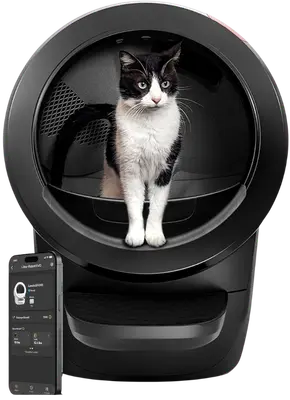
Best for: Buyers who want the strongest balance of evidence, capacity, and price.
Avoid if: Your cat dislikes enclosed boxes, urinates high against the sides, or would not have enough room to turn comfortably.
Honest buying note: LR4 is not the cheapest model, but it is the model with the clearest evidence that its convenience can justify the premium.
Litter-Robot 4 is the safest recommendation because it sits between the smaller EVO and the newer, more expensive LR5 models.
It supports many households with up to four cats and includes app-based visit history, cat-weight tracking, litter-level information, and waste-drawer alerts. It also works with the optional LR4 LitterHopper.
Customer-feedback evidence is much deeper than it is for the newer models. When we checked in August 2026, Amazon showed a 4.3-star rating from 167 ratings, while Chewy showed 4.4 stars from 893 ratings.
Positive reviews repeatedly mention less scooping, quieter-than-expected cycles, reduced odor, and easier litter-box care in multi-cat homes. Some owners with back or mobility problems found the reduced bending particularly valuable.
The complaints matter, however. Owners report incorrect weight assignments, Wi-Fi or app problems, interrupted cycles, liner deterioration, waste sticking inside the globe, and more cleaning than the phrase “self-cleaning” suggests. Chewy feedback also includes reports of sensor failures and urine reaching areas beneath the globe.
Pros
- Best-established current model
- Strong independent retailer-review depth
- Suitable for many multi-cat households
- Useful alerts and usage records
- Costs less than LR5 and LR5 Pro
- Compatible with LitterHopper
Cons
- Still costs $699
- Large footprint
- One-year standard warranty
- Sensor and software complaints
- Stuck litter may need manual removal
- Cat acceptance is not guaranteed

Litter-Robot EVO: The Better Fit for Limited Space
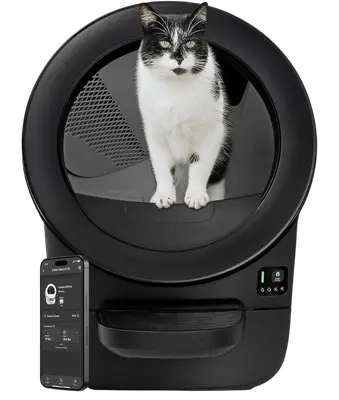
Best for: One or two small or average-size cats in a home where every inch matters.
Avoid if: You have three or more cats, a long-bodied cat, or need strong long-term reliability evidence.
Honest buying note: EVO is the least expensive Litter-Robot, but calling it a budget litter box would be misleading.
EVO is the smallest and least expensive current Litter-Robot. It is designed mainly for one- or two-cat households and weighs less than LR4.
Owners often praise its quiet cycling, straightforward drawer emptying, and ability to fit in laundry rooms, apartments, and even some RV layouts. It retains app control, visit records, weight-based identification, and automatic sifting.
Its “space-saving” label needs context. EVO is smaller than the other Litter-Robot models, but it is not a tiny litter box. Several buyers still described it as larger than expected.
Amazon’s early rating was encouraging at 4.5 stars from 29 ratings, but the model does not yet have enough long-term feedback to judge durability confidently. Early complaints include difficult 2.4-GHz Wi-Fi setup, a small display positioned close to the floor, interrupted cycles, bezel errors, stuck waste, and thin-feeling exterior plastic.
Pros
- Smallest current model
- Lowest current Litter-Robot price
- Quiet operation
- Suitable for one or two cats
- Works in spaces where LR4 may be too large
Cons
- Limited reliability history
- Lower cat-size and household capacity
- Still expensive compared with other brands
- Wi-Fi onboarding complaints
- Entry may be difficult for mobility-limited cats

Litter-Robot 5: Better for Larger Cats and Heavy Use
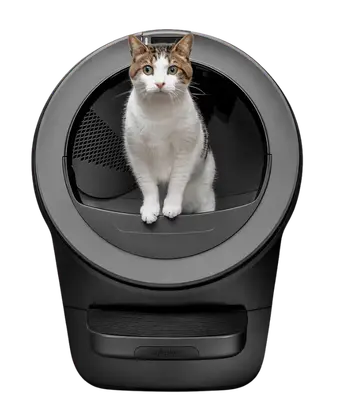
Best for: Larger cats and four- or five-cat households with high litter-box usage.
Avoid if: LR4 already offers enough space and capacity for your cats.
Honest buying note: Pay more for LR5 because you need its room and capacity—not simply because it is newer.
Litter-Robot 5 costs $100 more than LR4. That premium is most defensible for cats that need more interior room or households generating heavier waste volume.
It supports a wider published cat range, offers more headroom, and is positioned for up to five cats. Its larger drawer and WasteID system are intended to improve capacity and adjust cycling based on whether urine or solid waste was detected.
Early owners frequently praise the roomy globe, quiet cycling, and convenience in three- and four-cat homes. Reports also describe successful use by Maine Coons and cats around 18 pounds.
The limitation is evidence maturity. Whisker showed 4.6 stars from 85 reviews, while PetSmart had only two reviews during research. Most available feedback is recent, and much of it is manufacturer-hosted. That cannot establish how the sensors, liner, motor, or software will perform after several years.
Pros
- More interior headroom
- Suitable for larger cats
- Up-to-five-cat positioning
- Larger waste capacity
- WasteID
- Works on carpet
Cons
- $100 more than LR4
- Limited long-term ownership evidence
- Large and heavy
- 2.4-GHz Wi-Fi requirement
- Most small households may not need the upgrade

Litter-Robot 5 Pro: Only Worth It for the Cameras
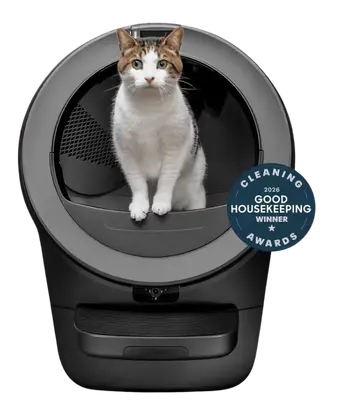
Best for: Owners who specifically want integrated litter-box video.
Avoid if: Your main goal is simply to reduce scooping.
Honest buying note: Most households will receive similar cleaning value from LR5 or LR4.
Litter-Robot 5 Pro uses a cleaning system and body similar to LR5 but adds dual cameras, night vision, video events, and more advanced individual-cat monitoring.
That makes it useful for owners who want visual confirmation of litter-box visits. It also supports both 2.4- and 5-GHz Wi-Fi, unlike the other current models.
Some advanced features, including facial recognition and expanded video functions, depend on Whisker+. Check the current subscription cost and included features before buying.
The evidence is mixed. Whisker displayed 4.6 stars from 146 reviews, while PetSmart showed 3.6 stars from 11. PetSmart reviewers reported incorrect cat identification, missed visits, WasteID mistakes, firmware-dependent fixes, and at least one early hardware failure.
Pros
- Built-in dual cameras
- Night vision
- Video activity records
- Larger-cat and five-cat positioning
- Supports 5-GHz Wi-Fi
- Useful for remote visual checks
Cons
- Highest price
- Advanced features may require a subscription
- Mixed independent retailer feedback
- Identification and recording may not be fully reliable
- Camera privacy considerations
- Core cleaning is similar to the cheaper LR5
What Does a Litter-Robot Actually Automate?
A Litter-Robot detects a visit, waits for the selected delay, and rotates the globe so clumped waste falls into a covered drawer.
It can reduce or automate:
- Routine waste sifting
- Moving clumps into the drawer
- Waste- and litter-level alerts
- Visit tracking
- Weight trends
- Some individual-cat records
It does not eliminate:
- Emptying the drawer
- Adding fresh litter
- Wiping the entrance and globe
- Removing stuck clumps
- Cleaning sensors
- Deep-cleaning removable parts
- Resolving interrupted cycles
- Checking that every cat is using it normally
“Self-cleaning” means automatic sifting. It does not mean maintenance-free.
If you own an LR3, our Litter-Robot 3 cleaning guide covers routine and deeper maintenance step by step.
How Much Does a Litter-Robot Really Cost?
The base price is only the beginning.
Current research prices were:
- EVO: $599
- Litter-Robot 4: $699
- Litter-Robot 5: $799
- Litter-Robot 5 Pro: $899
Necessary recurring costs
You will still buy compatible clumping litter, waste bags or liners, cleaning supplies, and possibly replacement carbon filters.
Some owners use ordinary compatible trash bags rather than official liners, but check current guidance for the exact model before recommending a substitute.
Choosing the right litter also affects odor, clump release, and how much clean litter falls into the drawer. Our guide to the best litter for Litter-Robot explains those differences without assuming every clumping formula performs equally well.
Optional expenses
Possible extras include:
- Extended WhiskerCare coverage
- LitterHopper
- Ramp or additional steps
- Litter mat
- OdorTrap products
- Filters
- Shields or fences
- Whisker+ subscription
- Accessory bundles
Before adding automated litter refilling, read our guide to whether the LitterHopper is worth it.
Trial, warranty, and return risk
Current direct-purchase information has included a 90-day trial and one year of standard warranty coverage. Return shipping may remain the customer’s responsibility, and the machine generally needs to be cleaned before it is returned.
A third-party retailer may use its own return policy. Read the exact terms before ordering and keep the original packaging until you are certain your cat will use the machine.
Do not assume the machine will “pay for itself.” Some households may use litter more efficiently, but savings vary by cat count, litter type, cleaning habits, and accessories.
Where Litter-Robot Provides the Most Value
Less daily scooping
This is the clearest benefit. Replacing several daily scooping sessions with periodic drawer changes can be a major improvement, especially in multi-cat homes.
Better odor containment
Automatic cycling moves waste into a covered drawer sooner than many owners would manually scoop it.
That can reduce odor, but it will not eliminate it. Results depend on litter quality, cleaning, room temperature, waste-drawer frequency, and whether residue remains inside the globe.
Cleaner litter between visits
Cats repeatedly enter a freshly sifted litter bed rather than a box containing several previous deposits. This can be useful in busy multi-cat homes, although it does not guarantee that every cat will accept the enclosed design.
Useful activity records
Weight and visit trends may help an owner notice that something has changed. They are not a diagnosis.
Contact a veterinarian when a cat strains, repeatedly enters without producing waste, stops using the box, urinates unusually often, or shows other concerning changes. Do not rely only on app records.
The Biggest Drawbacks and Reliability Concerns
The price is difficult to ignore
A traditional litter box still works and costs very little. Litter-Robot’s value comes from saved effort and convenience, not from being necessary cat equipment.
It needs substantial space
Measure more than the floor footprint. Allow space for the cat to enter, the drawer to open, the unit to be moved for cleaning, and the power cord to reach safely.
Sensors and software add failure points
Customer complaints across the lineup include false drawer readings, incorrect weight assignments, app connection problems, interrupted cycles, and units requiring resets.
If your unit stops mid-cycle or repeatedly refuses to run, our guide to Litter-Robot not cycling covers the common causes and safe troubleshooting steps.
Waste can stick
Wet clumps may smear or remain attached to the liner instead of falling cleanly. The likelihood depends partly on litter, cycle delay, waste consistency, and cleaning.
High-side urination can cause problems
Cats that face inward and urinate high toward seams or openings may create mess outside the litter bed. Published weight limits do not tell you how a particular cat positions itself inside the globe.
Long-term reliability is uncertain
LR4 has the strongest ownership history of the current models. EVO, LR5, and LR5 Pro are too new to support confident claims about normal lifespan.
Individual reviews range from years of successful use to failures within months. Those anecdotes cannot produce a reliable failure rate.
Is Litter-Robot Worth It for Your Household?
Is Litter-Robot worth it for one cat?
It can be, but the financial case is weaker.
For one cat, the strongest reasons are physical difficulty with scooping, frequent travel with appropriate human cat care, strong odor concerns, or a personal willingness to pay for convenience.
EVO may be enough for one smaller cat, while LR4 provides more evidence and room.
Is it worth it for two or more cats?
Usually, this is where the value becomes easier to defend.
More cats create more scooping and faster odor buildup. One machine may reduce a significant amount of daily work, though it should not automatically be assumed that one robot can replace every box in a large household.
What about large cats?
Consider body length, headroom, turning space, and toileting posture—not only weight.
LR5 has the strongest large-cat positioning. LR4 may still suit many larger cats, but comfort varies between individuals.
What about senior cats?
The entrance and step may be challenging for a cat with arthritis, weakness, or poor balance. An accessory ramp may help some cats, but it does not solve every mobility problem.
Ask your veterinarian for guidance when a cat has significant mobility limitations or begins avoiding the box.
What about nervous cats?
Some cats investigate immediately. Others take several weeks.
Keep the traditional box during the transition. Place the new unit nearby, allow the cat to explore it, and avoid forcing the cat inside.For the full process, follow our gradual guide on how to get a cat to use a Litter-Robot.
Does it work in an apartment?
Possibly. The enclosed drawer and quiet cycles can be useful in a smaller home.
The drawbacks are the machine’s physical size, the need for a nearby outlet, Wi-Fi requirements, and finding somewhere practical to deep-clean it.
Should You Buy a Cheaper Automatic Litter Box Instead?
A lower-priced machine may be more sensible when you have one smaller cat, prefer an open design, do not need detailed monitoring, or cannot justify Whisker’s pricing.
See our Litter-Robot alternatives for different budgets for other designs without turning this article into another roundup.
You can also compare the best automatic litter boxes across cleaning systems, size, odor control, and reliability.
For an open-design example, read our Meowant automatic litter-box review.
Before Buying: Safety, Fit, and Quality Checklist
- Verify the minimum automatic-mode weight in the current manual.
- Measure the cat’s length and turning room, not only body weight.
- Measure floor space, height, drawer access, and cleaning clearance.
- Consider whether your cat normally accepts enclosed boxes.
- Think about entry height for kittens, seniors, and mobility-limited cats.
- Consider whether your cat urinates high against box walls.
- Check that your preferred litter clumps and passes through the screen.
- Confirm the model’s Wi-Fi requirements.
- Read the retailer’s exact return policy.
- Confirm who pays return shipping.
- Keep the packaging during the trial period.
- Understand what the standard warranty covers.
- Keep the old box during acclimation.
- Check the machine and drawer daily, even when alerts are enabled.
- Do not treat weight, WasteID, or camera records as veterinary diagnosis.
- Do not use automation as a reason to reduce normal human care and observation.
Readers who already use crystal litter should check Litter-Robot and PrettyLitter compatibility before purchasing.
Frequently Asked Questions
Does Litter-Robot completely eliminate scooping?
It automates routine sifting, but an occasional clump may stick to the liner or remain inside the globe. Owners still need to empty the drawer, add litter, wipe surfaces, and deep-clean the machine.
Does Litter-Robot eliminate litter-box odor?
No. It can contain and reduce odor by moving waste into a covered drawer, but results depend on litter, drawer frequency, cleaning, room temperature, and the cat’s waste.
Is the Litter-Robot 4 worth it?
For most suitable households, LR4 currently offers the strongest balance of price, capacity, features, retailer availability, and ownership evidence. It is the model we would consider first unless you specifically need EVO’s smaller body or LR5’s added room.
Is a Litter-Robot worth it for one cat?
It is usually a convenience purchase rather than a financial necessity. It may still be worthwhile when scooping is physically difficult, odor control has high value, or the owner strongly dislikes daily litter-box care.
How often does the drawer need emptying?
It depends on the number and size of cats, diet, waste volume, and how full the owner allows the drawer to become. Manufacturer maximums such as “up to ten days” generally apply to favorable one-cat conditions.
Does Litter-Robot save money on litter?
Some owners report using less litter because clean litter is sifted and retained. Others report clean granules falling into the drawer. Do not expect a guaranteed percentage or rely on litter savings to recover the machine’s price.
Do I need Whisker+?
No subscription is required for the basic self-cleaning function. Some advanced history, camera, facial-recognition, and storage features may require Whisker+, depending on the model and current plan.
What happens if my cat refuses to use it?
Keep the old box during a gradual transition, avoid forcing the cat inside, and monitor the retailer’s return deadline. Some cats adjust immediately, while others need several weeks or may never accept an enclosed automatic box.
Final Verdict: Is Litter-Robot Worth It?
Litter-Robot is worth it for the right household, but not because it removes every unpleasant part of litter-box care.
It is a strong purchase for multi-cat homes, people who find frequent scooping physically difficult, and owners willing to pay for a consistently sifted litter bed and better waste containment.
It is a conditional purchase for one cat, a small apartment, or anyone uncomfortable with occasional sensor and software problems.
Skip it when the price causes financial strain, the cat rejects enclosed boxes, high-side urination creates a design risk, or you expect an appliance that never needs cleaning or troubleshooting.
For most buyers asking “is Litter-Robot worth it?”, Litter-Robot 4 is the best overall value. Choose EVO, LR5, or LR5 Pro only when its specific advantage clearly fits your cat and home.