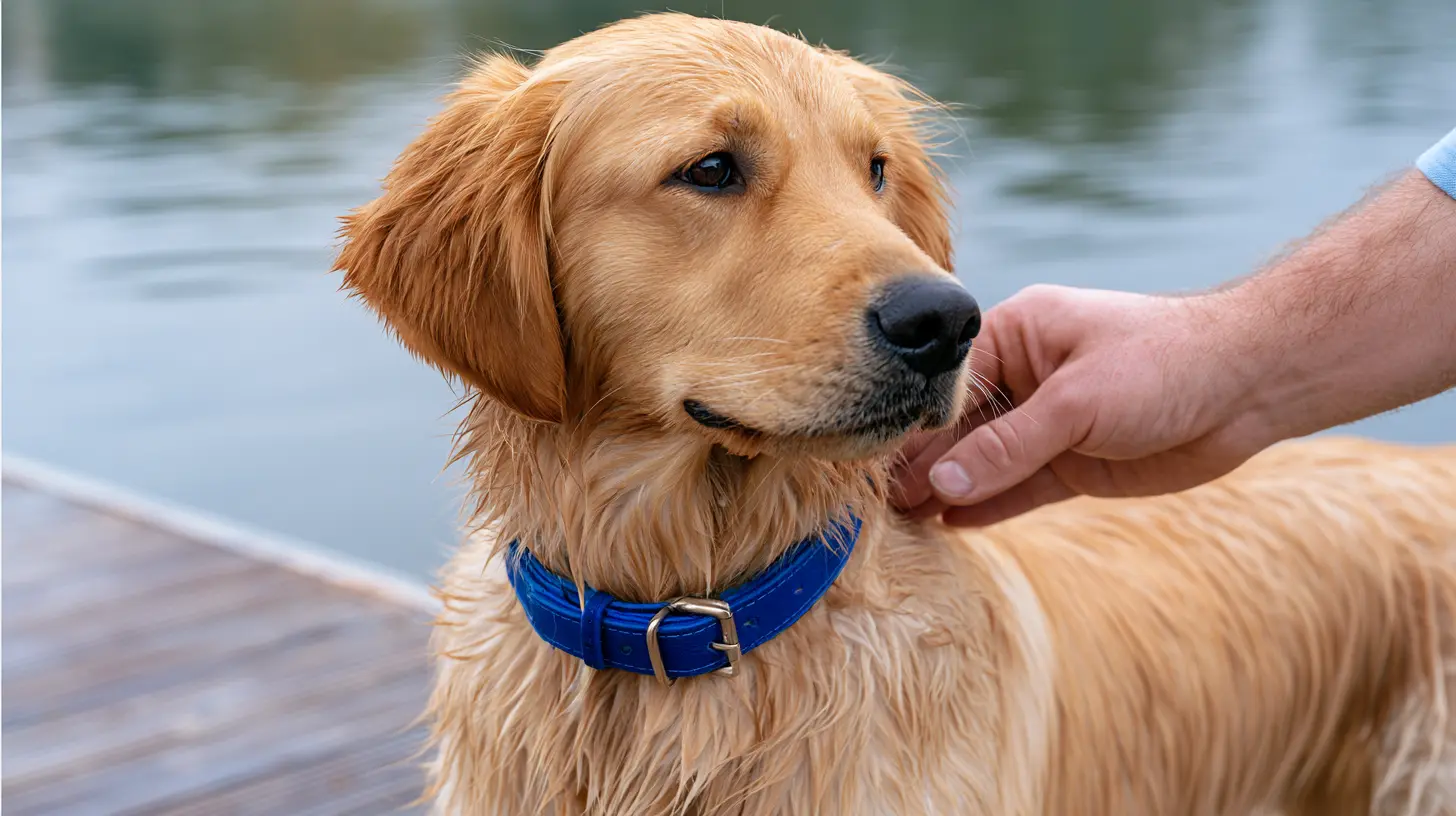
A wet fabric collar can stay damp long after a swim, collect sand and mud, and develop an odor that returns even after washing. A good waterproof dog collar avoids most of that moisture—but the coated strap is only part of the story.
The buckle, D-ring, adjustment system, width, and edge finish also affect comfort and reliability. A collar that repels water but gradually loosens or rubs the dog’s neck is not a good choice.
Based on product specifications, retailer information, independent reviews, and recurring customer feedback, the Tuff Pupper Classic Heavy Duty is our Best Overall pick. It combines non-absorbent coated webbing with traditional adjustment and brass hardware.
Affiliate disclosure: LumaPaw may earn a commission from qualifying purchases made through links in this article, at no extra cost to you. As an Amazon Associate, we earn from qualifying purchases.
Our Top Waterproof Dog Collar Picks
Tuff Pupper Classic Heavy Duty — Best Overall
Material: TPU/polymer-coated webbing
Best for: Swimming, rain, mud, and everyday wear
Main advantage: Traditional pin buckle with brass hardware
Main limitation: Heavier and less precisely adjustable than a sliding collar
Dogline BioThane Quick-Release — Best Value BioThane Collar
Material: BioThane coated webbing
Best for: Buyers who want a lower-priced BioThane dog collar
Main advantage: Broad choice of colors, widths, and neck ranges
Main limitation: Amazon groups several different closures and sizes together
Ruffwear Confluence — Best Premium for Frequent Swimming
Material: TPU-coated polyester webbing
Best for: Medium and large dogs that spend a lot of time in water
Main advantage: Lightweight design with reflective details and separate ID attachment
Main limitation: Premium price and only two size ranges
Wilderdog Waterproof Collar — Best Lightweight
Material: PVC-coated polyester webbing
Best for: Everyday comfort, hiking, and regular swimming
Main advantage: Softer and lighter than many thick coated collars
Main limitation: Plastic buckle and limited sizing
NIMBLE Reflective Waterproof Collar — Best Reflective
Material: Flex-poly-coated polyester
Best for: Rainy walks, early mornings, and low-light use
Main advantage: Reflective strip at an accessible price
Main limitation: The reflective surface may wear before the main strap
Red Dingo Vivid PVC — Best for Small Dogs
Material: PVC-coated nylon webbing
Best for: Toy and small dogs that swim or get muddy
Main advantage: Sizes begin at approximately an 8-inch neck
Main limitation: Punched buckle holes may stretch or tear under strong pulling
How We Researched These Waterproof Dog Collars
We did not choose these collars simply because they had high ratings or large review counts.
Each product was evaluated by looking at:
- Whether the strap absorbs meaningful moisture
- Waterproof versus water-resistant construction
- Odor and dirt resistance
- Buckle, D-ring, rivet, and adjuster materials
- Comfort, flexibility, width, and edge finish
- Neck-size coverage
- Adjustment stability
- Cleaning requirements
- Recurring customer complaints
- Amazon, Chewy, and manufacturer availability
- Whether the product served a distinct type of buyer
The roundup excludes electronic training collars, bark collars, GPS collars, flea collars, and replacement receiver straps. These products sometimes appear in searches for waterproof dog collars, but they do not match the intent of someone looking for a standard everyday collar.
We also excluded ordinary fabric collars that are only described as quick-drying. A collar that dries quickly after absorbing water is not the same as a coated collar designed to prevent water absorption.
This is a research-based comparison. LumaPaw did not personally test these collars, so manufacturer strength claims and individual customer experiences are not presented as verified test results.
The 6 Best Waterproof Dog Collars Reviewed

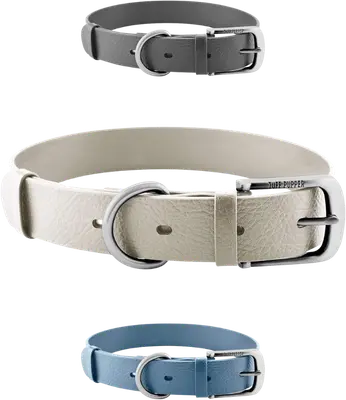
Tuff Pupper Classic Heavy Duty — Best Overall Waterproof Dog Collar
Best for: Dogs that swim, play in mud, or live in rainy climates, especially when the owner prefers a traditional metal buckle.
Avoid if: Your dog needs an ultralight collar, chews collars, or falls awkwardly between fixed buckle holes.
Honest buying note: Claims such as “chew-proof” or “ten times stronger than leather” should be treated as manufacturer marketing, not guaranteed performance. Confirm the exact size and active Amazon variant before ordering.
Product snapshot
- Coated waterproof webbing
- Traditional metal pin buckle
- Brass attachment hardware
- Small-to-large variants
- Everyday and frequent wet use
- Affordable-to-midrange position
The Tuff Pupper Classic Heavy Duty takes the top position because it offers the strongest balance of waterproof construction, traditional adjustment, hardware quality, and everyday usability.
Its strap uses coated webbing with a leather-like finish. Unlike genuine leather, the coated material is designed not to absorb water during swimming, rain, or muddy outdoor use.
The main difference is its traditional pin buckle and brass hardware. Many waterproof collars rely on plastic buckles and sliding adjusters. Tuff Pupper instead uses fixed adjustment holes, which may feel more predictable for owners concerned about a collar gradually becoming loose.
That design comes with a trade-off. Fixed holes cannot provide the same fine adjustment as a continuously adjustable collar. A dog that falls between two positions may end up with a fit that is slightly tighter or looser than ideal.
Customer and independent review patterns commonly mention easy cleaning, low odor retention, substantial construction, and good performance around water and dirt. However, it is heavier than Wilderdog or NIMBLE, and the leather-like appearance should not be confused with genuine leather.
Pros
- Strong overall balance of materials and hardware
- Non-absorbent strap
- Traditional adjustment
- Easy to wipe clean
- Brass hardware
- Strong review and independent-testing support
Cons
- Heavier than several alternatives
- Fixed holes limit adjustment precision
- Not genuine leather
- Not chew-proof
- Amazon availability may vary by size and color

Dogline BioThane Quick-Release — Best Value BioThane Collar
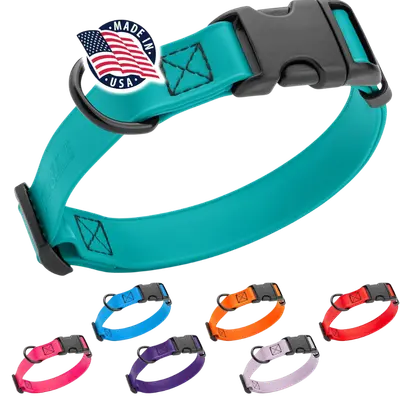
Best for: Owners who want an affordable BioThane collar with more size and color options than most competitors.
Avoid if: Your dog is escape-prone, pulls heavily from the collar, or you cannot confirm the exact closure and neck range before ordering.
Honest buying note: Confirm that the product page shows the quick-release version, not a pin-buckle or extra-wide model. Use the numerical neck measurement rather than relying on Small, Medium, or Large.
Product snapshot
- BioThane coated webbing
- Quick-release closure on the selected version
- Metal D-ring
- Multiple widths and neck ranges
- Large color selection
- Budget-to-midrange price position
Dogline is the most useful choice for shoppers specifically searching for a BioThane dog collar without moving into premium pricing.
BioThane combines a polyester webbing core with a protective polymer coating. The result is a strap that resists water absorption, wipes clean easily, and generally traps less odor than ordinary woven nylon.
Dogline offers an unusually broad range of colors, widths, and neck sizes. Customer feedback frequently mentions easy cleaning after swimming, mud, and bathing. Several owners also report that the smooth coating catches less loose hair than fabric webbing.
The main difficulty is Amazon’s product page. It groups several constructions under one listing, including quick-release collars, traditional pin-buckle versions, wider models, and different size systems. The article recommendation applies specifically to the adjustable quick-release collar—not every Dogline variant displayed on the page.
Some sizing information also conflicts between the title and variation menu. Reviews include reports of collars running smaller or larger than expected, as well as occasional movement in the sliding adjustment.
Pros
- Directly matches BioThane buying intent
- Easy to rinse and wipe clean
- Broad color and width selection
- Good odor-resistance feedback
- Less hair trapping than woven nylon
- Strong value
- Large customer-review base
Cons
- Confusing Amazon variants
- Conflicting size descriptions
- Some reports of adjustment slipping
- Initial adjustment may be difficult
- Exact hardware metal is unclear
- Coating may stiffen or crack with age

Ruffwear Confluence — Best Premium for Frequent Swimming
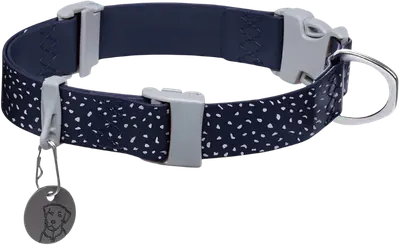
Best for: Medium and large dogs that swim frequently and owners who value low weight, reflectivity, and separate tag storage.
Avoid if: Your dog has a neck under 14 inches, has a history of neck irritation, or rarely gets wet enough to justify the premium price.
Honest buying note: This makes the most sense for a dog that genuinely spends a lot of time in water. For occasional rain, a simpler and less expensive collar may be sufficient.
Product snapshot
- TPU-coated polyester
- ITW Nexus quick-release buckle
- Separate ID attachment
- Silicone tag silencer
- Reflective pattern
- Two neck ranges: approximately 14–20 and 20–26 inches
The Ruffwear Confluence is the most technically refined collar in this group.
It uses TPU-coated polyester webbing with an ITW Nexus side-release buckle, reflective detailing, an anodized aluminum V-ring, a separate ID attachment, and a silicone tag silencer. That combination is particularly useful for dogs that spend a lot of time in pools, lakes, rivers, snow, or wet hiking conditions.
The separate ID connection keeps tags away from the main leash ring, while the silicone component reduces tag noise. Owners also commonly praise the low weight and easy cleaning.
The collar uses two adjusters rather than a simple single-slider design. This helps distribute the adjustment across the collar, but setting the fit takes more attention. One useful customer tip is to make the final adjustment while the collar is buckled into its circular wearing shape rather than lying flat.
Most feedback describes good odor resistance, but it is not universal. Isolated reviews mention odor developing after repeated swimming, adjusters moving, or rubbing against sensitive skin.
Pros
- Excellent water-focused construction
- Lightweight
- Easy to rinse clean
- Reflective details
- Separate leash and tag attachments
- Quiet tag design
- Strong outdoor-brand reputation
Cons
- Higher price
- Only two size ranges
- More complicated adjustment
- Isolated adjuster-movement reports
- Occasional rubbing or hot-spot complaints
- Odor resistance is not universal

Wilderdog Waterproof Collar — Best Lightweight
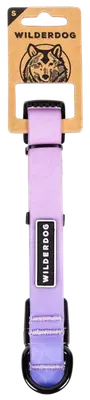
Best for: Dogs that swim or hike regularly and owners who prioritize flexibility, lower weight, and everyday comfort.
Avoid if: Your dog is very small, giant-sized, pulls powerfully, or needs all-metal hardware.
Honest buying note: The Wilderdog is lighter than Tuff Pupper, but the simpler plastic buckle and limited sizing are the trade-offs.
Product snapshot
- PVC-coated polyester webbing
- Plastic quick-release buckle
- Metal D-ring
- Small: approximately 11–15 inches
- Medium: approximately 13–18 inches
- Large: approximately 17–24 inches
- Midrange price position
Wilderdog is the easiest recommendation for owners who want a waterproof collar without thick hardware or a heavy belt-style buckle.
The collar uses polyester webbing covered with a soft PVC coating. This construction helps repel water and dirt while remaining more flexible than many thick BioThane-style collars.
Its standard plastic quick-release buckle keeps the collar light, and customer feedback often describes the strap as comfortable for everyday wear. Owners of active dogs commonly mention successful use around beaches, pools, lakes, creeks, and muddy trails.
The coated surface cleans easily, but the exposed stitching may hold dirt and require mild soap or gentle brushing. The three-size range is also less inclusive than Dogline or Red Dingo.
Wilderdog is available in many colors, which gives it more everyday appeal than several purely utilitarian-looking waterproof collars.
Pros
- Lightweight
- Soft and flexible
- Strong water- and odor-resistance feedback
- Easy to rinse
- Wide color selection
- Comfortable for many short-haired dogs
- Simple quick-release closure
Cons
- Only three sizes
- Plastic buckle
- Exposed stitching may retain dirt
- No confirmed premium corrosion-resistant hardware
- Not suitable for every toy or giant breed
- Not chew-proof

NIMBLE Reflective Waterproof Collar — Best Reflective
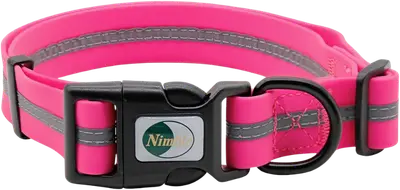
Best for: Rainy evening walks, early-morning outings, swimming, and owners who want an affordable reflective option.
Avoid if: Your dog has moisture-sensitive skin, pulls heavily, or requires premium metal hardware.
Honest buying note: Inspect both the reflective strip and the skin beneath the collar. Replace it when worn reflectivity is important for your routine.
Product snapshot
- Flex-poly-coated polyester
- Plastic side-release buckle
- Reflective fabric strip
- Coated metal D-ring
- Three adjustable size ranges
- Budget price position
NIMBLE is the strongest option for owners who need both waterproof construction and improved low-light visibility.
Its polyester webbing is covered with a flexible waterproof coating, while a reflective fabric strip runs along the collar. When reached by headlights, a flashlight, or another direct light source, that strip can make the collar easier to notice.
Reflective does not mean glow-in-the-dark, and it does not guarantee that a driver will see the dog. It should be treated as an additional visibility feature rather than the only nighttime safety measure.
The collar is lightweight, affordable, and available in several bright colors. Customer feedback frequently mentions easy cleaning, low wet-collar odor, and use in pools, rivers, rain, and muddy yards.
The main concern is long-term finish wear. Some owners report that the reflective strip or coating on the D-ring wears before the main strap fails. One customer also described trapped moisture and skin irritation, so dogs with sensitive skin should be checked regularly.
Pros
- Useful reflective strip
- Affordable
- Lightweight
- Easy to wipe clean
- Large customer-review base
- Bright colors
- Good odor-resistance feedback
- Three practical sizes
Cons
- Reflective strip can wear
- D-ring finish may rub off
- Plastic buckle
- Smaller sizes are relatively narrow
- Potential moisture trapping on sensitive skin
- Base hardware metal is not identified

Red Dingo Vivid PVC — Best Waterproof Dog Collar for Small Dogs
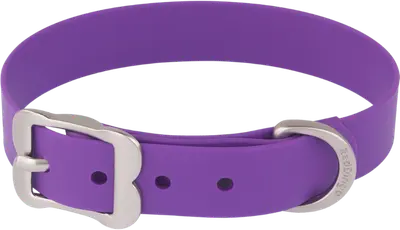
Best for: Toy and small dogs that need a lightweight, easy-clean collar for swimming, rain, and daily identification.
Avoid if: Your dog pulls, lunges, chews collars, or depends on the collar as the main walking restraint.
Honest buying note: Red Dingo remains in the roundup because it genuinely serves small dogs better than several more profitable Amazon options. Use a harness for leash attachment if your dog pulls.
Product snapshot
- PVC-coated nylon webbing
- Traditional pin buckle
- Chrome-plated buckle and D-ring
- Approximately 8–26-inch coverage across seven sizes
- Narrow widths for toy and small breeds
- Budget price position
Red Dingo fills an important gap because its size range starts at approximately an 8-inch neck.
The Vivid collar uses PVC-coated nylon webbing with a traditional pin buckle and chrome-plated hardware. Its smaller widths are more appropriate for toy breeds than the broad one-inch straps commonly found on outdoor collars.
The coated strap is easy to wipe clean and generally does not retain the same wet odor as woven nylon. Customer feedback includes successful use in pools, lakes, mud, and beach environments.
Its weakness is pulling durability. Several owners report stretching or tearing around the punched buckle holes, particularly when a dog lunged or pulled against the collar. This makes Red Dingo more suitable as an everyday identification collar than as the primary walking restraint for a strong dog.
The fixed holes can also make sizing less precise. A dog between two positions may need a different model rather than a homemade extra hole.
Pros
- Excellent small-dog sizing
- Seven sizes
- Lightweight
- Easy to clean
- Low odor retention
- Bright colors
- Traditional buckle
- Strong Chewy customer-feedback base
Cons
- Punched holes can tear
- Not suitable for hard pullers
- Thin smaller widths
- Chrome-plated rather than verified stainless-steel or brass hardware
- Occasional fastener and fading complaints
- Weak Amazon availability
Also Consider the WAUDOG Waterproof Collar With QR ID
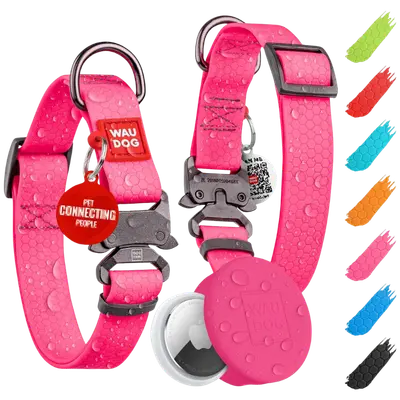
WAUDOG uses proprietary COLLARTEX coated material and offers a broad range of sizes, including versions with plastic or metal quick-release buckles. Selected variants include a QR identification tag and removable AirTag holder.
Those features are useful, but the collar did not make the main six because the QR tag receives repeated complaints about peeling, falling off, arriving missing, or failing to scan. Some customers also report adjustment movement and coating cracks.
Treat the digital tag as backup identification rather than a replacement for an engraved tag and registered microchip. Readers whose main priority is identification may find more suitable options in our guide to personalized dog collars with names and plates.
What Makes a Dog Collar Truly Waterproof?
A waterproof collar should use a coated, non-porous strap that absorbs little meaningful moisture. That is different from a fabric collar that becomes wet but dries faster than normal.
Waterproof vs Water-Resistant vs Quick-Drying
Waterproof collars usually use coated webbing designed to repel water rather than soak it up.
Water resistant dog collars may handle rain, splashing, and wet grass but can still absorb moisture during prolonged swimming.
Quick-drying collars absorb some water but release it faster than traditional webbing.
Manufacturers do not always use these terms consistently. Check the actual construction rather than relying only on the word “waterproof” in a product title.
BioThane Dog Collars
BioThane uses a polyester webbing core with a protective polymer coating. A well-made BioThane dog collar is easy to clean, absorbs little water, and generally holds less odor than woven nylon.
However, the strap material does not determine the quality of the entire collar. A weak buckle, loose adjuster, or poorly protected D-ring can still become the failure point.
Readers comparing coated materials with traditional options can also see our guide to leather dog collars and their care needs.
TPU- and PVC-Coated Webbing
TPU and PVC are coatings applied over a structural webbing core. Two collars using the same general coating can still feel very different.
Important differences include:
- Coating thickness
- Flexibility
- Edge finish
- Exposed stitching
- Buckle quality
- D-ring material
- Adjustment stability
A material name alone does not prove that a collar will be comfortable or durable.
Are Rubber Dog Collars Really Rubber?
Many products described informally as rubber dog collars are not made from solid rubber. They may use PVC-coated webbing, TPU-coated webbing, BioThane, silicone-like material, or a proprietary coating.
The most reliable approach is to check both the outer coating and the internal webbing rather than judging the collar by its rubber-like appearance.
Why the Hardware Matters as Much as the Waterproof Strap
A coated strap may repel water well, but the collar still depends on its buckle, D-ring, rivets, and adjusters.
Hardware problems can include corrosion, worn plating, loose fasteners, or an adjuster that gradually changes position. That is why a collar should not be judged only by whether the strap stays dry.
Buckles, D-Rings, Rivets, and Adjusters
Traditional pin buckles use fixed holes. They are simple and predictable, but they provide less precise sizing than sliding adjustments. The holes should be checked regularly for stretching, especially when the dog pulls against the collar.
Plastic quick-release buckles reduce weight and are convenient for daily removal. Quality varies, though, and a quick-release buckle should not automatically be treated as a breakaway safety buckle.
Metal quick-release closures may feel more substantial, but they can also add weight and create pressure points on smaller dogs.
The D-ring carries the leash or identification tags. Check that it is securely attached and that nearby stitching or rivets are not pulling away from the coated strap.
Sliding adjusters deserve particular attention. Customer feedback for several collars in this roundup includes occasional loosening. Recheck the fit after swimming, rough play, and the first few walks.
Brass, Aluminum, Stainless Steel, and Plated Hardware
Solid brass resists corrosion well and is one reason Tuff Pupper earned the overall position. Brass can still discolor, and it should be rinsed after saltwater exposure.
Anodized aluminum, used for Ruffwear’s leash ring, is lightweight and suitable for outdoor equipment. The finish and overall construction still matter.
Stainless steel is often a good choice around water, but manufacturers do not always identify the grade used.
Chrome-, nickel-, or zinc-plated hardware has a protective surface over another metal. Once that finish becomes scratched or worn, the underlying material may be more exposed to moisture.
Do not assume a product is permanently rustproof simply because the strap is waterproof.
What to Do After Saltwater Swimming
Ocean use is harder on collar hardware than rain or freshwater.
After a beach trip:
- Rinse the entire collar with clean freshwater.
- Open and close the buckle to remove trapped sand.
- Rinse around rivets, sliders, and the D-ring.
- Dry the metal parts with a towel.
- Look for discoloration, rough movement, coating damage, or loose hardware.
None of the current products has enough verified evidence for a confident “Best for Saltwater” award. Even waterproof collars benefit from basic maintenance after repeated ocean use.
How to Choose the Right Waterproof Dog Collar
The right collar depends on how often the dog gets wet, the dog’s neck size, coat, skin, and whether the leash attaches to the collar or a harness.
For a broader comparison of materials and collar types, see our complete dog collar guide.
Match the Collar to the Amount of Water Exposure
For occasional rain or wet grass, a simple coated collar such as NIMBLE or Wilderdog may be enough.
A dog that swims several times a week may benefit more from Ruffwear’s lightweight wet-use design or Tuff Pupper’s traditional metal hardware.
For regular mud, prioritize a smooth surface with minimal texture and exposed stitching. Wilderdog’s main strap wipes clean easily, but its stitching may need extra attention.
Beach use adds sand and salt to the decision. Look beyond the strap and consider whether the hardware material is identified. Rinse the collar after every ocean outing, even when the manufacturer markets it for water use.
Measure Neck Size and Compare Width
Do not choose a collar based only on a Small, Medium, or Large label. Those terms vary significantly between brands.
Measure where the collar normally sits using a flexible measuring tape. The tape should be snug but not tight.
Compare that measurement with the exact numerical range for the selected size. When a dog sits near the minimum or maximum limit, check whether another width or model would provide a better fit.
Width matters too:
- Narrow collars are lighter for toy and small dogs.
- A one-inch collar may distribute pressure better on many medium and large dogs.
- Extra-wide collars can feel bulky on short necks.
- A narrow strap may concentrate pressure when a dog pulls.
Puppies need regular fit checks as they grow. Long or thick fur can also make a collar seem looser than it is against the skin.
Choose Between a Pin Buckle and Quick-Release Buckle
A pin buckle gives the owner fixed adjustment points. It is less likely to move gradually, but a dog may fall between two hole positions.
A quick-release buckle is easier to put on and remove. It usually offers continuous adjustment, but the slider must remain secure during wear.
Neither style is automatically stronger. Reliability depends on the complete construction, including the buckle, webbing, stitching, D-ring, and adjuster.
Quick-release is also not the same as breakaway. A standard side-release buckle normally opens when a person squeezes it; it is not designed to release automatically under a specific level of pressure.
Consider Coat, Skin, and Everyday Comfort
Waterproof coatings can feel smooth, but some are thicker or stiffer than others.
Check for:
- Rough or sharp edges
- Heavy buckles pressing against the neck
- Moisture trapped between the strap and skin
- Hair catching around stitching or hardware
- Rubbing behind the ears or under the throat
- Redness or hair loss
Dogs with short coats may be more sensitive to stiff edges. Thick-coated dogs may need regular checks because skin irritation can remain hidden beneath the fur.
A non-absorbent collar can still trap moisture against the dog if it is fitted too tightly. Remove the collar, dry the neck, and monitor the skin after long swimming sessions.
Persistent redness, sores, odor, or hair loss should be discussed with a veterinarian.
Decide Whether the Collar Is for Identification or Walking
A waterproof collar can hold an engraved ID tag while the leash attaches to a harness.
That is often the better setup for dogs that:
- Pull strongly
- Cough or gag under neck pressure
- Have narrow heads
- Back out of flat collars
- Have neck or airway concerns
A heavier waterproof collar does not become a no-pull device simply because it has stronger hardware.
Dogs that regularly reverse out of flat collars may need a properly fitted martingale collar for supervised walks instead. A trainer or veterinarian can help when escape behavior, pulling, or neck sensitivity creates a safety concern.
Waterproof Dog Collar Safety and Quality Checklist
Check the collar before relying on it for regular use.
Before the First Walk
- Confirm the exact neck range and collar width.
- Use the two-finger fit test.
- Make sure the collar cannot slide easily over the dog’s head.
- Open and close the buckle several times.
- Check that the D-ring is securely attached.
- Inspect the edges for roughness.
- Pull gently on the strap and hardware.
- Mark or remember the correct adjustment position.
During Regular Use
- Recheck the fit after swimming and rough play.
- Look beneath the collar for redness, dampness, or hair loss.
- Inspect pin-buckle holes for stretching.
- Check coated webbing for cracks, peeling, or exposed fibers.
- Watch for a sliding adjuster that changes position.
- Check rivets and fasteners for movement.
- Replace the collar if reflective material is badly worn and visibility is important.
- Rinse it after saltwater, chlorine, mud, or sand.
- Use a harness when neck pressure is a concern.
A waterproof collar is not suitable as a vehicle-restraint device unless the product is specifically designed and tested for that purpose. It should also not be used for unattended tie-outs.
Replace the collar when the buckle becomes unreliable, the coating separates, holes begin tearing, or structural webbing becomes exposed.
How to Clean a Waterproof Dog Collar
Always follow the manufacturer’s instructions for the specific collar.
For light dirt, wipe the strap with a damp cloth. Mud and skin oils may require mild soap and freshwater.
Textured surfaces, stitching, and reflective strips may need a soft brush. Avoid aggressive scrubbing that could damage reflective material or the outer coating.
After pool or saltwater use:
- 1
Rinse the complete collar with freshwater.
- 2
Work the buckle and adjusters while rinsing.
- 3
Remove sand from hardware and seams.
- 4
Dry the metal parts with a towel.
- 5
Let the collar air-dry before putting it back on.
Avoid bleach, solvents, harsh disinfectants, direct heat, and dishwashers unless the manufacturer specifically approves them.
Cleaning is also a good time to inspect the collar. Look for cracks, loose rivets, peeling reflective material, stretched holes, exposed webbing, and hardware discoloration.
Frequently Asked Questions About Waterproof Dog Collars
Are BioThane dog collars completely waterproof?
The coated BioThane strap is designed to absorb very little water. However, the whole collar also includes a buckle, D-ring, stitching, rivets, or adjusters.
Damage to the coating can expose the inner webbing, and the hardware may still require rinsing and drying. “Waterproof” should not be interpreted as maintenance-free.
What is the difference between waterproof and water-resistant dog collars?
A waterproof collar usually has coated, non-porous webbing that absorbs little meaningful moisture.
Water-resistant dog collars can handle light rain and splashing but may absorb water during prolonged swimming. A quick-drying collar can get wet internally but dries faster than standard fabric webbing.
Because manufacturers use these terms inconsistently, check the material and care information rather than relying only on the product title.
Do waterproof dog collars still smell?
They usually retain less wet odor than woven nylon because the coated strap absorbs less moisture.
They can still develop odor from skin oils, dirt, trapped moisture, exposed stitching, or insufficient cleaning. Textured collars may also hold more grime than smooth coated straps.
Can a dog swim while wearing a waterproof collar?
Yes, when the manufacturer allows swimming and the collar fits safely.
After swimming, check the dog’s neck for rubbing or trapped moisture. Rinse the collar after saltwater or chlorinated pools and dry the hardware.
A waterproof collar is not a flotation device and should not replace a properly fitted dog life jacket when one is needed.
What collar hardware is least likely to rust?
Solid brass, appropriate grades of stainless steel, and properly treated aluminum generally offer better corrosion resistance than low-quality plated hardware.
However, the exact grade, finish, construction, and maintenance all matter. Hardware that is marketed as rust-resistant should still be rinsed after saltwater use.
Is TPU-coated webbing the same as BioThane?
No.
BioThane is a specific coated-webbing material or product family. TPU-coated webbing is a broader construction description. Two collars can both be waterproof while using different coatings, substrate materials, thicknesses, and manufacturing methods.
Are waterproof collars comfortable for everyday wear?
Many are, but comfort depends on more than water resistance.
Look at:
- Flexibility
- Collar width
- Weight
- Edge finish
- Buckle size
- Adjustment
- Coat type
- Skin sensitivity
Remove or adjust the collar if it causes redness, dampness, rubbing, or hair loss.
Can a waterproof dog collar be personalized?
Some waterproof collars can include an engraved plate, printed name, QR tag, or separate ID tag.
For a broader comparison of identification options, see our guide to dog collars with names and built-in identification.
Which Waterproof Dog Collar Should You Choose?
The Tuff Pupper Classic Heavy Duty is our Best Overall waterproof dog collar because it offers the strongest balance of coated construction, traditional adjustment, and brass hardware.
Choose the Dogline BioThane Quick-Release when value, colors, and size choice matter most, but verify the exact variant before ordering.
The Ruffwear Confluence is the better premium option for medium and large dogs that swim frequently. The Wilderdog suits owners who prefer a softer and lighter everyday collar.
For low-light walks, the NIMBLE Reflective adds useful visibility. The Red Dingo Vivid PVC remains the most practical choice for many toy and small dogs, provided the collar is not used to control a hard puller.
Whichever product you choose, measure carefully, inspect the hardware, and match the collar to the dog’s real activity level rather than choosing by material or rating alone.