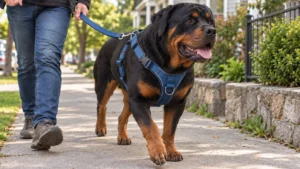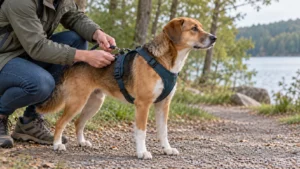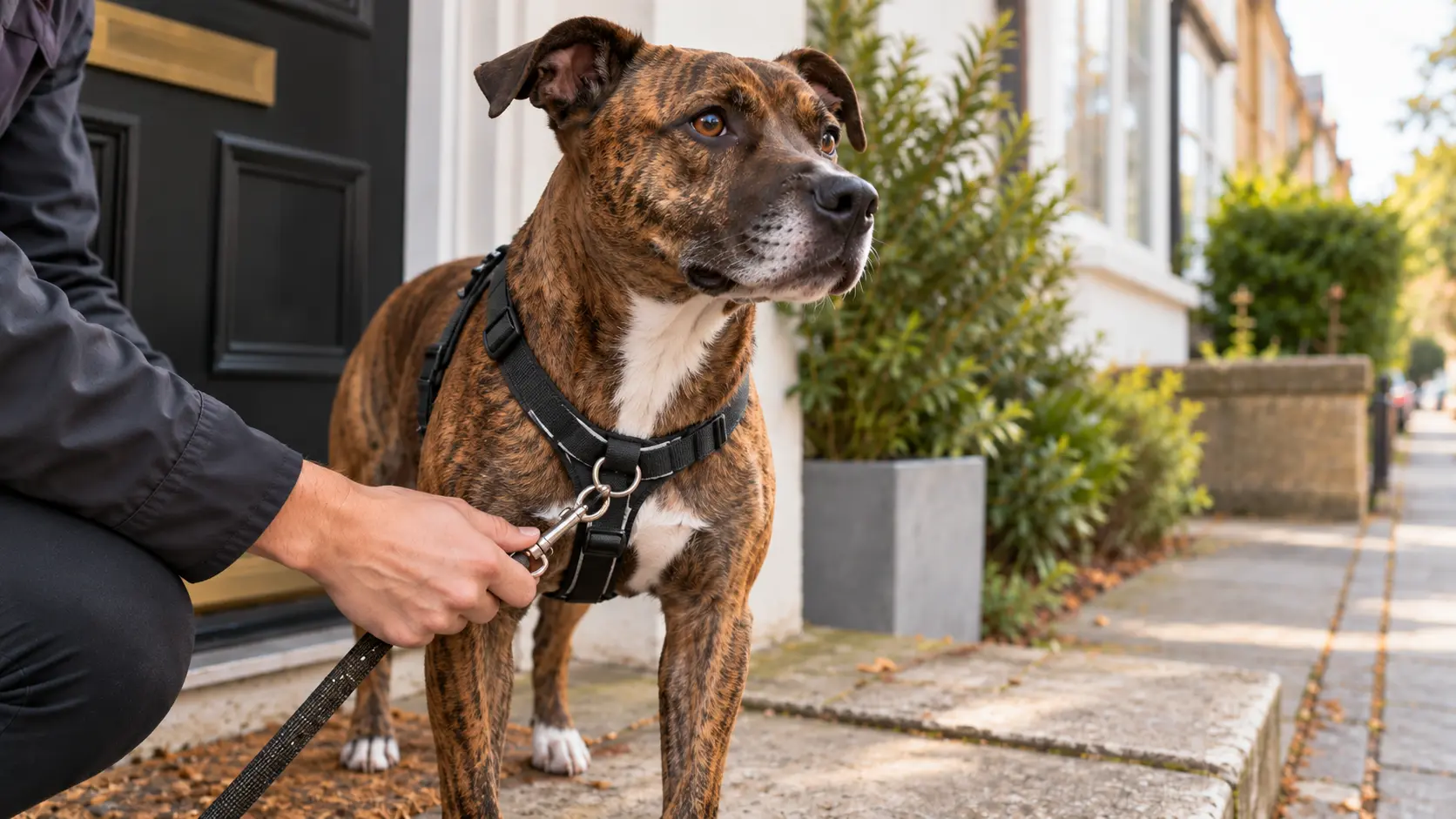
A dog can still pull hard while wearing a harness. If the leash attaches only to the back, some dogs simply lean forward and keep going. A front clip dog harness gives you another way to manage that pulling by attaching the leash at the chest, where it may be easier to redirect your dog.
The right design depends on more than pulling strength. A harness that twists sideways, rubs behind the front legs, or slips out of adjustment can turn an ordinary walk into a frustrating experience.
We compared five front-clip and no-pull harnesses with different approaches to walking control, padding, and fit. None is guaranteed to stop pulling, but each has a practical reason to consider it.
Affiliate disclosure: LumaPaw may earn a commission when you purchase through links on this page, at no additional cost to you. Our recommendations are based on product specifications, retailer information, and customer feedback—not hands-on testing.
Our Top Front-Clip Dog Harness Picks at a Glance
These five harnesses are designed for different needs. Some use a tightening martingale loop, others have ordinary front and back attachment points, and one offers a double-ended training leash.
Dog harness |
Best for |
Main limitation |
|---|---|---|
2 Hounds Design Freedom |
Two-point leash control |
Short leash in dual-clip mode |
PetSafe Easy Walk Original |
Simple front-clip control |
Chest strap can slip or rub |
rabbitgoo Classic Fit |
Affordable padded walking |
Strap adjustment and fit complaints |
Ruffwear Front Range |
Padded everyday walks |
Higher price and no grab handle |
Blue-9 Balance |
Adjustable fit |
Takes time to set up correctly |
If your main problem is pulling, start by comparing 2 Hounds Freedom and PetSafe Easy Walk. If fit or comfort is the bigger concern, the other three offer different features worth examining.
How We Researched These Harnesses
We compared manufacturer specifications, Amazon and Chewy listings, size charts, leash attachment designs, materials, and customer feedback.
We paid particular attention to complaints involving rubbing, loose straps, harness rotation, damaged attachment points, and dogs slipping out. Those details matter more for walking equipment than a bestseller badge or an impressive review count.
We also considered products that didn’t make this list, including PetSafe Easy Walk Comfort, Frisco Padded No Pull, Chai’s Choice Outdoor Adventure, and Kurgo Tru-Fit Enhanced Strength. Some overlap with the selected harnesses, while Kurgo is more focused on vehicle restraint.
LumaPaw has not physically tested these products. Our recommendations reflect documented differences and reported owner experiences. Fit, comfort, and durability can vary between dogs and product versions.
The 5 Best Front-Clip Dog Harnesses Reviewed

2 Hounds Design Freedom — Best for Two-Point Leash Control
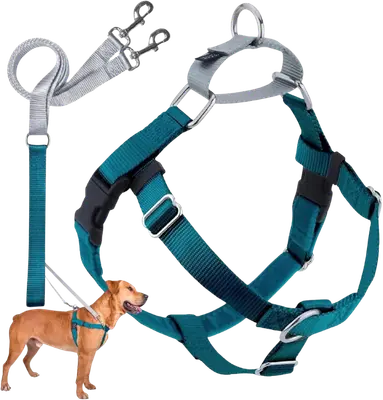
Product snapshot: Adjustable nylon webbing, stainless steel hardware, Swiss velvet lining behind the front legs, four adjustment points, and front/back leash connections.
Best for: Owners working on loose-leash walking who want the option of two-point handling.
Avoid if: You prefer a long, relaxed-walking leash or your dog regularly develops irritation from straps behind the legs.
Buying note: Make sure you’re selecting the Freedom harness with the double-ended training leash. The manufacturer also sells the harness without a leash and offers different leash configurations. Check the chest measurement and strap width before ordering.
The 2 Hounds Design Freedom is worth a close look if you want more than a single leash attachment to manage pulling.
It has a metal connection ring at the chest and a martingale-style control loop across the back. The harness-and-leash bundle includes a double-ended leash that can connect to both points simultaneously, allowing you to guide your dog from the front while maintaining a second connection at the back.
That makes it different from a basic padded vest with two rings. The included leash is part of the control system, not simply an accessory.
Pros
- Front and rear leash connections work with the included double-ended training leash.
- Velvet lining provides a softer contact surface behind the front legs.
- Available in different strap widths and chest sizes.
Cons
- More complicated to fit than a simple vest harness.
- The standard training leash is short in dual-connection mode.
- Some dogs still experience rubbing or harness movement.
The standard manufacturer’s training leash measures approximately three feet when attached at both points and four feet when used with a single connection. That’s useful for close handling but may feel restrictive to someone who prefers giving their dog more room to explore.
Customer feedback frequently mentions improved walking control. Common complaints involve leash length, adjusting the straps, and occasional chafing despite the velvet lining.

PetSafe Easy Walk Original — Best Simple Front-Clip Harness
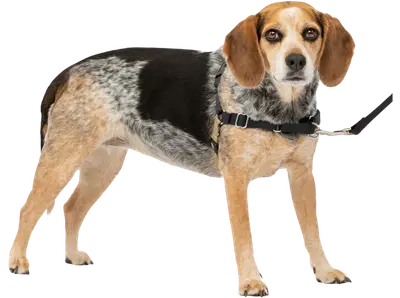
Product snapshot: Nylon strap construction, front martingale attachment, adjustable straps, and quick-snap buckles. The original version does not have a conventional back leash attachment.
Best for: Owners who want a straightforward front-clip training harness without additional padding or a complicated leash system.
Avoid if: Your dog needs a padded chest panel, a back attachment, or has difficulty keeping a horizontal chest strap in position.
Buying note: Choose the original Easy Walk, not the Easy Walk Deluxe or Easy Walk Comfort. They have different construction and features. Use PetSafe’s shoulder and girth measurements, and check the exact package contents if a retailer mentions an included leash.
The original PetSafe Easy Walk takes a simpler approach to pulling control.
Instead of using a padded vest or multiple leash attachments, it has a martingale loop at the front of the chest. When the leash becomes tight, the design applies gentle tightening pressure across the chest and shoulders, helping the handler redirect the dog.
It’s lightweight, relatively affordable, and has less body coverage than many padded harnesses.
Pros
- Simple front-clip design directly focused on leash control.
- Lightweight construction with limited body coverage.
- Generally costs less than more elaborate training harnesses.
Cons
- No standard rear leash connection.
- Minimal padding around the straps.
- Incorrect positioning can cause rubbing or shifting.
A recurring concern in customer reviews is the chest strap sliding too low or moving toward the front legs. Some owners also report irritation behind the legs or difficulty fitting deep-chested dogs.
This matters because the Easy Walk depends on its chest strap sitting in the intended position. Tightening every strap as much as possible isn’t the answer; the dog still needs comfortable movement.
The front martingale may make leash handling easier, but it doesn’t teach a dog to walk calmly on its own.

rabbitgoo Classic Fit — Best Budget Padded Harness
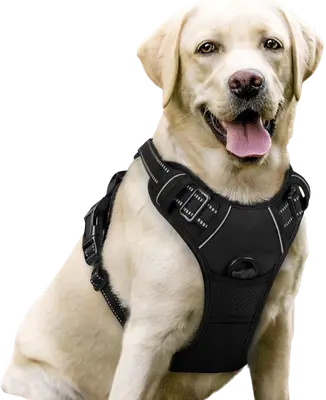
Product snapshot: Polyester-based padded construction, breathable mesh areas, four adjustment straps, two leash attachment points, reflective details, and a top handle.
Best for: Owners who want an affordable padded harness with both front and back leash options.
Avoid if: Your dog frequently backs out of harnesses or has proportions that make the neck opening and chest difficult to fit together.
Buying note: Look for the rabbitgoo Classic Fit No Pull model with front and back leash attachments. The brand sells several harness styles with similar names. Check the size chart for the exact listing rather than choosing solely by breed or weight.
The rabbitgoo Classic Fit offers a useful combination of features without the higher price associated with some specialist brands.
It has a metal leash attachment on the chest, another on the back, padded body panels, reflective detailing, and a top grab handle. Four adjustable straps allow some flexibility around the neck and chest.
The front attachment is intended for walking control, while the rear ring can be used for ordinary walks with dogs that aren’t pulling.
Pros
- Useful features for a relatively low price.
- Padded chest and belly areas.
- Reflective details and a handle for close guidance.
Cons
- Straps may need repeated adjustment.
- The over-the-head opening doesn't suit every dog.
- Customer experiences with long-term durability vary.
The large Amazon review history gives us plenty of owner feedback, but the number of ratings isn’t proof that this harness will work for every dog.
Owners often praise the padding and value. Repeated complaints involve straps loosening, the harness moving sideways, and difficulty finding a size that fits both the neck and chest. Some report years of satisfactory use, while others describe earlier wear.
The handle is useful for briefly guiding a dog closer, but it shouldn’t be treated as a certified lifting device or vehicle restraint.

Ruffwear Front Range — Best for Padded Everyday Walks
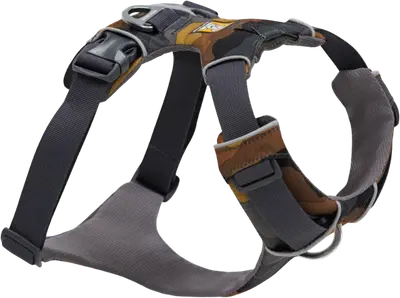
Product snapshot: Polyester ripstop shell, foam padding, mesh lining, four adjustment points, front and back connections, reflective trim, and an ID pocket.
Best for: Dogs needing a padded everyday walking harness with the option of front-clip redirection.
Avoid if: You specifically want a martingale control mechanism, need a top handle, or are shopping on a tight budget.
Buying note: Choose the standard Front Range harness, not the Front Range Flex or another Ruffwear design with similar naming. Check the correct girth range and inspect the reinforced front attachment as part of routine maintenance.
The Ruffwear Front Range makes sense for owners who want a padded everyday harness that also provides a front leash connection.
Its foam-padded chest and belly panels are designed for extended wear, while four adjustment points help accommodate different body shapes. It has an aluminum V-ring on the back and a reinforced webbing attachment at the front.
That front connection is an important distinction: it isn’t a metal D-ring or martingale loop. It’s a reinforced fabric attachment designed to provide another leash-handling option.
Pros
- Padded chest and belly construction.
- Two distinct leash attachment options.
- Reflective trim and an ID pocket for everyday convenience.
Cons
- More expensive than several other options.
- Front connection uses reinforced webbing rather than a metal ring.
- Fixed over-the-head opening may be difficult for some dogs.
Owners frequently appreciate the fit, padding, and construction. However, feedback also includes concerns about tight head openings, rubbing behind the front legs, and occasional wear around attachment areas.
The Front Range shouldn’t be assumed to control pulling better than a dedicated front-martingale harness. Its strongest reason for inclusion is the combination of everyday padding, adjustment, and front/back leash versatility.
For dogs that dislike bulky equipment, its substantial body panels may be a disadvantage rather than a benefit.

Blue-9 Buckle-Neck Balance — Best for Adjustable Fit
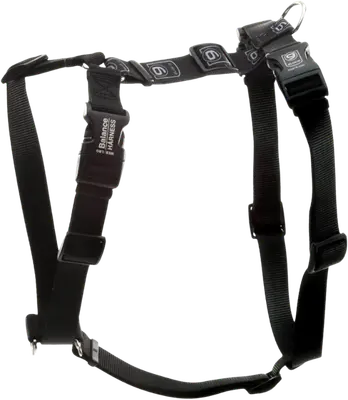
Product snapshot: Soft-touch nylon webbing, six adjustment points, front/back metal leash rings, opening neck buckle, and minimal body coverage.
Best for: Owners who need more fitting flexibility or whose dogs resist over-the-head harnesses.
Avoid if: You want substantial padding, a grab handle, or a harness that requires very little initial adjustment.
Buying note: Check that you’re purchasing the original Buckle-Neck Balance design rather than a different Blue-9 version. Adjust it while the dog is standing, then check how the straps behave during a short walk.
Some dogs are difficult to fit even when their chest measurement falls neatly inside a size chart.
A deep chest, narrow neck, or unusual body proportions can leave one part of a harness loose while another feels tight. That’s where the Blue-9 Balance becomes interesting.
Rather than relying on large padded panels, the Balance uses adjustable nylon straps. It offers six adjustment points, front and back leash attachment rings, and a buckle-neck opening.
The neck buckle is particularly useful for dogs that dislike having a harness pulled over their heads.
Pros
- Six adjustment points provide flexibility.
- Neck buckle avoids forcing the harness over the dog's head.
- Lightweight strap design with front and rear leash options.
Cons
- Initial fitting takes patience.
- Thin straps may not suit every dog's body.
- Some owners report shifting or rotation during walks.
Customer feedback often praises the ability to fit dogs that struggled with conventional harnesses. Other owners find the adjustments frustrating or report the harness moving sideways when the dog pulls.
Six adjustment points provide more ways to change the fit, but they don’t guarantee that the harness will stay centered.
Front-Clip vs. Back-Clip Harnesses: What's the Difference?
How a Front Attachment Helps Manage Pulling
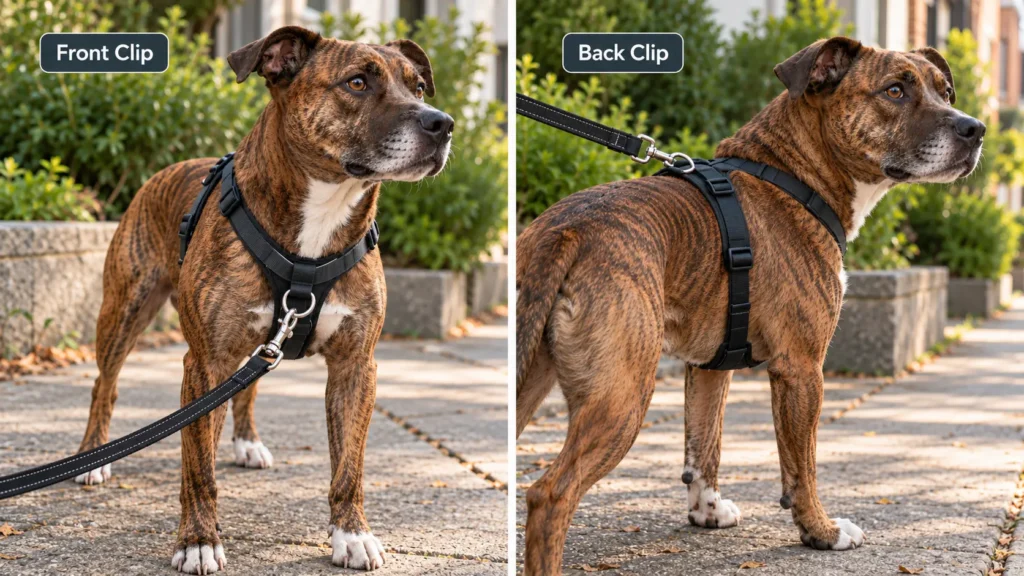
A front-clip harness attaches the leash near the dog’s chest. When the dog moves ahead and the leash becomes taut, that connection can help redirect the dog’s movement rather than allowing the same straight-ahead pull associated with a rear attachment.
It may improve handling, especially when paired with training. It doesn’t mean the dog will immediately understand that walking without pulling is the goal.
A poorly fitted front-clip harness can also twist sideways, causing discomfort or making control less predictable.
Front-Only, Dual-Clip, and Martingale Designs
Front-only designs, such as the original PetSafe Easy Walk, prioritize chest attachment for leash control.
Dual-clip harnesses, including rabbitgoo Classic Fit, Ruffwear Front Range, and Blue-9 Balance, let you choose between front and back connections.
Martingale-style designs have a tightening component intended to discourage pulling. The placement and operation vary by product.
The 2 Hounds Freedom goes further by offering a front connection, rear control loop, and an optional double-ended handling arrangement.
If pulling management isn’t your main concern, our broader dog harness comparison covers other harness styles and walking needs.
How to Choose a Front-Clip Harness for Your Dog
Choose the Attachment Design for Your Walking Needs
Start by thinking about what happens during a typical walk.
Does your dog lean steadily into the leash? Suddenly pull toward other dogs? Walk calmly most of the time but become difficult to redirect around distractions?
For ongoing pulling, a front-martingale or two-point training design may offer useful handling options.
For dogs that generally walk well but occasionally need redirection, a padded dual-clip harness may be more practical.
Don’t choose a product simply because its packaging says “anti pull” or “no pull.” Look at how the leash attaches and whether you can use that arrangement comfortably and consistently.
Check Fit, Padding, and Freedom of Movement
Measure your dog’s chest at the point specified by the manufacturer. Some harnesses also require neck, shoulder, or additional body measurements.
Check the neck opening and the distance between the front legs. These areas can cause problems even when chest girth seems correct.
A harness should remain comfortably secure without pinching, riding toward the throat, or repeatedly rotating when the dog moves.
Padding may improve comfort, but it cannot fix a poorly positioned strap. Likewise, a lightweight harness isn’t necessarily comfortable if narrow webbing creates pressure in the wrong place.
Watch your dog walking, turning, and lowering its head after the initial adjustment.
Look Beyond Metal Rings and “Heavy-Duty” Claims
A metal attachment ring can be a useful feature, but its strength depends on more than the ring itself.
Check how the connection is attached to the harness. Stitching, webbing, buckles, and adjustment sliders all affect reliability.
Look for loose threads, cracked plastic, damaged metal hardware, or straps that repeatedly work themselves loose.
Also consider cleaning instructions and retailer support. A harness that needs handwashing isn’t necessarily a poor choice, but it may be less convenient for a dog that gets muddy every day.
Choose documented construction and practical fit over broad durability claims.
No-Pull Harnesses for Large and Small Dogs: What Changes?
Large Dogs That Pull
Choosing a no-pull harness for large dogs requires careful attention to both fit and handling.
A large dog may generate considerable leash tension, so check the connection points, buckles, strap positioning, and whether the harness stays centered when the dog changes direction.
Avoid choosing by XL or XXL labels alone. Size ranges vary widely between brands, and some broad-chested dogs fall outside standard measurements.
A specialized two-point harness may be useful for leash training, while a more adjustable design can help with difficult proportions.
For options covering larger body sizes beyond front-clip control, see our harness guide for larger dogs.
Small Dogs and Front-Clip Fit
A no-pull harness for small dogs needs an appropriately positioned front attachment, not simply a smaller version of a large dog’s vest.
On short-legged dogs, a chest connection that hangs too low may interfere with movement. Bulky panels can also sit too close to the front legs.
Look for lightweight materials, suitable strap widths, and enough adjustment around both the neck and chest.
If your dog is very small, compare the actual measurements rather than assuming the smallest available size will work. Our small-dog harness guide covers additional designs for compact breeds.
How to Use a Front-Clip Harness Without Relying on It to Stop Pulling
A front attachment works best as one part of a consistent walking routine.
- Introduce the harness at home or in a quiet area, rewarding your dog for calmly wearing it.
- Attach the leash to the appropriate chest connection. For a double-ended leash system, follow the specific manufacturer's routing instructions.
- Start walking somewhere with few distractions. Reward your dog when the leash remains loose and they stay near you.
- If your dog pulls, avoid sharp leash jerks. Pause, regain their attention, or change direction gently before continuing.
Check the harness position during the walk. If it twists repeatedly or causes rubbing, stop and reassess the fit.
Persistent lunging or serious leash reactivity may require help from a qualified reward-based trainer or veterinary behavior professional rather than a different harness alone.
Front-Clip Harness Fit and Safety Checklist
Before using a new harness on a full walk, check these details:
- Fit: Chest and neck measurements match the exact manufacturer's size chart.
- Position: The front connection and chest straps stay correctly placed as the dog moves.
- Movement: Your dog can walk and turn normally without a strap interfering with the front legs.
- Comfort: There is no repeated rubbing, pinching, or visible skin irritation.
- Hardware: Buckles close properly, webbing is intact, and attachment stitching shows no damage.
- Security: Your dog cannot easily reverse out during a supervised fit check.
Recheck adjustments after the first few walks and whenever your dog’s weight or body shape changes.
Remove walking harnesses when they aren’t needed, particularly if your dog chews straps. Replace equipment with damaged attachment points or unreliable buckles.
Do not assume that an ordinary front-clip harness is suitable for crash protection in a vehicle. A handle or rear leash ring doesn’t establish car-restraint safety.
If a harness repeatedly causes pain, altered movement, or skin irritation, discontinue use and consult your veterinarian.
Front-Clip Dog Harness FAQs
Does a front-clip dog harness actually help with pulling?
It can. Attaching the leash at the chest may make it easier to redirect a dog that pulls forward.
The results depend on the harness design, fit, dog’s behavior, and handling technique. Some owners notice an immediate improvement, while others still need substantial loose-leash training.
A no-pull label should never be treated as a guarantee.
Should you clip a dog's leash to the front or back?
Use the front connection when you want the handling option it provides for pulling and redirection.
A back connection may be convenient for ordinary walks with a dog that already walks calmly.
For harnesses with both attachment points, follow the manufacturer’s guidance. Some double-ended systems are designed specifically for using both points together.
Can a front-clip harness rub or restrict a dog's movement?
Yes, especially when it fits poorly.
A loose harness may rotate, while a tight or badly positioned strap may rub behind the front legs or interfere with movement.
Pay attention to the dog’s walking pattern rather than relying only on a two-finger fit check. If a harness repeatedly shifts, causes irritation, or changes the way your dog walks, reassess it.
Can small and large dogs both use front-clip harnesses?
Yes, provided the specific model fits the dog correctly.
Smaller dogs may need lighter materials, narrower straps, and carefully positioned chest attachments. Large dogs need secure hardware, suitable dimensions, and a design that remains stable under leash tension.
Neither breed labels nor weight recommendations replace actual body measurements.
Which Front-Clip Harness Should You Choose?
For owners focused on two-point leash handling, the 2 Hounds Design Freedom offers the most distinctive control system in this comparison. The PetSafe Easy Walk Original is a simpler alternative built around a front martingale loop.
The rabbitgoo Classic Fit offers affordable padding and dual attachment points, while the Ruffwear Front Range emphasizes padded everyday walking. If ordinary harnesses are difficult to fit, the Blue-9 Balance deserves particular attention.
The right front clip dog harness isn’t necessarily the one with the most features or the strongest marketing claims. It’s the one that fits securely, allows comfortable movement, and gives you a practical way to work toward better leash manners.