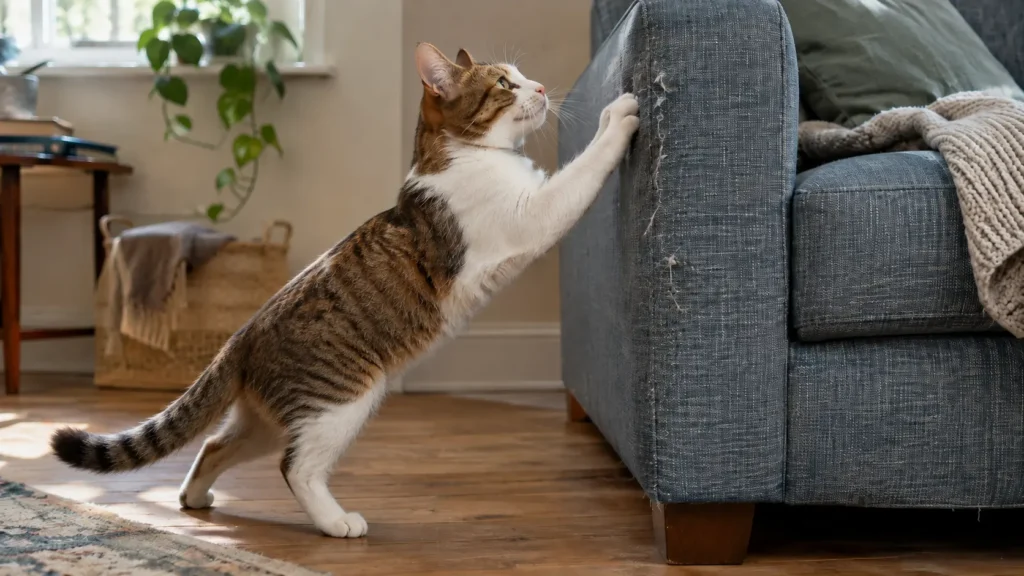
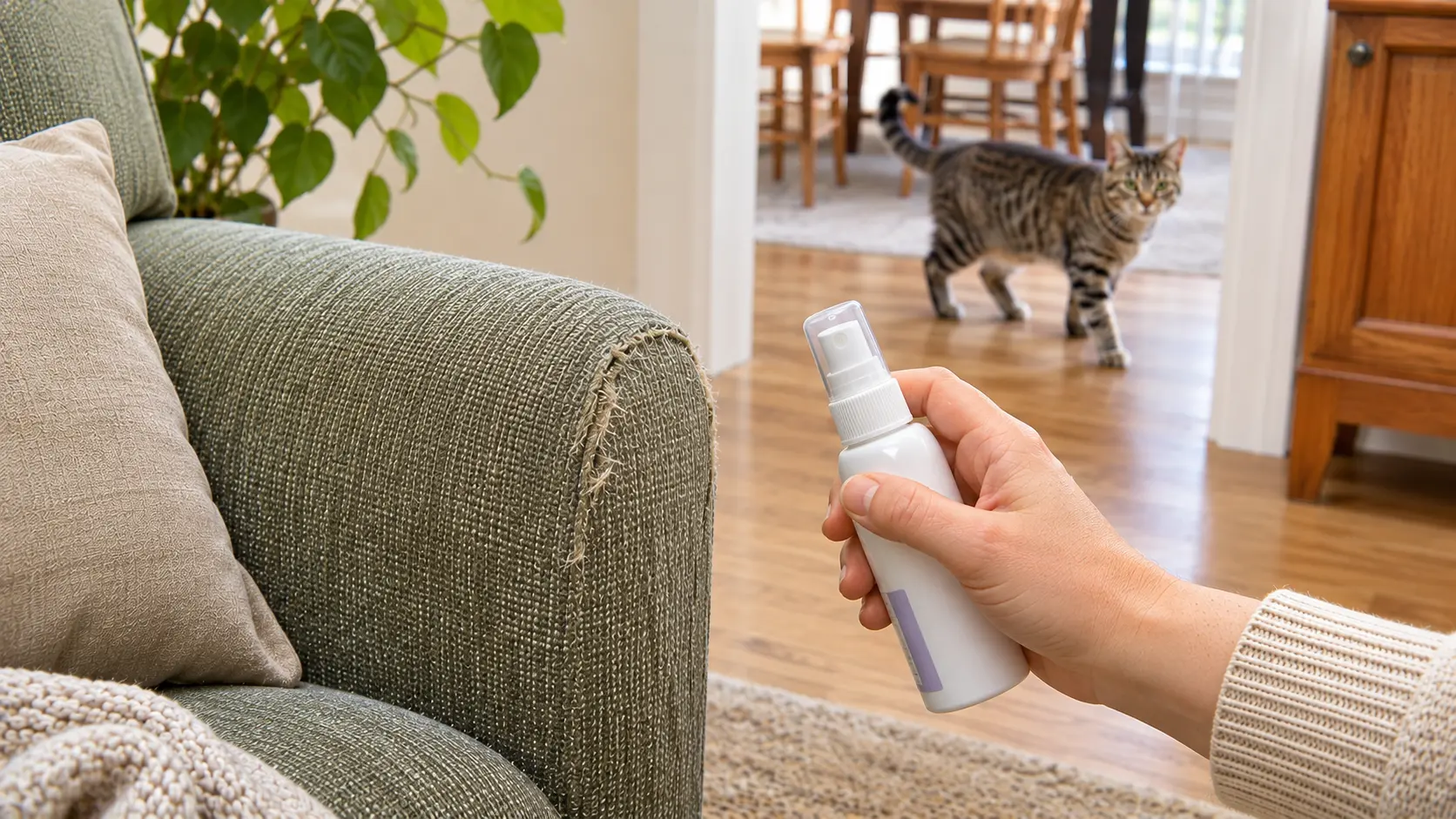
A cat anti-scratch spray may help protect your furniture, but choosing the right type matters. Some sprays use strong scents to discourage cats from approaching treated surfaces, while others use synthetic pheromones to help reduce stress-related scratching. This guide focuses on pheromone sprays, not scent-based repellents. They may help when stress contributes to scratching, but they will not physically protect upholstery or remove a cat's natural need to scratch.
We recommend FELIWAY Classic Spray and Comfort Zone Calming Spray as two options worth considering when stress may be contributing to the problem. Neither guarantees that your cat will stop scratching the couch.
If your cat simply loves the texture of your sofa, a suitable scratching post and a furniture cover may be a better investment.
After researching six popular sprays, we narrowed our recommendations to two based on their formulations, intended use, safety considerations, manufacturer instructions, and customer experiences.
Affiliate disclosure: LumaPaw may earn a commission when you purchase through links in this article, at no additional cost to you.
Best Cat Anti-Scratch Sprays at a Glance
Both of our picks use synthetic feline pheromones rather than unpleasant scents to discourage unwanted scratching. Here is how they compare.
| Product | Our recommendation | Bottle size | Main limitation |
|---|---|---|---|
| FELIWAY Classic Spray | First choice for stress-related scratching | 60 ml | Higher price and limited spray-specific effectiveness evidence |
| Comfort Zone Calming Spray | Lower-cost pheromone alternative | 2 fl oz / 59 ml | Surface restrictions and recurring sprayer complaints |
Quick buying advice: Start with FELIWAY if you suspect stress is contributing to your cat's scratching. Comfort Zone is worth considering if you want a less expensive pheromone option for compatible fabric furniture.
If your priority is immediate protection from sharp claws, neither spray provides a physical barrier.
The 2 Cat Anti-Scratch Sprays We Recommend
FELIWAY Classic Spray — First Choice for Stress-Related Scratching
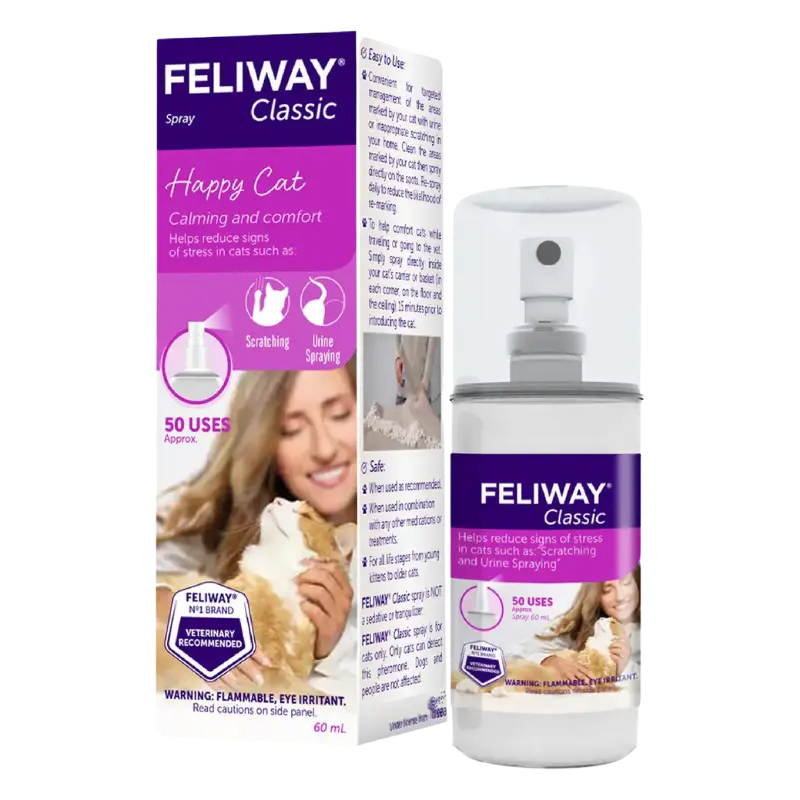
Best for: Cats whose furniture scratching may be associated with changes in their environment, unfamiliar surroundings, or other sources of stress.
Avoid if: You expect a single application to protect furniture indefinitely or want an alcohol-free formula.
Product snapshot
- Selected product: FELIWAY Classic Calming Pheromone Spray
- Bottle size: 60 ml
- Active ingredient: Synthetic F3 feline facial pheromone analogue
- Carrier: Ethanol
- Application: Targeted household surfaces
- Bottle capacity: 60 ml; usage depends on the number of sprays and areas treated
- Waiting period: At least 15 minutes
FELIWAY Classic takes a different approach from the typical cat repellent spray for furniture. Instead of making the couch smell unpleasant, it mimics the facial pheromones cats naturally leave on familiar objects when rubbing their cheeks against them.
The idea is to help a particular area feel familiar and reassuring.
That makes it worth considering if your cat starts scratching more frequently after a move, a change in household routines, or the arrival of another pet.
A 2019 veterinary review in the Journal of Feline Medicine and Surgery discusses applying FELIWAY Classic to surfaces cats have been scratching as one possible behavior-management measure. However, that recommendation does not establish how reliably the handheld spray works for individual cats.
Customer feedback is more mixed. Some owners report that their cats scratched sofas and doors less frequently after using the spray. Others noticed little improvement, even with repeated applications.
The small bottle is another consideration. Treating one sofa corner is relatively straightforward, but treating several pieces of furniture every day could become expensive.
FELIWAY also uses an ethanol carrier, which may produce a temporary alcohol smell. The formula is flammable, so it must be used and stored away from heat and ignition sources.
Pros
- Non-aversive approach to stress-related scratching
- Established veterinary literature supporting its intended use
- Clearly disclosed active ingredient
- No essential oils listed in its formulation
- Useful for targeted treatment of individual areas
Cons
- Relatively expensive for a 60 ml bottle
- Requires repeated applications
- Does not work for every cat
- Alcohol-based and flammable
- Limited controlled research on the exact spray for furniture scratching
Honest buying note: FELIWAY would be our first spray to consider when stress appears to be part of the problem. If your cat has always preferred the couch over an unstable or poorly positioned scratching post, spend money on a better scratching surface first.
Follow the official FELIWAY application instructions, and avoid treating the scratching posts you want your cat to use.
Comfort Zone Calming Spray — Lower-Cost Pheromone Alternative
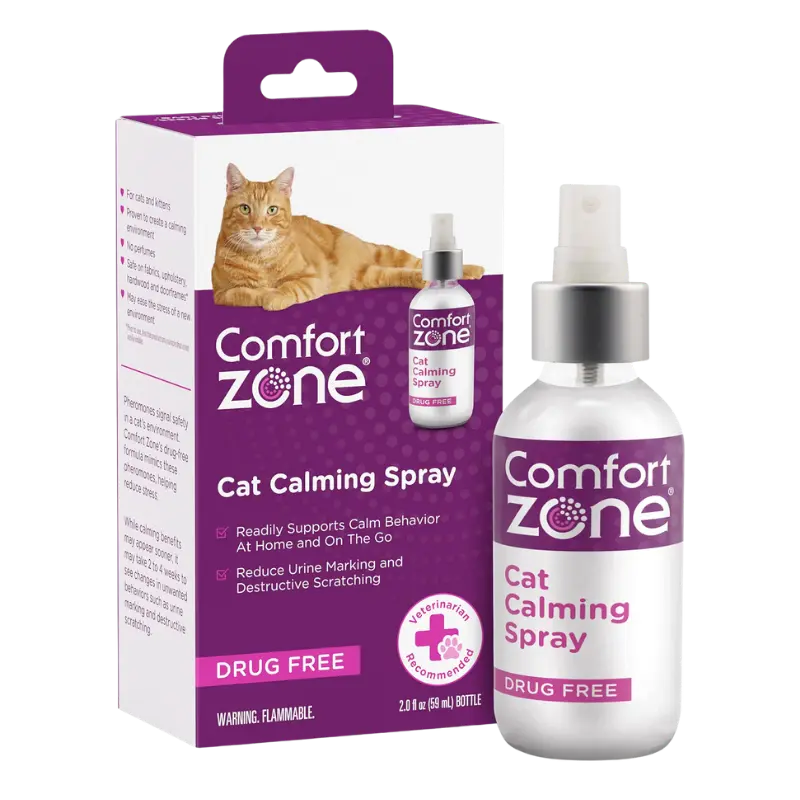
Best for: Owners who want to try a more affordable pheromone spray on compatible fabric sofas, chairs, or carpets.
Avoid if: Your cat scratches leather furniture, varnished wood, or another surface excluded by the manufacturer.
Product snapshot
- Selected product: Comfort Zone Calming Pheromone Spray for Cats
- Bottle size: 2 fl oz / 59 ml
- Active ingredient: 15% feline pheromone analogue
- Carrier: 85% diethylene glycol monoethyl ether
- Fragrance: No added fragrance, according to the manufacturer
- Alternative size: 4 fl oz
- Application: Once daily for targeted scratching areas
Comfort Zone offers a similar pheromone-based approach to FELIWAY, but its smaller bottle had a noticeably lower purchase price when we compared the two products.
It is a reasonable option for someone who wants to try a calming spray without spending as much upfront.
Several customer reviews describe reduced scratching on couches, upholstered chairs, and curtains. Some owners also report that their cats began using scratching posts more consistently.
However, the results are not universal. Other customers saw little change or found that unwanted scratching returned when they stopped applying the spray.
One recurring complaint concerns the spray mechanism. Owners describe leaking nozzles, stuck pumps, or bottles that stopped dispensing properly before the liquid was finished. These experiences matter when you are paying for a relatively small quantity of product.
Furniture compatibility is an even more important limitation.
The manufacturer's instructions specifically exclude leather, drywall, wood laminate, wood finishes, and varnished surfaces. Comfort Zone also recommends testing a hidden area for 24 hours before treating a larger section.
Although the product is marketed as fragrance-free, some customers notice a temporary chemical-like smell. A few also report irritation after application. Fragrance-free does not necessarily mean completely odorless or suitable for every sensitive household.
Pros
- Lower initial purchase price than FELIWAY
- Non-aversive pheromone approach
- Disclosed active ingredient and carrier
- Encouraging scratching-specific customer feedback
- Available in two bottle sizes
Cons
- Recurring complaints about the spray pump
- Not suitable for several common furniture materials
- Effectiveness varies between cats
- Some reports of temporary odor and irritation
- Limited independent evidence for the exact spray
Honest buying note: The 2 oz bottle is the more sensible starting point. If your cat responds well and you need regular applications, the larger 4 oz bottle may offer better value.
Don't buy Comfort Zone specifically for a leather sofa or varnished furniture. A suitable removable furniture protector would be a better option.
How We Researched These Cat Anti-Scratch Sprays
We began by comparing six products commonly available through Amazon and Chewy, including four botanical scent deterrents and two pheromone sprays.
Our research considered ingredient disclosures, manufacturer instructions, furniture compatibility, application requirements, customer complaints, and veterinary guidance on scratching behavior.
We also examined reviews for the exact products whenever possible. This was important because some retailer listings combine feedback for different bottle sizes, formulations, or entirely different products. A positive review of a calming diffuser or urine-marking spray does not establish that a furniture-scratching spray works.
Several conventional deterrents were excluded because of conflicting ingredient information, incomplete formulation disclosures, potential exposure concerns, and inconsistent effectiveness.
Our two recommendations are based on published research, product documentation, retailer information, and customer experiences. We have not personally tested these sprays or independently measured their effectiveness.
Which Cat Anti-Scratch Spray Should You Choose?
FELIWAY Classic is our first choice when stress appears to be contributing to furniture scratching. Comfort Zone offers a lower-cost pheromone alternative, provided the surface you want to treat is compatible with its formulation.
Neither is a guaranteed solution, and we would not recommend buying a conventional scent repellent simply because it promises stronger deterrence.
If your cat scratches furniture because it provides a satisfying stretch or an appealing texture, a better scratching post and appropriate furniture protection may solve more of the problem than any spray.
The goal isn't to stop your cat from scratching altogether. It's to protect your home while giving your cat somewhere appropriate to do what comes naturally.