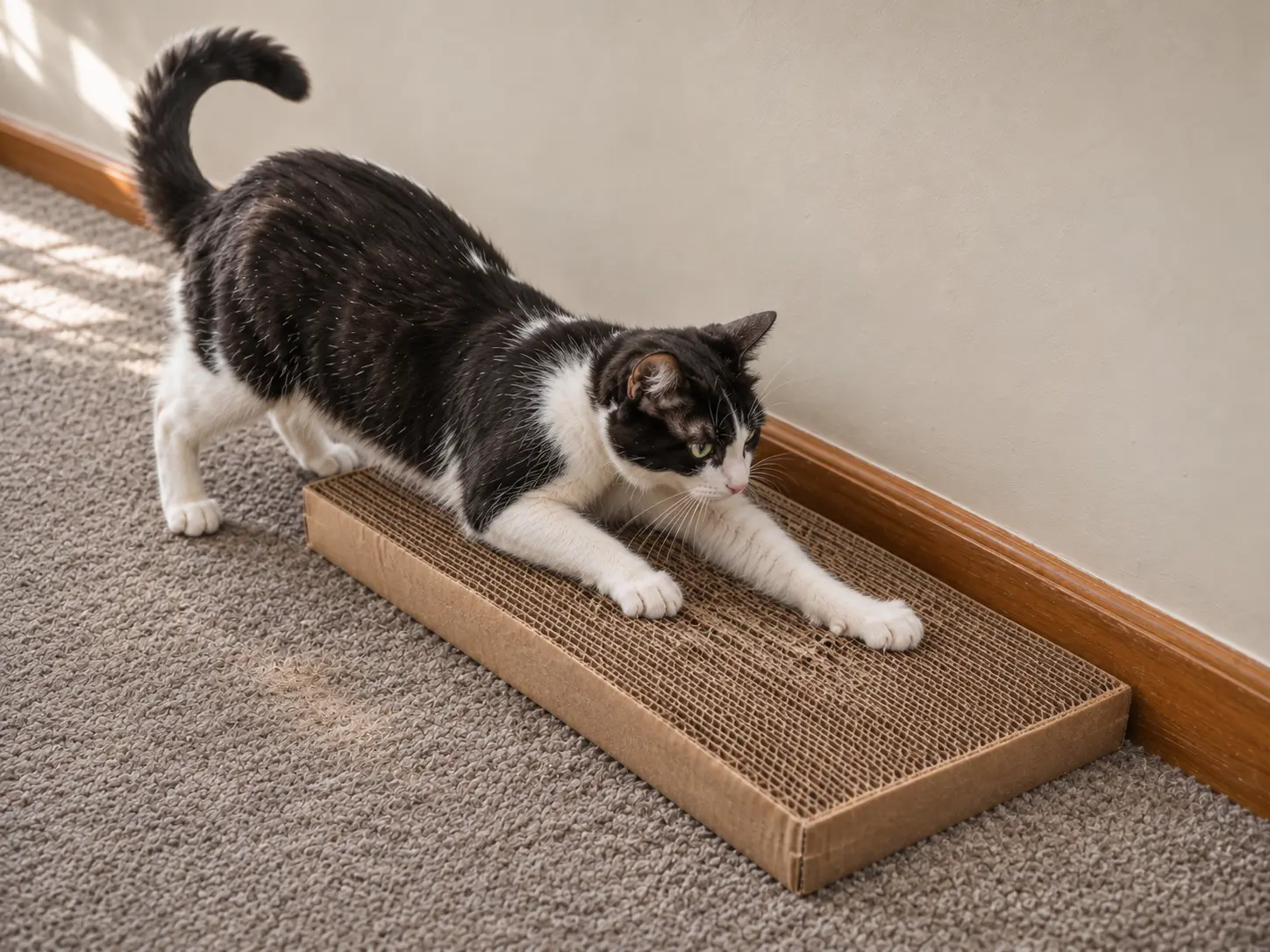
If your cat keeps scratching the carpet, start by placing a sturdy horizontal scratcher next to the area it regularly targets. Temporarily cover the damaged carpet and reward your cat whenever it chooses the new scratching surface.
Many cats that ignore traditional scratching posts simply prefer scratching something flat beneath their paws. Others are attracted to the carpet's texture or a particular location, such as a doorway or the area beside their bed.
The key to stopping unwanted carpet scratching is to work with your cat's natural instincts rather than against them.
How to Stop Your Cat From Scratching the Carpet
1. Offer a Horizontal Scratcher
A tall scratching post might seem like the obvious solution, but it isn't always the right choice for a cat that prefers scratching the floor.
Watch how your cat scratches the carpet. If it stands on all four paws and stretches forward while digging its front claws into the surface, a flat scratcher may be a better match.
There are several materials worth trying:
- Corrugated cardboard: A textured surface that many cats enjoy digging their claws into and shredding.
- Sisal mats: A rough, woven surface that may appeal to cats that prefer coarse textures.
- Carpet-covered scratchers: An alternative for cats with a strong preference for carpet, although distinguishing the scratcher from household carpeting may take some experimentation.
Whichever material you choose, make sure the scratcher stays in place and is large enough for your cat to stretch comfortably.
Our guide to horizontal cardboard scratch pads covers several designs suited to cats that prefer scratching flat surfaces.
2. Place It Where Your Cat Already Scratches
Location can make as much difference as the scratcher itself.
Putting a scratching pad in an unused corner of the house is unlikely to help if your cat consistently scratches the carpet outside your bedroom.
Start by placing the scratcher directly beside the damaged area or over it, provided the placement is stable and safe. Your cat should be able to use the alternative without having to change its usual routine.
If your cat scratches in several rooms, you may need more than one scratching surface.
Once your cat regularly uses the new scratcher, you can gradually move it to a more convenient nearby location. Avoid removing it altogether as soon as the carpet scratching improves.
3. Temporarily Protect the Carpet
While your cat learns to use its new scratcher, protect the original scratching spot to limit further damage.
A suitable carpet protector, a securely positioned floor mat or a piece of furniture that safely covers the damaged area can help prevent access.
For smaller rugs, temporarily removing them may be the simplest option.
Choose protection that stays flat and doesn't create a slipping or tripping hazard. Check that your cat cannot easily pull up the edges, chew loose pieces or become caught in the material.
Remember that covering the carpet is only part of the solution. If your cat has nowhere appealing to scratch, it may simply find another unprotected area.
4. Reward Your Cat for Using the Scratcher
When your cat scratches the appropriate surface, offer a small treat, praise or another reward it enjoys. Timing matters: reward the behavior as it happens or immediately afterward.
You can encourage initial interest by playing with a wand toy near the scratcher. A little catnip may also help if your cat responds positively to it.
Avoid picking up your cat and moving its paws across the scratching surface. Let it investigate and use the scratcher voluntarily.
If you notice your cat approaching its usual carpet scratching spot, try drawing its attention toward the nearby alternative before it starts scratching.
Some cats switch surfaces quickly, while others need more time or a different material. Consistency is more useful than repeatedly moving the scratcher or changing your approach.
5. Reduce Stress and Provide Enrichment
Sometimes, scratching becomes more noticeable after a change in the household. A new pet, visitors, unfamiliar furniture or tension between cats can affect how comfortable a cat feels at home.
Consider whether anything changed around the time the carpet scratching increased.
Provide opportunities for interactive play, comfortable resting places, hiding spots and a reasonably predictable daily routine.
In a multi-cat household, pay attention to whether one cat prevents another from reaching a favorite resting area or scratching post. Providing resources in separate locations can help reduce competition.
Environmental improvements are particularly valuable when scratching occurs alongside other behavioral changes. However, a cat scratching carpet is not necessarily stressed or bored. It may simply enjoy the surface.
6. Keep Your Cat's Claws Trimmed
Regular claw trimming can help reduce the amount of damage caused by scratching.
Use suitable cat nail clippers and remove only the sharp tip, taking care to avoid the quick, which contains blood vessels and nerves.
If your cat struggles or becomes distressed, don't force the process. A veterinarian or experienced groomer can demonstrate how to trim its claws safely.
Keeping the claws shorter may make carpet damage less severe, but your cat will still need appropriate scratching surfaces.
Why Do Cats Scratch Carpet?
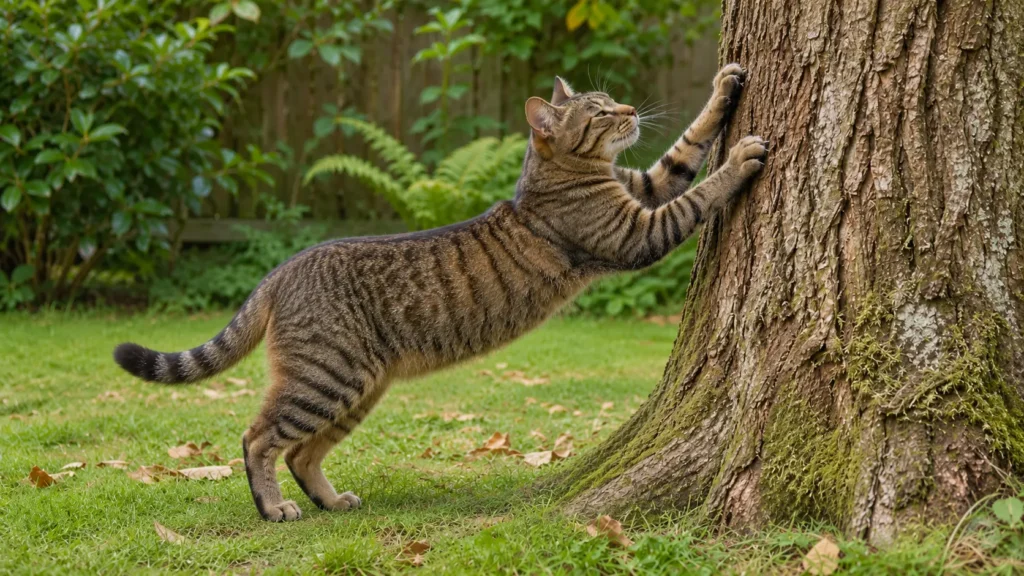
Scratching is a normal part of feline behavior. Cats use their claws to stretch, remove worn outer claw sheaths and leave both visible and scent markings.
According to Ohio State University's Indoor Pet Initiative, cats that scratch rugs and carpets may prefer horizontal scratching surfaces rather than upright posts.
Carpet offers several attractive features. It provides resistance against the claws, is available across large areas of the home and allows cats to stretch forward while scratching.
Location is another important factor. A carpet beside a sleeping area, in a frequently used hallway or near a doorway may be particularly appealing.
Cats also have individual preferences. One might ignore cardboard entirely, while another chooses it over carpet whenever both are available.
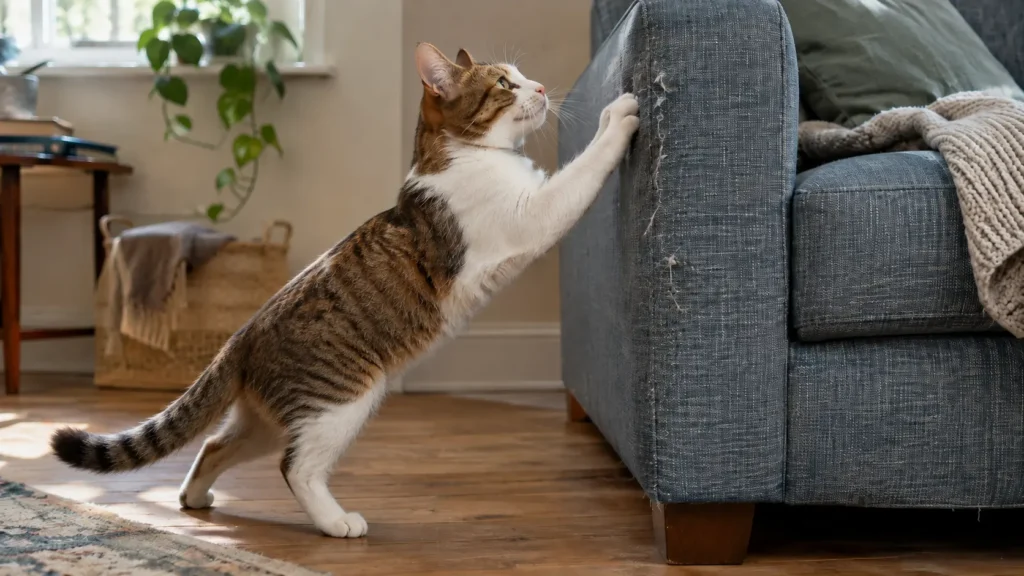
If your cat targets the sofa or chairs as well, our guide on how to stop cats from scratching furniture explains how to manage scratching on those surfaces.
How to Protect Different Carpet Scratching Spots
Where your cat scratches can provide useful clues about which changes might help.
Carpet Under Doors and Around Doorways
If your cat scratches the carpet beneath a closed door, watch what happens immediately before the behavior.
Does it start as soon as you close the bedroom door? Does your cat meow at the same time? Or does it scratch that area even when the door is open?
A cat that scratches primarily when a door is closed may be trying to gain access to the room. In other cases, the doorway may simply be a preferred scratching or marking location.
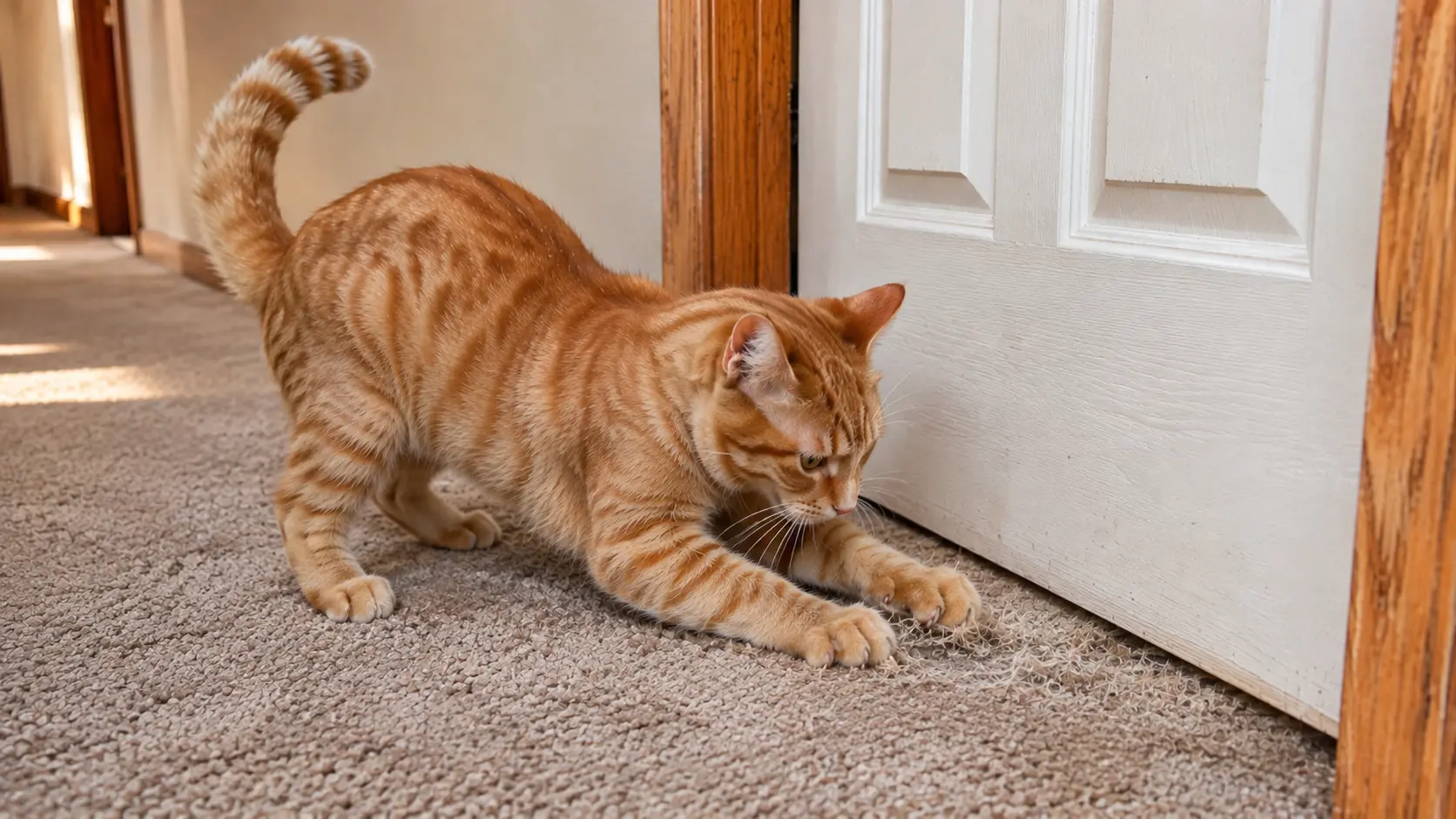
Use a securely fitted carpet protector around the threshold and make sure it does not interfere with the door.
Place an appropriate scratcher nearby, outside the door's swing path.
If restricted access appears to be the trigger, consider whether your cat can safely enter the room or whether changes to its routine and environment could make the restriction easier to tolerate.
Carpet Edges and Corners
The edge of a carpet can be especially inviting when fibers are already exposed or the material is starting to lift.
Loose threads and damaged seams can give your cat something to catch and pull with its claws.
Have lifting carpet edges secured or repaired where necessary, then protect the vulnerable area and position a scratching pad nearby.
Check damaged spots regularly. If your cat starts pulling out fibers with its teeth rather than simply scratching, prevent access to the area.
Rugs and Carpeted Stairs
Loose rugs are often easier to manage than fitted carpets. You can temporarily remove a favorite scratching rug while introducing a separate mat or pad with a similarly appealing texture.
Stairs require more care.
Avoid placing loose scratchers, plastic sheets or unsecured mats on steps. These can move underfoot and create a fall hazard for both people and pets.
If a carpeted stair needs protection, use a securely installed solution designed for stairs. Offer the alternative scratching surface on a nearby landing, provided there is enough space to keep the walkway clear.
Carpet Scratching at Night
Nighttime scratching can be particularly frustrating when the damaged area is near your bedroom.
Pay attention to whether the scratching coincides with a closed door, your bedtime routine or your cat waking up and becoming active.
Try offering interactive play during the evening and keeping an accessible scratching pad close to the usual nighttime scratching location.
If you suspect your cat is seeking attention, provide regular opportunities for interaction before the behavior begins. Avoid turning every scratching episode into an exciting game or feeding opportunity.
A sudden change in nighttime behavior, especially in an older cat, deserves veterinary attention rather than being dismissed as a training problem.
What If Your Cat Ignores the Scratching Post?
Before buying another scratching post, look at what your current one offers compared with the carpet.
A cat scratching the hallway floor may have little interest in a vertical sisal post in the living room. The post could be perfectly suitable for another cat but wrong for this particular scratching preference.
Check these five factors:
- Orientation: Does your cat prefer scratching horizontally, vertically or at an angle?
- Material: Is the scratcher's texture similar to what your cat normally chooses?
- Stability: Does it slide, wobble or tip when your cat applies pressure?
- Size: Can your cat stretch comfortably while using it?
- Location: Is it close to an area your cat naturally visits or scratches?
Older cats may also find a low, flat scratcher easier to use than a tall post, particularly if stretching upward has become uncomfortable.
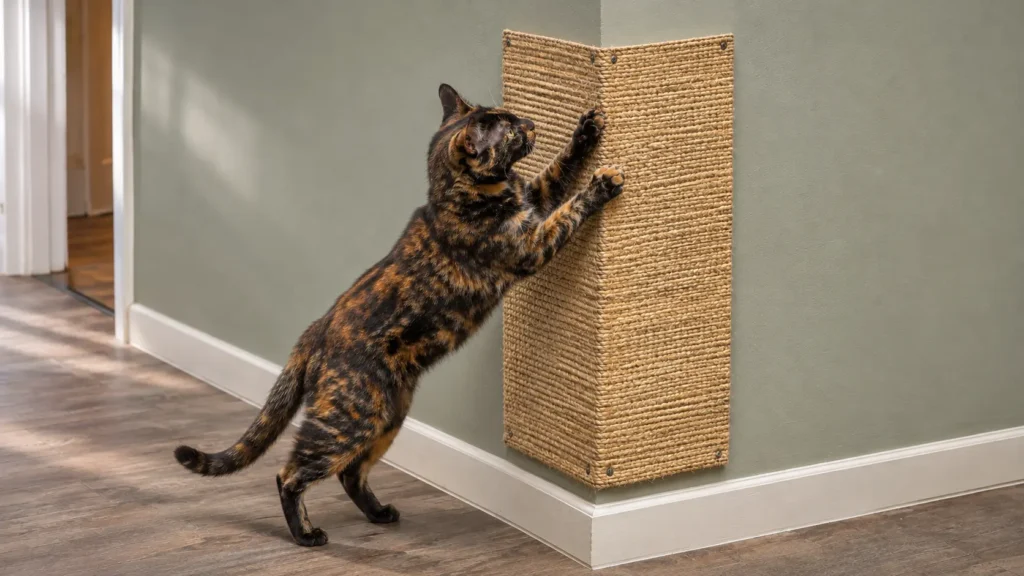
Rather than repeatedly replacing similar vertical posts, consider trying a different design. Our guide to different types of cat scratchers explains the options available for different scratching preferences.
What Not to Use to Deter Cats From Scratching Carpet
Several commonly suggested deterrents may create additional problems without addressing why your cat scratches the carpet in the first place.
Avoid shouting, spraying your cat with water or using devices designed to frighten it. Punishment can increase fear and distress, making unwanted behavior more difficult to manage.
The Feline Veterinary Medical Association's behavior guidance also advises against using double-sided sticky tape as a scratching deterrent. Physical protection and positive reinforcement are preferable approaches.
Be especially cautious with homemade repellent sprays. According to Pet Poison Helpline, several essential oils, including citrus, peppermint, eucalyptus and tea tree oils, can cause poisoning in cats.
Vinegar and other homemade mixtures are sometimes suggested as carpet deterrents, but their effectiveness is not reliably established. They may also be unsuitable for particular carpet materials.
Declawing should not be considered a solution to carpet scratching. It involves surgical amputation of part of the cat's toes and can result in lasting pain and behavioral problems.
A suitable scratching alternative addresses your cat's needs without relying on discomfort or fear.
When Carpet Scratching May Need Veterinary Attention
Most carpet scratching is normal behavior that can be managed through changes to the cat's environment.
However, contact your veterinarian if you notice:
- A sudden or significant increase in scratching.
- Persistent scratching accompanied by hiding, unusual vocalization or other behavioral changes.
- Limping, difficulty stretching or changes in mobility.
- Damaged claws, painful paws or bleeding.
- Repeated chewing or swallowing of carpet fibers.
Chewing carpet deserves particular attention because it is different from ordinary scratching. The Cornell Feline Health Center warns that swallowed fabric can cause dangerous gastrointestinal obstructions.
If you suspect your cat has swallowed carpet material, contact your veterinarian promptly rather than waiting for symptoms.
For persistent scratching that continues despite suitable alternatives and environmental changes, a veterinarian or qualified feline behavior professional can help identify contributing factors and develop a more individualized management plan.
Final Thoughts
The best way to keep cats from scratching carpet is to make an appropriate alternative easier and more appealing to use.
Start with a stable horizontal scratcher in the exact location your cat already prefers. Protect vulnerable areas while encouraging the new behavior, and adjust the material or placement if your first attempt doesn't work.
Your cat doesn't need to stop scratching altogether. It needs somewhere better to scratch.