Cats scratch to maintain their claws, stretch their muscles, communicate with other cats, and sometimes express excitement or respond to stress. It's a natural behavior that serves several purposes, whether your cat is scratching a tree, a cardboard pad, or the arm of your favorite sofa.
Even indoor cats with regularly trimmed nails need opportunities to scratch. The goal isn't to stop scratching altogether but to understand why your cat does it and provide suitable places for this behavior.
Why Do Cats Scratch Things?
A cat stretching against a scratching post may be maintaining its claws, exercising its muscles, and leaving scent marks at the same time. These functions often overlap.
1. To Maintain Their Claws
A cat's claws have outer layers that gradually wear down. Scratching helps loosen and remove these old layers, exposing the sharper claw underneath.
If you've ever found a small, curved, translucent piece of claw beside your cat's scratching post, you've probably discovered a shed claw sheath. Finding one is generally normal and doesn't mean your cat has lost an entire claw.
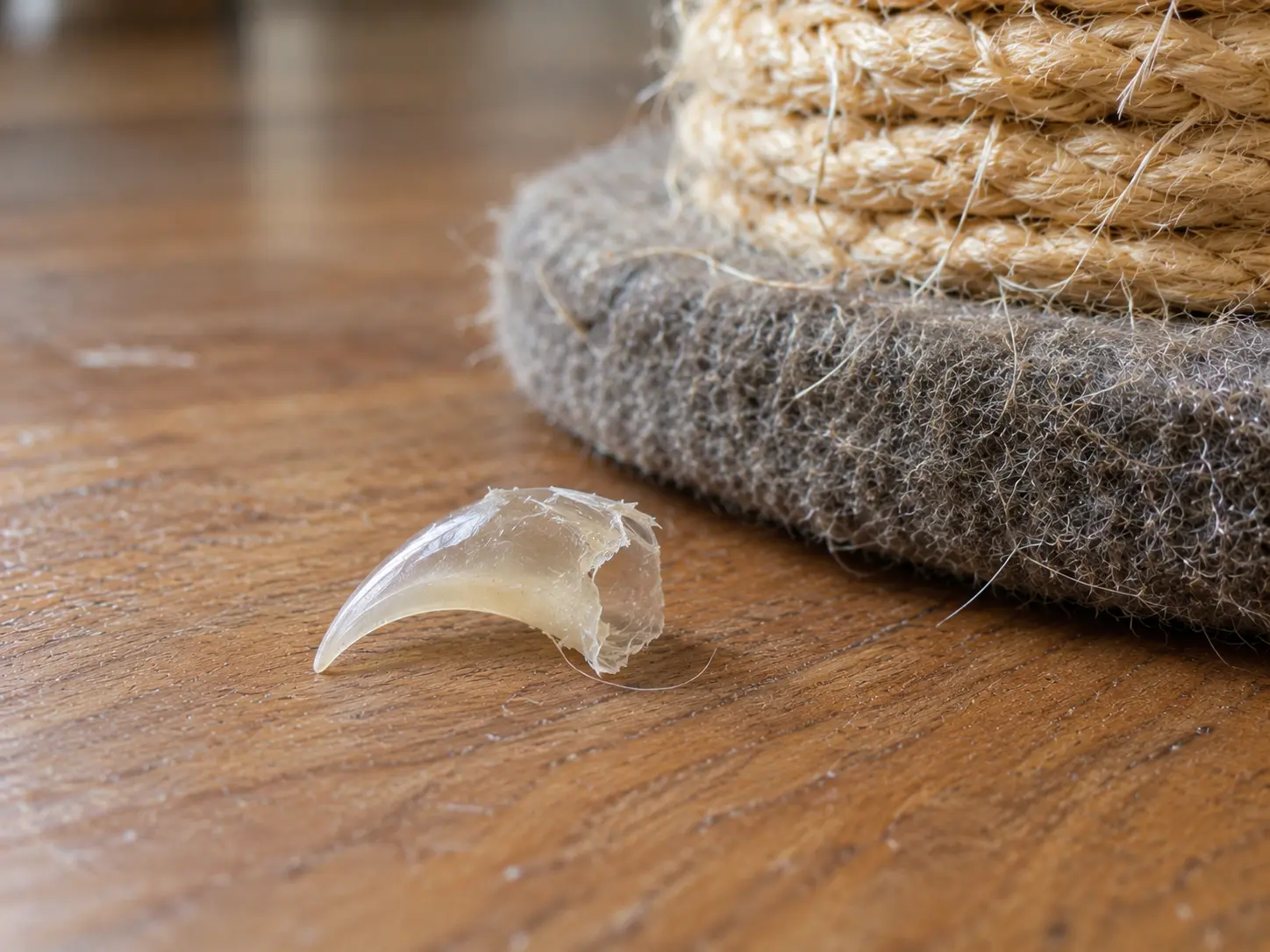
This process is one reason cats are drawn to surfaces that offer enough texture and resistance for their claws to catch.
However, scratching doesn't always keep claws at an appropriate length. Older cats and cats that scratch less frequently may need additional help with nail care.
2. To Stretch and Exercise Their Muscles
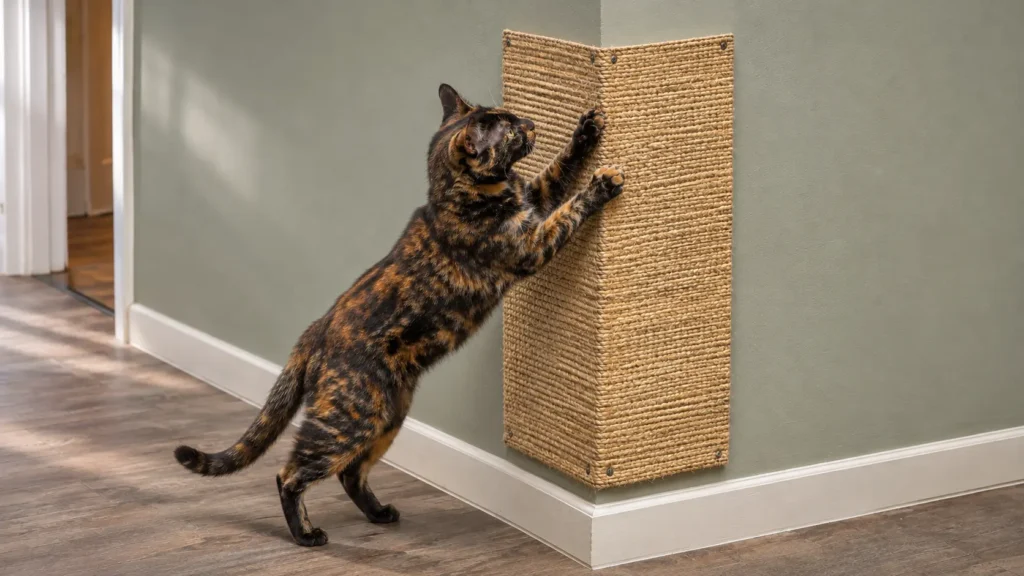
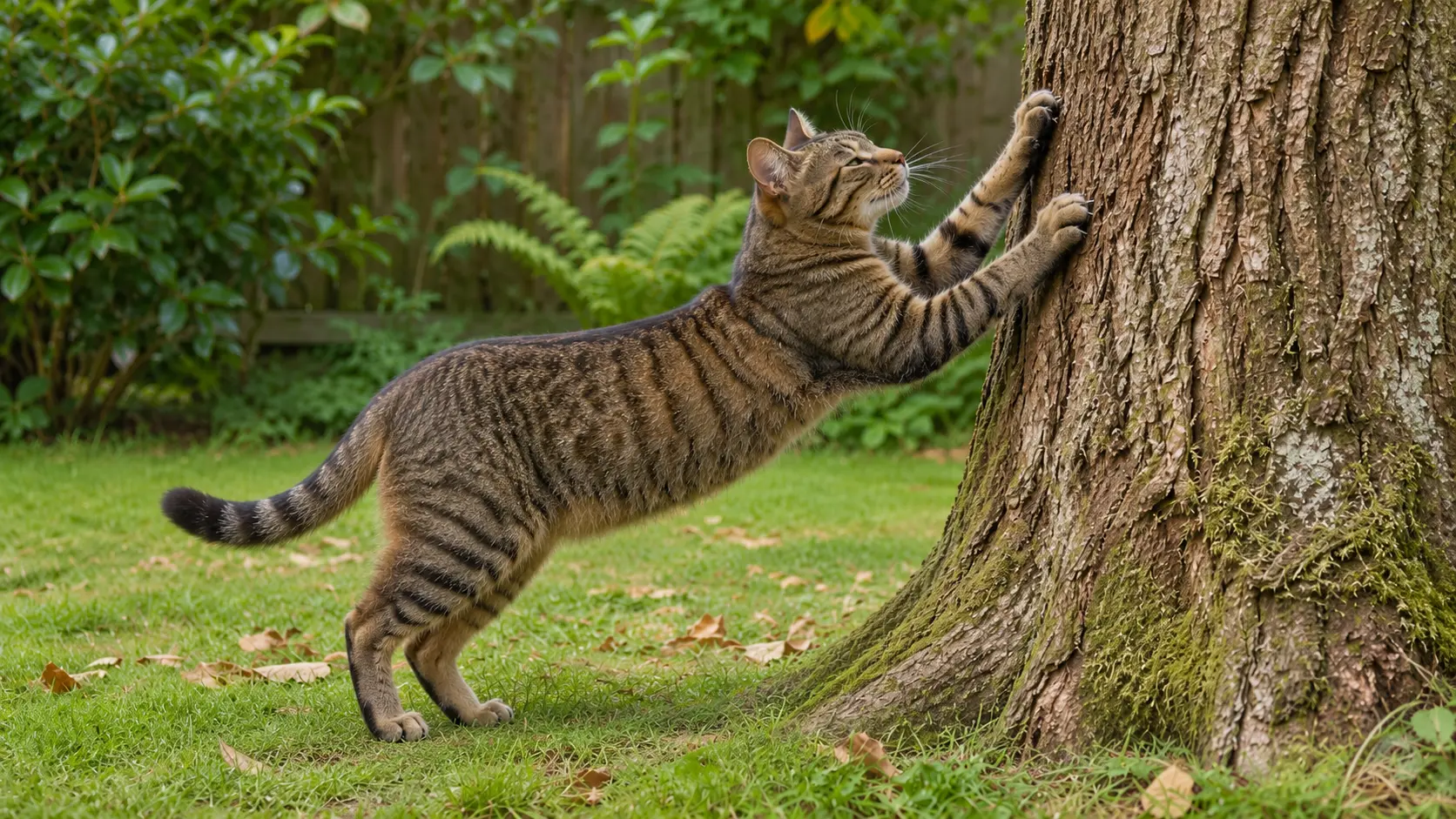
Watch a cat use a tall scratching post and you'll notice how much of the body is involved. The front paws reach upward, the claws grip the surface, and the cat extends its body into a long stretch.
This movement engages muscles in the legs, shoulders, and back.
Cats often scratch shortly after waking up. A scratching post near a favorite sleeping spot allows them to stretch as part of their usual routine.
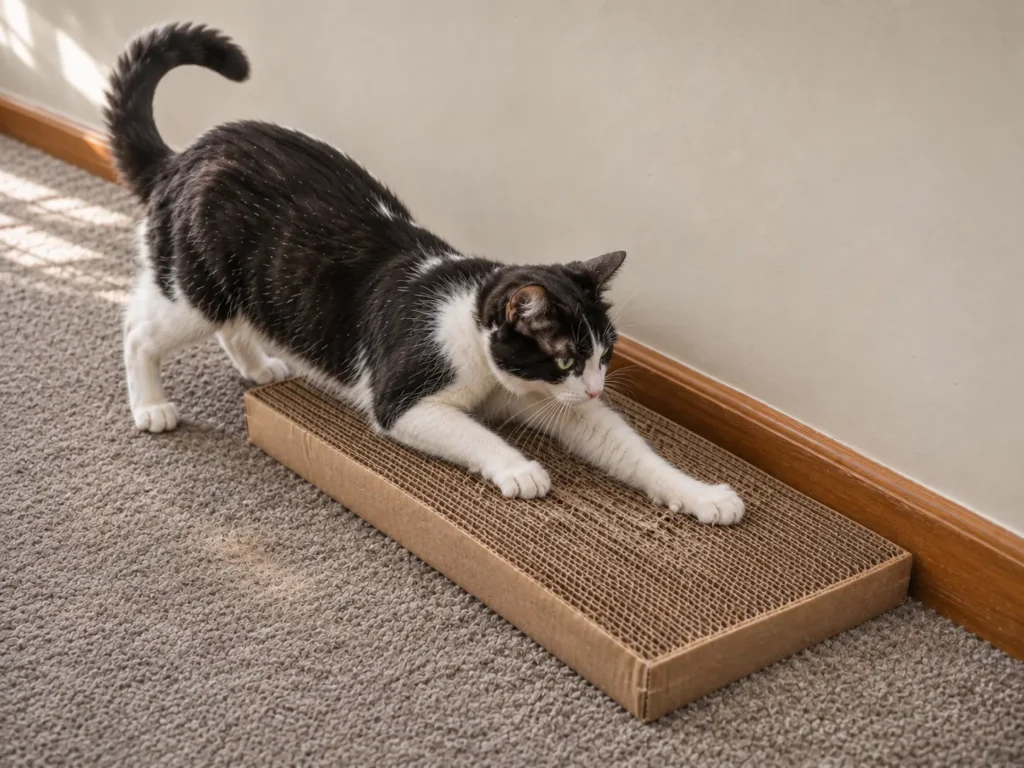
Not every cat stretches vertically, though. Some prefer extending their front legs across a flat scratching surface on the floor.
3. To Leave Visual and Scent Marks
Scratching is also a way for cats to communicate.
The marks left behind create a visible sign of their presence. At the same time, scent glands on their paws deposit chemical signals that other cats may detect.
A veterinary review of feline scratching behavior identifies marking, claw maintenance, and stretching as important functions of scratching.
This helps explain why a cat may repeatedly scratch the same piece of furniture, doorway, or scratching post. The location already carries familiar marks and scent.
Even cats living alone may display this behavior. They don't need another cat in the household to retain their natural marking instincts.
4. In Response to Excitement or Stress
Some cats scratch during play or moments of excitement. You might notice your cat running toward a scratching post after chasing a toy or becoming particularly active.
Stress can also influence scratching behavior. If your cat suddenly starts scratching around doors or windows, consider whether something has changed. An unfamiliar cat outside, tension with another pet, or a change in the household routine could be contributing to the behavior.
However, scratching doesn't automatically mean your cat is anxious. A relaxed, healthy cat may scratch frequently as part of its normal routine.
What matters is whether the behavior fits your cat's usual habits or represents a noticeable change.
Why Do Cats Like Scratching Posts?
A good scratching post gives cats a surface on which they can perform several natural behaviors without relying on household furniture.
The appeal often comes down to a combination of texture, resistance, stability, and position.
A cat that enjoys reaching upward may prefer a tall, sturdy scratching post covered in sisal. Another might spend more time scratching a horizontal cardboard pad because it allows a more comfortable movement.
Location matters, too. A perfectly suitable post may receive little attention if it's tucked away in a room your cat rarely visits.
Cats can also develop a preference for familiar scratching surfaces. An older, slightly worn post may remain more appealing than a brand-new replacement.
As long as the original scratcher remains stable and free from hazardous damage, there's no need to replace it simply because it looks used.
Why Do Cats Scratch Furniture and Carpets Instead?
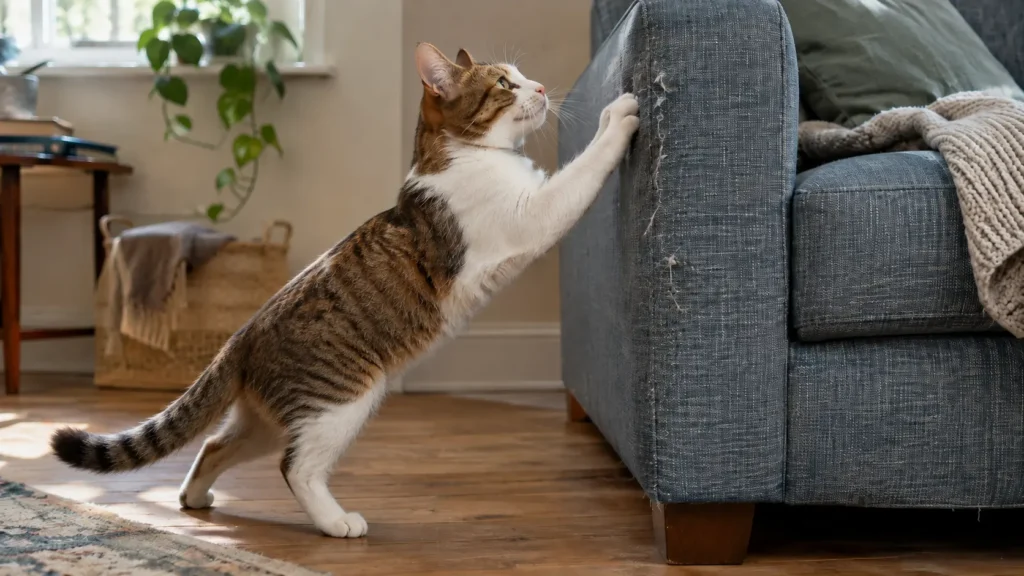
Your sofa may offer several of the qualities your cat wants from a scratching surface: a textured fabric, a stable structure, enough height to stretch, and a prominent location in the home.
Carpets and rugs offer a different experience. They provide a broad, horizontal surface for cats that prefer scratching close to the ground.
The problem isn't necessarily that your cat dislikes scratching posts. The available post might simply be less appealing than the furniture.
For example, a small post that moves whenever your cat pulls on it is unlikely to compete well with a heavy sofa arm. Similarly, a vertical post may not satisfy a cat that consistently scratches flat surfaces.
Some cats also learn that scratching furniture gets your attention. If scratching the sofa regularly makes you stop what you're doing and interact with your cat, that response may encourage the behavior to continue.
Before trying to redirect furniture scratching, observe where and how your cat scratches. Those preferences can help you choose a more suitable alternative.
When Is Cat Scratching a Cause for Concern?
Regular scratching is normal. However, sudden or unexplained changes in your cat's scratching habits deserve closer attention.
Changes in Scratching Habits
There is no single amount of scratching that defines normal behavior for every cat. Some cats use their scratching surfaces more frequently than others.
It's more helpful to compare your cat's current behavior with its usual routine.
| What You Notice | What It May Mean |
|---|---|
| Scratching after a nap | Normal stretching and claw maintenance |
| Returning to the same scratching post | Familiarity, preference, or marking |
| Scratching a rug instead of a post | A preference for horizontal surfaces |
| Suddenly scratching more frequently | Possible environmental or social distress |
| Avoiding a previously favored tall post | Possible discomfort or reduced mobility |
These observations offer clues, but they cannot establish the cause of a behavioral change on their own.
Physical discomfort can affect scratching, particularly in older cats. The AAFP and IAAHPC feline hospice and palliative care guidelines recognize that changes in health and mobility may influence scratching habits and the types of surfaces cats can comfortably use.
For example, a senior cat that previously enjoyed tall scratching posts may find a flat scratcher easier to use.
Speak with your veterinarian if your cat's scratching habits change significantly without an obvious explanation, especially if you also notice difficulty jumping, reduced activity, or other signs of discomfort.
Scratching Objects vs. Scratching Their Skin
Scratching a sofa or cardboard pad is different from repeatedly scratching the body.
While occasional scratching of the skin is normal, persistent itching, excessive licking, irritated skin, and hair loss may indicate an underlying health problem.
According to the MSD Veterinary Manual, common causes of itching in cats include parasites, infections, and allergies.
If your cat frequently scratches or bites its skin, arrange a veterinary examination rather than assuming the behavior is related to its normal need to scratch objects.
How to Support Your Cat's Natural Scratching Behavior
Start by observing what your cat already enjoys scratching. You don't necessarily need the most expensive scratching post or the largest cat tree. You need something that suits your cat's preferences.
A few practical adjustments can make a difference:
- Offer different scratching surfaces. Try a vertical post, a horizontal pad, or an angled scratcher to discover which your cat prefers.
- Choose a stable, appropriately sized scratcher. It shouldn't wobble when your cat pulls against it. If your cat prefers scratching vertically, choose a post tall enough to allow a full stretch.
- Consider placement. Put scratching surfaces near favorite resting spots or locations your cat already scratches.
- Reward voluntary use. A treat, gentle praise, or another reward your cat enjoys can encourage continued use.
- Provide accessible options. Cats with limited mobility may need scratching surfaces that don't require reaching upward.
- Consider each cat's needs. In a multi-cat household, provide scratching opportunities in separate locations so cats don't have to compete for access.
Avoid shouting, spraying your cat with water, or physically forcing its paws against a scratching post. These approaches may cause fear and make the situation worse.
The Feline Veterinary Medical Association recommends positive reinforcement and environmental adjustments rather than punishment when managing unwanted scratching.
Regular nail trimming may also help reduce household damage, but it won't eliminate your cat's instinctive need to scratch.
Final Thoughts
The next time your cat scratches the sofa, look at how it scratches and what that surface offers. Matching those preferences with a suitable scratcher is often more helpful than trying to discourage the behavior itself.