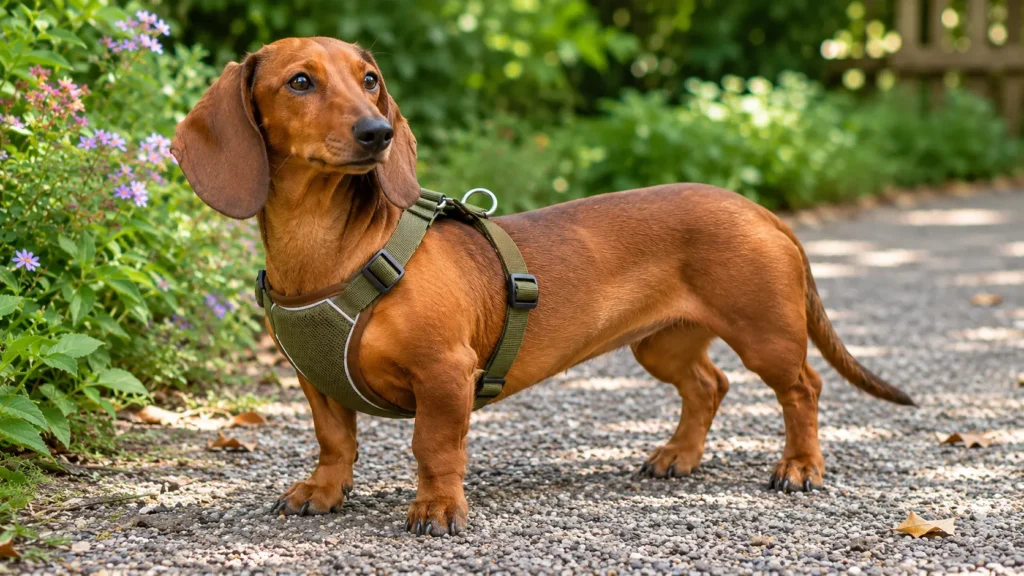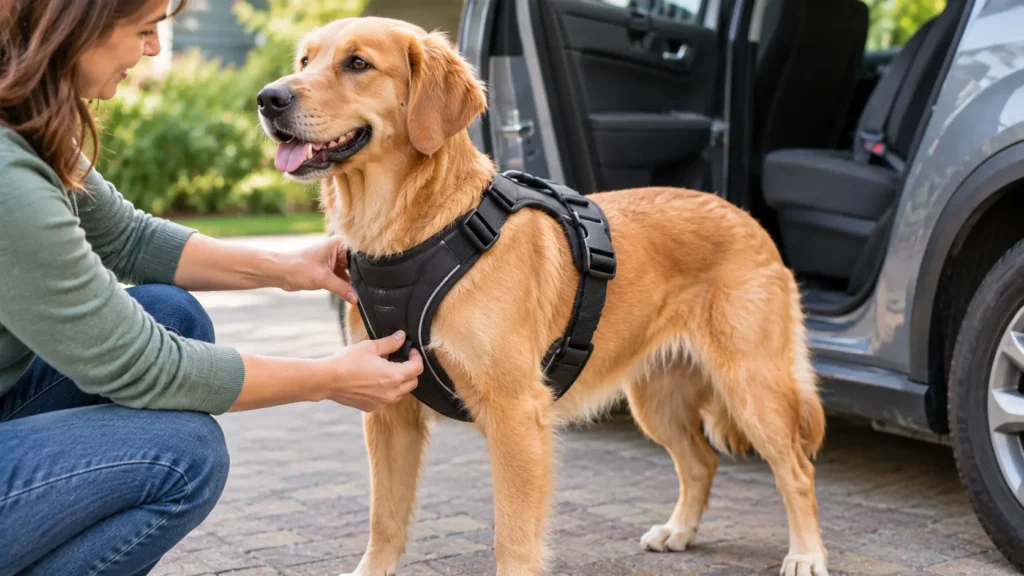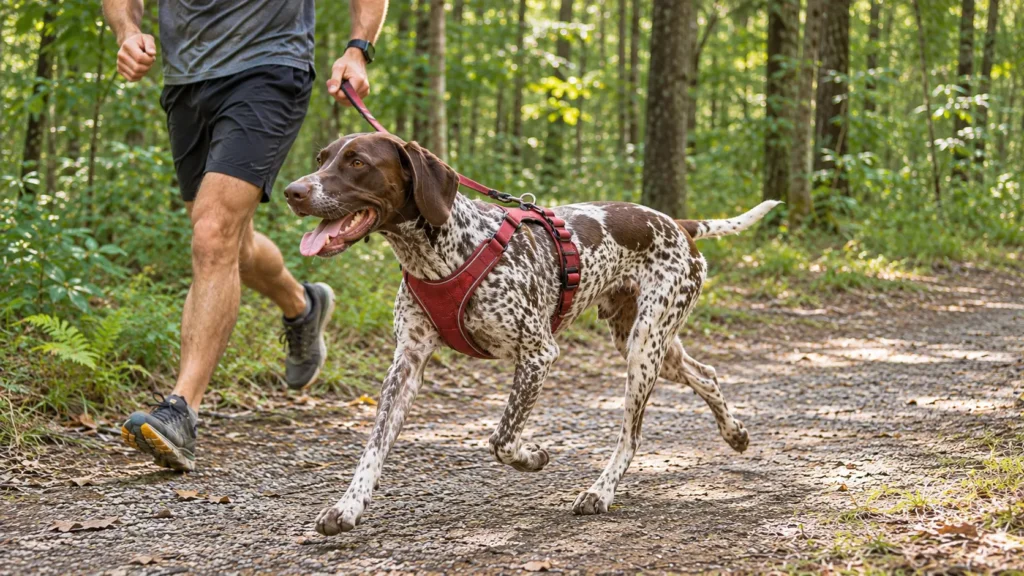
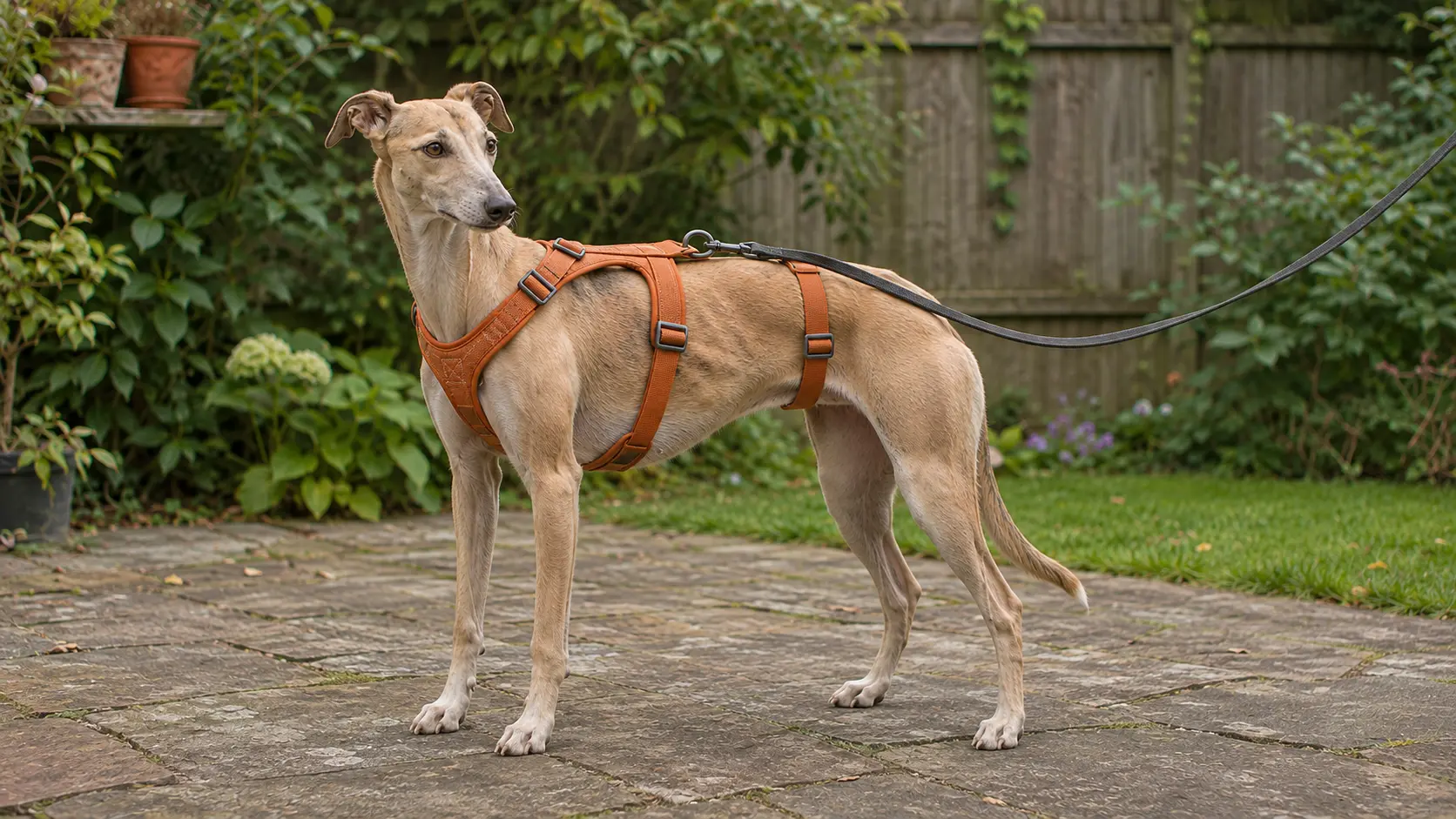
It only takes a moment for a dog to back out of a harness. A loud noise, an unfamiliar dog, or a sudden change in direction can be enough for a frightened dog to slip free.
The best escape-proof dog harnesses are designed to make this more difficult. Some use an additional strap behind the rib cage, while others reduce the space around the dog's body when leash tension is applied.
Our top pick is the Ruffwear Flagline because it combines additional rear retention with lightweight construction and six adjustment points. The Ruffwear Web Master offers a more structured alternative, while Huntboo and Gooby provide options for different budgets and body shapes.
However, no dog harness is completely escape-proof. Even a well-designed harness can fail if it fits poorly, becomes damaged, or is unsuitable for the dog's proportions.
If your dog doesn't have a particular problem with slipping out, our guide to the best dog harnesses covers a wider range of everyday walking options.
Affiliate disclosure: LumaPaw may earn a commission from qualifying purchases made through links on this page, at no additional cost to you.
Our Top Escape-Proof Dog Harness Picks at a Glance
| Dog Harness | Best For | Retention Design | Main Limitation |
|---|---|---|---|
| Ruffwear Flagline | Overall versatility | Three straps, six adjustments | Higher price and fit sensitivity |
| Ruffwear Web Master | Structured support | Three straps, four adjustments | Stiffer, bulkier construction |
| Huntboo Escape Proof Reflective | Affordable option | Three straps, five adjustments | Reported strap durability concerns |
| Gooby Escape Free Easy Fit X | Small dogs needing a step-in design | Tension-activated X-frame | Retention depends partly on leash tension |
If your dog regularly backs out of conventional harnesses, start by comparing the three-strap designs. Gooby offers a different approach for smaller dogs, particularly those that dislike wearing a harness with extended body coverage.
How We Researched These Harnesses
We compared eight escape-resistant dog harnesses using manufacturer specifications, sizing charts, Amazon and Chewy listings, independent product reviews, and customer feedback.
We looked closely at how each harness is designed to resist backward escape, rather than relying on the words “escape-proof” or “heavy-duty” in a product title.
Reports of slipping, loose straps, damaged buckles, torn stitching, and uncomfortable fit received particular attention. We also considered whether each product offered a worthwhile advantage over similar alternatives.
LumaPaw has not physically tested these harnesses. Our recommendations are based on documented product features, comparisons, and reported owner experiences. They are not comparative safety-test results.
The 4 Best Escape-Proof Dog Harnesses Reviewed
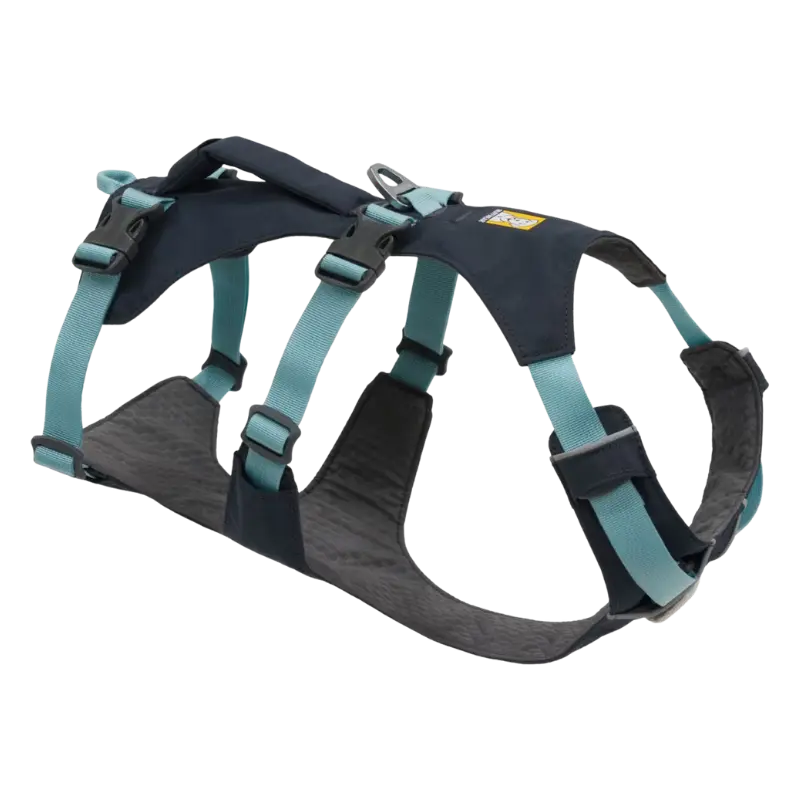
1. Ruffwear Flagline — Best Overall
Product snapshot
- Variation examined: Basalt Gray, Medium
- Medium chest girth: 27–32 inches
- Available sizes: XX-Small to Large/X-Large
- Adjustment points: Six
- Leash attachments: Three
- Construction: Lightweight polyester ripstop with a chest and belly panel
- Extras: Padded assistance handle and reflective trim
- Cleaning: Hand wash and air dry
The Ruffwear Flagline is a good starting point for owners who want additional security without the weight and bulk of a more structured body harness.
Its third strap sits farther back along the dog's torso than the main chest strap. When properly adjusted behind the wider part of the rib cage, it helps prevent the harness from sliding forward as the dog attempts to back out.
Six adjustment points give owners more flexibility when fitting dogs with unusual proportions. This is especially useful when a dog's chest fits a conventional harness but the neck opening remains too loose.
The lightweight construction is another reason to consider Flagline. It provides extended coverage without the substantial padding found on some support harnesses, making it practical for daily walks, hikes, and active dogs.
The padded handle and underside panel also help distribute pressure during brief lifting assistance. Several owners of three-legged dogs report that the design fits their pets better than conventional harnesses.
Customer feedback frequently praises its comfort, adjustability, and ability to stay on dogs that previously slipped out. However, the reviews aren't universally positive.
One owner reported chest-material tearing on two separate harnesses, while another described a buckle breaking during use. There are also reports of dogs managing to get a leg out of the harness.
These experiences don't establish a widespread defect, but they are worth considering when choosing equipment for a dog that may suddenly bolt.
Best for: Owners looking for a versatile, lightweight harness with additional rear retention and plenty of fitting flexibility.
Avoid if: Your dog dislikes overhead dressing, falls outside the available size range, or cannot wear the extended belly panel comfortably.
Buying note: Check the official Flagline sizing guide before ordering. Pay particular attention to the rear panel on short-bodied dogs and males that need sufficient clearance for urination.
Pros
- Additional rear retention strap.
- Six adjustment points.
- Lightweight, low-profile construction.
- Three leash attachment options.
- Wide size range.
Cons
- More expensive than many alternatives.
- Requires careful initial fitting.
- Material tearing and buckle failure have been reported.
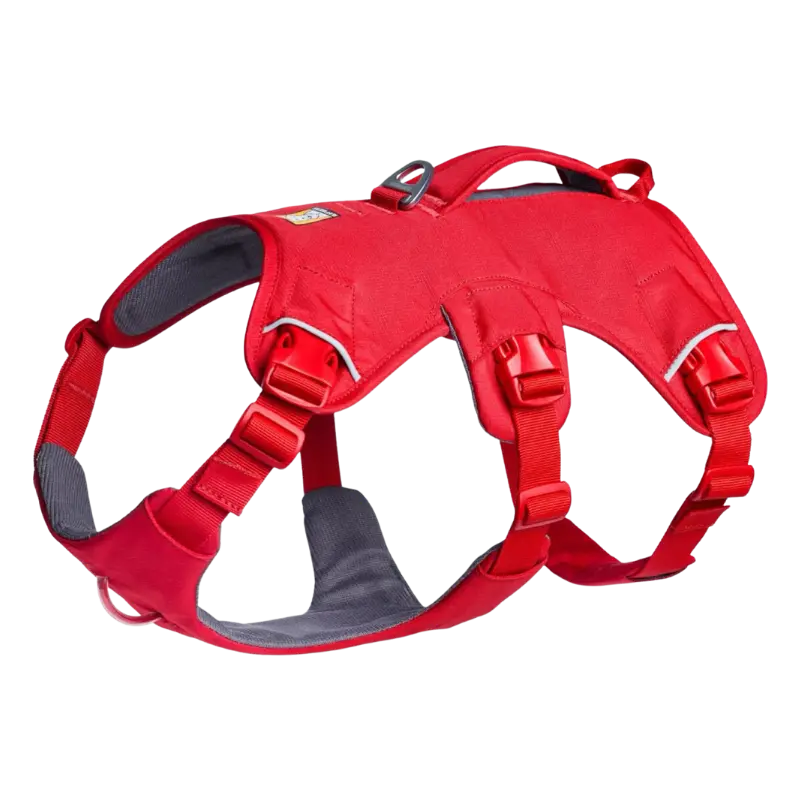
2. Ruffwear Web Master — Best for Structured Support
Product snapshot
- Variation examined: Red Canyon, Small, redesigned model
- Small chest girth: 22–27 inches
- Available sizes: XX-Small to Large/X-Large
- Adjustment points: Four
- Leash attachments: Three
- Construction: Polyester ripstop with structured foam padding
- Extras: Opening neck buckle, padded handle, and reflective trim
- Cleaning: Hand wash and air dry
Some dogs need a little more body coverage than a lightweight harness provides. Others become uncomfortable when anything is pulled over their heads.
The redesigned Ruffwear Web Master addresses both considerations.
Like Flagline, it uses an additional rear strap to help resist backward escapes. Its more structured body panels and reinforced handle also make it useful for controlled assistance over obstacles or into a vehicle.
One particularly welcome change is the opening neck buckle. Owners can fit the harness around the dog's neck without passing a fixed opening over the ears and face.
The current Web Master also features three leash attachments, including an aluminum back ring and reinforced textile connections.
There is a trade-off, though. Its more structured construction can feel stiff compared with Flagline. Some owners find it unnecessarily bulky, especially on smaller dogs or those with shorter torsos.
Customer feedback includes many positive experiences from owners whose dogs escaped previous harnesses. The padded handle and rear retention are frequently appreciated.
However, some repeat buyers prefer the fit or materials of the older Web Master. There are also reports of uncomfortable shoulder contact, individual escapes, and a front attachment failure during a sudden tethered lunge.
That last incident involved a different type of loading from ordinary leash walking, but it reinforces the importance of using harnesses appropriately and inspecting their attachments.
Best for: Dogs that benefit from structured body coverage, owners seeking occasional lift assistance, and dogs uncomfortable with overhead dressing.
Avoid if: Your dog is sensitive to stiff equipment, has limited space between the chest and abdomen, or needs a particularly lightweight harness.
Buying note: Make sure you're purchasing the redesigned Web Master with four adjustment points and an opening neck buckle. Older versions have different features. Check the current manufacturer specifications if the retailer's description is unclear.
The handle is intended for assistance. Dogs recovering from injuries or needing substantial mobility support may require dedicated equipment and veterinary guidance.
Pros
- Structured three-strap body design.
- Opening neck buckle.
- Reinforced padded assistance handle.
- Three leash attachment options.
Cons
- Higher price.
- Can feel stiff or bulky.
- Fit and attachment-related complaints have been reported.
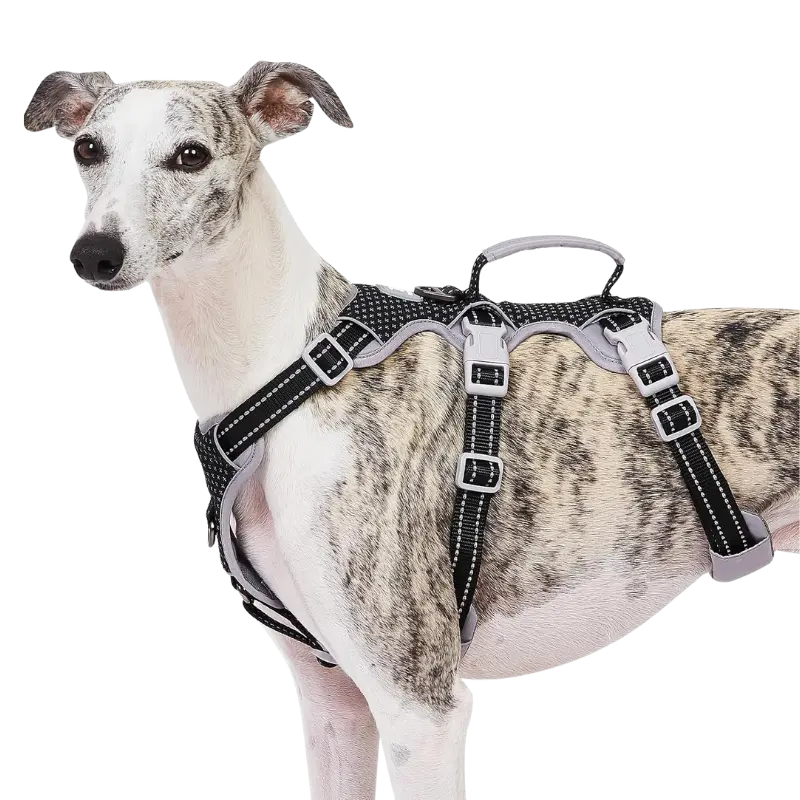
3. Huntboo Escape Proof Reflective — Best Affordable Option
Product snapshot
- Variation examined: Black, Medium
- Model: HD03-BLACK-M
- Available sizes: X-Small to X-Large
- Adjustment points: Five
- Leash attachments: Front and back metal D-rings
- Construction: Reflective webbing with padded mesh areas
- Extras: Padded handle and extensive reflective detailing
Huntboo takes a slightly different approach to the three-strap harness. Rather than covering much of the dog's back with padded material, it uses a more open construction with an angled rear retention strap.
It's a useful option for owners who want additional security features without paying the higher price of a Ruffwear harness.
The front and rear metal D-rings also provide flexibility. You can use the back attachment for regular walks or the chest attachment when working on leash manners.
Its extensive reflective material is another practical advantage for early-morning or evening walks.
The relatively open construction may suit some dogs with deep chests and narrow waists. Owners of Whippets, Italian Greyhounds, and other unusually proportioned dogs have reported successful fitting experiences.
That doesn't mean Huntboo will fit every sighthound. The neck opening, strap length, and rear-strap position still need careful adjustment.
Although many customers report improved escape resistance, the negative feedback deserves particular attention.
One buyer reported that a strap separated during the first walk. Another described fraying after a period of use, and several owners mentioned rough reflective threads, shifting straps, or dogs managing to slip out.
These reports do not establish how frequently such problems occur. Nevertheless, they are significant when the main reason for buying the harness is security.
Huntboo offers useful features at an attractive price, but I would not rely on it as the sole means of containment for a dog that regularly panics and lunges violently.
Best for: Budget-conscious owners looking for an adjustable, reflective three-strap harness for ordinary supervised walks.
Avoid if: Your dog has severe escape behavior involving sudden, powerful lunges, or the harness cannot be adjusted without leaving gaps.
Buying note: Huntboo sells several similar harnesses. Choose the reflective HD03 model and follow its specific sizing chart. Inspect the webbing, stitching, buckles, and reflective edges before the first walk.
Pros
- Affordable three-strap retention design.
- Front and rear metal leash rings.
- Extensive reflective detailing.
- Relatively open body coverage.
Cons
- Strap failure and fraying complaints.
- Initial fitting can be time-consuming.
- Some owners report rough materials or sideways movement.
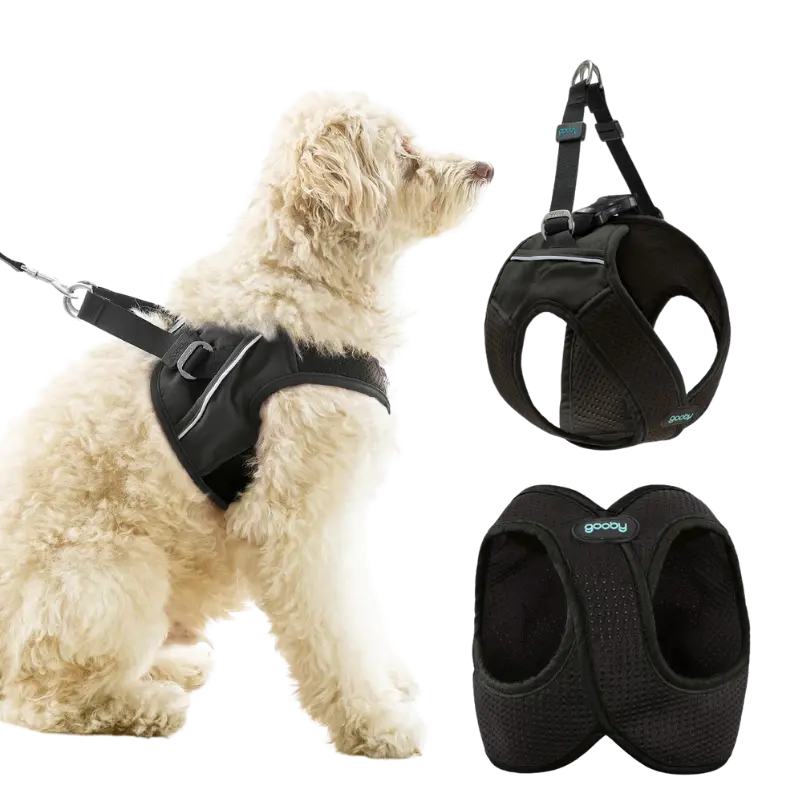
4. Gooby Escape Free Easy Fit X — Best Step-In Option for Small Dogs
Product snapshot
- Variation examined: Black, Small
- Small chest girth: 13.5–17 inches
- Available sizes: X-Small to X-Large
- Overall chest-girth range: 11.25–27.25 inches
- Design: X-frame step-in harness
- Leash hardware: Metal rings
- Extras: Reinforced internal nylon strap, quick-release buckle, and reflective lining
A full-body harness isn't the most convenient choice for every small dog. Some have short torsos, dislike excessive straps, or become nervous when their owners dress them from above.
The Gooby Escape Free Easy Fit X offers an alternative to the three-strap designs.
Instead of using an additional strap behind the rib cage, it uses a contracting mechanism that reduces the available space around the body when the dog pulls against the leash.
The X-frame design has a deep neckline intended to keep the harness away from the throat. It also allows the dog to step into the harness rather than having it pulled over the head.
What distinguishes the Easy Fit X from the original Gooby Easy Fit is its reinforced internal nylon strap and metal leash hardware. Gooby also uses metal components in the strap-adjustment system.
These are worthwhile construction differences, although they do not prove that the X version prevents more escapes or lasts longer than every alternative.
Customer feedback includes positive experiences with small dogs that had previously wriggled out of conventional harnesses. Owners also appreciate the step-in arrangement and hardware.
However, there are reports of dogs escaping. One owner described the harness loosening when leash tension was released.
Gooby includes an adjustment tab intended to limit excess looseness, but the contracting mechanism still depends partly on how tension is applied.
For that reason, I would favor a properly fitted three-strap design for a small dog with persistent or severe escape behavior, when its body shape allows one.
Best for: Smaller dogs that need a specialized step-in harness with limited body coverage.
Avoid if: Your dog repeatedly escapes when the leash becomes slack, or you need equipment that provides additional rear retention without relying on contraction.
Buying note: Choose the Easy Fit X, not the original Easy Fit or Escape Free Sport. They have different construction, hardware, and sizing. Refer to the official Gooby size chart before purchasing.
Pros
- Easy step-in construction.
- Metal leash and adjustment hardware.
- Reinforced internal nylon strap.
- Available in sizes suitable for small chest measurements.
Cons
- Retention depends partly on leash tension.
- Not suitable for every persistent escape artist.
- Actual escapes have been reported.
How to Choose an Escape-Proof Dog Harness
Measure Your Dog's Chest, Neck and Body Shape
Start with a flexible measuring tape and have your dog stand naturally.
Measure around the widest part of the rib cage. Depending on the harness, you may also need the lower neck circumference, the narrower area behind the rib cage, and the length of the torso.
Don't choose a size based solely on your dog's weight or breed. Two dogs of the same weight can have very different chest depths, neck widths, and body lengths.
If your dog falls between sizes, follow the instructions for that particular model. Manufacturers don't all recommend the same approach.
For example, a larger size may provide more comfortable body coverage but leave excessive room around the neck. A smaller size may fit the chest while placing the rear strap too close to sensitive areas.
Owners of dogs with especially broad chests can also consult our guide to harnesses designed for large dogs.
Check Rear-Strap Placement and Freedom of Movement
An additional strap needs to sit in the correct position to serve its purpose.
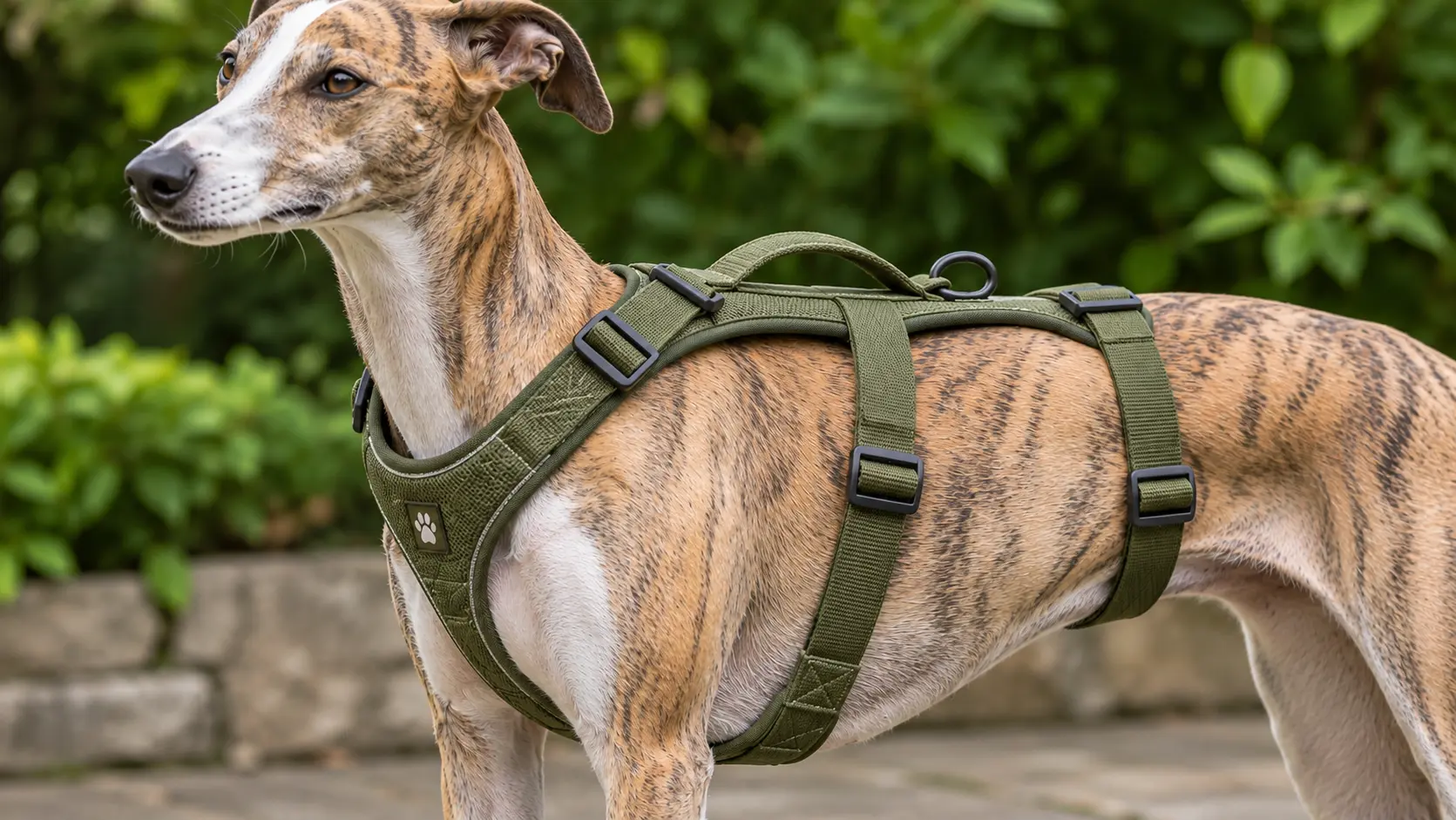
On a three-strap harness, the rear strap should follow the manufacturer's fitting instructions and sit securely behind the wider part of the rib cage without digging into the abdomen.
Watch for:
- Straps rubbing against the armpits.
- Chest panels interfering with shoulder movement.
- Excessive gaps around the neck.
- Rear straps pressing into sensitive areas.
- Belly panels interfering with urination.
- The harness rotating or shifting as the dog moves.
A harness should be snug without restricting breathing or normal movement. Being able to fit a finger comfortably under the straps is a useful initial check, but follow the instructions for your specific product.
If you cannot achieve a secure fit without making the harness uncomfortable, try a different size or design. Tightening the straps further isn't always the answer.
Look Beyond Metal Hardware and Heavy-Duty Claims
Metal leash rings can be appealing, especially if you've previously had a plastic attachment break. However, a metal ring is only as useful as the construction holding it in place.
Inspect the stitching around the leash attachments, the condition of the webbing, and the adjustment hardware. Check that buckles fasten completely and that the straps remain in position during normal movement.
A thick, heavily padded harness isn't necessarily stronger than a thinner one. Similarly, a manufacturer's strength claim for an individual ring doesn't establish the strength of the entire harness.
For dogs prone to escaping, regular inspections matter as much as choosing the initial design.
Replace any harness with damaged buckles, torn stitching, stretched straps, or chewing damage.
Which Escape-Proof Dog Harness Should You Choose?
The Ruffwear Flagline is our overall pick for its lightweight extended coverage, additional rear strap, and flexible adjustment system.
Choose the Ruffwear Web Master if you prefer more structured support or need a harness that opens around the neck. Huntboo provides a more affordable three-strap alternative, although its reported durability concerns deserve careful consideration.
For smaller dogs that need a step-in design, the Gooby Escape Free Easy Fit X offers a different retention mechanism with reinforced construction features.
Whichever harness you choose, measure your dog carefully, inspect the equipment before use, and check how it fits during normal movement.
The best escape-proof dog harness isn't simply the one with the most straps or the strongest-looking hardware. It's the one that remains securely positioned on your individual dog without causing discomfort or restricting movement.