Choosing the best cat litter is less about finding one bag that wins every category and more about finding the right balance for your cat and your home. A litter can form excellent clumps but track badly, control odor well but have a strong fragrance, or stay lightweight while requiring a completely different cleaning routine.
For this guide, we compared eight distinctly different options across clumping, odor control, visible dust, tracking, scent, weight, maintenance, cat acceptance, value, retailer availability, and recurring customer complaints.
Our overall pick is Boxiecat Unscented, a premium clumping clay litter with a strong balance of odor control and everyday scoopability. Dr. Elsey’s Ultra is the better value choice, while World’s Best, PrettyLitter, and Feline Pine make more sense for owners who specifically want clay-free, crystal, or pellet litter.
Affiliate disclosure: LumaPaw may earn a commission when you buy through links on this page, at no extra cost to you.
Best Cat Litter at a Glance
Product |
Our pick for |
Material |
Clumping |
Scent |
Main advantage |
Main limitation |
|---|---|---|---|---|---|---|
Boxiecat Unscented |
Best Overall |
Clay |
Yes |
Unscented |
Balanced odor and clumping performance |
Premium price |
Dr. Elsey’s Ultra |
Best Value |
Clay |
Yes |
Unscented |
Strong performance for the price |
Heavy bags |
ARM & HAMMER SLIDE Platinum |
Best Easy-to-Clean |
Clay |
Yes |
Scented |
Less scraping and sticking |
Fragrance and tracking |
Fresh Step Extreme Clump |
Best Scented |
Clay |
Yes |
Scented |
Tight clumps and strong scented odor control |
Strong fragrance |
Cat’s Pride Max Power |
Best Lightweight Clay |
Clay |
Yes |
Unscented |
Easier to carry than traditional clay |
Tracking and dust vary |
World’s Best Multi-Cat |
Best Clay-Free Clumping |
Corn |
Yes |
Unscented |
Plant-based litter that still clumps |
Higher cost and tracking |
PrettyLitter Original |
Best Crystal |
Silica gel |
No |
Unscented |
Lightweight with color-changing monitoring |
Cost and tracking |
Feline Pine Original |
Best Pine Pellet |
Pine |
No |
No added fragrance |
Simple pine pellets and low cost |
Different cleaning routine |
The six-product lineup was chosen because each product has a defensible reason to be here rather than simply filling another slot in a long roundup.
What Is the Best Cat Litter Overall?
For a household that wants conventional clumping litter without added fragrance, Boxiecat Unscented Odor Control Clumping Clay Litter is our broadest all-around recommendation.
It combines firm clumping, generally strong odor-control feedback, an unscented bentonite-clay formula, and a familiar granular texture. It is also widely available in several bag sizes.
That does not mean Boxiecat is automatically worth paying more for. Dr. Elsey’s Ultra comes surprisingly close at a lower cost, and many households may reasonably prefer it.
The answer changes even more if you dislike heavy clay. World’s Best offers plant-based clumping, Cat’s Pride reduces carrying weight while staying with clay, PrettyLitter uses non-clumping silica crystals, and Feline Pine replaces granules entirely with pine pellets.
The best choice is the one that works for your cleaning routine and that your cat consistently accepts.
How We Researched These Cat Litters
We did not conduct laboratory or in-home testing for this article.
Our recommendations are based on current manufacturer information, Amazon and Chewy listings, product specifications, differences between formulas, retailer availability, recurring customer-feedback patterns, common complaints, and comparison with competing litters.
What we compared
We looked at:
- Exact formula and product version
- Clumping and scoopability
- Odor-control approach
- Added fragrance
- Visible dust
- Tracking
- Material and texture
- Weight and packaging
- Cat acceptance
- Cleaning routine
- Automatic-box compatibility where relevant
- Current size options
- Value
- Repeated positive feedback
- Recurring complaints and limitations
Ratings and review counts helped show how much customer evidence exists, but they were not the reason a litter made the list.
We also treated claims such as “99.9% dust-free,” “10-day odor control,” or similar performance statements as manufacturer claims unless stronger evidence supported them independently.
The 8 Best Cat Litters

Boxiecat Unscented Odor Control Clumping Clay Cat Litter — Best Overall
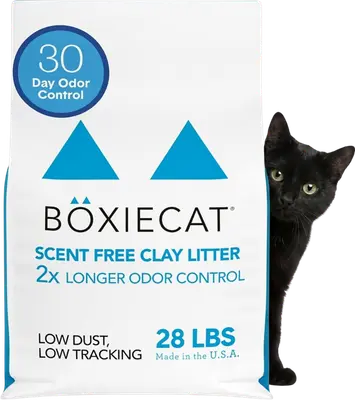
Best for: Cat owners who want a premium unscented clumping clay litter with balanced everyday performance.
Avoid if: You want the lowest cost per pound or tracking is your biggest frustration.
Product snapshot: Bentonite clay, clumping, fragrance-free, available in multiple bag sizes.
Honest buying note: Boxiecat is a strong premium all-rounder, but it does not outperform the cheaper Dr. Elsey’s in every category. The higher price makes the most sense if you specifically value its balance of odor control, fragrance-free use, and premium clumping performance.
Boxiecat Unscented earned our overall spot because it does most of the important things well without relying on fragrance. Its current formula is a straightforward bentonite-clay litter rather than the probiotic BoxiePro formula, so the two should not be confused.
Odor control is one of its strongest areas. Current customer feedback also tends to be favorable toward its clumping, with many owners reporting firm clumps that are easier to remove before urine reaches the bottom of the box.
It is not flawless. Tracking appears regularly in customer complaints, and some owners report more dust or sticking than they expected. Heavy bags and packaging are also recurring annoyances.
Pros
- Unscented conventional clay
- Strong overall odor feedback
- Firm clumping for many users
- Suitable for single- and multi-cat homes
- Broad Amazon and Chewy availability
Cons
- More expensive than Dr. Elsey’s
- Tracking is a meaningful complaint
- Heavy in larger sizes
- Dust performance is not universally consistent

Dr. Elsey’s Ultra Unscented Clumping Clay Cat Litter — Best Value
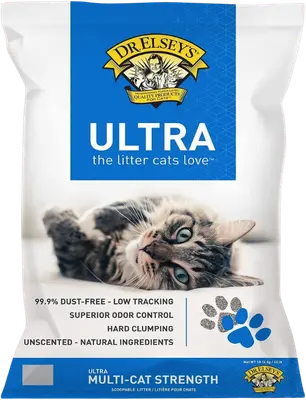
Best for: Owners who want reliable unscented clumping clay without paying premium-litter prices.
Avoid if: Carrying a large, dense bag is difficult for you.
Product snapshot: Clay-based, clumping, unscented, with 20- and 40-pound options commonly available.
Honest buying note: For many households, this is the more rational purchase than Boxiecat. You give up some premium positioning, but not necessarily much practical performance.
Dr. Elsey’s Ultra remains difficult to beat on value. It uses a medium-grain clay formula and is designed to create hard, scoopable clumps without relying on perfume.
Repeated customer feedback supports its main appeal: the clumps are generally strong, the formula is straightforward, and larger bags can be substantially cheaper per pound than many premium alternatives.
Its weaknesses are just as clear. A 40-pound bag is heavy. Some owners find that urine clumps stick hard to the bottom or sides of the box, and “low tracking” should not be interpreted as no tracking. Dust feedback is generally favorable but not unanimous either.
If visible dust is your main concern rather than overall value, see our comparison of low-dust cat litter options.
Pros
- Strong price-to-performance balance
- Unscented
- Firm clumping
- Widely available
- Long-established formula with extensive customer feedback
Cons
- Heavy to lift and pour
- Clumps can stick firmly to the box
- Tracking still occurs
- Some users report noticeable dust

ARM & HAMMER SLIDE Platinum — Best Easy-to-Clean Option
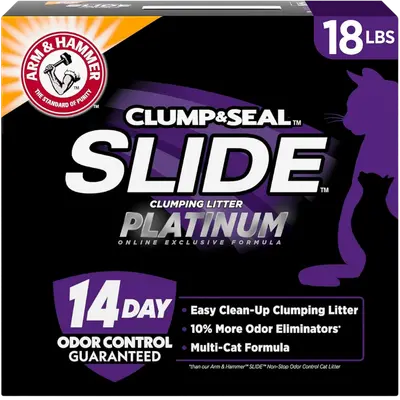
Best for: Owners tired of scraping clay clumps from the bottom and corners of the litter box.
Avoid if: You or your cat prefer fragrance-free litter.
Product snapshot: Clumping clay, scented, multi-cat formula with a non-stick cleanup focus.
Honest buying note: Choose this for the cleanup advantage, not because it is automatically better in every other category.
SLIDE Platinum has a clearer reason for inclusion than most mainstream clay litters: it is specifically designed around easier removal from the litter box.
Its moisture-activated clumps are intended to seal waste and release more cleanly instead of sticking hard to the pan. That matches a recurring positive theme in customer feedback—less scraping and easier daily scooping.
Odor control also receives good feedback, particularly in multi-cat homes, but the formula is scented. That is an advantage only if you actively prefer fragranced litter.
Tracking remains a common compromise, and the fine granules can travel outside the box. It is also important to buy the exact SLIDE Platinum formula rather than assuming all ARM & HAMMER SLIDE products have identical specifications.
Pros
- Easier box cleanup
- Firm clumps
- Strong odor-control positioning
- Useful for multi-cat households
- Widely available
Cons
- Scented
- Fine particles can track
- Heavy like other clay litters
- More expensive than basic clay formulas

Fresh Step Extreme Clump — Best Scented Cat Litter
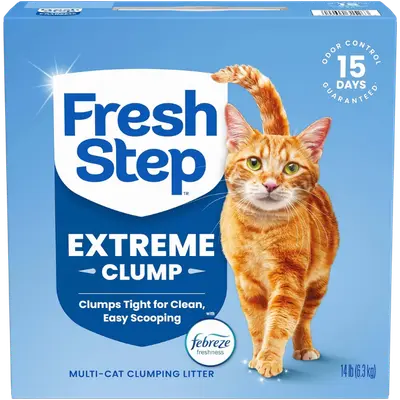
Best for: Owners who specifically want a fragranced litter with tight clumping and strong odor-control positioning.
Avoid if: Your cat dislikes scented litter or you prefer a fragrance-free home.
Product snapshot: Clumping clay with activated charcoal, Ammonia Block technology, and Febreze fragrance.
Honest buying note: This is the scented option for readers who already know they prefer fragrance. It should not be treated as inherently better than an unscented litter.
Fresh Step Extreme Clump is deliberately not our recommendation for everyone. Its strength is that it serves households that want scent, rather than pretending fragrance is universally beneficial.
The formula generally earns strong customer feedback for forming tight clumps and controlling litter-box odors. It is also easy to find and relatively affordable compared with premium clay products.
The main tradeoff is obvious: the fragrance can be strong. Some people appreciate that; others find it overpowering, and cats can have their own preferences.
Tracking is another recurring complaint, while some owners report clumps sticking to the box despite the generally good scoopability.
Pros
- Tight clumping
- Strong scented odor-control approach
- Broad availability
- Reasonable mainstream pricing
- use
Cons
- Strong fragrance
- Tracking complaints
- Some sticking can occur
- Not appropriate for owners intentionally seeking unscented litter

Cat’s Pride Max Power Total Odor Control Unscented — Best Lightweight Clay Litter
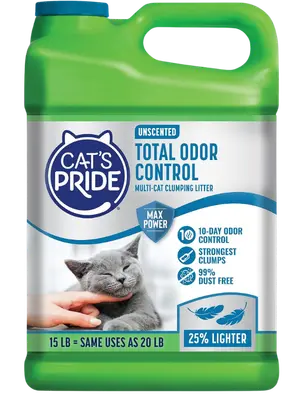
Best for: Owners who like clumping clay but do not want to lift the heaviest conventional clay bags.
Avoid if: Minimal tracking is your top priority.
Product snapshot: Unscented clumping clay marketed as 25% lighter than traditional scoopable clay.
Honest buying note: This is worth considering because of easier handling, not because it clearly beats heavier clay litters on clumping or odor.
Cat’s Pride fills an important middle ground. It keeps the familiar feel and cleaning routine of clumping clay while reducing some of the weight that makes large clay bags awkward to carry.
The manufacturer describes Max Power as 25% lighter than traditional scoopable clay. Its handled 15-pound jug is especially practical for pouring and storage, while larger bags can offer better value.
Current feedback on clumping, odor control, and dust is generally solid rather than exceptional. Tracking still appears regularly, particularly because of the relatively fine granules.
A minority of recent buyers also report differences in dust, texture, or performance between packages. We could not confirm an official reformulation, so those reports should be treated as customer experience rather than proof that the formula changed.
Pros
- Easier handling than many traditional clay litters
- Unscented and dye-free
- Good overall clumping
- Good odor-control feedback
- Useful handled jug option
Cons
- Fine granules can track
- Dust experiences vary
- Some recent batch-consistency complaints
- Not as inexpensive as the best value clay options

World’s Best Multiple Cat Unscented — Best Clay-Free Clumping Litter
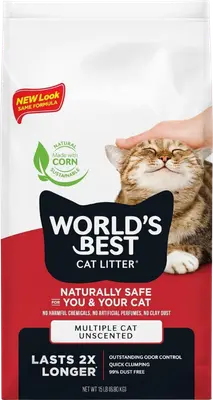
Best for: Owners who want a plant-based alternative while keeping a familiar scoopable clumping routine.
Avoid if: Lowest possible price is the priority.
Product snapshot: Whole-kernel corn, clumping, unscented, clay-free.
Honest buying note: A good transition away from clay when you still want scoopable clumps, but “plant-based” does not automatically mean cleaner, safer, or better for every cat.
World’s Best is one of the easier alternatives to recommend to someone who wants to move away from clay without switching to pellets or non-clumping crystals.
The corn-based granules still form scoopable urine clumps, which makes the daily routine more familiar than Feline Pine or PrettyLitter. It is also lighter than dense clay.
Customer feedback is generally favorable for clumping and odor control, although experiences with dust and tracking are mixed. Some owners also notice the natural grain smell, even though the formula does not rely on artificial perfume.
The product is marketed as flushable under certain conditions, but we would not make flushability a buying reason. Plumbing, septic systems, and local rules differ, and trash disposal avoids that uncertainty.
For more plant-based materials, see our comparison of natural cat litter options.
Pros
- Clay-free corn formula
- Clumps like a more conventional litter
- Unscented
- Lighter than many clay products
- Broad Amazon and Chewy availability
Cons
- Costs more than many clay litters
- Tracking still occurs
- Some users report dust
- Natural grain smell may be noticeable

PrettyLitter Original Unscented — Best Crystal Cat Litter
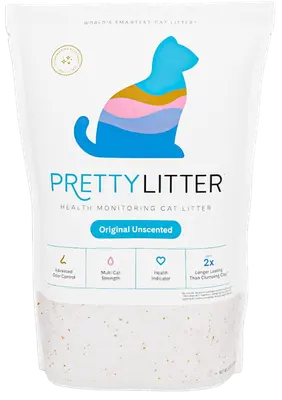
Best for: Owners who want lightweight non-clumping silica litter and like the added urine-monitoring feature.
Avoid if: You want conventional urine clumps or the lowest recurring cost.
Product snapshot: Silica gel crystals, non-clumping, unscented, lightweight.
Honest buying note: Buy PrettyLitter because you want silica litter and its monitoring feature—not as a replacement for veterinary evaluation.
PrettyLitter works differently from the clay products above. Urine is absorbed by the silica crystals rather than turning into scoopable urine clumps, so daily care mainly involves removing solid waste and stirring the litter.
Its most distinctive feature is the color-changing system. The crystals can react to certain changes in urine and provide a signal that something may be different.
That should not be treated as a diagnosis. A color change cannot tell you by itself that a cat has a urinary tract infection, kidney disease, crystals, or another condition. Concerning changes or urinary symptoms warrant veterinary advice.
PrettyLitter is very lightweight and odor control receives plenty of positive feedback, but the tradeoffs are price and tracking. Some households also find that a bag does not last as long as expected.
For more silica options, see our full crystal cat litter comparison.
Pros
- Very lightweight
- No urine clumps to scoop
- Useful color-change monitoring feature
- Generally good odor absorption
Cons
- Expensive compared with basic clay
- Crystals can track
- Requires regular stirring
- Monitoring colors can be ambiguous
- Non-clumping routine will not suit everyone

Feline Pine Original Non-Clumping Pine Pellet Litter — Best Pine Pellet Cat Litter
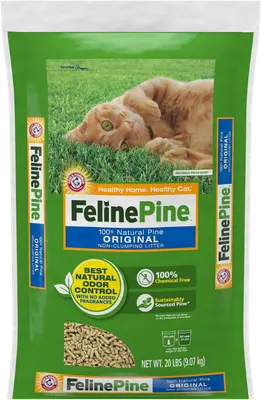
Best for: Owners who want a simple, inexpensive pine-pellet system instead of conventional granular litter.
Avoid if: Your cat strongly prefers fine, sand-like litter or you use an automatic box that requires clumping litter.
Product snapshot: 100% pine, pellet form, non-clumping, no added perfume.
Honest buying note: Feline Pine is not a drop-in replacement for clay. It makes the most sense when you actively want the pellet system and are willing to transition your cat gradually.
Feline Pine changes the cleaning routine more than any other pick here. The dry pellets absorb urine and gradually break down into sawdust rather than forming scoopable clumps.
That can work very well in the right setup. Intact pellets are less likely to scatter like fine clay, the product is inexpensive, and the pine fibers absorb urine without added fragrance.
The tradeoff is cat acceptance. Some cats adapt easily; others dislike the larger pellet texture. As the pellets break down, sawdust must be managed, and stool odor may remain more noticeable than with some clumping formulas.
Although it is sold as unscented, pine itself has a natural smell. “Unscented” here means no added synthetic perfume.
You can compare it with other wood, corn, walnut, tofu, and plant-based options in our natural cat litter guide.
Pros
- 100% pine
- Low purchase cost
- Lightweight compared with dense clay
- Good urine absorption
- No added synthetic fragrance
Cons
- Non-clumping
- Pellets become sawdust
- Some cats reject the texture
- Different cleaning routine
- Not suited to many conventional automatic litter boxes
Which Type of Cat Litter Is Best?
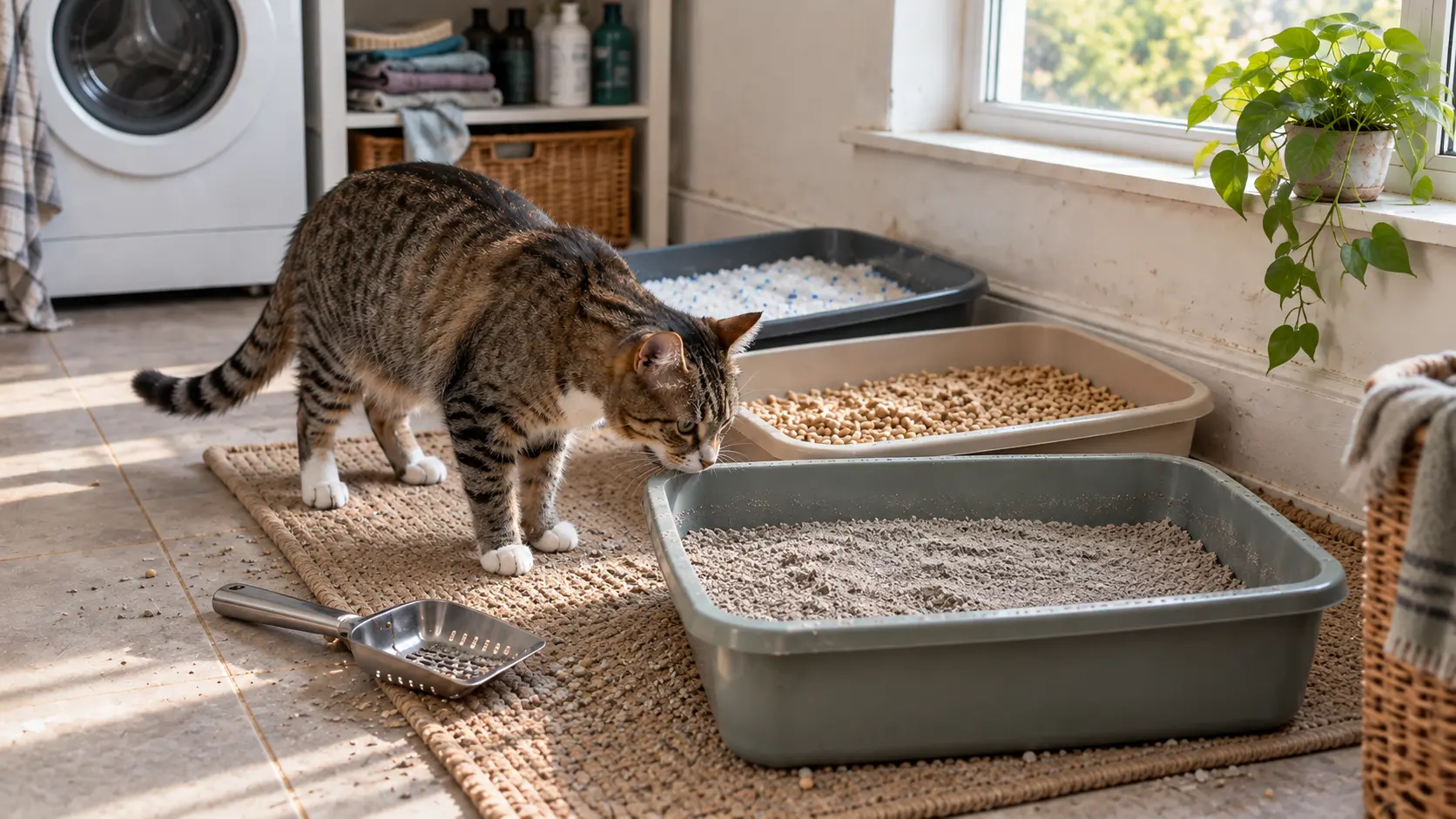
The best litter type depends on what matters most in your home. Clumping clay is familiar and easy to scoop, while crystal and pellet litters use completely different approaches to moisture and cleanup. Plant-based formulas sit somewhere in between.
Clumping Cat Litter
Clumping litter forms solid masses around urine so you can remove wet litter without replacing the entire box each time.
Most of the products in this guide use a clumping formula because it makes daily spot-cleaning straightforward. Bentonite clay is common, but corn, wheat, walnut, tofu, and other plant-based materials can also clump.
Good clumping is not only about forming a hard ball. A useful litter should also resist crumbling and avoid bonding so firmly to the bottom of the box that every scoop becomes a scraping job.
Non-Clumping Cat Litter
Non-clumping litter absorbs urine instead of turning it into removable clumps.
PrettyLitter and Feline Pine are good examples, but they work very differently. PrettyLitter traps moisture inside silica crystals, while wet Feline Pine pellets gradually break down into sawdust.
Non-clumping litter can reduce the number of urine clumps you scoop, but it requires a different maintenance routine. Whether that is easier depends on the litter and your setup.
Clay Cat Litter
Clay remains the most familiar option for many cat owners. Most premium clumping clay litters use bentonite because it expands and binds when wet.
Clay can offer strong clumping and good odor control, but it is usually heavier than silica, corn, or pine. Dust and tracking also vary substantially between formulas.
The five clay-based recommendations in this guide are not interchangeable: Boxiecat emphasizes balanced premium performance, Dr. Elsey’s value, SLIDE easier cleanup, Fresh Step fragrance, and Cat’s Pride lighter handling.
Crystal Cat Litter
Crystal litter uses absorbent silica granules rather than clay.
It is much lighter to carry and typically absorbs urine instead of creating urine clumps. That can simplify daily scooping, although the crystals usually need regular stirring so moisture is distributed through the litter.
Tracking, texture, and cost are the main tradeoffs.
See our crystal cat litter comparison if you want to compare more silica formulas.
Plant-Based and Natural Cat Litter
Plant-based litter can be made from corn, pine, walnut shells, wheat, grass, tofu, cassava, and other materials.
That category is too broad for “natural” to tell you how a litter will actually perform. A corn clumper such as World’s Best behaves very differently from non-clumping pine pellets.
Plant-based litter is also not automatically dust-free, low-tracking, or safer simply because it does not contain clay.
Our natural cat litter guide compares these materials in more detail.
Tofu Cat Litter
Tofu litter is usually made from processed soybean or pea-fiber material compressed into lightweight pellets or granules.
Many formulas clump, but performance varies by brand, especially around clump firmness, tracking, dust, and how quickly wet litter softens.
We have a separate tofu litter comparison for readers specifically interested in this format.
Scented vs. Unscented Cat Litter
Fragrance is a preference, not an automatic performance upgrade.
Scented litter can make the box area smell more pleasant to some people, but fragrance may also be too strong for individual cats or household members.
Unscented does not mean odorless. Corn, pine, walnut, and other materials can have their own natural smell even when no perfume is added.
If you are unsure, a good unscented litter is usually the simpler starting point.
How to Choose the Best Cat Litter for Your Home
Odor Control
Good odor control starts with removing waste, not covering it with perfume.
Clumping quality, absorbency, litter depth, box cleanliness, and scooping frequency all affect odor. Some formulas add activated charcoal, baking soda, or other odor-control systems, while others rely mostly on the litter material itself.
Manufacturer claims such as “10-day” or “30-day” odor control are useful for understanding how a product is positioned, but they should not be treated as guarantees. A heavily used multi-cat box can behave very differently from a lightly used single-cat box.
Dust
“Dust-free” claims deserve some skepticism.
Several litters in this guide are marketed as 99%, 99.5%, or 99.9% dust-free, yet current customer feedback still includes visible-dust complaints for nearly every clay formula we researched.
Pouring technique, particle breakdown, shipping, batch variation, and how old the litter is in the box can all affect visible dust.
If minimizing dust is your main priority, see our low-dust cat litter comparison.
Tracking
No litter in this roundup is completely non-tracking.
Fine particles are easier for cats to carry between their toes, while larger pellets often stay near the box better. But large pellets introduce their own compromises in texture and cat acceptance.
Long-haired cats can also carry litter differently from short-haired cats.
A litter mat and a generously sized box can help, but they do not change the underlying particle behavior.
Clumping and Scoopability
A strong clump should hold together long enough to scoop without leaving wet fragments behind.
But extremely hard clumps are not always easier to clean. Some clay litters can create dense masses that stick firmly to the pan.
That is why we considered both clump strength and release from the box rather than treating harder as automatically better.
Texture and Cat Acceptance
Performance on paper means little if your cat refuses to use the litter.
Some cats readily switch between clay, corn, crystals, and pellets. Others are much more sensitive to particle size, hardness, smell, or the feel of the litter under their paws.
Fine granular litter is closer to the texture many cats already know. Pine pellets and larger crystals create a more noticeable change.
When trying a radically different material, transition gradually rather than assuming your cat will accept it on day one.
Weight and Packaging
This is easy to overlook until you have to carry a 40-pound bag upstairs.
Traditional clay is dense. Dr. Elsey’s and larger Boxiecat bags can offer strong value, but they are heavy.
Cat’s Pride is designed to reduce some of that burden while keeping a clay formula. PrettyLitter and Feline Pine are lighter by material, and some brands divide larger packages into smaller bags or pouches.
The easiest litter to use is partly the one you can comfortably lift, pour, and store.
Price and Long-Term Value
Price per pound is useful when comparing similar clay litters, but it becomes misleading across different materials.
A pound of dense clay does not cover or behave like a pound of silica crystals or pine pellets.
Look at:
- Purchase price
- How much litter the box needs
- How often you replace it
- How much clean litter gets removed during scooping
- How many cats share the box
A more expensive litter can sometimes be economical if less clean material is wasted. The opposite can also happen.
Multi-Cat Households
The words “multi-cat” on a package do not guarantee superior performance.
More cats mean more urine, more solid waste, and usually more frequent cleaning. Box count matters too.
A litter that works well for one cat can struggle when several cats repeatedly use the same box.
Regardless of the formula, scoop frequently and maintain enough clean litter for normal digging and covering.
Automatic Litter Box Compatibility
Do not assume every clumping litter works in every automatic box.
Machines vary in:
- Particle-size requirements
- Maximum litter weight
- Clumping speed
- Sensor design
- Sifting openings
PrettyLitter Original, for example, is not universally suitable across all automatic systems, while large Feline Pine pellets are a poor match for many machines designed around fine clumping litter.
Check the instructions for your exact litter box before switching.
Cat Litter Safety and Quality Checklist
Before buying a new litter:
- Check the exact formula instead of relying only on the brand name.
- Confirm whether it is clumping or non-clumping.
- Check for added fragrance if your cat dislikes scented litter.
- Treat “dust-free” percentages as manufacturer claims rather than guarantees.
- Do not assume “natural” automatically means safer or better.
- Follow the litter-box manufacturer’s requirements for automatic systems.
- Transition gradually when changing to a very different texture.
- Keep plant-based litter sealed and dry during storage.
- Follow disposal instructions and do not assume “flushable” means suitable for every sewer or septic system.
- Wash your hands after handling used litter.
If your cat suddenly strains to urinate, repeatedly enters the box without producing normal urine, cries while urinating, has visible blood in the urine, or shows another significant change in elimination habits, contact a veterinarian. Changing litter alone is not an appropriate response to possible urinary illness.
Squeezable vs Freeze-Dried Cat Treats
Neither format is automatically better.
Squeezable treats contain a lot of moisture and require little or no chewing. Their tube format also works well for hand-feeding, meal topping, and handling rewards.
Freeze-dried treats are dry pieces rather than purées. Many use relatively short meat or fish ingredient lists and can be easier to portion one piece at a time, but they do not provide the same moisture or lickable texture.
If ingredient simplicity and dry meat-based pieces are your priority, compare our freeze-dried cat treats. If hand-feeding, soft texture, or moisture matters more, squeeze treats usually make more sense.
Frequently Asked Questions About Squeezable Cat Treats
What are squeezable cat treats?
Squeezable cat treats are soft or creamy wet treats sold in small tubes or pouches. They are also commonly called cat squeeze treats, lickable treats for cats, wet cat treats, or cat treats in a tube.
Most are designed to be fed directly from the package, squeezed into a bowl, or used as a topper.
Are squeezable cat treats healthy?
They can fit into a healthy diet when the formula suits the cat and the portion is appropriate.
High moisture can be useful, and some products are relatively low in calories. But they are still treats, and ingredient quality, calories, proteins, and intended feeding use differ between products.
A cat eating a complete and balanced diet does not need squeeze treats for basic nutrition.
How many lickable cat treats can a cat have per day?
There is no responsible universal number.
Products differ substantially in calories and portion size. Follow the manufacturer’s directions for the specific treat and account for other snacks the cat receives that day.
If your cat is overweight, has a medical condition, or eats a therapeutic diet, ask your veterinarian how treats should fit into the daily calorie allowance.
Can kittens have squeezable cat treats?
Some can, but check the life-stage labeling.
A kitten-specific product such as Delectables Squeeze Up Kitten is easier to evaluate than assuming an adult treat is automatically appropriate. Kittens need complete nutrition for growth, so treats should not displace meaningful amounts of their normal kitten food.
Do lickable treats help cats drink more water?
They add water to the diet because they contain much more moisture than dry treats.
That can be useful for increasing dietary moisture, but it is not the same thing as treating dehydration. Cats should still have constant access to fresh water, and changes in drinking, urination, or suspected dehydration deserve veterinary attention.
Final Verdict
For most shoppers comparing squeezable cat treats, INABA Churu Tuna & Chicken Variety is our Best Overall pick. It combines a full-size tube, about 91% moisture, roughly 6 calories, broad flavor variety, and strong recurring acceptance without depending on an exaggerated health claim.
Delectables is the stronger value alternative. Catit is more compelling when low calories and salmon matter, Nulo when you specifically want inulin, Tiki for short handling sessions, and Delectables Kitten for a kitten-specific option.
The best tube is ultimately the one that fits your cat’s normal diet, calorie needs, ingredient restrictions, preferred texture, and how you actually plan to use it.