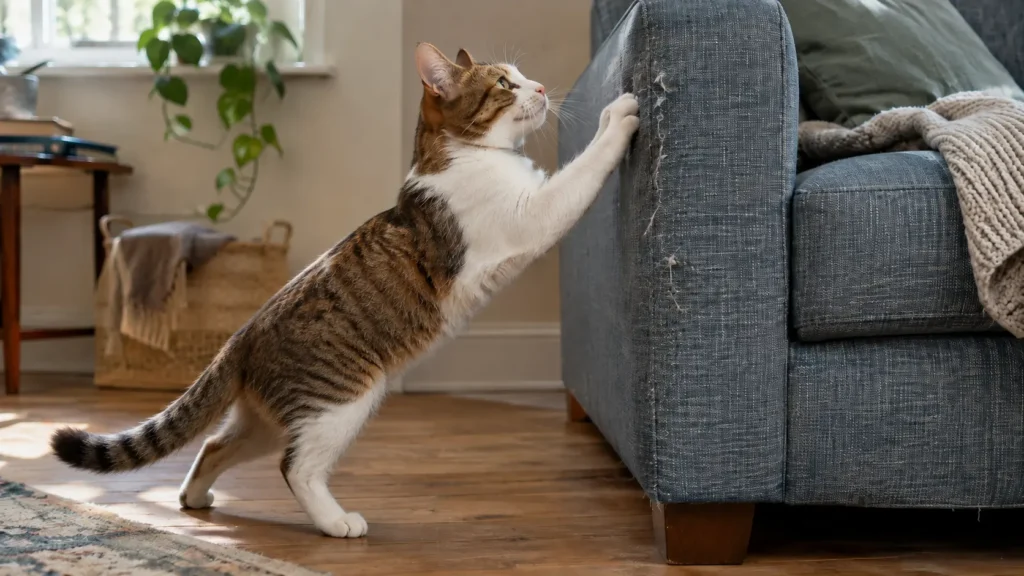
A wall cat scratcher gives your cat a place to stretch, dig in their claws and scratch without taking up valuable floor space. It can be particularly useful if your cat already targets wall corners, doorways or the sides of your furniture.
But choosing one involves more than finding a scratching surface that looks good on the wall. The material needs to appeal to your cat, the surface should accommodate their scratching style, and the mounting system must hold up to repeated pulling.
We've selected five wall-mounted cat scratchers for different scratching preferences, from folding corner boards to tall sisal posts and replaceable cardboard pads. If your cat prefers other scratching positions, our guide to the best cat scratchers covers additional options.
Affiliate disclosure: This article contains affiliate links. If you purchase through one of these links, LumaPaw may earn a commission at no additional cost to you. As an Amazon Associate, we earn from qualifying purchases.
The Best Wall Cat Scratchers at a Glance
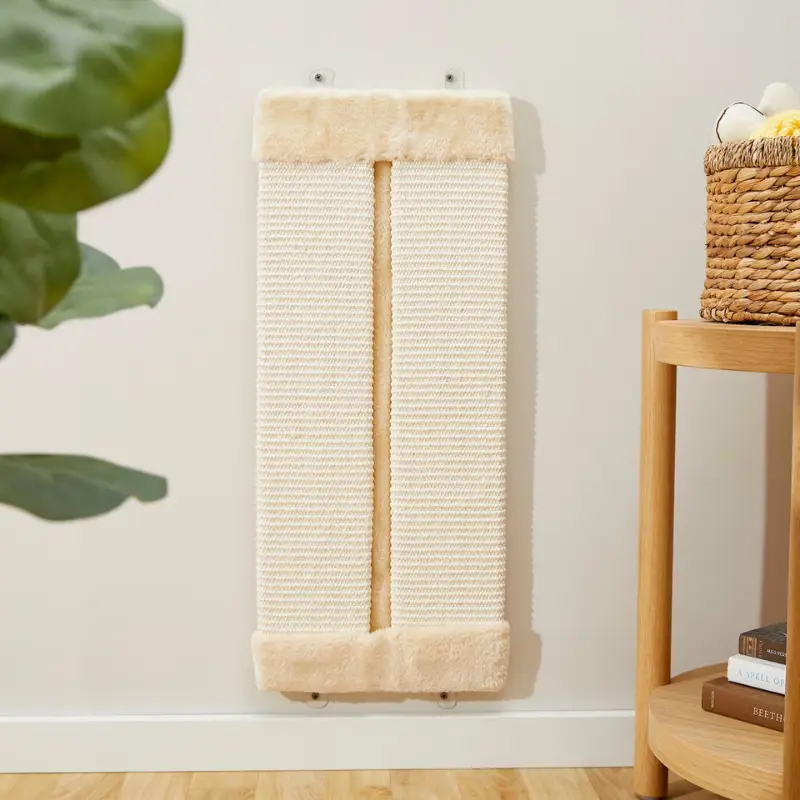
Best for Wall Corners — Frisco Wall Sisal Cat Scratcher
A folding sisal board that fits around corners or against flat walls, making it useful for cats that repeatedly scratch exposed wall edges.
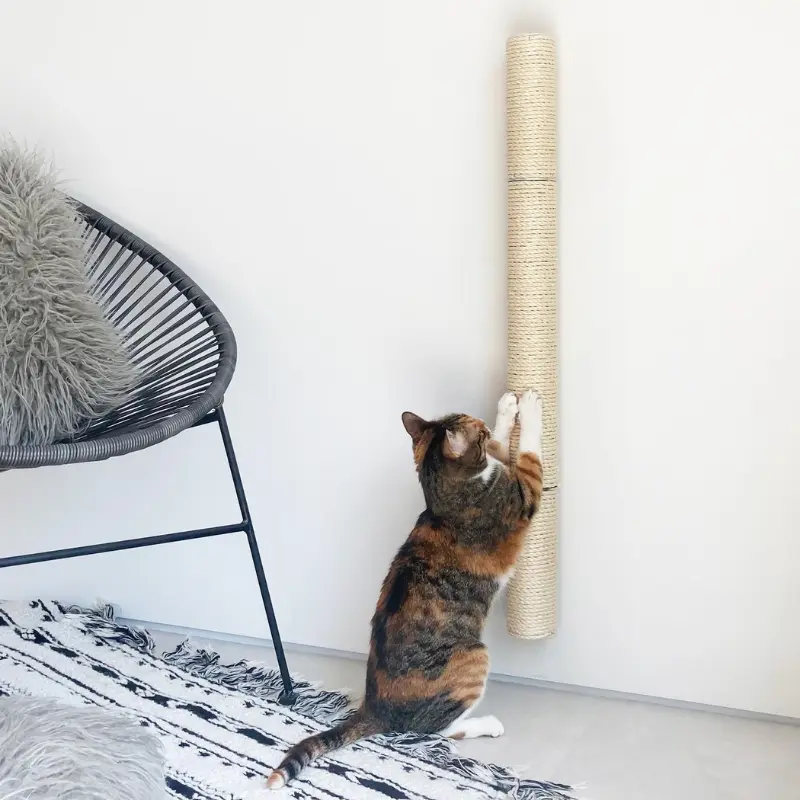
Best Tall Wall-Mounted Scratching Post — Xympo 34-Inch Wall-Mounted Cat Scratcher
A slim, cylindrical sisal post with three rotatable sections for cats that enjoy stretching upward.
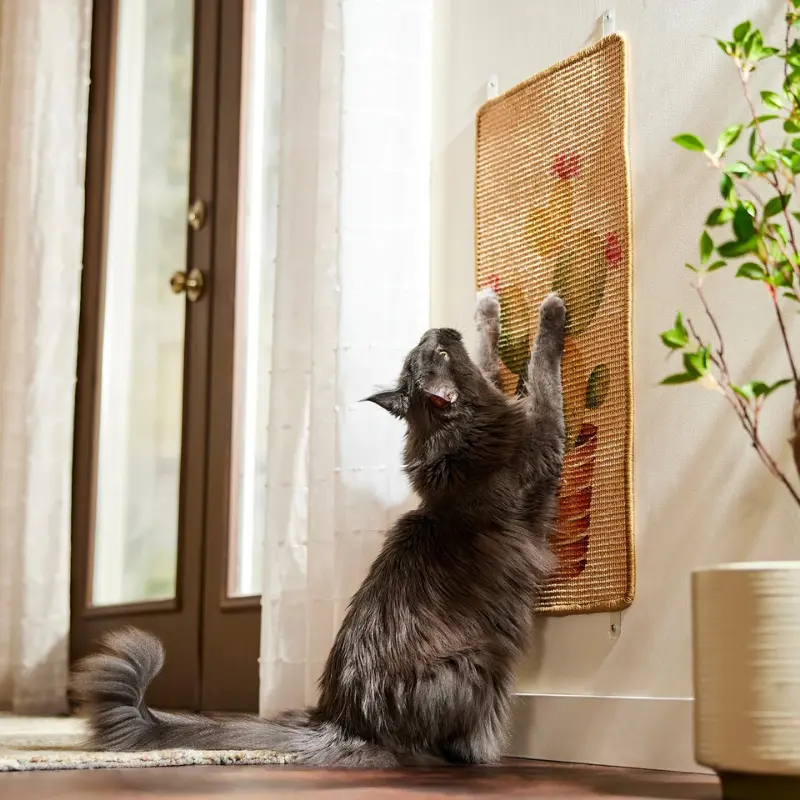
Best Wall-Mounted Sisal Mat — Frisco Cactus Wall-Mounted Cat Scratching Mat
A wide, decorative sisal mat with dedicated screw mounting and plenty of room for vertical scratching.
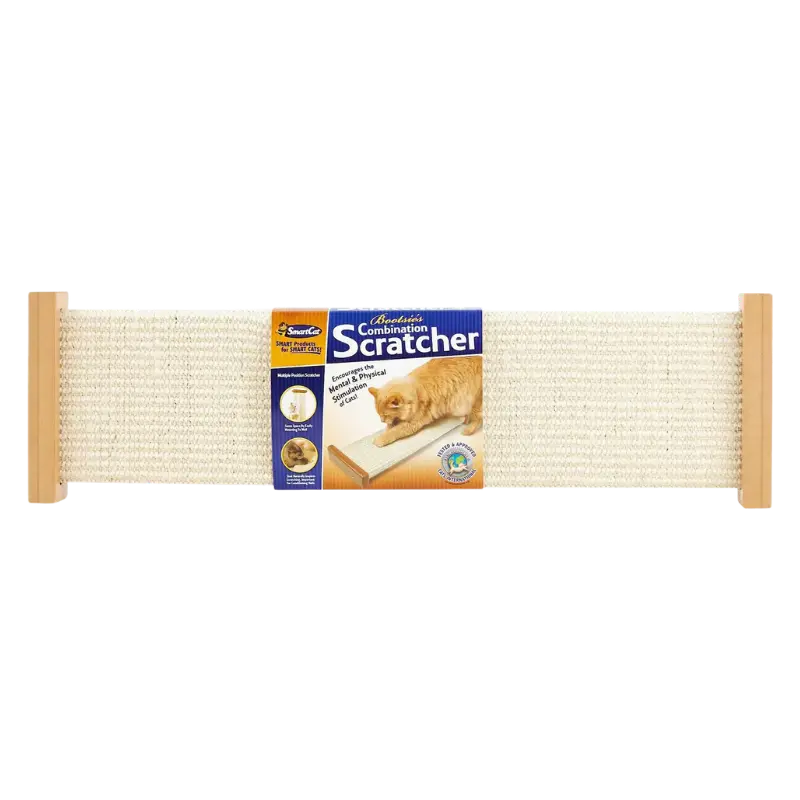
Best Wall and Floor Combination Scratcher — SmartCat Bootsie's Combination Scratcher
A sturdy woven sisal board that can be mounted vertically or placed on the floor.
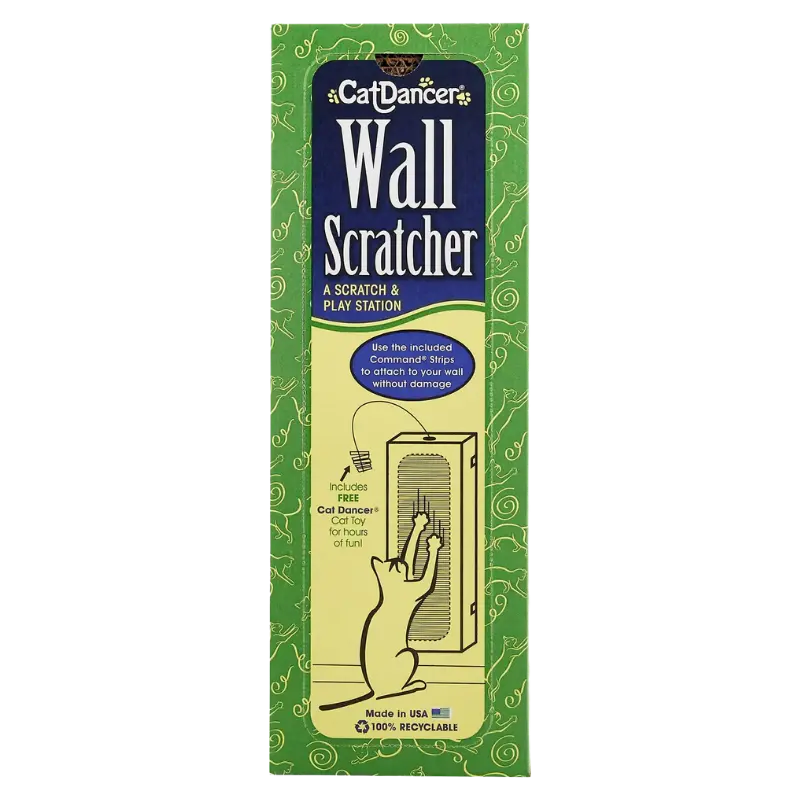
Cardboard Pick: No-Drill Mount — Cat Dancer Wall Cat Scratcher
A compact cardboard scratcher with replaceable inserts, adhesive mounting and an included teaser toy.
| Product | Overall size | Scratching material | Mounting method |
|---|---|---|---|
| Frisco Wall Sisal | 27.15 × 11 × 1.18 in | Sisal | Screws or adhesive |
| Xympo 34-Inch | 33.7 × 3 × 2.8 in | Sisal rope | Screws |
| Frisco Cactus | 31.5 × 15.7 × 0.2 in | Sisal | Screws |
| SmartCat Bootsie's | 24 × 7 × 2.5 in | Woven sisal | Wall-mount system |
| Cat Dancer | Approx. 18–19 in long | Cardboard | Adhesive strips |
Measurements represent overall product dimensions, not necessarily the usable scratching area.
How We Chose These Wall-Mounted Cat Scratchers
We compared product specifications, manufacturer information, installation instructions and customer feedback from Amazon and Chewy.
Our selection focused on scratching surface size, materials, mounting design, everyday usability, durability feedback and how well each product serves a different type of cat or household.
We paid particular attention to complaints about loose hardware, adhesive failures and damaged walls. Products with questionable mounting performance or insufficient supporting information were less competitive.
These recommendations are based on research and product comparison rather than hands-on testing.
Our 5 Wall-Mounted Cat Scratcher Picks
1. Frisco Wall Sisal Cat Scratcher — Best for Wall Corners
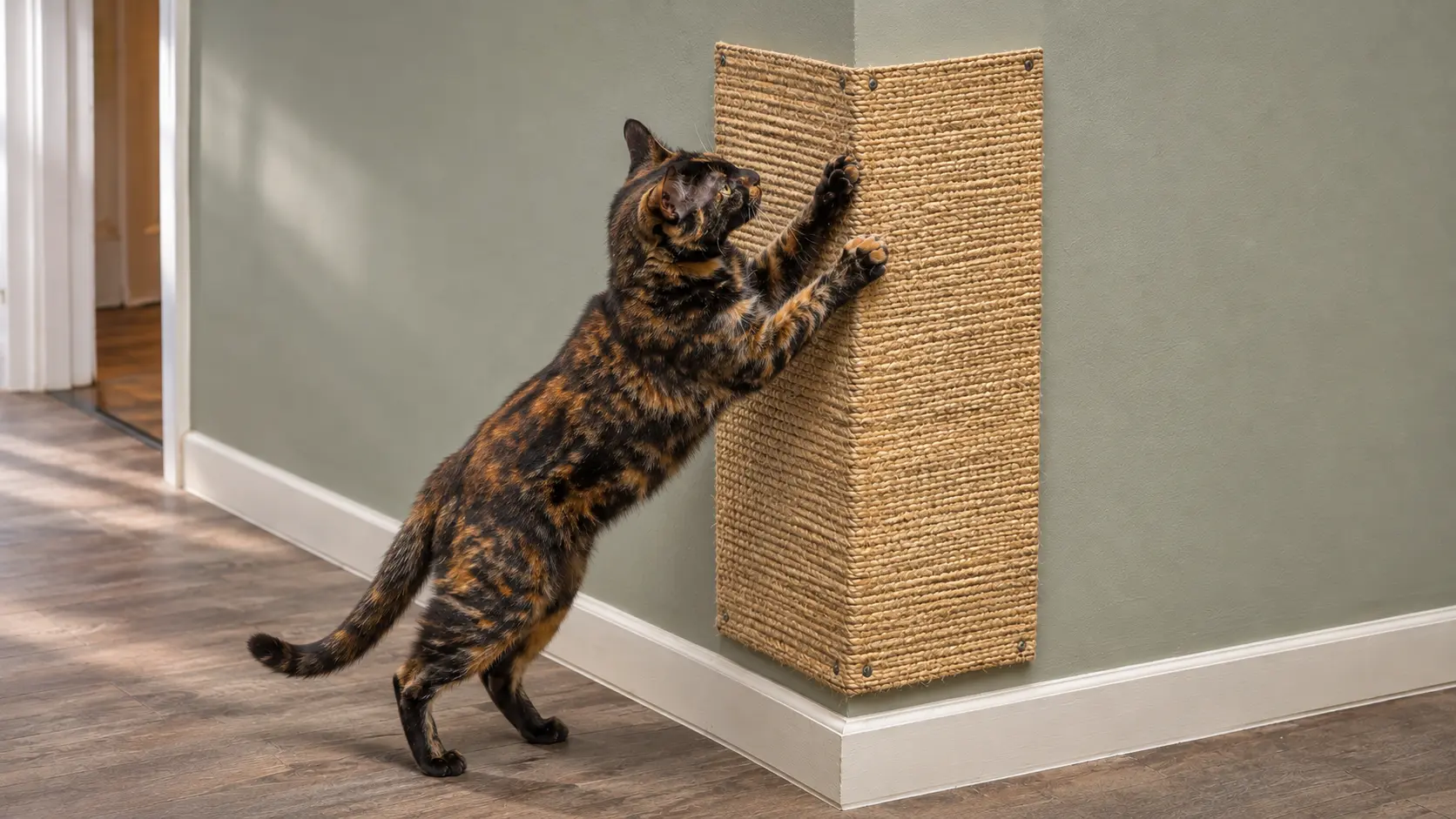
If your cat has turned the corner of your hallway into a scratching spot, the Frisco Wall Sisal Cat Scratcher offers a practical way to work with that habit instead of constantly trying to discourage it.
Its two connected sisal panels fold around an exposed corner, giving your cat a scratching surface on either side. You can also mount the board flat against a wall or place it horizontally on the floor.
Product snapshot
- Selected size: Large, Cream
- Dimensions: 27.15 × 11 × 1.18 inches
- Scratching material: Sisal
- Construction: Engineered wood with fabric covering
- Installation: Screws or adhesive hook-and-loop fasteners
The large version offers more vertical reach than the smaller model without projecting far into the room. This makes it useful beside doorways, furniture or narrow hallway corners.
Customer feedback is generally encouraging, with several owners reporting that their cats readily accepted the surface. Some repeat buyers describe their previous scratchers lasting for years, although durability naturally varies with scratching intensity.
The mounting system deserves closer attention. Owners have reported adhesive strips losing their grip, panels falling and paint peeling during removal. There are also complaints about the supplied anchors and mounting tabs.
For regular scratching, we would favor the screw-mounted installation when your wall and rental agreement allow it. Follow the assembly instructions and make sure all attachment points are secure.
Pros
- Fits around corners or against flat walls.
- Offers a substantial vertical scratching area.
- Can also be used horizontally.
- Positive long-term durability feedback.
Cons
- Adhesive mounting can be unreliable.
- Supplied mounting hardware receives mixed feedback.
- No official replacement scratching panels were confirmed.
Best suited to: Cats that scratch wall corners and owners looking for a versatile scratching board.
Skip it if: You need an adhesive-only installation with minimal risk of wall damage.
2. Xympo 34-Inch Wall-Mounted Cat Scratcher — Best Tall Wall-Mounted Scratching Post
Some cats prefer wrapping their paws around a scratching post rather than digging into a flat mat. The Xympo offers that familiar cylindrical shape without the bulky base of a traditional freestanding post.
Measuring approximately 34 inches tall, it consists of three sisal-wrapped sections held between aluminum mounting brackets.
Product snapshot
- Selected model: PCP01, Natural
- Dimensions: 33.7 × 3 × 2.8 inches
- Scratching material: Natural sisal rope
- Internal construction: Paper tubes
- Installation: Screw-mounted aluminum brackets
One of its most useful features is the ability to rotate the scratching sections. If your cat wears down the exposed side, you can turn the sections to bring less-used sisal into reach. This can help you get more use out of the existing material.
The slim profile works particularly well in rooms where a freestanding scratching post would obstruct a walkway.
Many owners appreciate the minimalist design and report that their cats enjoy using the post for long upward stretches. Some describe extended periods of regular use, while others report quicker rope wear.
The biggest concern is wall attachment. Reviews include reports of drywall anchors pulling loose and the post becoming wobbly over time. It is also relatively narrow, which may not appeal to cats that prefer scratching with their front paws farther apart.
Choose appropriate structural mounting rather than assuming the included anchors will suit every wall.
Pros
- Tall scratching surface with minimal floor-space requirements.
- Three rotatable sisal sections.
- Compact aluminum mounting brackets.
- Suitable for cats that prefer rope-covered posts.
Cons
- Requires drilling.
- Included drywall anchors receive mixed feedback.
- Narrow diameter.
- Replacement-section availability is uncertain.
Best suited to: Cats that enjoy tall, cylindrical scratching posts and owners with suitable wall-mounting locations.
Skip it if: Your cat prefers a wide scratching board or you cannot install screws.
Although the product is also marketed for climbing, we would not rely on it as load-bearing climbing furniture without appropriate installation guidance and a verified load rating.
3. Frisco Cactus Wall-Mounted Cat Scratching Mat — Best Wall-Mounted Sisal Mat
The Frisco Cactus mat takes a different approach from the narrow Xympo post. Its broad, flat design gives cats room to scratch across a wider area while sitting close to the wall.
The flowering cactus pattern also makes it look more like a decorative wall hanging than a conventional scratching board.
Product snapshot
- Design: Flowering cactus
- Dimensions: 31.5 × 15.7 × 0.2 inches
- Scratching material: Sisal
- Installation: Screws
- Mounting hardware: Included
At nearly 16 inches wide, this mat is worth considering if your cat likes scratching large, flat surfaces, such as the side of an upholstered chair.
Unlike adhesive-only scratching mats, the Frisco includes hardware for attaching it directly to the wall with screws. That makes it a more practical design for owners who are comfortable drilling.
Customers frequently praise its appearance, generous size and material quality. Some cats even begin scratching it before installation.
However, several positive reviews come from customers who received the product for free, and there is less independent long-term feedback than for more established scratchers. Some owners also describe difficulty getting the mat to sit completely flat or report concerns about the mounting tabs.
Its decorative design is appealing, but the mounting system and scratching dimensions should be the deciding factors.
Pros
- Wide, tall scratching surface.
- Low-profile design.
- Attractive cactus pattern.
- Dedicated screw-mounting hardware.
Cons
- Requires holes in the wall.
- No separate replacement scratching surface.
- Limited independent long-term durability evidence.
Best suited to: Cats that prefer broad, flat scratching surfaces and owners who want a less conspicuous scratcher.
Skip it if: You cannot drill into your walls or need a scratcher that wraps around a corner.
4. SmartCat Bootsie's Combination Scratcher — Best Wall and Floor Combination Scratcher
Buying a dedicated vertical scratcher can be frustrating if your cat decides that the carpet is more interesting.
SmartCat Bootsie's Combination Scratcher gives you another option. You can mount it on a wall or use it flat on the floor, where rubber feet help limit sliding.
Product snapshot
- Model: 3831
- Dimensions: 24 × 7 × 2.5 inches
- Scratching material: Woven sisal
- Construction: Rigid board with rubber feet
- Installation: Included wall-mount system
Its woven sisal surface feels different from a cylindrical rope-covered post. The firm, flat construction may appeal to cats that already scratch tightly woven upholstery or similar textured surfaces.
Customer feedback is particularly positive about durability. Several owners describe using the scratcher for years, and repeat purchases are common among the reviews we examined.
Its wall mounting is less convincing. One owner reported that their cat repeatedly shifted the board sideways until it came off the wall. Others describe successful wall installation, so this is not a universal problem, but it matters if your cat scratches forcefully from the side.
The 24-inch length is another consideration. A long-bodied cat may benefit from a taller surface, while cats that enjoy scratching close to the floor may find Bootsie's sufficient.
Pros
- Suitable for vertical and horizontal placement.
- Woven sisal scratching surface.
- Rubber feet help reduce floor movement.
- Encouraging long-term customer feedback.
Cons
- The board can move or become detached when wall-mounted.
- Shorter and narrower than some alternatives.
- Replacement sisal fabric is not sold separately.
Best suited to: Cats with mixed scratching preferences and owners who want flexibility if vertical placement proves unsuccessful.
Skip it if: Your cat needs an extra-tall surface or you specifically want replaceable scratching material.
5. Cat Dancer Wall Cat Scratcher — Cardboard Pick: No-Drill Mount
Not every cat enjoys sisal. If yours regularly scratches cardboard boxes or wears through corrugated scratching pads, the Cat Dancer Wall Cat Scratcher offers a familiar texture in a vertical format.
It attaches to the wall using included Command adhesive strips and comes with a Cat Dancer wire teaser.
Product snapshot
- Model: 705
- Length: Approximately 18–19 inches
- Scratching material: Corrugated cardboard
- Installation: Adhesive strips
- Replaceable inserts: Yes
The reversible cardboard inserts are its most appealing feature. Once the exposed side becomes worn, you can turn the insert over rather than immediately replacing the whole scratching station.
Replacement cardboard cores are also sold separately, which can reduce waste and replacement costs over time.
Some owners report that their cats readily switch from scratching walls or furniture to using the cardboard. The included toy also attracts interest, although a few cats seem more interested in playing than scratching.
Adhesion is the main drawback. Customers have reported strips failing and, in some cases, paint damage during removal.
The scratching area is also considerably shorter than the sisal products in this guide. It may work for cats that scratch at a lower height, but it is less suitable for those that need a long, continuous surface.
Pros
- Familiar cardboard scratching texture.
- No drilling required.
- Reversible, replaceable cardboard inserts.
- Compact wall-mounted design.
Cons
- Adhesive mounting receives mixed feedback.
- May damage paint during removal.
- Relatively short scratching surface.
- Cardboard can produce loose debris.
Best suited to: Cats that prefer cardboard and owners with a compatible wall surface who cannot drill.
Skip it if: Your cat scratches aggressively or you need a longer, more securely attached scratching surface.
Supervise play with the included wire toy, and remove it if it becomes loose or damaged.
How to Choose a Wall-Mounted Cat Scratcher
Choose the Right Height and Scratching Surface Size
Watch your cat the next time they scratch a piece of furniture. Do they stretch their front paws high above their head, or do they prefer shorter movements close to the floor?
That observation tells you more about the size they need than a general recommendation based on breed or weight.
A vertical scratcher should allow your cat to extend comfortably while keeping their hind paws supported. The Cornell Feline Health Center recommends providing a stable scratching surface that accommodates a cat's full stretch.
Check the actual scratching area rather than just the advertised product height. Wooden ends, fabric trim and mounting brackets can reduce the usable surface.
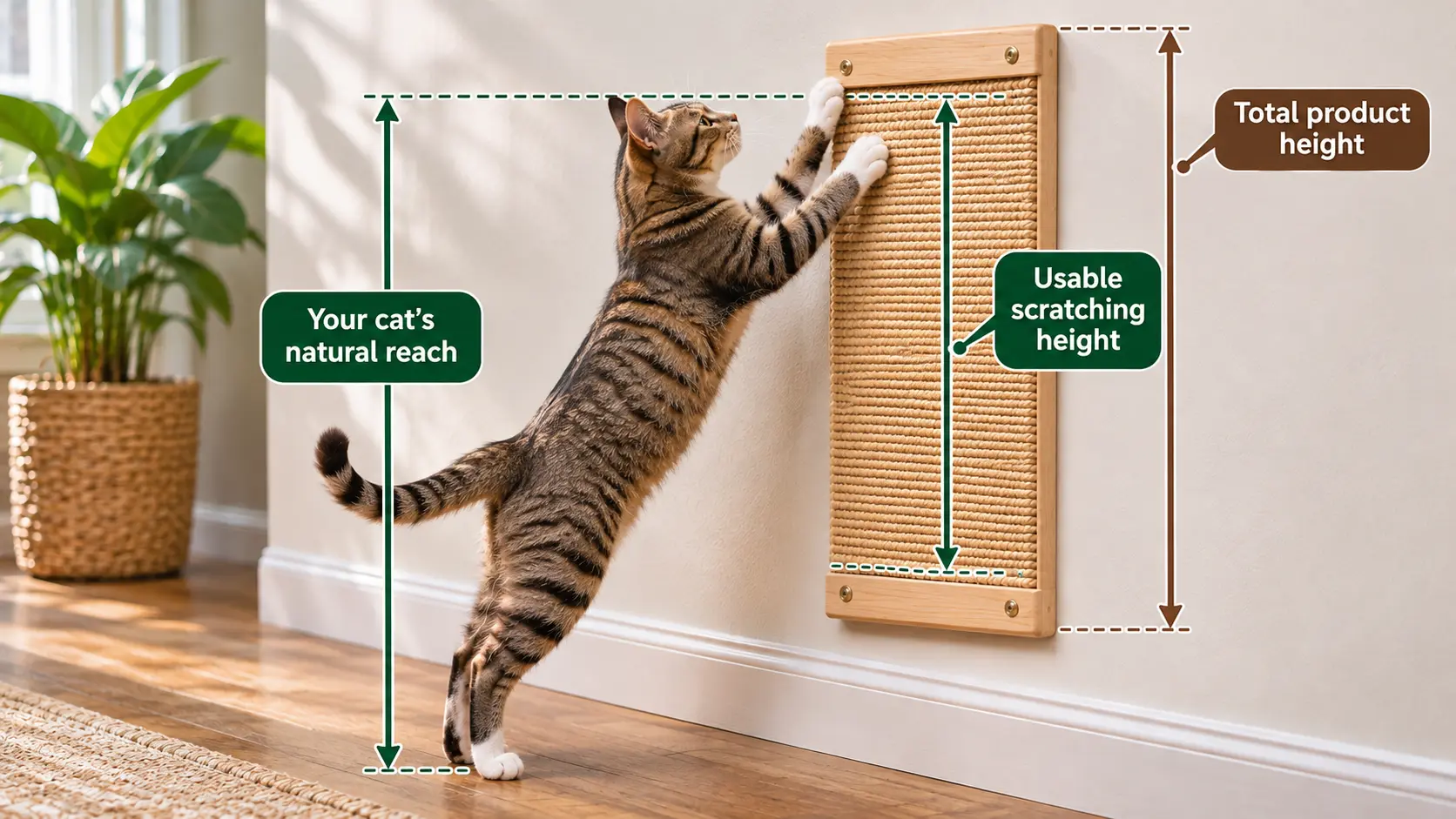
Width matters too. A narrow cylindrical post works well for cats that like gripping a column, while a broad mat accommodates cats that scratch with their paws spread apart.
If you cannot find a suitable wall-mounted design for your cat's reach, a tall freestanding scratching post may be a better alternative.
Sisal Rope, Woven Sisal or Cardboard?
There is no single scratching material that every cat prefers.
| Material | Consider it if your cat... | Main limitation |
|---|---|---|
| Sisal rope | Enjoys gripping cylindrical posts | Rope may loosen or fray |
| Woven sisal | Prefers flat, textured surfaces | Worn fabric may not be replaceable |
| Corrugated cardboard | Regularly scratches boxes or cardboard pads | Produces debris and may wear more quickly |
The Ohio State University Indoor Pet Initiative recommends observing your cat's existing scratching preferences when choosing an alternative surface.
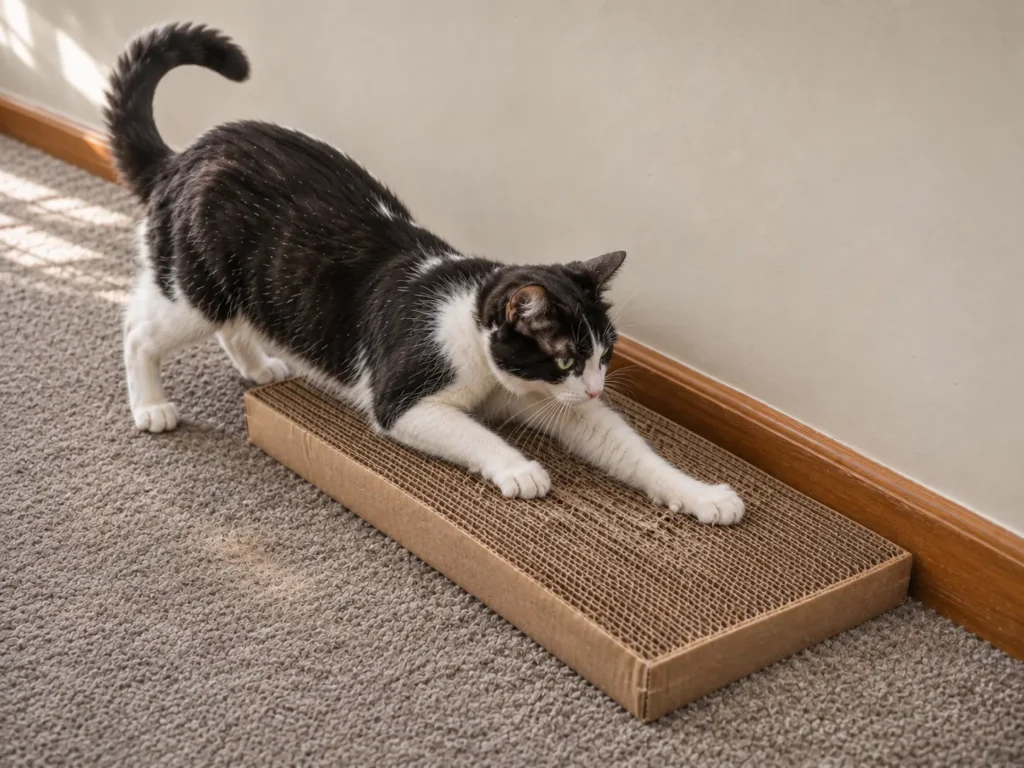
If your cat already loves cardboard, don't assume an expensive sisal post will be more appealing. You may have better results with a wall-mounted cardboard design or a selection of cardboard scratching pads.
Screw Mounting vs. Adhesive Mounting
The mounting method is one of the most important differences between wall scratchers.
Screw mounting provides a mechanical connection to the wall and is generally the option we would favor for regular, forceful scratching when appropriate installation is possible.
Adhesive mounting avoids drilling but depends heavily on the wall surface, adhesive compatibility and installation technique. It can be convenient, although it is not necessarily damage-free.
| Mounting method | Advantages | Limitations |
|---|---|---|
| Screws | Mechanical attachment; suitable for repeated use when properly installed | Requires drilling and compatible wall hardware |
| Adhesive strips | No screw holes; convenient for suitable surfaces | Can detach or damage paint |
| Freestanding alternative | No wall attachment required | Takes up floor space |
For renters, check your lease or ask your landlord before drilling. If adhesive mounting is permitted, make sure your wall is compatible with the supplied strips.
For example, 3M's Command product guidelines advise against using Command products on wallpaper and require fresh paint to be fully cured before installation.
Other adhesives may have different requirements. Always follow the instructions for the specific mounting system included with your scratcher.
Durability, Cleaning and Replacement Surfaces
A scratcher that looks worn isn't necessarily ready for the trash. Scratching naturally changes the appearance of sisal and cardboard, and many cats continue using familiar, well-worn surfaces.
Rotatable sections, like those on the Xympo post, can help distribute wear. Replaceable cardboard inserts, like those offered by Cat Dancer, let you renew the scratching surface without replacing the entire product.
For everyday maintenance, remove loose cardboard debris, vacuum trapped fur where appropriate and follow the manufacturer's cleaning instructions.
Replace or repair the scratcher according to the manufacturer's guidance if you notice:
- Exposed staples or sharp fasteners.
- Loose mounting brackets or broken attachment tabs.
- Long, loose rope strands.
- A damaged backing board or exposed internal structure.
- Adhesive strips that no longer hold securely.
A worn scratching surface is normal. A structurally unstable scratcher is not.
Frequently Asked Questions
How Do I Stop My Cat From Scratching the Walls?
Rather than trying to eliminate scratching altogether, give your cat an acceptable surface near the area they already target.
A folding sisal board can work well for wall corners, while a broad scratching mat may be more suitable for a large, flat section of wall.
Temporarily restricting access to the damaged area and rewarding use of the new scratcher can help redirect the behavior.
If your cat continues scratching elsewhere, experiment with a different material or placement. For a broader approach, see our guide to how to stop cats from scratching furniture.
Can a Wall-Mounted Cat Scratcher Replace a Regular Scratching Post?
Yes, for some cats. A securely mounted scratcher with enough room for a comfortable stretch can meet the scratching needs of a cat that prefers vertical surfaces.
However, cats that enjoy horizontal or angled scratching may still benefit from a floor-based scratcher or another design.
Providing more than one scratching option can be particularly useful in multi-cat homes.
Final Thoughts
The right wall-mounted cat scratcher depends on what your cat enjoys scratching and where you can install it securely.
The Frisco Wall Sisal is particularly useful for exposed corners, while the Xympo provides a tall, cylindrical scratching surface without occupying floor space. The Frisco Cactus offers a wider alternative for cats that prefer flat surfaces.
SmartCat Bootsie's is worth considering if your cat alternates between vertical and horizontal scratching, and Cat Dancer provides a replaceable cardboard option when drilling is not possible.
Whichever design you choose, prioritize your cat's scratching preferences and secure installation. A well-placed scratcher that your cat uses comfortably is far more valuable than one chosen for its appearance alone.