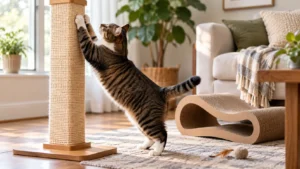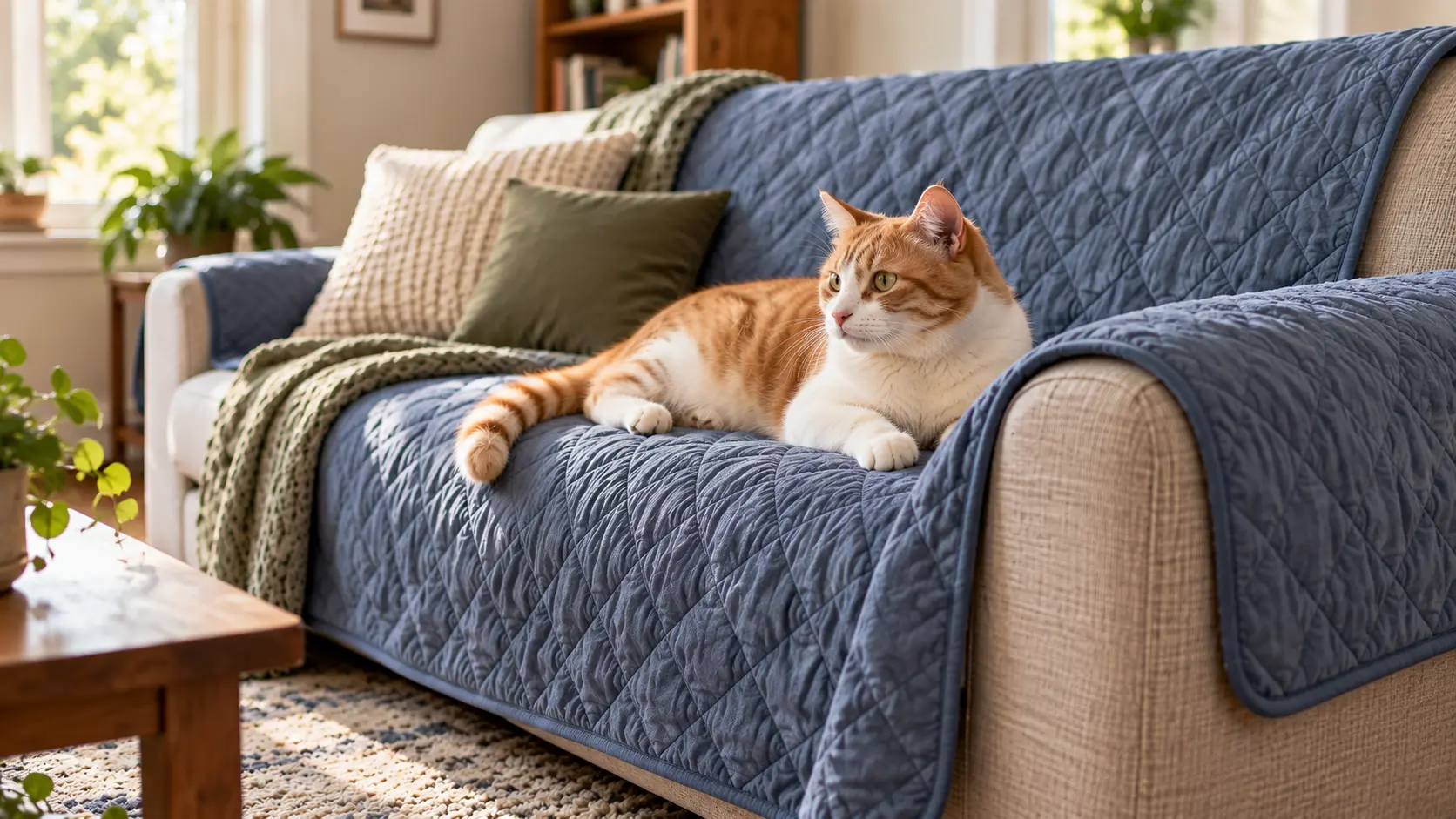
A cat that scratches the outside corner of your couch doesn’t need much exposed fabric to cause damage. Even a decent pet blanket can leave that corner unprotected if it slips off whenever someone sits down.
The best couch covers for cats put a removable layer between claws and upholstery. But coverage, fabric construction, and how well the cover stays in place matter much more than a product calling itself “scratch-proof.”
We compared four different designs, from full-sofa protectors to individual cushion covers, to help you choose something that fits both your furniture and your cat’s habits.
Affiliate disclosure: LumaPaw may earn a commission when you purchase through links in this article, at no additional cost to you.
Best Couch Covers for Cats at a Glance
Not every cat scratches the same part of a sofa. Some target the arms, while others claw at seat cushions or dig into the fabric before settling down.
Here is how our four picks compare.
Couch cover |
Best for |
Main limitation |
|---|---|---|
Deep Dream Cat-Scratch Resistant Cover |
Broad sofa coverage |
Claws can still penetrate |
Easy-Going Reversible CoverEasy-Going Reversible Cover |
Budget-friendly protection |
Can shift during use |
FurHaven Waterproof Non-Skid Back |
Quilted coverage with cushion anchors |
Fastening complaints |
Smiry Washable Couch Cover |
Individual sofa cushions |
Doesn't cover the entire sofa |
Quick buying advice: If your cat scratches the arms or backrest, start by comparing Deep Dream and FurHaven. Easy-Going is worth considering for inexpensive everyday coverage. Smiry makes more sense when the seat cushions are the main problem.
None is guaranteed to withstand persistent scratching in the same spot.
The 4 Best Couch Covers for Cats That Scratch Furniture

Deep Dream Cat-Scratch Resistant Couch Cover — Best for Broad Sofa Coverage
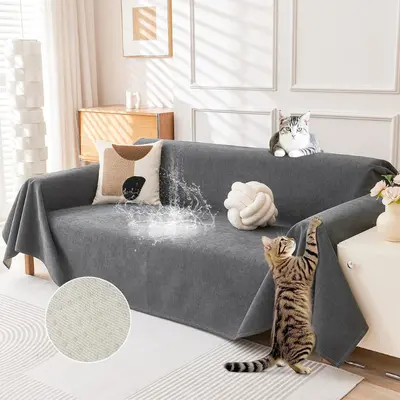
Best for: Owners who need a removable cover over a large portion of the sofa, including the backrest and arms.
Avoid if: Your cat repeatedly digs its claws into one spot and you expect the fabric to prevent every puncture.
Honest buying note: Easy-Going is a sensible starting point when you’re trying to keep an ordinary couch cleaner without spending much. It is not the strongest choice for determined scratchers, but its practical everyday value is clear.
Check the seat width carefully rather than choosing Large based only on the number of cushions.
Product snapshot
- Selected model: Dark Grey, 71 × 118 inches
- Material: 100% polyester
- Design: Large rectangular draped cover
- Features: Non-slip backing, washable fabric, advertised scratch and water resistance
- Cleaning: Machine washable according to the manufacturer
Deep Dream takes a relatively straightforward approach: instead of stretching tightly around individual cushions, it provides a large piece of fabric that you arrange over the couch.
That gives it flexibility. You can position more material over the arm your cat prefers to scratch, or extend the cover over the backrest where another cat likes to climb.
Its polyester construction is marketed as scratch-resistant, and customer feedback includes reports of successful protection from everyday claw contact. Some owners also appreciate being able to shake or vacuum pet hair off the surface.
The limitation is important, though. At least one customer reported a cat’s claws passing through the cover and damaging the upholstery underneath. Other feedback mentions shifting and inconsistent protection from liquids.
Pros
- Affordable full-sofa protection
- Reversible, comfortable quilted fabric
- Machine washable and relatively easy to remove
Cons
- Foam inserts may come loose
- Can slide or expose upholstery
- Limited evidence of resistance to deliberate scratching

Easy-Going Reversible Couch Cover — Best Budget Couch Cover
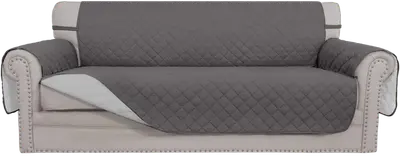
Best for: Cat owners who want an affordable, washable cover for ordinary sofa wear, fur, and occasional claw contact.
Avoid if: Your couch is particularly slippery or your cat persistently attacks exposed corners.
Honest buying note: Deep Dream is worth considering when your priority is covering more of the furniture, especially exposed arms. It is less convincing as a solution for a cat that deliberately scratches through fabric.
Measure the sofa before ordering. The 71 × 118-inch figure describes the cover itself, not a guarantee that it will fit every three-cushion couch.
Product snapshot
- Selected model: Gray/Light Gray, Large Sofa
- Material: Quilted polyester microfiber
- Design: Reversible furniture protector
- Fit: Designed for a sofa seat width up to 66 inches
- Features: Rear elastic and two foam inserts
- Water protection: Water-resistant, not waterproof
Easy-Going is the budget option in this lineup, but not simply because it has a lower price.
It covers a conventional sofa’s seating area, backrest, and arms without requiring separate pieces for every cushion. The reversible design also gives you two color choices in one cover.
The quilted fabric is made for everyday household use, and many customer reviews praise its comfort and easy cleaning. For a cat that mainly lounges on the sofa, sheds, and occasionally catches a claw on the upholstery, that may be enough protection.
Keeping it in place is the bigger question.
The two foam inserts are intended to sit in the gaps between cushions, while the rear elastic helps secure the back. Some owners report that the inserts work loose or the cover shifts, particularly on leather furniture.
And although the fabric is water-resistant, it should not be relied upon to contain every spill or pet accident.
Pros
- Generous coverage for seats, arms, and backrests
- Washable fabric with a non-slip design
- More directly focused on cat scratching than many generic pet throws
Cons
- Not proven puncture-resistant
- Loose draping may require readjustment
- Larger sizes can be awkward to wash

FurHaven Waterproof Non-Skid Back Furniture Protector — Best Quilted Cover with Cushion Anchors
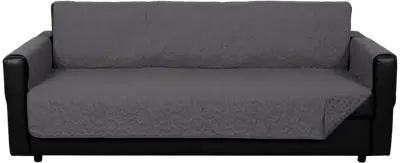
Best for: Owners who prefer a shaped furniture protector with dedicated attachment features rather than a loosely draped throw.
Avoid if: Your sofa cannot accommodate the anchors or you want fastening hardware that never needs checking.
Honest buying note: FurHaven is a reasonable alternative to Deep Dream if you prefer a conventional quilted protector with cushion anchors. Its design is more structured, but that doesn’t automatically mean it will stay in place on every couch.
Check the furniture’s cushion arrangement and attachment points before purchasing.
Product snapshot
- Selected model: Gray, Large Sofa
- Flat cover dimensions: 122 × 75 inches
- Design: Quilted sofa protector with shaped arm panels
- Attachment: Cushion anchors, rear elastic band, and non-skid backing
- Water protection: Waterproof core claimed by the manufacturer
- Cleaning: Machine washable; hang dry
FurHaven’s main difference is its construction.
The cover has sections for the seat, backrest, and arms, with cushion anchors and an elastic band to help secure it. A non-skid backing provides another layer of grip.
This can be useful when you want the cover positioned over specific upholstered areas without manually arranging a large blanket each time.
Customer reviews include positive experiences with pet hair, general wear, and occasional claw contact. Some owners also report successful protection from spills.
However, the attachment system has its own drawbacks. Complaints include broken clips, weakened straps, and sections moving out of place. A few owners also report liquid getting through despite the manufacturer’s waterproof-core claim.
That makes regular inspection particularly important, especially if the cover is installed on delicate upholstery.
Pros
- Shaped coverage for the sofa and arms
- Several methods intended to hold the cover in place
- Washable quilted construction with a waterproof-core claim
Cons
- Fasteners and clips are recurring complaint points
- Some owners report slipping or leakage
- Not proven resistant to repeated claw punctures

Smiry Non-Slip Washable Couch Cover — Best for Individual Sofa Cushions
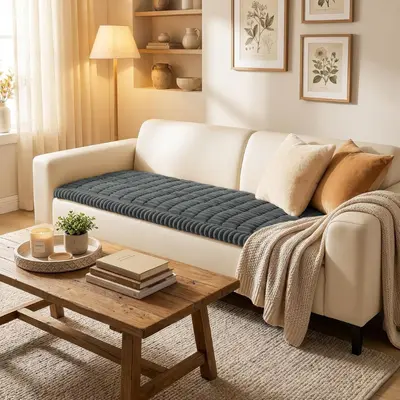
Best for: Owners who want to cover particular seat cushions or sections of a sofa without using one large slipcover.
Avoid if: Your cat mainly scratches the arms, outer corners, or backrest.
Honest buying note: Smiry is useful when you know exactly which seat cushions need protection. For a cat scratching the vertical side of a couch, however, buying several seat covers won’t address the main problem.
Measure each section separately and calculate the full cost before ordering multiple pieces.
Product snapshot
- Selected model: Dark Grey, 27.6 × 59 inches
- Material: Polyester
- Design: Soft rectangular cushion protector
- Features: Textured surface and advertised non-slip backing
- Water protection: Not water-resistant
- Cleaning: Machine washable
Smiry makes sense for a different reason from the other three covers.
Instead of trying to protect the whole couch with one piece, you can choose rectangular sections that sit over individual cushions or specific seating areas.
This is particularly convenient if your cat sleeps in the same spot every afternoon, leaving hair and dirt on one cushion while the rest of the sofa stays relatively clean.
The soft polyester material has received positive feedback for comfort and easy washing. Several owners like being able to remove the cover without stripping the entire sofa.
Still, the advertised non-slip backing doesn’t work equally well on every surface. Customers have reported slipping, particularly on leather, and some mention fabric snags or loose stitching following contact with pet claws.
Pros
- Useful range of cushion-sized pieces
- Soft surface for everyday lounging
- Individual sections are easy to remove and wash
Cons
- Doesn't protect exposed arms and corners
- May slide on smooth upholstery
- Multiple pieces increase the cost of covering a whole sofa
How We Researched These Couch Covers
We began with 13 potential products found through Amazon, Chewy, and manufacturer information, then compared their relevance to cat owners.
Rather than ranking covers by review counts or bestseller badges, we looked at where each product provides coverage, how it stays attached, its materials, cleaning requirements, price, and available customer feedback.
We paid particular attention to reports involving claws, slipping, poor fit, fastening failures, and damage after washing.
Some products were excluded because of recurring durability complaints, unclear advantages over similar covers, limited evidence, or availability problems.
These recommendations are based on product specifications, retailer information, and customer experiences. We have not physically tested the covers or independently measured their claw resistance or waterproof performance.
Can Couch Covers Actually Stop Cat Scratching?
A couch cover can protect upholstery from direct contact with claws, but it doesn’t necessarily stop a cat from scratching.
Some cats will scratch the protective fabric instead. Others may reach an exposed corner, push beneath a loose arm flap, or pull the cover out of position.
Even a thick cover can be punctured by sharp claws.
Scratching is normal feline behavior. Cats use it to stretch, mark surfaces, and maintain their claws. The ASPCA’s guidance on destructive scratching recommends providing suitable scratching surfaces and encouraging cats to use them rather than trying to eliminate scratching altogether.
A cover is most useful as part of that approach: protect the furniture while giving your cat somewhere more appropriate to scratch.
How to Choose a Couch Cover for Cats
Protect the Area Your Cat Actually Scratches
Before comparing materials or colors, watch where your cat scratches.
A cat that claws the outer arm needs a different type of coverage from one that kneads or scratches a seat cushion before lying down.
Look at the sofa after your cat has used it. Are the loose threads near the arm? Along the back? At the front edge of a cushion?
For arm scratching, prioritize a cover with enough fabric to extend over the sides and stay there. For individual cushion wear, a removable rectangular protector might be simpler.
Buying a cat furniture protector for the wrong area is an easy way to spend money without solving anything.
Choose the Right Fabric and Surface
Polyester is common in washable pet furniture covers. But polyester alone doesn’t tell you how resistant a cover will be to claw damage.
The weave, quilting, backing, and overall construction also matter.
Some soft or loosely textured fabrics can develop pulls when claws catch individual threads. A tightly constructed surface may snag less readily, but that doesn’t guarantee it will resist punctures.
Deep Dream uses a thicker polyester construction marketed for scratch protection. Easy-Going and FurHaven use quilted designs. Smiry prioritizes a soft, textured seating surface.
None should be treated as indestructible.
Consider comfort, too. A cover that feels unpleasant or constantly wrinkles may become frustrating for everyone using the couch, even if its protective material initially seems promising.
Check the Grip and Attachment System
A cover that moves away from your cat’s favorite scratching area isn’t doing much to protect it.
Different models use silicone-style gripping surfaces, foam inserts, cushion anchors, or elastic straps.
There are trade-offs.
Foam inserts may pop out of shallow cushion gaps. Elastic can lose tension. Straps may be difficult to fit around certain sofas. Even non-slip backing can move on smooth leather.
Check whether your cushions are removable or permanently attached before choosing a model that depends on anchors.
Also consider how often you will remove the cover for cleaning. A complicated attachment system may become irritating if you need to wash it several times a week.
Waterproof vs. Water-Resistant Couch Covers
These terms aren’t interchangeable.
Water-resistant covers are intended to resist some moisture, but they may allow liquids through, especially during prolonged contact.
Waterproof products claim a barrier that prevents liquid penetration. However, customer reports sometimes describe leakage even on products advertised as waterproof.
A waterproof claim also tells you little about resistance to claws.
If your priority is scratching, concentrate first on coverage, fabric construction, and fit. If your cat has repeated urinary accidents, a couch cover should not replace a veterinary assessment of the cause.
Washing, Durability, and Real Value
Machine washable doesn’t automatically mean trouble-free maintenance.
In our wider research, some furniture protectors received repeated complaints about backing layers sticking together or deteriorating after laundering.
Follow the care instructions for the exact model. Don’t assume that every polyester cover can handle the same drying temperature.
Look at the cost of protecting the entire sofa, too.
One inexpensive cushion protector might be enough for a single seat. Covering a sectional with multiple pieces could cost considerably more than buying one appropriately sized furniture throw.
The better value is the cover that fits the job and remains practical to maintain.
How to Measure and Fit a Couch Cover Properly
Washing, Durability, and Real Value
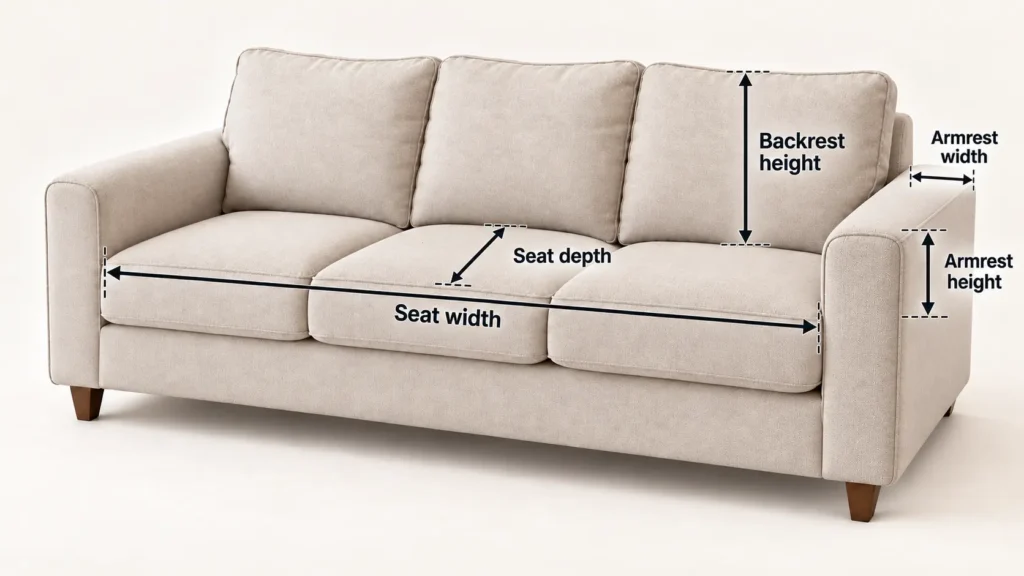
Start by measuring the actual sofa, not simply counting its cushions.
Check:
- Seat width: The distance across the usable seating area.
- Seat depth: From the front edge to the back cushions.
- Backrest height: Especially important for draped covers.
- Arm width and height: Include the outside sections if your cat scratches there.
- Extra coverage: Allow enough material to tuck the cover in or drape it over vulnerable edges.
Remember that a flat cover measuring 71 × 118 inches does not necessarily fit a sofa with those dimensions.
For example, Deep Dream’s measurements describe its rectangular fabric, whereas the Easy-Going Large Sofa version is designed around a seat width of up to 66 inches.
Always use the fitting diagram for the specific product and size.
Keep the Cover in Position Without Damaging Furniture
Once you’ve placed the cover, sit on the sofa and stand up a few times. Check whether the fabric slips away from the arms or pulls loose behind the cushions.
If the cover includes anchors or foam inserts, install them according to the manufacturer’s instructions.
Don’t force attachments into narrow spaces or use pins against delicate upholstery without confirming compatibility.
On leather furniture, pay particular attention to grip. Some owners report that covers marketed as non-slip still need regular adjustment.
Finally, observe what happens when your cat jumps onto the couch. A cover that stays neatly positioned when nobody is using the furniture may behave differently during normal household activity.
What If Your Cat Keeps Scratching the Couch Corners?
A cover can become less useful—and potentially problematic—once it starts deteriorating.
Inspect it regularly, particularly in homes with cats that chew or pull at loose material.
- Replace covers with torn backing, unraveling seams, or loose threads that cats repeatedly catch their claws in.
- Check that anchors, elastic bands, and fasteners remain attached and aren't accessible as loose chewable pieces.
- Avoid forcing hardware against surfaces that may scratch or mark easily.
- Wash and dry the cover according to the label, particularly if it contains a waterproof layer.
- Make sure the cover doesn't hang in a way that creates a tripping hazard or leaves loose material where a pet could become tangled.
If your cat starts chewing or swallowing fabric, remove the damaged cover. Contact your veterinarian promptly if you suspect material has been swallowed.
Frequently Asked Questions
Can cats scratch through couch covers?
Yes. A cover may prevent incidental claw contact with the upholstery, but determined scratching can still puncture or damage the material.
Some owners report successful protection with fabric covers, while others have experienced claws passing through them. No ordinary pet couch cover should be treated as completely scratch-proof.
What kind of couch cover is best for cats that scratch?
Choose according to where the scratching happens.
For sofa arms and backrests, prioritize broad coverage that stays in position. For individual seat cushions, smaller removable protectors may be more convenient.
Material, attachment method, and furniture compatibility matter more than a “cat-proof” claim on the packaging.
Do stretch couch covers protect against cat scratches?
Stretch covers can reduce the amount of exposed upholstery, particularly when they fit closely.
However, stretch fabric is not automatically puncture-resistant. A determined cat may still catch its claws in the material or scratch through it.
Check the fabric and customer feedback for the exact model instead of assuming a tight fit guarantees protection.
Do couch covers stay in place on leather sofas?
Some do, but performance varies considerably.
Smooth leather can make it harder for certain covers to grip, and customer reviews frequently mention sliding even on products advertised as non-slip.
Look for a compatible attachment system, measure carefully, and avoid hardware or adhesives that could damage the leather.
Are plastic furniture guards better than fabric couch covers?
They serve different purposes.
A clear plastic guard can protect a particular area, such as a fabric sofa corner, without covering the entire couch. Fabric covers usually offer more comfortable seating and broader everyday protection.
Plastic guards may be less comfortable or visually appealing, and some installation methods aren’t suitable for delicate upholstery.
Neither option is guaranteed to stop scratching behavior.
Which Couch Cover Should You Choose?
The right couch cover depends on what needs protecting.
Deep Dream is worth considering for broad sofa coverage, while Easy-Going offers an affordable conventional protector. FurHaven provides a more structured quilted design with cushion anchors, and Smiry makes sense when you only need to protect individual seating areas.
For cats that repeatedly scratch the same arm or corner, don’t assume a fabric cover alone will solve the problem. Coverage needs to stay in place, and a suitable scratching alternative should be available nearby.
The best couch covers for cats aren’t necessarily the thickest, most expensive, or highest-rated ones. They’re the covers that fit the furniture, protect the relevant areas, and have limitations you can comfortably live with.