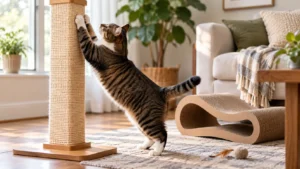
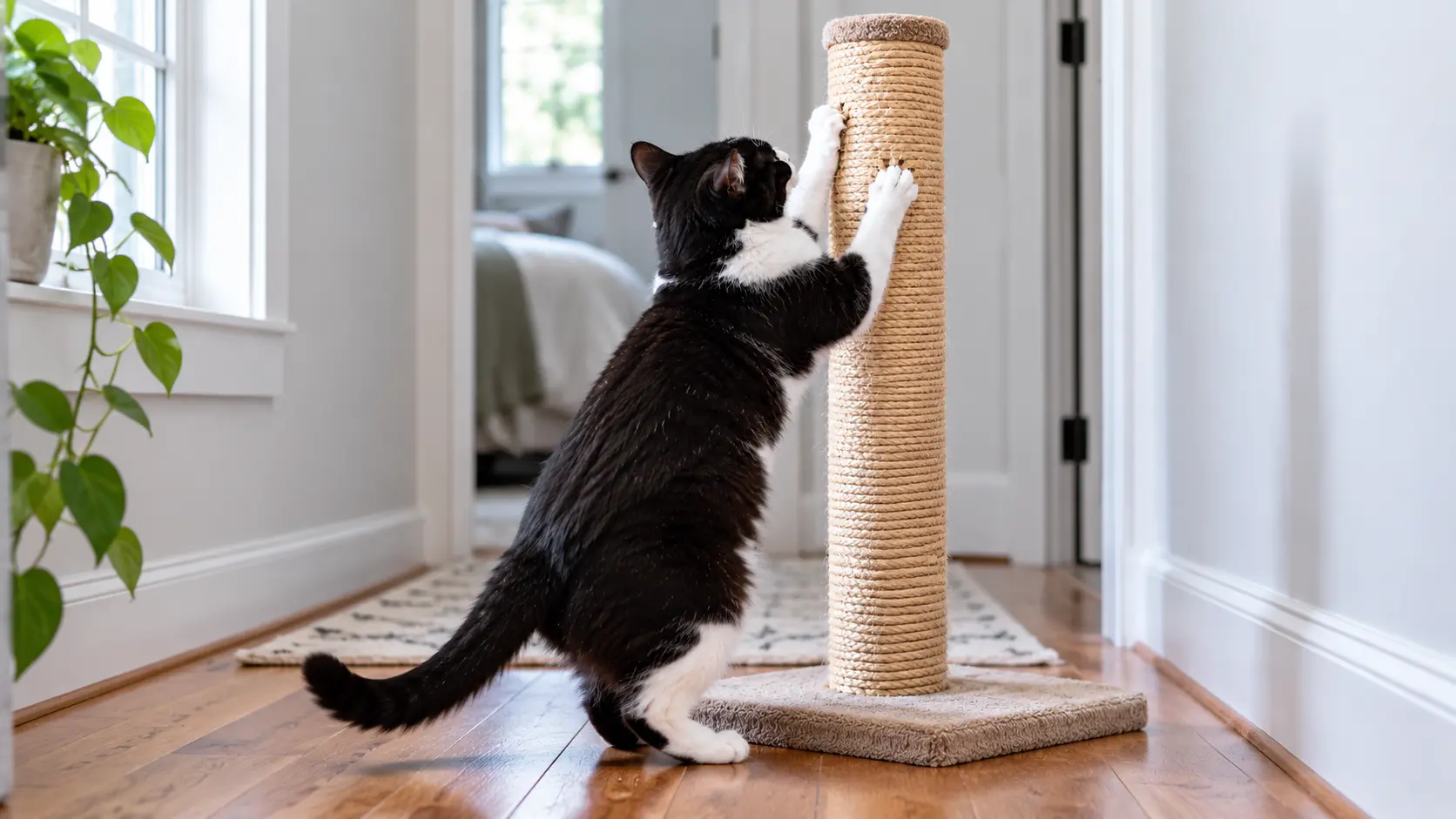
A cat scratching post can look sturdy in a product photo and still be a poor fit for the cat using it. Height matters, but so do the size and weight of the base, the way the post connects to it, and—often overlooked—the texture your cat actually wants to scratch.
After comparing current specifications, retailer information, product Q&A, availability, and recurring customer-feedback patterns, five traditional freestanding posts stood out for different reasons. The SmartCat Ultimate offers the strongest overall balance, while the other picks make more sense when price, extra height, or scratching-surface preference matters more.
If your cat prefers horizontal pads, cardboard lounges, or another format, see our guide to different types of cat scratchers instead.
Affiliate disclosure: LumaPaw may earn a commission when you buy through links on this page, at no extra cost to you. Our product selections are based on research and comparison, not paid placement.
Best Cat Scratching Posts at a Glance
Product |
LumaPaw pick |
Height |
Base |
Scratching surface |
Best for |
Main limitation |
|---|---|---|---|---|---|---|
SmartCat Ultimate |
Best Overall |
32 in |
16 × 16 in |
Woven sisal |
Most households |
Higher price |
Frisco 33.5-in Heavy Duty |
Best Value |
33.5 in |
16 × 16 in |
Woven sisal |
Value-focused buyers |
No replacement surface |
Amazon Basics 35.4-in |
Best for Extra Stretch in a Standard Footprint |
35.43 in |
15.75 × 15.75 in |
Jute/fiber* |
Cats wanting more vertical room |
Material wording is inconsistent |
TRIXIE Parla |
Best Budget |
24.4 in |
15.7 × 15.7 in |
Jute |
Lower-cost basic post |
Shorter scratching height |
Cat Craft Bobcat |
Best for Cats That Prefer Carpet |
41.73 in |
19.25 × 19.25 in |
Carpet-style fabric |
Cats that reject sisal |
Large footprint and variable covering durability |
*Amazon’s current product information uses inconsistent terminology around the Amazon Basics scratching surface, so we describe it conservatively as a jute/fiber covering rather than presenting it as conventional sisal rope.
How We Chose These Cat Scratching Posts
We did not personally test these posts. Our selections are based on current manufacturer and retailer specifications, product Q&A, availability, customer-feedback patterns, and comparison with similar traditional vertical scratching posts.
A high star rating or thousands of reviews was not enough by itself.
Height and usable scratching space
A taller post can give a cat more room to stretch, but the number on the product page is only part of the story. We also looked at how much of the structure is actually useful for scratching and whether owners repeatedly described their cats stretching comfortably on it.
We avoided treating one arbitrary height as correct for every cat. Body length, scratching posture, and individual preference all matter.
Stability and base design
We compared base dimensions, listed product weight where the information appeared reliable, post-to-base construction, and recurring reports of wobbling.
We also separated normal scratching from climbing. A post can stay steady when a cat scratches with its front paws yet move when the same cat runs at it, climbs it, or launches from the top.
Scratching surface
The five picks do not all feel the same under a cat’s claws.
SmartCat and Frisco use woven-style sisal surfaces. TRIXIE uses jute. Amazon Basics has retailer terminology that needs more caution. Cat Craft is the outlier, with a carpet-style covering that may make more sense for cats that repeatedly ignore sisal.
There is no reason to assume every cat will prefer the same material.
Durability and repairability
We looked beyond whether reviewers called a post “durable.”
More useful questions were whether rope unraveled, seams lifted, fabric detached, connections loosened, or one section wore out much faster than another. We also checked whether the scratching portion could be reversed, swapped, repaired, or replaced.
Value and availability
A cheap post is not automatically good value if it is too short for the cat or needs frequent replacement. Likewise, a more expensive post still needs construction and feedback strong enough to justify the difference.
We also penalized weak current availability instead of recommending a product that readers may struggle to buy.
The 5 Best Cat Scratching Posts

SmartCat The Ultimate 32-in — Best Overall
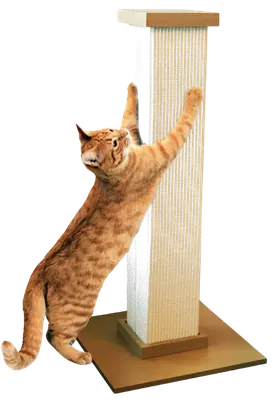
Product snapshot: 32 inches tall, 16 × 16-inch base, woven sisal, traditional freestanding design.
Best for: Cats that already like vertical scratching and owners wanting a straightforward full-size post.
Avoid if: You want the lowest-priced option or a scratching surface that can be easily replaced when worn.
Honest buying note: SmartCat makes the most sense when you want one conventional vertical post and would rather pay more for a well-established design than chase the cheapest option. It is not automatically the better choice if your cat prefers carpet, horizontal scratching, or needs substantially more height.
The SmartCat Ultimate is our strongest all-around cat scratching post because it gets the important basics right without relying on extra platforms, toys, or cat-tree features.
Its 32-inch height gives many adult cats useful room to stretch upward, while the 16-inch-square base keeps the footprint reasonable. The scratching surface is woven sisal rather than a series of individual rope coils, which gives cats a broad continuous area to work on.
The other reason it stayed at the top is the depth of owner feedback. Your supplied research included many reports praising its height and stability, along with individual owners describing years of use. Those long-use reports are encouraging, but they should not be read as a promised lifespan.
There are also enough complaints to keep the recommendation grounded. Some buyers report wobbling, rough or damaged base areas, and sisal beginning to separate. More recent feedback includes a few owners who felt replacement units did not hold up as well as earlier ones.
Another limitation is repairability. There is no official replacement scratching surface. Retailer Q&A indicates the post can be disassembled and reversed to spread wear more evenly, which is useful, but eventually the entire scratching section still becomes a replacement issue.
Pros
- 32-inch height works well for many vertical scratchers
- Broad woven-sisal surface
- Simple post-focused design
- Strong overall stability feedback
- Large body of long-term customer feedback
- Post can reportedly be reversed to distribute wear
Cons
- Costs more than several good alternatives
- No official replacement scratching surface
- Some complaints about wobbling and base finish
- Sisal separation appears in a minority of reviews

Frisco 33.5-in Heavy Duty — Best Value
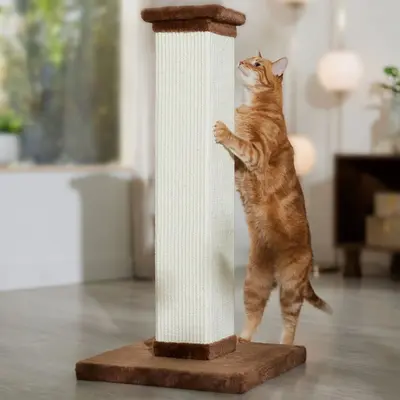
Product snapshot: 33.5 inches tall, 16 × 16-inch base, woven sisal on four sides, 14.33-pound supplied weight, small padded top.
Best for: Buyers who want a substantial full-size vertical post for less than the SmartCat.
Avoid if: Replaceable scratching components or a real lounging platform are priorities.
Honest buying note: If you shop primarily at Chewy and want a conventional woven-sisal post without moving into premium pricing, this is one of the strongest compromises we found.
The Frisco 33.5-inch Heavy Duty gives up surprisingly little in basic size while coming in at a lower price than the SmartCat in the listings we researched.
It is slightly taller at 33.5 inches and uses the same 16 × 16-inch footprint. The scratching section is covered in woven sisal across all four sides rather than wrapped with conventional rope, giving it a broad surface that several owners specifically preferred to rope-style posts.
The base is listed at a substantial 14.33 pounds for the complete product, and customer feedback is generally positive about stability during everyday scratching. Your research also found owners describing several years of use, although there are enough reports of seam lifting, wobbling at the base connection, and attachment problems that we would not call it exceptionally durable without qualification.
One design detail deserves realistic expectations: the top measures only about 7.25 × 7.25 inches. Some cats may balance there, but it should not be treated like a proper cat-tree perch.
Wear is another limitation. Cats often scratch higher on the post, so the upper section can deteriorate while much of the lower material still looks usable. This model does not offer an easy replacement surface or a simple way to reverse that wear.
That is why we consider it a value choice rather than simply declaring it equal to the SmartCat for less money.
Pros
- 33.5-inch scratching-post height
- Woven sisal across four sides
- 16-inch-square base
- Strong price-to-size proposition
- Generally positive stability feedback
- Some encouraging long-term owner reports
Cons
- No replacement scratching surface
- Upper areas may wear faster than lower sections
- Some connection-point wobble complaints
- Occasional seam or covering separation
- Small top is not a true lounging perch

Amazon Basics 35.4-in — Best for Extra Stretch in a Standard Footprint
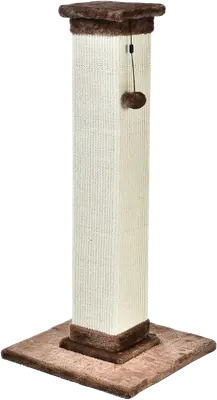
Product snapshot: 35.43 inches tall, 15.75 × 15.75-inch base, approximately 16.1 pounds listed, freestanding design.
Best for: Cats that benefit from a little more vertical reach without requiring an oversized 19-inch base.
Avoid if: You want completely clear material specifications or an easily replaceable scratching cover.
Honest buying note: This is most interesting for the dimensions, not the Amazon badges or review count. If a 32-inch post looks marginally short for your cat but a huge base would be inconvenient, the proportions make sense.
The Amazon Basics Premium Scratching Post occupies a useful middle ground. It is noticeably taller than the SmartCat and Frisco without becoming a 40-plus-inch specialist post.
At 35.43 inches tall with a 15.75-inch-square base, its strongest advantage is the amount of height it provides for the floor space it occupies. That can matter in smaller rooms where a 19-inch-square base starts to feel bulky.
Owner feedback in the supplied research is generally favorable about everyday stability and stretching room. Some buyers also describe several years of use, although those individual reports should not be treated as a normal guaranteed lifespan.
The main weakness is unusually messy product terminology. Amazon information has referenced both sisal and natural jute fiber. Because those descriptions do not line up cleanly, we would rather be conservative than tell readers they are buying a specific rope construction that has not been consistently documented.
Customer complaints also reveal a few practical weaknesses: seam separation, bolts that may need retightening, occasional crooked assembly, and wobbling when energetic cats climb or jump from the top.
That last point is important. A post can be steady while scratching and still move under the much greater leverage of an airborne cat.
Pros
- 35.43-inch overall height
- Compact footprint relative to its height
- Substantial listed weight
- Good feedback on normal scratching stability
- Useful option for longer vertical stretches
- Large pool of owner feedback
Cons
- Scratching-material terminology is inconsistent
- Some seam-separation complaints
- Hardware may need occasional retightening
- Can wobble with aggressive climbing or jumping
- Main scratching covering is not obviously replaceable

TRIXIE Parla 24.4-in — Best Budget
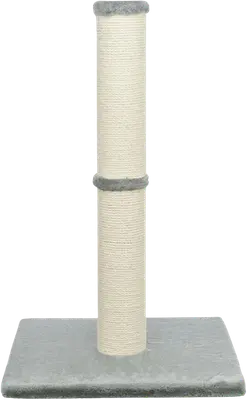
Product snapshot: 24.4 inches tall, 15.7 × 15.7-inch base, jute scratching surface, freestanding design.
Best for: Budget-conscious owners, smaller cats, or households adding an extra vertical scratching option.
Avoid if: Your cat is long-bodied, stretches high when scratching, or is especially hard on wrapped scratching surfaces.
Honest buying note: Buy this because you want an inexpensive basic post, not because it matches a taller heavy-duty model for less money. If your cat already stretches high on furniture, spending more on a taller post is probably the better fit.
The TRIXIE Parla earns its place by being inexpensive and straightforward, not because it competes directly with the 32- to 35-inch posts on size.
Its current Chewy version uses jute and a 15.7-inch-square base. At 24.4 inches tall, though, it is substantially shorter than every other mainstream post in this roundup.
That is the compromise to understand before buying.
For a cat that scratches in a more compact posture, it may be enough. For a long adult cat that likes to reach high and fully extend, the Parla may feel restrictive compared with the taller alternatives.
Customer feedback is positive enough around price, ease of assembly, and ordinary stability to make it a reasonable budget choice. Durability is far less consistent. The supplied reviews include recurring complaints about gaps developing in the jute, unraveling, shedding, loosening connections, and occasional failures where the post meets the base.
Construction has also changed over time, with recent buyers describing a sectional design that is not necessarily identical to older versions. That makes it especially important not to mix older review details with the current unit.
Chewy also confirms that staples are used in the construction and that replacement rope is not sold separately. As the jute wears, inspect it for exposed hardware rather than continuing to use a badly damaged post.
Pros
- Low purchase price
- Confirmed jute scratching surface
- Simple traditional vertical design
- Reasonably broad base for its height
- Easy assembly reported frequently
- Currently available through Chewy in the research snapshot
Cons
- Only 24.4 inches tall
- Jute can gap, shed, or unravel
- No official replacement rope
- Some post-to-base failure complaints
- Current construction differs from some older versions

Cat Craft Bobcat 41.73-in — Best for Cats That Prefer Carpet
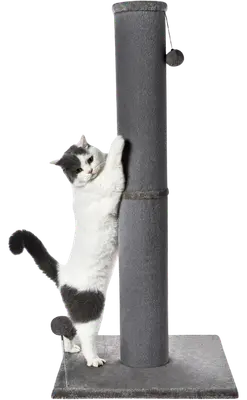
Product snapshot: 41.73 inches tall, 19.25 × 19.25-inch base, 10.8-pound listed weight, carpet-style scratching surface.
Best for: Cats that repeatedly choose carpet, upholstery, or fabric-like textures over sisal or jute.
Avoid if: You want a compact post, maximum structural weight, or a scratching cover with predictable long-term durability.
Honest buying note: This is not the post we would buy simply because it is tallest. Its real value is for cats whose scratching history already tells you they prefer a carpet-like surface.
The Cat Craft Bobcat is the most specialized recommendation here.
Its 41.73-inch height is eye-catching, but that is not why we kept it on this general page. The more important difference is the scratching texture. This model uses a short-plush, carpet-style covering rather than the sisal or jute found on most traditional posts.
That matters because several owners in the supplied review set specifically said their cats ignored sisal posts but used the Cat Craft enthusiastically. If your cat keeps targeting carpet or upholstered furniture, matching that texture preference may be more useful than buying another highly rated sisal pole.
Its two main post sections are another interesting feature. Multiple buyers report rotating or swapping them when one area becomes worn, which can extend the useful life of the surface.
Durability itself is mixed. Some owners report one to several years of use, while others describe fabric loosening, shedding, or separating after only weeks or months. The underlying structure can remain usable even after the covering becomes the weak point.
Stability also needs context. The 19.25-inch-square base is wide, but the post weighs only 10.8 pounds despite standing almost 42 inches tall. Most feedback is positive during scratching and normal climbing, yet running leaps and aggressive climbing can make it wobble or tip.
Assembly deserves an extra check. Several reviews mention a top screw protruding when the hardware is arranged incorrectly or does not seat properly. Make sure no bolt or sharp hardware is exposed before your cat uses it. Remove damaged hanging toys or strings rather than leaving loose parts attached.
Pros
- Distinct carpet-style scratching surface
- Very tall 41.73-inch design
- Large base
- Strong feedback from cats that reject sisal
- Post sections can reportedly be rotated or swapped
- Useful climbing/stretching space
Cons
- Large footprint
- Relatively light for its height
- Covering durability varies considerably
- Fabric may shed or detach
- Can wobble under aggressive climbing
- Assembly hardware needs careful inspection
How to Choose the Right Cat Scratching Post
A good cat scratching post should fit the way your cat already likes to scratch. Height, material, and stability matter, but they only help if the post matches your cat’s preferred direction and texture.
Start With Your Cat’s Scratching Direction
Watch what your cat chooses when no scratching post is nearby.
If your cat reaches upward on sofa arms, door frames, or other vertical surfaces, a freestanding post is a logical match. If your cat mostly scratches flat carpet, rugs, or cardboard on the floor, a vertical post may not solve the problem by itself.
Cats can have individual preferences for both scratching material and orientation. AAHA recommends offering appropriate scratching surfaces that are stable and long enough for comfortable stretching, rather than assuming one format suits every cat.
If you are still figuring out which format fits your cat, our guide to the best cat scratchers compares different scratching styles rather than only vertical posts.
Choose Enough Height for Your Cat’s Stretch
There is no single height that automatically works for every cat.
A better approach is to watch how high your cat reaches when scratching. Ideally, the post should let the cat extend comfortably without running out of usable scratching surface halfway through the stretch.
That is one reason the 24.4-inch TRIXIE Parla and 35.43-inch Amazon Basics post serve different buyers even though both are traditional vertical posts.
Do not rely too heavily on labels such as “for large breeds.” Actual dimensions, usable scratching area, base stability, and your cat’s body length are more useful.
AAHA specifically recommends scratching surfaces that are tall or long enough to allow a full stretch and sturdy enough to resist the cat’s pulling force.
Check the Base, Weight, and Connection Points
A wide base is helpful, but base width alone does not guarantee stability.
Look at the whole design:
- Base dimensions
- Overall product weight
- Thickness of the scratching column
- How the post connects to the base
- Whether bolts can be retightened
- Whether owners repeatedly report wobbling
Also think about how your cat uses a post.
A cat that stands on the floor and scratches puts different forces on the structure from a cat that climbs to the top and jumps off. Some products in our research received strong feedback during normal scratching but occasional complaints when cats treated them like climbing poles.
If the post moves noticeably during ordinary scratching, check the assembly before continuing to use it.
Sisal Fabric vs Rope vs Jute vs Carpet
Material preference is one of the easiest things to overlook.
Woven sisal gives cats a broad continuous scratching surface without individual rope coils. That can reduce one common failure mode—rope gradually separating into gaps—but woven surfaces can still lift at seams or wear unevenly.
Sisal or jute rope gives a rough, claw-friendly texture and is common on scratching furniture. The downside is that individual wraps can loosen or unravel as the post ages.
Jute/fiber coverings can vary in construction, which is why exact retailer terminology matters. If a product page is inconsistent, it is better to describe the surface conservatively than pretend the material is clearer than it is.
Carpet or fabric-style surfaces may make sense when your cat already shows a strong preference for similar textures. They can also shed or detach differently from rope or woven sisal.
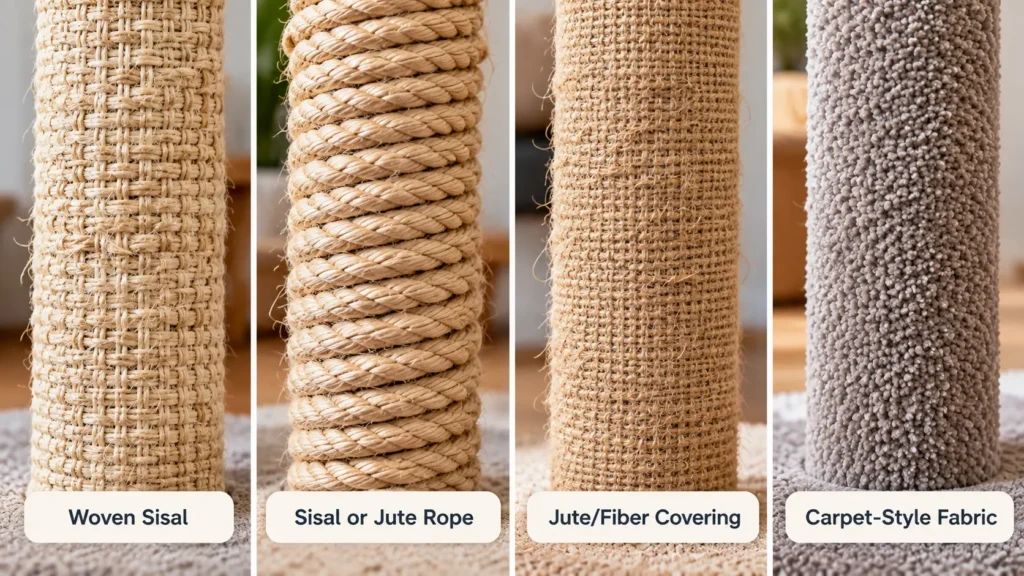
AAHA guidance supports offering different substrate choices because cats do not all prefer the same material.
Think About Replacement Cost, Not Just Purchase Price
The cheapest post at checkout is not always the cheapest post to own.
Before buying, check what happens when the most-used section wears out.
Can the post be:
- Turned upside down?
- Rotated?
- Swapped between upper and lower sections?
- Rewrapped?
- Replaced with an official spare part?
SmartCat can reportedly be reversed to spread wear. Cat Craft owners report rotating or swapping sections. Several other products in our roundup do not offer an easy replacement surface.
That difference matters because cats often concentrate scratching on one section rather than wearing the entire post evenly. Repairability and uneven wear were therefore part of our product comparison rather than an afterthought.
Cat Scratching Post Safety and Quality Checklist
A scratching post is simple furniture, but it still needs occasional inspection.
Before your cat uses a newly assembled post:
- Follow the assembly instructions rather than leaving out hardware.
- Tighten bolts fully.
- Place the post on a flat, stable surface.
- Push or pull it gently from several directions to check for excessive movement.
- Make sure no screw, staple, or bolt protrudes into an area your cat can contact.
As the post wears:
- Check rope and fabric seams for separation.
- Watch for exposed staples or fasteners.
- Retighten hardware if the post begins to loosen.
- Remove dangling toys if the string or attachment becomes damaged.
- Replace or retire the post if a structural joint cracks or can no longer be tightened securely.
- Do not keep a badly frayed scratching surface in use if it exposes hard or sharp parts underneath.
Very tall posts deserve extra attention if your cat climbs them. Scratching, climbing, and jumping place different loads on the structure, so a post that feels stable during normal scratching can still move when a cat launches onto it.
AAHA also recommends firmly anchored scratching surfaces so cats get resistance when they scratch.
Where to Put a Cat Scratching Post So Your Cat Uses It
Buying the right post does not help much if it sits in a corner your cat never visits.
A better starting point is to place it where your cat already shows scratching behavior.
That might mean:
- Beside a sofa arm the cat already scratches
- Near a favorite sleeping area
- Along a frequently used pathway
- In a social room where your cat spends time
AAHA recommends placing appropriate scratching objects near current scratching targets and favorite resting areas. Positive reinforcement can also help cats build a habit of using the new surface.
Do not force your cat’s paws onto the post. Instead, make the area easy to investigate.
A wand toy, catnip if your cat responds to it, praise, or a small reward after voluntary use can all be more useful than physically placing the cat on the post.
If you already use food rewards for training, our cat training treats guide compares small options that are practical for repeated reinforcement.
Give the cat time before moving or removing every old scratching option. Some cats need repeated exposure before a new surface becomes part of their routine.
When a Scratching Post Isn’t the Right Scratcher
Not every scratching problem calls for a vertical post.
A different format may make more sense if your cat consistently prefers:
- Flat cardboard on the floor
- Rugs or carpet
- A wall or corner surface
- Angled scratchers
- Large climbing structures with resting platforms
That does not mean the cat “doesn’t like scratchers.” It may simply prefer another orientation or material.
For a broader comparison of formats, see our guide to cat scratchers for different scratching styles.
If your main goal is climbing and lounging rather than dedicated scratching, a larger structure may also make more sense. Our cat tree guide for large cats covers that different use case.
Frequently Asked Questions About Cat Scratching Posts
What Type of Scratching Post Do Cats Prefer?
There is no single material or design that every cat prefers.
Some cats like woven sisal or rope, while others repeatedly choose carpet, cardboard, wood, or another texture. Orientation matters too: one cat may prefer a tall vertical post while another chooses a horizontal pad.
Start with the surfaces your cat already tries to scratch and choose a stable alternative with a similar orientation or texture. AAHA also recommends offering different materials to identify individual preference.
How Tall Should a Cat Scratching Post Be?
It should be tall enough for your cat to stretch comfortably while scratching.
Rather than relying on one fixed number, watch how high your cat reaches on furniture or other vertical surfaces. A long-bodied adult cat may need considerably more height than a smaller cat that scratches in a compact posture.
The post should also remain stable during that stretch. Height without a secure base is not an advantage.
Is Sisal Rope or Sisal Fabric Better for a Cat Scratching Post?
Neither is automatically better for every cat.
Woven sisal gives a continuous scratching surface and does not have individual rope coils that can gradually unwind. Rope can offer a rough texture many cats like, but individual wraps may separate as they wear.
Construction quality and your cat’s preference matter more than choosing a material based only on its name.
Where Is the Best Place to Put a Cat Scratching Post?
Start near a place where your cat already scratches or spends time resting.
A post hidden in an unused room may be less appealing than one beside a sofa, sleeping area, or familiar pathway. AAHA recommends placing scratching objects near existing scratching locations and favorite resting areas.
Once your cat is using the post consistently, you can experiment with moving it gradually if needed.
How Do I Get My Cat to Scratch a Scratching Post?
Make the post easy to notice and reward voluntary interaction with it.
Place it near an existing scratching target, then try toys, catnip if your cat responds to it, verbal praise, or a small food reward when the cat uses it.
Do not punish the cat for ignoring the new post or force its paws onto the surface. Positive reinforcement and better placement are more useful starting points.
How Often Should You Replace a Cat Scratching Post?
There is no useful universal replacement schedule.
Replace or repair the post based on condition. Warning signs include:
- A base that no longer stays stable
- Loose joints that cannot be tightened
- A wall or corner surface
- Exposed staples, screws, or other hardware
- A scratching surface that has detached badly
- Loose strings or toys that create an avoidable hazard
Heavy wear alone is not always a problem. Many cats prefer a well-used scratching surface. The important question is whether the post remains structurally sound and safe.
Final Verdict
For a traditional vertical cat scratching post, the SmartCat Ultimate 32-in offers the strongest overall balance in this group. Its usable height, woven-sisal surface, straightforward construction, and depth of customer feedback make it the most broadly suitable starting point.
That does not make it the right choice for every home.
The Frisco 33.5-in Heavy Duty offers stronger value, while the Amazon Basics 35.4-in gives cats more vertical room without requiring an oversized base. The TRIXIE Parla makes sense when keeping the upfront price low matters most, and the Cat Craft Bobcat is the more interesting option when a cat clearly prefers carpet-like surfaces.
The best cat scratching post is not necessarily the one with the most reviews or the tallest column. Choose a post that matches your cat’s scratching direction, preferred texture, body length, and how energetically they use it.