If your cat keeps scratching the couch, buying another scratching post isn't necessarily the answer. The problem may be where the post is located, how stable it feels, or whether its surface appeals to your cat.
The best way to stop cats from scratching furniture is to provide suitable scratching alternatives, place them near the areas your cat already scratches, protect the furniture, and reward your cat for using the right surfaces.
Scratching is a normal feline behavior. Rather than trying to eliminate it, the goal is to redirect it somewhere that satisfies your cat's needs without damaging your home.
Why Do Cats Scratch Furniture?
Cats scratch for several reasons:
- To remove worn outer layers of their claws.
- To stretch their muscles.
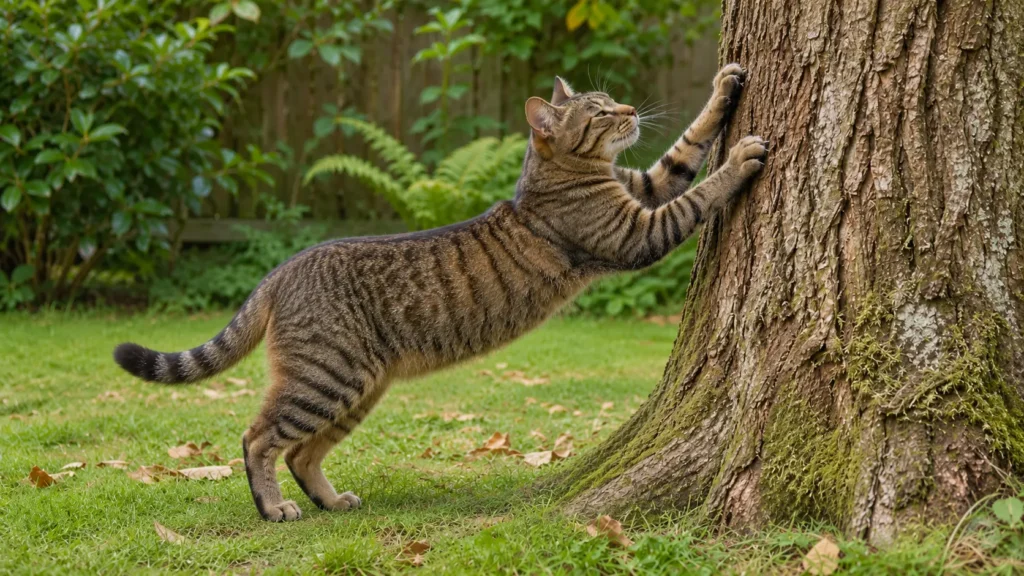
- To leave visual marks and scent signals.
- To express excitement or respond to stress.
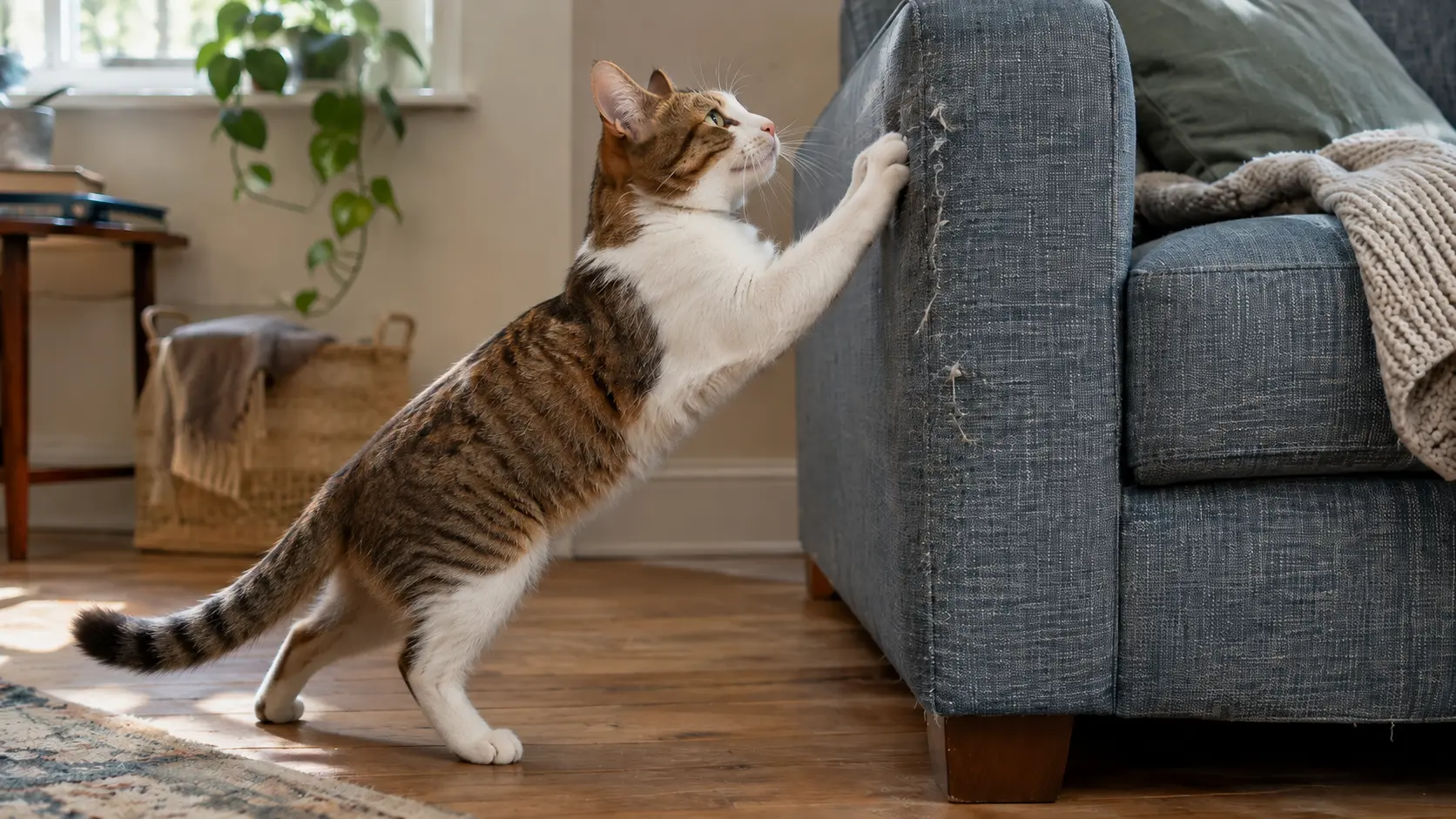
Furniture often meets several of these needs at once. A sofa arm provides a textured surface, enough resistance for pulling with the claws, and a stable structure that allows a cat to stretch.
Location matters, too. Your couch may sit in a room where your cat spends much of its day, while its scratching post stands in a quiet corner that it rarely visits.
Your cat isn't scratching the furniture out of spite. It's using a surface that meets its needs. Understanding what makes that surface appealing is the first step toward changing the habit.
7 Humane Ways to Stop Cats From Scratching Furniture
1. Choose a Scratcher Your Cat Actually Wants to Use
Before buying a scratching post, watch how your cat scratches.
Does it stand on its hind legs and reach up the side of the couch? Does it pull at the fabric of a seat cushion? Does it prefer wooden chair legs over upholstered furniture?
These habits can help you choose a more suitable alternative.
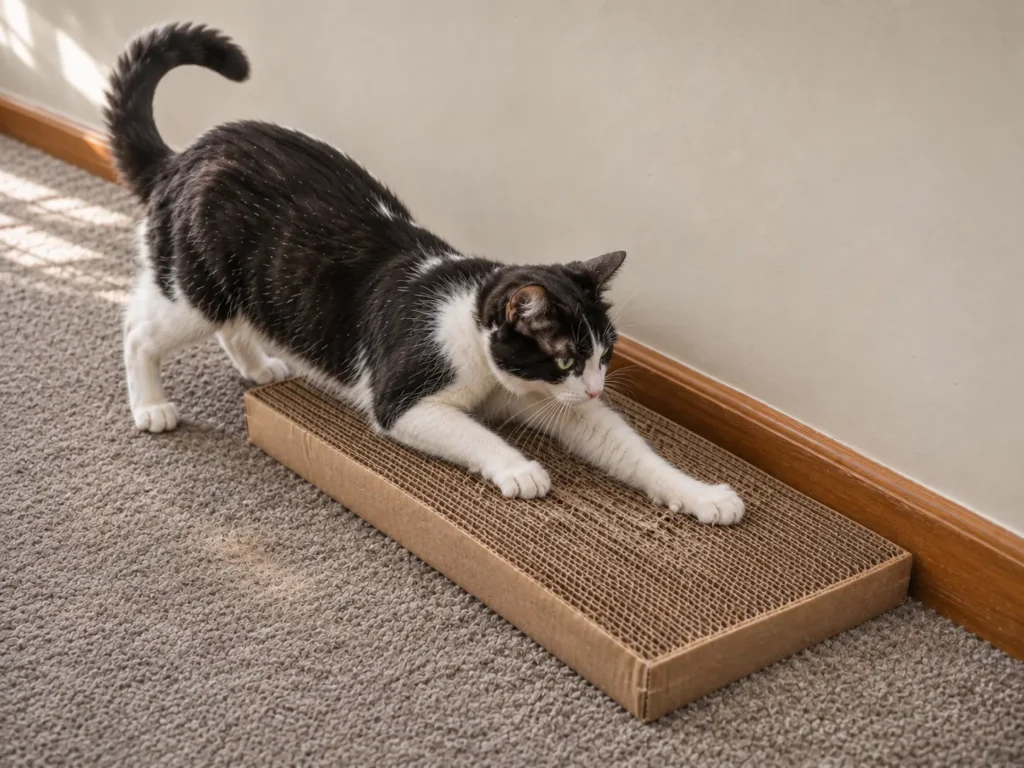
| What your cat scratches | Scratcher to try |
|---|---|
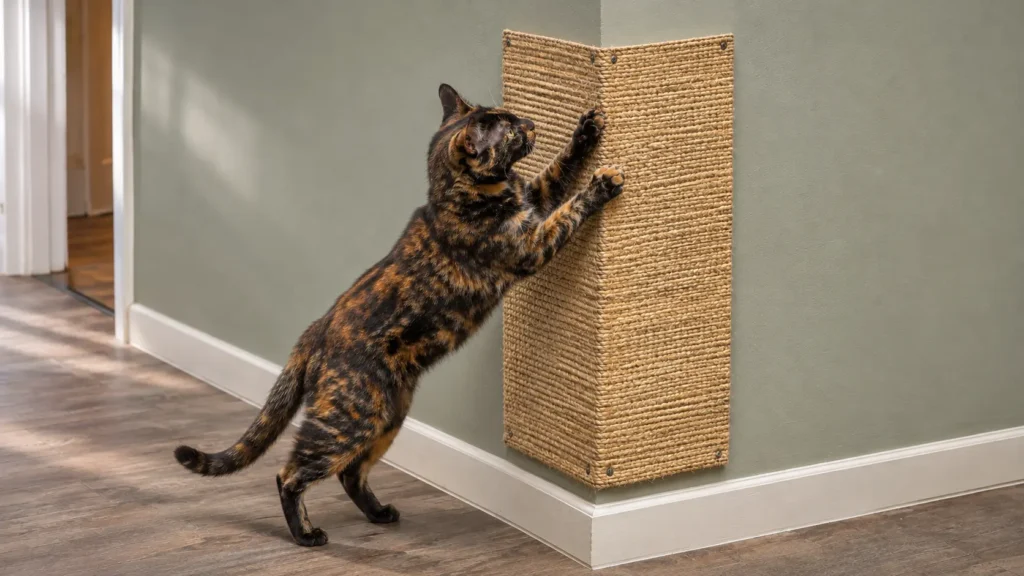
| Sofa arms and chair backs | Tall vertical scratching post |
| Seat cushions and flat surfaces | Horizontal scratching pad |
| Sloping furniture surfaces | Angled scratching board |
| Wooden furniture legs | Suitable wood or textured scratching post |
Pay attention to the material as well. Sisal rope, woven sisal, cardboard, carpet, and wood are common options, but individual cats have different preferences.
A cat that ignores a carpet-covered post might happily use a cardboard scratch pad. Another may prefer the resistance of tightly wrapped sisal rope.
For vertical scratching, choose a post tall enough for your cat to stretch comfortably and sturdy enough that it doesn't wobble when pulled.
Ohio State University's Indoor Pet Initiative recommends considering the surfaces a cat already scratches when selecting an appropriate scratching post.
If you already own a scratcher, check its design before replacing it. A better location or a more stable base may be all that is missing. If you want to compare formats, our guide to different types of cat scratchers covers the main options.
2. Put Scratching Posts Where Your Cat Already Scratches
A perfectly good scratching post can go unused simply because it's in the wrong place.
If your cat scratches the left arm of the sofa every morning, put a suitable scratching post directly beside that arm. Don't expect your cat to walk across the house to use a post in another room.
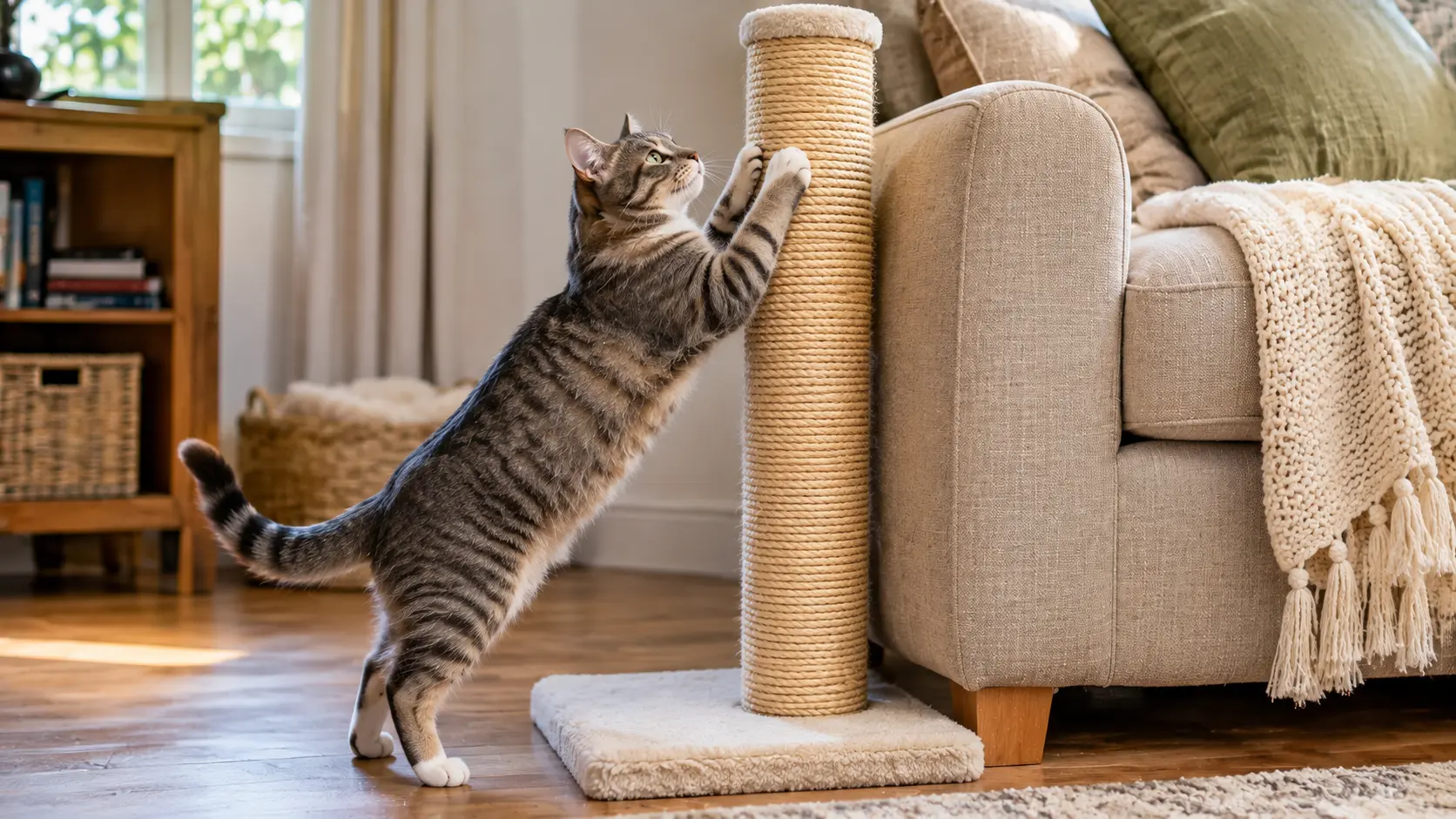
Other useful locations include:
- Near your cat's favorite sleeping area.
- In rooms where your cat spends a lot of time.
- Near doors or windows where scratching regularly occurs.
- Beside other frequently scratched furniture.
Cats often stretch and scratch after waking, so a scratcher near their favorite bed or resting spot can be particularly useful.
Once your cat regularly uses the new scratching surface, you can try moving it gradually to a more convenient location. If your cat returns to the furniture, move the scratcher back.
Sometimes the most effective place for a scratching post is simply the place your cat has chosen, even if it isn't where you originally wanted it.
3. Protect the Couch While Your Cat Learns
Changing an established scratching habit takes time. In the meantime, protecting vulnerable furniture can prevent further damage.
Start with the areas your cat actually targets rather than covering everything unnecessarily.
For example, if the outside corner of your couch is the main problem, a blanket covering only the seat cushions won't help much.
Consider:
- A securely fitted furniture cover.
- A thick blanket that stays over the damaged area.
- A smooth furniture guard suitable for your upholstery.
- Temporarily blocking access to a particular piece of furniture, provided your cat still has access to its essential resources.
Choose protectors that can be secured without leaving exposed sharp fasteners, loose strings, or other hazards.
Our guide to protective couch covers for cats explains the differences between full-sofa covers and more targeted furniture protection.
Remember that even thick fabric can be damaged by persistent scratching. A cover provides a protective layer, but it doesn't change the reason your cat wants to scratch.
Keep an appealing scratching alternative beside the protected area so your cat has somewhere else to direct the behavior.
4. Reward Your Cat for Using the Scratching Post
Positive reinforcement helps your cat learn which scratching surfaces lead to a pleasant experience.
You don't need a complicated training routine.
- Let your cat investigate the new scratcher without forcing contact.
- Encourage interest by playing with a wand toy nearby or adding a small amount of catnip if your cat enjoys it.
- When your cat scratches the appropriate surface, offer a reward immediately.
- Repeat this whenever you notice the desired behavior, especially while the new habit is developing.
The reward could be a small treat, a favorite toy, or gentle attention if your cat enjoys being petted.
The Feline Veterinary Medical Association's positive reinforcement guidance emphasizes giving rewards immediately after the desired behavior so the cat can associate the two.
If your cat starts scratching the couch, avoid yelling or rushing over with a treat. Instead, calmly encourage it toward an appropriate alternative and reward actual use of that scratcher.
Try to reward spontaneous use of the post as well. Otherwise, your cat may learn that scratching the couch is what gets your attention.
Never hold your cat's paws against a scratching post to demonstrate how it works. Let your cat explore it voluntarily.
5. Provide More Scratching Options Around Your Home
One scratching post may be enough for some cats, but others need several options in different locations.
Your cat might prefer a tall sisal post in the living room and a cardboard pad beside its sleeping area. Providing both allows it to scratch in different positions throughout the day.
If you have multiple cats, consider whether each cat can reach a scratching surface without passing another cat that makes it uncomfortable.
Several scratchers placed together in one corner may be less useful than scratchers distributed across separate rooms.
Also consider your cat's age and mobility. A senior cat that previously enjoyed tall posts may find horizontal scratching more comfortable, particularly if stretching upward has become difficult.
Keep suitable scratchers accessible and replace them when they become unstable, develop unsafe loose parts, or are too worn to use properly.
A scratching post doesn't need to look brand new to be useful. If your cat still enjoys a worn but safe scratcher, there's no reason to replace it simply because it looks untidy.
6. Reduce Stress and Provide More Enrichment
Sometimes a change in scratching behavior follows a change in the household.
A new pet, unfamiliar visitors, moving furniture, or tension between cats can affect how secure a cat feels at home.
Scratching alone doesn't prove your cat is stressed, but a noticeable increase in scratching is worth investigating.
Consider whether your cat has:
- Quiet places to rest without being disturbed.
- Accessible hiding spots and suitable elevated resting areas.
- Regular opportunities for interactive play.
- Predictable daily routines.
- Easy access to food, water, litter boxes, and scratching surfaces.
These resources are particularly important in households with several cats.
A cat that avoids the living room whenever another cat is present may not benefit from another scratching post in that same room. It may need its own scratching and resting areas elsewhere.
Synthetic feline pheromone diffusers may also help some cats. A 2023 randomized, placebo-controlled study found that a specific facial pheromone diffuser reduced unwanted scratching more than a placebo.
However, the study was funded by the product's manufacturer, and its findings do not establish that every pheromone product works equally well.
Treat pheromones as an optional addition to environmental changes, not a replacement for them.
7. Keep Your Cat's Claws Maintained
Regular nail trimming can reduce some of the damage caused by sharp claws, particularly in indoor cats.
It will not, however, remove your cat's need to scratch.
If your cat is comfortable having its paws handled, use appropriate cat nail clippers to trim only the sharp tip of the claw. Avoid the quick, the sensitive area inside the nail containing nerves and blood vessels.
You don't need to trim every claw in one session. Taking breaks or trimming a few claws at a time may make the experience easier.
If you're unsure where to cut, or your cat becomes distressed during nail trimming, ask your veterinarian or a qualified groomer for help.
Temporary nail caps may be another option for some cats, but they require proper fitting and maintenance. Discuss their suitability with your veterinarian rather than relying on them as your primary solution.
What If Your Cat Still Scratches the Furniture?
If you've followed these steps and your cat continues scratching the couch, don't assume the training has failed.
Look more closely at what happens before and during the scratching.
| Problem | What to try next |
|---|---|
| Your cat ignores its scratching post | Try a different material, check stability, and move the post closer to the furniture. |
| Your cat uses the post but still scratches the couch | Improve furniture protection and continue rewarding appropriate scratching. |
| Scratching happens when you're away | Keep vulnerable furniture protected and preferred scratchers accessible throughout the day. |
| Your cat scratches immediately after waking | Place a scratching surface beside its favorite resting spot. |
| Your cat starts scratching new furniture | Provide an alternative nearby and consider whether household changes are affecting its behavior. |
| One cat prevents another from using a post | Place scratching resources in separate areas with easy access. |
| Your older cat stops using its vertical post | Offer a horizontal alternative and speak to your veterinarian about possible mobility problems. |
When testing a new scratching setup, try changing one feature at a time. This makes it easier to identify whether the material, location, or orientation is influencing your cat's choice.
Watch for gradual improvements, such as more frequent use of the scratching post or fewer incidents of furniture scratching.
You don't need to remove furniture protection as soon as your cat uses the post successfully. Keep it in place until the new habit becomes more consistent.
If scratching resumes after you remove the cover, protect the area again and reassess the setup.
What Not to Do When Your Cat Scratches Furniture
Some methods may interrupt scratching momentarily but do little to address the underlying behavior. Others can cause fear, distress, or physical harm.
Avoid the following:
- Spraying your cat with water or yelling: Punishment can make your cat fearful of you without teaching it where to scratch.
- Using startling devices: Sudden noises or bursts of air may create unnecessary anxiety.
- Applying double-sided sticky tape as a deterrent: Prefer ordinary protective covers or smooth physical barriers that don't rely on an unpleasant experience.
- Forcing your cat's paws onto a scratcher: This may create a negative association with the very surface you want your cat to use.
- Making homemade essential-oil sprays: Certain essential oils can be harmful to cats, particularly through concentrated exposure or ingestion.
- Removing all scratching opportunities: Your cat still needs an appropriate place to perform this natural behavior.
The Feline Veterinary Medical Association's behavioral training guidance recommends protecting furniture, providing suitable scratching surfaces, and reinforcing desired behavior instead of using punishment.
Commercial anti-scratch sprays should also be approached with caution. Their ingredients and effectiveness vary, and an unpleasant scent doesn't teach your cat which surface it should use instead.
Avoid homemade concentrated oil mixtures. The ASPCA's household product safety guidance explains why essential-oil exposure can be a concern for pets.
Declawing should not be used to protect furniture. Unlike nail trimming, surgical declawing involves removing the last bone of the affected toes. It can cause pain and other complications, which is why the Feline Veterinary Medical Association strongly opposes elective declawing.
When to Ask a Veterinarian for Help
Occasional furniture scratching is normal. A cat that regularly scratches a sofa doesn't necessarily have a medical or behavioral disorder.
However, speak to your veterinarian if your cat:
- Suddenly scratches much more often than usual.
- Changes its scratching habits alongside changes in appetite, activity, or social behavior.
- Shows signs of pain, stiffness, or difficulty stretching.
- Appears persistently anxious or avoids other household cats.
- Continues to have significant behavioral difficulties despite appropriate environmental changes.
Cats may be subtle about physical discomfort. An older cat that stops using a familiar scratching post, for example, may be experiencing mobility problems rather than simply losing interest.
Your veterinarian can investigate possible medical contributors and, when necessary, recommend a qualified feline behavior professional.
Frequently Asked Questions
How Long Does It Take to Train a Cat Not to Scratch Furniture?
There is no fixed timeline. Some cats quickly accept a suitable scratching alternative, while others need repeated encouragement and adjustments to their environment.
Established scratching habits may take longer to change. Focus on consistent improvement rather than expecting your cat to stop scratching the furniture within a particular number of days.
Can Older Cats Learn to Stop Scratching Furniture?
Yes. Older cats can learn new scratching habits through positive reinforcement and suitable alternatives.
Consider their comfort when choosing a scratcher. A stable, low-profile scratching pad may be more accessible than a tall post for a cat with reduced mobility. Sudden changes in scratching preferences should also be discussed with a veterinarian.
Do Anti-Scratch Sprays Really Work?
Some cats may avoid furniture treated with a repellent spray, while others continue scratching it. Results vary, and no general anti-scratch spray can be assumed to work for every cat.
Repellent sprays are different from synthetic feline pheromone products, which are intended to influence emotional or behavioral responses rather than simply repel cats. Our guide to cat anti-scratch sprays and their limitations explains the differences.
Neither should replace an appropriate scratching surface and consistent behavioral management.
Final Thoughts
Learning how to stop cats from scratching furniture starts with understanding why your cat chooses that particular surface.
Before buying more products, observe where your cat scratches, what material it prefers, and whether its existing scratcher offers enough space and stability.
Provide an appealing alternative close to the furniture, protect the vulnerable area, and reward your cat whenever it uses the appropriate scratching surface.
You may need to experiment before finding the right combination. But giving your cat somewhere it genuinely wants to scratch is a better long-term approach than trying to suppress a natural behavior.