Choosing wet kitten food is not just a matter of finding a flavor your kitten will eat. A food used as the main diet should be nutritionally appropriate for growth, while texture, calories, package size, ingredient restrictions, and daily feeding cost can make one option much more practical than another.
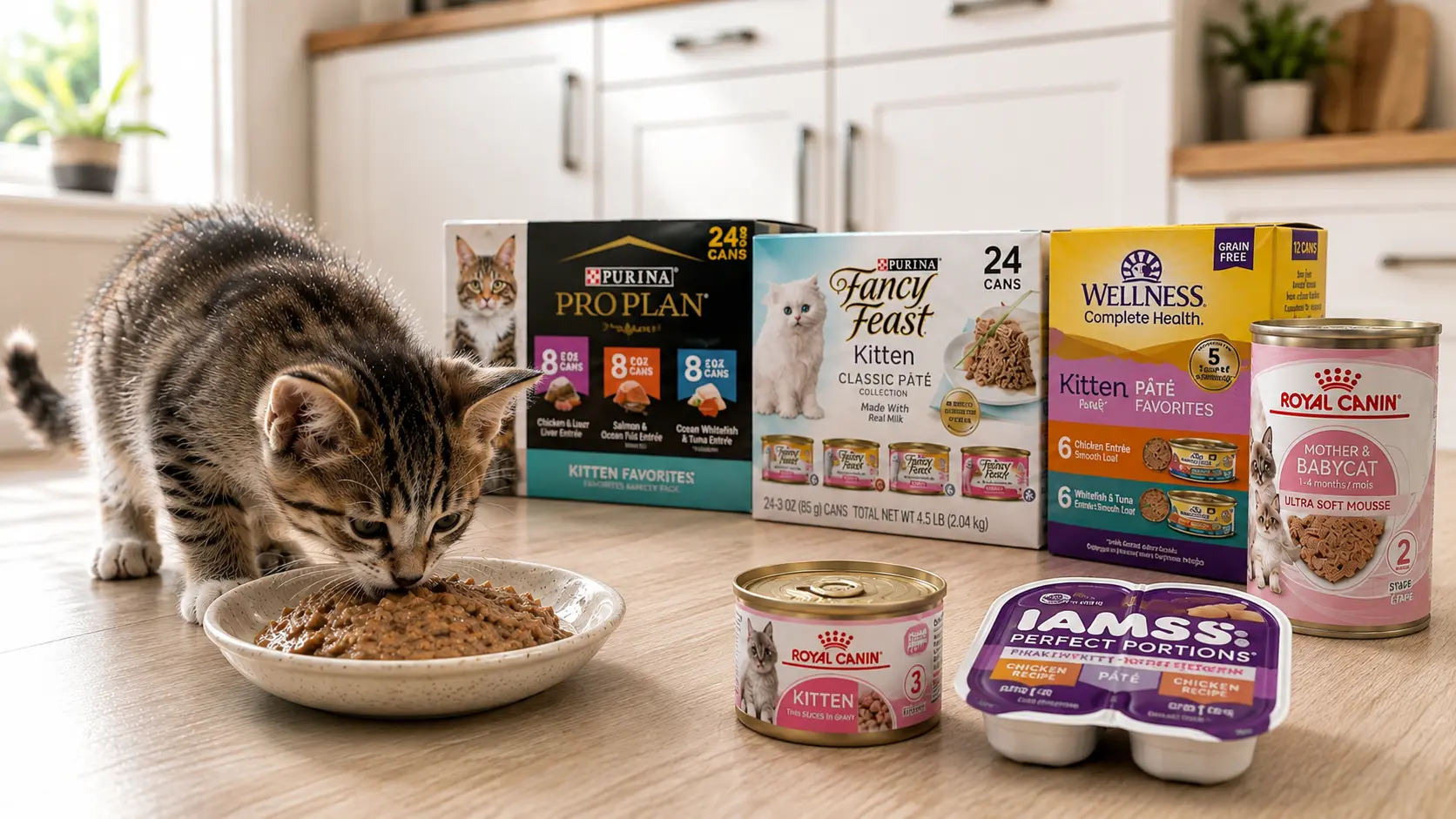
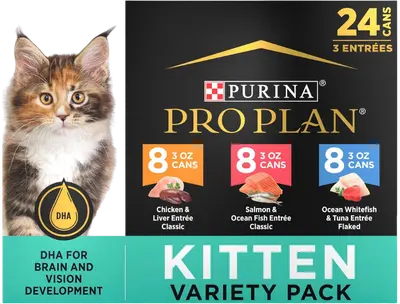
After comparing current manufacturer information, retailer listings, nutritional details, and recurring Amazon and Chewy feedback, Purina Pro Plan DEVELOPMENT Kitten Favorites Variety Pack is our Best Overall pick. It combines three recipes, two textures, DHA, and relatively good calorie density.
That does not make it the right choice for every kitten. Fancy Feast offers better value, Royal Canin has useful options for gravy lovers and early weaning, while IAMS solves a practical portioning problem.
If you are still deciding between wet and dry formats, our complete guide to food for kittens compares both.
Affiliate disclosure: LumaPaw may earn a commission when you buy through links on this page, at no extra cost to you. We did not personally test these foods. Our recommendations are based on current product information, nutritional details, retailer listings, and patterns in customer feedback.
Best Wet Kitten Food at a Glance
Purina Pro Plan DEVELOPMENT Kitten Favorites Variety Pack
Best Overall Wet Kitten Food
Three kitten recipes with both smoother classic entrées and a flaked Whitefish & Tuna option. The researched formulas provide about 99–111 calories per 3-oz can.
Best for: Owners who want several flavors and textures in one purchase.
Main limitation: The flaked recipe can be less appealing to kittens that strongly prefer pâté.
Fancy Feast Kitten Classic Pâté Variety Pack
Best Budget Wet Kitten Food
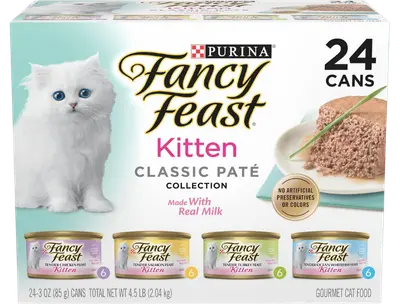
Four kitten pâté recipes at a considerably lower feeding cost than several of the other picks.
Best for: Affordable everyday pâté.
Main limitation: The recipes use several animal proteins and can include milk and egg.
Wellness Complete Health Kitten Pâté Variety Pack
Best Smooth Pâté
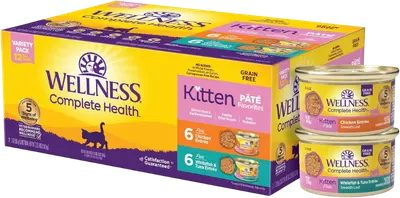
Two soft pâté recipes with useful calorie density, especially the Chicken formula.
Best for: Kittens that prefer a consistent smooth texture.
Main limitation: Customer acceptance is less consistent than with some of our higher-ranked options.
Royal Canin Kitten Thin Slices in Gravy
Best Gravy-Style Wet Kitten Food
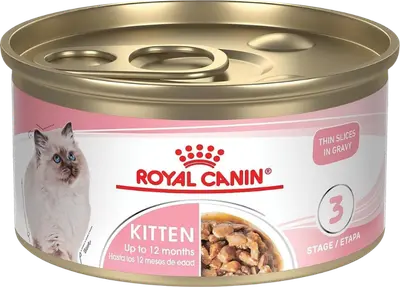
Small soft pieces in gravy designed for growing kittens, particularly around 4–12 months.
Best for: Kittens that prefer pieces and gravy instead of pâté.
Main limitation: Only 76 calories per 3-oz can, combined with a relatively high price.
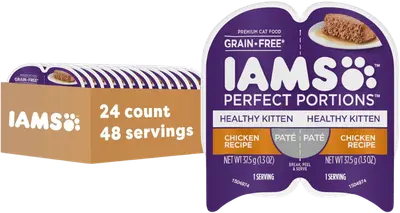
IAMS Perfect Portions Healthy Kitten Chicken Pâté
Best Single-Serve Portions
Each twin pack separates into two individually sealed servings.
Best for: One-kitten households and smaller meals.
Main limitation: The small trays create more packaging and may become inconvenient when feeding several servings daily.
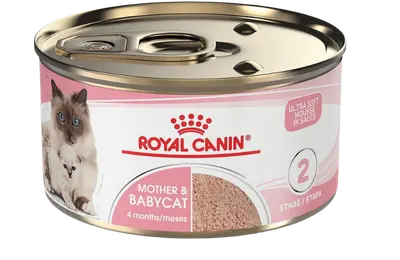
Royal Canin Mother & Babycat Ultra Soft Mousse
Best for Weaning
An ultra-soft mousse formulated for kittens around 1–4 months and designed to help with the transition toward solid food.
Best for: Early weaning.
Main limitation: Expensive and intended for a relatively short stage of kittenhood.
How We Chose the Best Wet Food for Kittens
We started with one important requirement: foods recommended as a kitten’s main diet needed to be appropriate for growth and presented as complete nutrition rather than simply a topper, broth, treat, or complementary food.
We then compared calorie content. Two 3-oz cans can look identical on the shelf while providing noticeably different amounts of energy. That affects both how much food you may need to serve and how much the diet costs over time.
Texture also mattered. Our final list includes smooth pâté, mousse, flaked food, and pieces in gravy because kitten preferences can differ considerably.
We looked beyond star ratings as well. Thousands of positive reviews are useful, but recurring comments about a kitten rejecting one particular texture, difficult packaging, or inconsistent acceptance can be more useful than the average score alone.
Shipping complaints were treated separately. A dented delivery box is not evidence that a food’s nutritional formulation is poor.
Finally, terms such as grain-free, natural, premium, high protein, or real meat first did not automatically improve a product’s position. Those descriptions can tell you something about a formula, but they do not by themselves prove that it provides better nutrition.
The 6 Best Wet Kitten Foods

Purina Pro Plan DEVELOPMENT Kitten Favorites — Best Overall Wet Kitten Food
Best for: Kittens without known dietary restrictions whose owners want flavor and texture variety.
Avoid if: Your kitten only accepts smooth pâté or needs a tightly controlled protein list. The recipes use several animal proteins, and the fish recipe also includes ingredients such as wheat and soy.
Honest buying note: If your kitten has never tried flaked food, testing a smaller quantity first may reduce the risk of wasting part of a large variety pack.
Purina Pro Plan earns the top position because it offers one of the best balances of nutritional suitability, variety, calorie density, and retailer feedback.
The pack contains Chicken & Liver, Salmon & Ocean Fish, and Ocean Whitefish & Tuna. Two have a smoother classic texture, while the Whitefish & Tuna recipe is flaked.
The researched 3-oz cans provide roughly 99–111 calories, depending on the recipe. Protein ranges from about 12% to 13% minimum, while fat ranges from 4.5% to 6% minimum. DHA is also declared in the formulas we researched.
Customer feedback is generally strong, but there is a useful warning hidden in the reviews: the flaked Whitefish & Tuna recipe is more polarizing. Some kittens happily eat it, while others eat the smoother recipes and leave the flaked pieces behind.
Pros
- Three kitten recipes
- Two texture styles
- DHA
- Good calorie density
- Large retailer feedback base
Cons
- One texture may be wasted with pâté-only kittens
- More expensive than budget options

Fancy Feast Kitten Classic Pâté Variety Pack — Best Budget Wet Kitten Food
Best for: Owners looking for an affordable everyday canned kitten food with several pâté flavors.
Avoid if: You need a simple limited-ingredient diet. Across the recipes, ingredients can include several animal proteins as well as milk and egg.
Honest buying note: This is the product I would look at first if feeding cost is making the Best Overall pick impractical.
Fancy Feast is the clearest value option in this group.
The recommended 24-can pack includes Chicken, Turkey, Salmon, and Ocean Whitefish recipes, all in a pâté format. That gives kittens flavor variety without switching abruptly between pâté and larger pieces.
The formulas we researched provide about 90–94 calories per 3-oz can, with 11–12% minimum protein and 4–5% minimum fat.
Its biggest advantage is practical: it costs substantially less per can than several of the other finalists while remaining kitten-specific and complete for growth.
Chewy also has an unusually large review base for this product. Customer comments generally support good acceptance and value, although some kittens naturally prefer certain flavors.
Pros
- Four recipes
- Consistent pâté texture
- Strong value
- Very large customer feedback base
- Widely available
Cons
- Multiple protein sources
- Less calorie-dense than Pro Plan
- Variety packs can still leave unwanted flavors

Wellness Complete Health Kitten Pâté Variety Pack — Best Smooth Pâté
Best for: Kittens that clearly prefer a soft, uniform pâté.
Avoid if: Your kitten needs to avoid chicken or fish, or you mainly want the lowest feeding cost.
Honest buying note: Texture is the reason to choose this food—not the grain-free label.
Wellness stands out mainly for texture.
The pack contains Chicken and Whitefish & Tuna recipes, both with a smooth pâté consistency. That makes it easier to predict what is coming out of each can than a pack mixing pâté with flakes or chunks.
The Chicken recipe we researched provides about 114 calories per 3-oz can, while Whitefish & Tuna is around 99 calories. Current manufacturer information lists 11% minimum protein and 6% minimum fat.
The fish recipe is not chicken-free: chicken appears in the ingredient list. That matters for anyone shopping around a known dietary restriction.
Customer feedback repeatedly mentions the smooth texture, but acceptance is less consistent than with several of our other finalists.
Pros
- Smooth texture
- Two recipes
- Good calorie density
- Kitten-specific formulation
Cons
- More expensive than Fancy Feast
- Some kittens reject one or both recipes
- Fish formula still contains chicken

Royal Canin Kitten Thin Slices in Gravy — Best Gravy-Style Wet Kitten Food
Best for: Growing kittens that prefer gravy and small pieces.
Avoid if: Feeding cost is a major concern or your kitten needs a restricted chicken-, pork-, or wheat-free diet.
Honest buying note: This makes most sense when texture acceptance matters more than getting the lowest cost per calorie.
Not every kitten wants pâté. Royal Canin gives those kittens a genuinely different option.
This formula uses small, soft pieces in gravy and is particularly suited to the later kitten-growth stage, around 4–12 months.
A 3-oz can contains about 76 calories, with 10.5% minimum protein and 2.5% minimum fat.
Customer feedback around the texture is one of this product’s strongest points. Many owners specifically mention kittens preferring the small pieces and gravy to loaf or pâté foods.
The tradeoff is cost. Because each small can contains only 76 calories, kittens eating wet food as most of their diet may require multiple cans.
Pros
- Clearly different texture
- Small pieces designed for kittens
- Complete growth nutrition
- Strong customer feedback
Cons
- Expensive
- Relatively low calories per can
- Less flavor variety

IAMS Perfect Portions Healthy Kitten Chicken Pâté — Best Single-Serve Portions
Best for: One-kitten households and owners who prefer smaller freshly opened portions.
Avoid if: You feed several kittens, want larger cans, or want to minimize packaging.
Honest buying note: The packaging is both the reason to buy it and the main reason some people will prefer a conventional can.
IAMS earns its place because of the packaging.
Each 2.6-oz twin pack separates into two individually sealed servings, each providing about 45 calories. You can open one side without refrigerating an already opened larger can.
The formula provides 9% minimum protein, 5% minimum fat, and includes DHA.
Customer feedback regularly praises the portion size, especially for one kitten or smaller meals. The drawback is that the package design is not equally convenient for everyone. Some reviewers find the foil difficult to peel, and feeding several kittens can produce a lot of small empty trays.
Pros
- Two separately sealed servings
- Easy portion control
- Kitten-specific complete nutrition
- DHA
- Strong overall customer feedback
Cons
- More packaging
- Multiple servings may be needed per day
- Some owners find the trays difficult to open

Royal Canin Mother & Babycat Ultra Soft Mousse — Best for Weaning
Best for: Young kittens beginning the transition to solid food.
Avoid if: Your kitten already handles normal kitten-food textures well or needs to avoid ingredients such as chicken, pork, wheat, or milk-derived protein.
Honest buying note: For many households, this makes more sense as an early-stage food than something to feed throughout the entire first year.
Mother & Babycat has the narrowest audience here, but one of the strongest reasons for inclusion.
Royal Canin formulates it for kittens around 1–4 months, along with pregnant and nursing queens. Its ultra-soft mousse is intended to help young kittens move from milk toward solid food.
Royal Canin currently lists 78 calories per 3-oz can; some retailer nutrition data may show a conflicting figure.
Foster and rescue reviewers repeatedly mention using its soft consistency during the transition to solids, which aligns closely with the manufacturer’s intended use.
The main drawback is price, especially because this specialized stage does not last long.
Pros
- Very soft mousse
- Clear 1–4 month use case
- Complete growth nutrition
- Also formulated for gestation and lactation
Cons
- Expensive
- Shorter useful life-stage window
- Multiple animal proteins
How to Choose Wet Kitten Food
Check the Nutritional Adequacy Statement First
A can showing a kitten on the label is not enough.
If the food will make up most or all of the diet, check that it is nutritionally complete and appropriate for growth. Broths, toppers, mixers, and complementary foods can have a useful place, but they should not automatically replace a complete kitten meal.
Choose a Texture Your Kitten Can Manage
Mousse is especially soft. Pâté offers a consistent texture. Flaked foods introduce larger pieces, while food in gravy gives kittens something closer to small chunks.
None is automatically nutritionally better.
A kitten that regularly leaves the chunks behind may get a very different meal from what the label intends, so actual eating behavior matters.
Compare Calories, Not Just Can Size
The products above show why can size alone is misleading.
A 3-oz Wellness Chicken can provides around 114 calories, while a 3-oz Royal Canin Thin Slices can provides about 76.
That difference affects how many cans you may need to open each day.
Consider Package Format and Daily Cost
Single-serve trays can reduce leftovers but create more packaging. Larger cans may be cheaper per ounce but need refrigeration after opening.
For multi-kitten households, cost per calorie can be more useful than simply comparing the shelf price of each package.
Check Every Protein Source When Restrictions Matter
A recipe called “whitefish” may still contain chicken. A chicken formula may include egg or fish oil.
If your kitten has a suspected food reaction or your veterinarian has recommended avoiding a particular ingredient, read the complete ingredient list rather than relying on the recipe name.
Wet Kitten Food vs Dry Kitten Food
Wet food provides considerably more moisture and is available in textures ranging from mousse to gravy. Dry food is easier to store and tends to provide more calories in a smaller volume.
Either format can work when it provides appropriate complete nutrition for kitten growth.
Some owners use both, which can provide the convenience of kibble alongside wet food’s higher moisture content. The amount of each needs to be adjusted so you are not simply adding a full wet-food ration on top of a full dry-food ration.
If you are comparing kibble specifically, see our kitten dry food guide for dry-food picks, calorie information, and practical differences between formulas.
For a broader look at both formats, see our food for kittens guide.
Wet Kitten Food Safety and Quality Checklist
Before feeding a new food:
- Confirm that it is appropriate for kitten growth if it will be the main diet.
- Do not confuse toppers and complementary foods with complete meals.
- Follow the manufacturer's storage directions after opening.
- Discard cans or trays that are swollen, leaking, badly damaged around the seam, or otherwise compromised.
- Introduce a new diet gradually when practical.
- Follow feeding guidance for the exact formula rather than assuming all 3-oz cans provide the same calories.
- Keep fresh drinking water available.
Contact your veterinarian if your kitten has persistent vomiting or diarrhea, refuses food, loses weight, or is not growing as expected. Very young, orphaned, underweight, or sick kittens may need more than a simple food change.
Frequently Asked Questions About Wet Kitten Food
What is the best wet kitten food?
For most kittens without special dietary restrictions, Purina Pro Plan DEVELOPMENT Kitten Favorites Variety Pack is our Best Overall choice because it combines three recipes, two textures, DHA, and good calorie density.
Fancy Feast is the stronger budget choice, while Royal Canin Mother & Babycat is more appropriate when the specific goal is early weaning.
When can kittens start eating wet food?
Kittens normally begin transitioning toward solid foods during the early weeks of life rather than switching from milk to regular food in a single day.
Very young kittens may need kitten milk replacer and a gradual weaning plan; our guide to whether kittens can drink milk explains cow’s milk, kitten formula, and the transition toward solid food.
Can a kitten eat regular wet cat food?
Do not assume that any adult wet cat food is appropriate as a kitten’s main diet.
Growing kittens have different nutritional requirements. Look for a complete food formulated for growth or another nutritional adequacy statement that appropriately covers kitten growth.
An occasional bite of another food is a different question from feeding it as the primary diet.
Should I feed my kitten wet and dry food?
You can use both if each food is appropriate and the total daily intake is adjusted.
Mixed feeding can offer the moisture and texture of wet food together with the convenience of dry food. Avoid feeding the full recommended amount of both foods at the same time unless the feeding plan specifically accounts for the combined calories.
How many cans of wet food should a kitten eat?
There is no single number that works for every canned kitten food.
The products in this roundup range substantially in calories per container. Kitten age, current weight, expected adult size, activity, body condition, and any dry food or treats also affect daily needs.
Use the feeding directions for the exact product as a starting point and adjust based on body condition. Ask your veterinarian for help if you are unsure whether your kitten is growing appropriately.
Final Verdict: Which Wet Kitten Food Should You Choose?
Purina Pro Plan DEVELOPMENT Kitten Favorites Variety Pack is our Best Overall wet kitten food because it offers a useful combination of kitten-specific nutrition, three recipes, two textures, DHA, and relatively strong calorie density.
For a lower-cost everyday pâté, Fancy Feast Kitten Classic Pâté is the stronger value option. Choose Royal Canin Thin Slices in Gravy if your kitten dislikes pâté, while Royal Canin Mother & Babycat has the clearest role for kittens in the early weaning stage.
The best choice is ultimately the complete food your kitten can eat consistently, tolerate well, and receive in an amount that supports steady growth.